


Crypto Contactless Payments: How NFC Crypto Cards Work 2026
This article is available in the following languages:
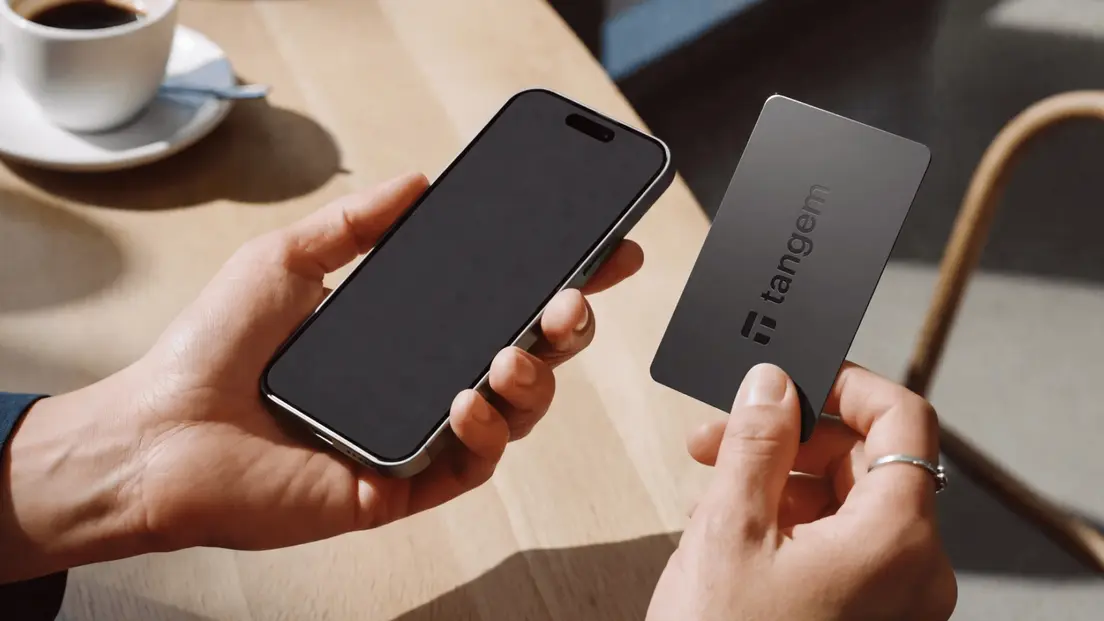
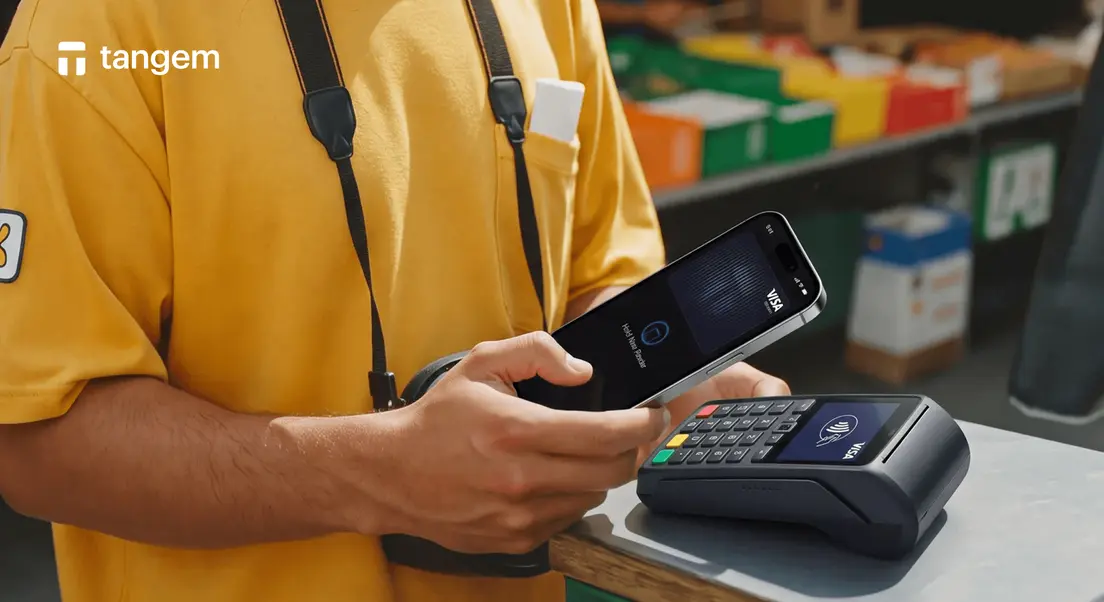
You tap your phone at a coffee shop terminal. The merchant's screen shows an approved U.S. dollar payment at checkout. But on your side, the funds came from a crypto wallet, not a bank account.
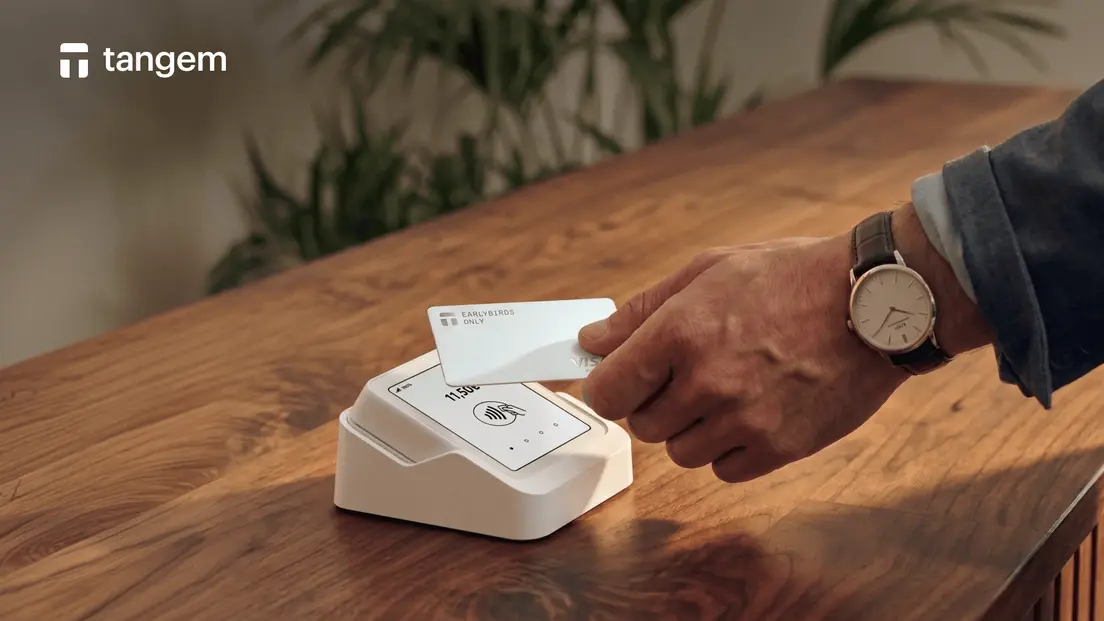
That's the core idea behind contactless crypto payments: spending cryptocurrency at any standard payment terminal without the merchant needing to know or care that crypto was involved.
From the merchant's perspective, it looks exactly like a Visa transaction. From yours, it's a crypto balance being converted and spent in real time.
The mechanism that makes this work is a crypto payment card, a virtual or physical card issued on the Visa network, backed by a crypto wallet rather than a bank account. Payment gateways such as BitPay, Coinbase Commerce, and NOWPayments let merchants accept crypto directly, but the card model is different: it converts your crypto to fiat at the moment you pay, so merchants never handle crypto themselves. Tangem Mobile Wallet supports more than 16,000 cryptocurrencies and tokens across 91+ blockchain networks. Tangem Pay itself uses USDC on Polygon.
The Technology Behind Crypto Tap-to-Pay
NFC (Near Field Communication)
NFC lets your phone and a payment terminal exchange data. It's the same standard that powers Apple Pay and Google Pay. Bring your phone close to a terminal, and the devices exchange payment data.
Supported Networks and Merchants
Visa/Mastercard Payment Rails
Crypto tap-to-pay cards use Visa or Mastercard rails to route a purchase from the card issuer to a merchant that accepts those networks. The terminal receives an ordinary card approval. It never handles cryptocurrency.
Real-Time Crypto-to-Fiat Conversion
When you tap, the merchant does not receive crypto. The card issuer converts the required amount to fiat, and normal Visa settlement delivers local currency. That separation matters when you are thinking about what actually reaches the merchant. The merchant's terminal follows the familiar card-payment flow, while the funding side first converts the crypto balance. In a self-custodial setup, the wallet controls the private key used to authorize the underlying crypto transaction. The merchant does not need to receive or manage that asset directly.
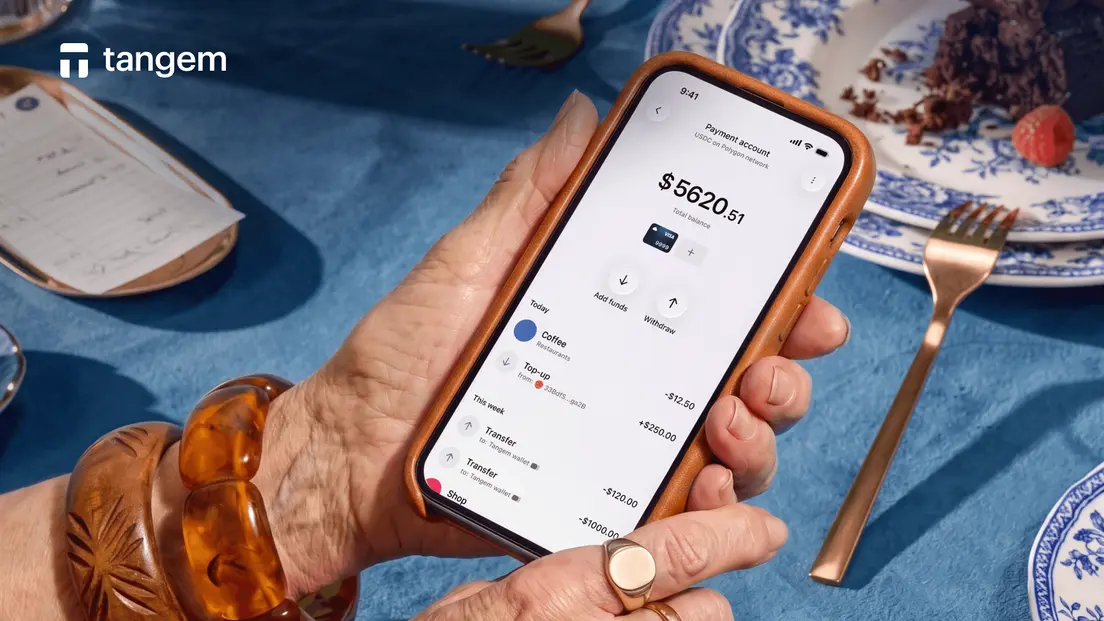
Tangem Pay is an optional, non-custodial regulated payment feature in the Tangem Wallet app, launched in December 2025.
Funds remain in a user-controlled smart contract. Tangem Pay supports USDC and USDT on Polygon, Base, and Arbitrum. Purchases automatically convert stablecoins to USD for payment to merchants via Visa.
The virtual Visa card supports Apple Pay and Google Pay for online and contactless in-store payments. Daily POS limits are $10,000 on the Basic plan and $50,000 on the Plus plan.
Setup requires a Tangem hardware wallet or a backed-up Tangem Mobile Wallet, plus one-time KYC via Sumsub. Compliance partners only see Tangem Pay activity, keeping the main wallet history and holdings private.
How to Make a Contactless Crypto Payment
Step 1: Set Up a Crypto Payment Card
Tangem Pay requires a Tangem hardware wallet (card or ring), the Tangem Wallet app, a supported region, and a one-time KYC exercise. Verification uses a government ID and face check. There are no transaction, monthly account, or virtual-card issuance fees. Top-ups pay Polygon network fees, while non-USD spending uses standard Visa foreign-exchange rates.
Step 2: Add It to Your Mobile Wallet
Tangem Pay is a virtual-card-only. Add the virtual Visa card to Apple Pay or Google Pay directly from the Tangem Wallet app. It then behaves like any other card stored in your mobile wallet. The app runs on iPhone 8 and newer, as well as Android 6.0 and later devices with full NFC support.
Step 3: Tap and Pay
For an in-store purchase, tap your phone through Apple Pay or Google Pay at a compatible terminal. The NFC signal reaches the terminal, Visa authorizes the transaction, and the USDC equivalent comes from your smart contract balance. The merchant sees a standard Visa approval.
Security of Contactless Crypto Payments
Crypto tap-to-pay cards use the same tokenization and PCI-DSS compliance standards as other contactless Visa cards.
Self-custody removes exchange counterparty risk but makes you responsible for key protection. A hot wallet's constant internet connection expands exposure to phishing, malware, and device compromise. Use strong, unique passwords, enable two-factor authentication where supported, keep software updated, and never share recovery phrases.
Tangem hardware uses a Samsung S3D350A secure element chip certified to Common Criteria EAL6+. Private keys are generated and stored in the secure element and never leave the chip. Hardware signing uses an AES-256 encrypted NFC channel with a 0-5 cm range. You need the physical card and proximity to sign a transaction.
With Tangem hardware, a phone's NFC field powers the card during signing. The secure element creates the signature inside the device, then the app broadcasts the signed transaction. The app alone cannot move funds when it is paired with the hardware. For Tangem cold wallets, a physical card tap is required to sign transactions.
One real limitation: if all backup cards are lost and no seed phrase was created, funds are permanently inaccessible. That's the trade-off for keeping keys off the internet.
Contactless Crypto vs Traditional Contactless Cards
| Feature | Crypto Contactless Card | Traditional Contactless Card |
|---|---|---|
| Funding source | Crypto wallet/stablecoin | Bank account/credit line |
| Custody | Self-custodial (user controls keys) | Custodial (bank controls funds) |
| Conversion | Crypto-to-fiat at point of sale | No conversion needed |
| Merchant experience | Standard Visa/Mastercard approval | Standard Visa/Mastercard approval |
| KYC required | Yes (for card issuance) | Yes (for account opening) |
| Fees | Network fee on top-up; FX on non-USD | Varies by bank; FX on non-local currency |
Tangem Pay converts USDC to USD at a 1:1 rate at purchase. The terminal sees a normal Visa approval. The choices sit with you: funding source, custody, and conversion. Traditional cards draw from a bank account that the bank ultimately controls. A self-custodial crypto card draws from a smart contract you control, so you carry responsibility for keeping access to it.
FAQ
-
From the merchant's perspective, yes. Your crypto card uses the same NFC and Visa/Mastercard networks. Your balance converts to fiat when you make the purchase.
-
Tangem Pay is funded with native USDC on the Polygon network. At purchase, that USDC converts 1:1 to USD before the merchant receives local currency.
-
Yes. They use the same tokenization security standards as Apple Pay and Google Pay. Your wallet security still depends on protecting private keys and your recovery method. Hardware-backed wallets also require a physical card tap for transaction signing.
-
Visa contactless terminals process a crypto Visa card like any other Visa card. Spending in non-USD currencies uses standard Visa foreign-exchange rates.


Don't miss these 


Other articles

