


How to Buy USDC With a Bank Account

You already have a U.S. bank account. You want USDC. The question most guides skip is: which bank-transfer method should you actually use, and what does the full journey look like from your checking account to a confirmed USDC balance?
There are two paths: ACH and wire transfer. They share the same destination but differ in speed, cost, and the amount of friction your bank adds along the way. This guide walks through both, compares the numbers, and covers what to do if you'd rather skip the bank entirely.
Two Ways to Buy USDC With a Bank Account: ACH and Wire
Not every crypto platform accepts the same funding methods. Some support ACH transfers and debit cards; others support PayPal or wire transfers. The distinction matters because ACH and wire are fundamentally different rails, even though both move dollars from a bank account.
ACH (Automated Clearing House) is the same network behind direct deposit and bill pay. It's batch-processed, which is why it takes time. Transfers move in groups throughout the business day, and settlement typically takes 1 to 3 business days. The upside: fees are low, often $0 to $1.50.
- Wire transfer (FedWire) is a real-time gross settlement system. Each transfer moves individually and immediately. Settlement is typically same-day or within 1 business day. The tradeoff is cost: wire fees typically run $10 to $25, sometimes higher depending on your bank.
Here's what that means in practice. If you need USDC quickly and the dollar amount is large enough to absorb a $10+ fee, a wire makes sense. If you're funding a position over the next few days and cost matters more than speed, ACH is the better call.
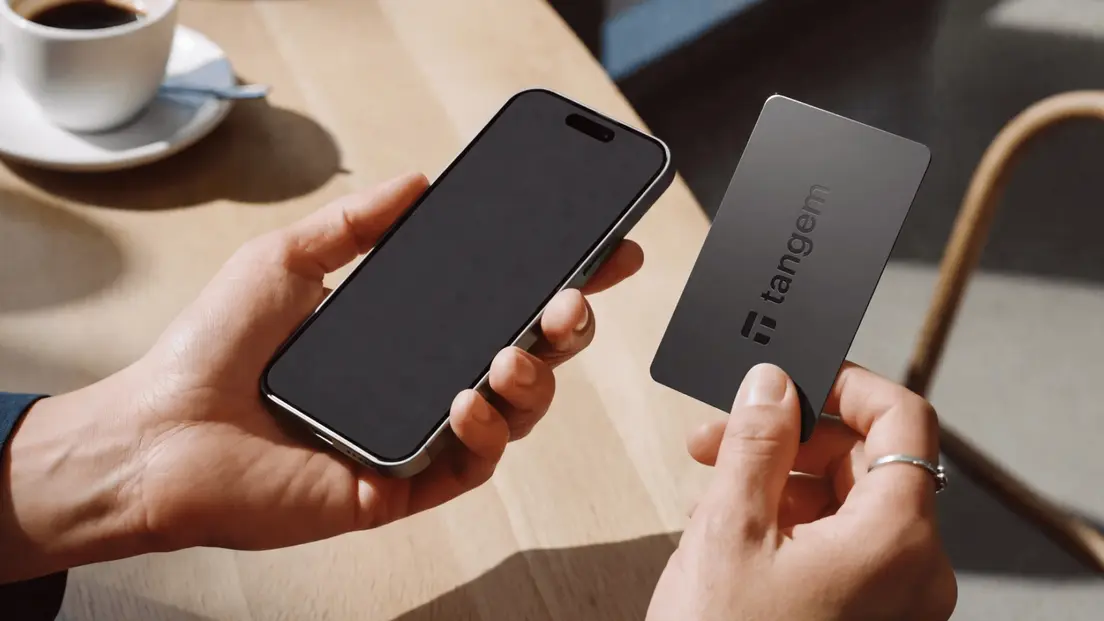
Platforms like Tangem Pay support both ACH and FedWire for U.S. bank accounts, with USD deposits credited 1:1 as USDC on Polygon. The feature is available in selected countries, so the app checks your region during signup.
Step-by-Step: Buying USDC via ACH
The ACH flow on a platform that supports it runs through five stages. The exact screens differ by provider, but the sequence is consistent.
1. Download the app and create an account. For Tangem Pay, this starts in the Tangem Wallet app (version 5.31 or later, introduced December 12, 2025). You'll need a Tangem hardware wallet (card or ring) to activate the Pay account.
2. Complete KYC. Tangem Pay's identity verification uses Sumsub and requires a government-issued ID plus face verification. Automated ID checks typically take only a few minutes. The product documentation states that Tangem does not see or store your identity data. Only Tangem Pay activity is visible to compliance partners.
3. Send USD from your U.S. bank. Tangem says eligible users can send dollars from a U.S. bank through its ACH/FedWire on-ramp.
4. Receive USDC. Funds typically settle within 1 to 3 business days. Once the transfer clears, USD arrives in your Tangem Pay account as native USDC on Polygon, is credited after blockchain confirmation, and is available for instant spending.
One thing to keep in mind: your bank may add its own processing time or a small outgoing transfer fee on top of whatever the platform charges. The platform fee and the bank fee are separate charges.
Step-by-Step: Buying USDC via Wire Transfer
Wire transfers follow a different initiation model. Instead of the platform pulling funds from your bank, you push them from your bank to the platform.
Activate Tangem Pay and complete KYC (same as the ACH flow above, you only do this once).
Send USD from your bank. Tangem says eligible users can send dollars from a U.S. bank through its ACH/FedWire on-ramp.
Initiate the wire transfer. Use the transfer instructions available in your account. Wire transfers typically cost $10 to $25 and settle within 1 to 2 business days.
Wait for the settlement. Wire transfers typically settle within 1 to 2 business days.
- Receive USDC. Once the wire arrives, USD converts 1:1 to USDC on Polygon in your Tangem Pay account.
The wire path is faster but requires more manual steps on your end. You're initiating from your bank's interface rather than the app, so double-check every routing digit before confirming.
Costs and Timing Compared
Here's how the two methods stack up. Note that "platform fee" and "bank fee" are separate line items. The table shows typical platform-side charges.
| Method | Typical Platform Fee | Typical Settlement | Plus Tier |
|---|---|---|---|
| ACH | ~$0 to $1.50 | 1 to 3 business days | Free (ACH top-ups waived) |
| Wire (FedWire) | ~$10 to $25 | Same day to 2 business days | Free (FedWire top-ups waived) |
Tangem Pay Plus-tier subscribers get free ACH and FedWire top-ups with zero transaction fees, according to Tangem's own release notes. If you're funding regularly, the Plus tier can eliminate the platform-side fee entirely on both methods.
Your bank's outgoing wire fee is not covered by any platform tier. Wire transfer fees typically range from $15 to $50. That's a real cost to factor in before choosing wire over ACH for small amounts. A total user cost includes deposit fees, withdrawal fees, and spreads, so make sure you're comparing the same category of charges when evaluating platforms.
Other Ways to Buy USDC (If You Don't Want to Use a Bank Account)
Bank transfers aren't the only on-ramp. If you want USDC faster than ACH allows and don't want to handle wire instructions, several card and wallet options are available.
The Tangem app aggregates and compares rates from 8 providers for buying crypto. The listed payment methods include credit and debit cards (Visa and Mastercard), Apple Pay, Google Pay, Venmo, and bank transfers. On-ramp purchases are delivered directly to the Tangem wallet, with KYC completed through the individual providers.
Card purchases typically settle in minutes rather than days. The tradeoff is fees: card-based on-ramps generally charge higher spreads or flat fees than ACH. If speed matters more than cost, a debit card or Apple Pay purchase gets you USDC faster. If cost matters more, ACH wins.
FAQ
-
Yes. Platforms like Tangem Pay support ACH and FedWire (wire) transfers directly from a U.S. bank account, converting the funds to USDC. The app checks your country during signup because the feature is available only in selected regions. Once eligible, you link your bank, initiate a transfer, and receive USDC 1:1 in your account.
-
ACH transfers typically take 1 to 3 business days to settle. Wire transfers typically settle within 1 to 2 business days. These are platform-side estimates; your bank's own processing time can add to the total.
-
ACH is typically cheaper, with platform fees of around $0 to $1.50, compared to wire, which is roughly $10 to $25. Wire settles faster. On Tangem Pay's Plus tier, both ACH and FedWire top-ups are free at the platform level, though your bank's outgoing wire fee still applies.
-
It can. The platform fee and your bank's outgoing transfer fee are separate charges. Wire transfer fees typically run $15 to $50. Factor in both when comparing the real cost of each method.
-
Wire delays are usually caused by missing or incorrect reference codes, bank cutoff times, or compliance holds. If your USDC doesn't appear within 2 business days of sending a wire, check that you copied the platform's routing number and reference code exactly, then contact the platform's support with your wire confirmation number.
-
Review the details in your bank record and in the account instructions. Then contact your bank or the platform with the transfer confirmation.
-
Not necessarily. The documented ACH and FedWire routes are for U.S. bank accounts, and Tangem Pay is available only in select countries. Check availability at signup before relying on this funding method.
-
Yes. Tangem Pay activation requires a Tangem hardware wallet (card or ring), the Tangem app, a supported region, and one-time KYC. The main Tangem Wallet handles holdings, storage, and earnings; Tangem Pay is a separate, regulatory-compliant spending account with its own virtual Visa card for purchases.

Don't miss these 


Other articles

