



How to Receive Your Salary in USDC
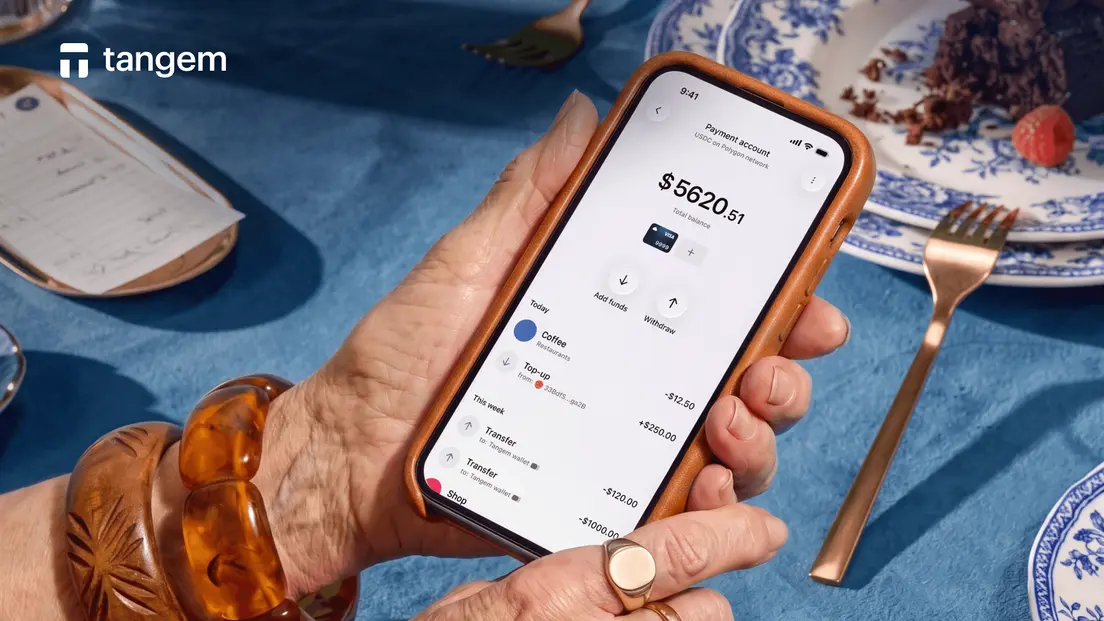
Most people who ask about getting paid in USDC already understand the basic idea: USDC is a stablecoin pegged 1:1 to the US dollar, so a salary in USDC holds its value like a dollar. The practical details are usually the missing piece. What wallet will work for you? Which network matters? How do you even bring it up with HR? This guide answers those questions in order.
What You Need Before Asking
Three things need to be in place before you ask your employer to pay you in USDC: a wallet that supports USDC, clarity on which blockchain network the payment will travel over, and a rough plan for what you'll do with the funds once they arrive.
Self-custody is the right starting point. In a self-custodial wallet, you control the private keys. The public key is what you share with your employer as a receiving address; the private key is what authorizes any transaction leaving your wallet. No bank, no exchange, no employer can touch the funds once they land.
The network question is less obvious but just as important. USDC is available on multiple blockchains, including Ethereum, Polygon, Arbitrum, Base, and others. Your wallet address might look identical across several of them, but a transfer sent on the wrong network can leave funds inaccessible or require complex recovery. Before you give your employer an address, you need to agree on the specific chain.
A hardware wallet like the Tangem Cold Wallet supports 16,000+ tokens across 91+ blockchains and stores private keys offline on a secure-element chip, so the keys never touch an internet-connected device. Setup takes one to three minutes. That said, it's a mobile-only interface. There's no desktop or web app, so confirm your phone supports NFC before buying. Know in advance whether you'll hold, spend, or convert the USDC when it arrives. That decision affects which wallet type makes the most sense for day-to-day use.
How Employers Actually Pay in USDC
There are two distinct paths, and they work very differently.
Direct payroll means your employer holds USDC themselves and sends it straight to your wallet address on payday. This is more common at crypto-native companies that already manage treasury in stablecoins. The employer chooses the network, initiates the transfer, and you receive USDC directly. No intermediary converts anything.
Third-party payroll platforms are the more common route for traditional employers. Platforms like Deel and Rise sit between employers and employees. The employer funds payroll in fiat (or in USDC via an exchange like Coinbase, in Deel's case), and the platform handles the conversion and payout. Rise, for instance, supports funding payroll in USD, USDC, or USDT across 190+ countries and charges $10 per participating employee per month for the stablecoin opt-in. Deel offers a similar structure for employee salary payouts in the US and the Eurozone at the same rate of $10 per employee per month.
One thing worth knowing: network fees vary significantly by chain. On Layer-2 networks like Polygon or Arbitrum, those fees are typically fractions of a cent. On the Ethereum mainnet, a few dollars is common. That's not a trivial difference if payroll runs every two weeks.
Remote is another platform in this space, though its public materials describe contractor USDC payouts through Stripe Connect rather than a formal employee salary product.
Having the Conversation With Your Employer
Most HR teams haven't had this conversation before. That means you need to come prepared.
Start with the split question. You don't have to go all-in. Platforms like Toku let workers set a preference, such as 70% fiat and 30% ETH, so you can test the arrangement without converting your entire income. Partial conversion is often easier for an employer to approve because it reduces their exposure to crypto operations.
Next, agree on the network before anything else. Give your employer a specific address for a specific chain. Don't hand over a wallet address and assume they'll figure out the rest. If your employer uses a payroll platform, ask which network that platform supports for USDC. Then confirm your wallet supports the same one.
The fee question matters too. On Polygon, for example, the sender typically pays the network fee while the recipient simply shares a Polygon address. That's not a universal rule. It's network-specific. Clarify upfront who covers conversion fees and gas, especially if the employer is converting fiat to USDC at the time of payment. Toku recommends that companies keep a buffer so a delayed conversion doesn't delay payday. Put the agreed terms in writing. Network, amount or percentage, frequency, and who handles fees. This protects both sides.
What to Do Once USDC Lands
USDC sitting in a self-custody wallet is yours. The question is how to use it. Here's the practical split most people land on: keep a short-term spending buffer accessible, and protect the rest in cold storage.
Hot wallets are built for daily access. They're connected to the internet, which makes them convenient for small transactions but also more exposed to risk. The standard approach is to keep only what you need in the near term in a hot wallet and move the bulk of your holdings to cold storage. A hot-wallet compromise doesn't affect what's in cold storage.
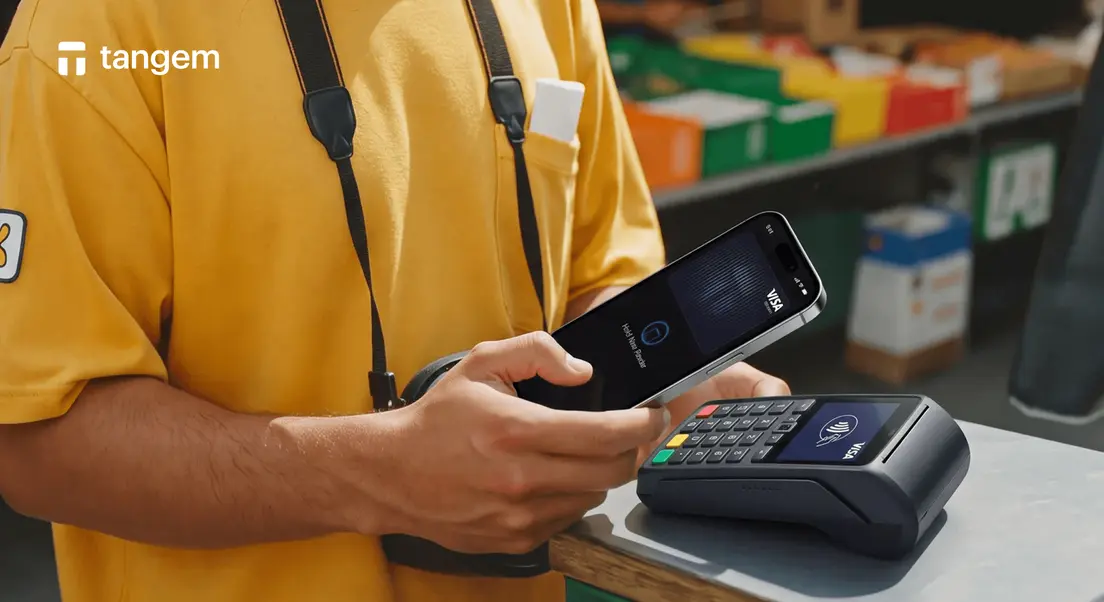
If you want to spend USDC directly without converting it first, Tangem Pay is worth knowing about. It's a non-custodial payment account inside the Tangem Wallet app, funded with USDC on the Polygon network. Purchases convert USDC 1:1 to USD through the Visa network, so merchants receive USD, and the equivalent USDC is deducted from your account. The Visa card can be added to Apple Pay or Google Pay. Tangem lists no transaction, monthly account, or card issuance fees. You pay only the Polygon gas fee when funding the account. KYC is required for Tangem Pay; the main Tangem Wallet remains anonymous.
For converting USDC to fiat, ACH is usually the cheapest recurring option: often free, with a 1-3 business-day settlement window. Wire transfers typically cost $10-25. Third-party off-ramps like MoonPay, Transak, and Banxa commonly charge 1-5.5% depending on method and region. Instant card cashout is faster but costs around 1.5% and can be capped per day. Reserve that option for cash-flow gaps, not routine conversion.
The practical budgeting frame: treat your USDC inflow in three buckets. Short-term spending buffer in fiat. Recurring conversion via the cheapest repeatable off-ramp you can access. Longer-term savings in cold storage.
Tax and Recordkeeping Basics
Tax rules vary by jurisdiction. This section is general information, not tax advice. Consult a qualified local tax professional for your specific situation. In most jurisdictions, salary received in USDC is treated as ordinary employment income, valued at its fiat equivalent on the date of receipt. That's the same treatment as a cash paycheck. The UK, for instance, explicitly lists receiving crypto as salary among taxable events subject to income tax.
The complication comes later. If you hold the USDC and its value changes before you convert or spend it, that subsequent disposal may create a separate capital gains event. In the UK, income-earned crypto that appreciates creates what the guidance calls a two-layer tax situation: income tax at receipt, then capital gains tax on any additional gain when you sell.
For recordkeeping, keep a log of each salary receipt, including the date, the USDC amount, and the fiat-equivalent value at the time of receipt. That record becomes your cost basis for any future capital gains calculation. Circle, which issues USDC, states that users are solely responsible for reporting and paying any taxes arising from the use of USDC in their jurisdiction. Good records now save significant work at tax time.
FAQ
-
They may decline if their payroll process cannot support it. Ask whether a partial arrangement or a payroll platform is possible. If neither option works, you can receive your salary in fiat and decide separately whether to buy USDC.
-
Generally yes. In most jurisdictions, salary received in USDC is treated as ordinary income at its fiat value on the date received, the same as a cash paycheck. If you later sell or spend the USDC after it has appreciated, a separate capital gains event may apply. Consult a tax professional for your specific jurisdiction.
-
It depends on the provider and your location. Read the platform's onboarding requirements before you enroll, and ask your employer whether it needs identity verification or other documents. A self-custody wallet gives you key control, but third-party payroll and spending services can set their own rules.
-
Treat a wallet change as a new payment instruction. Give your employer or provider the new compatible address and reconfirm the network before the next payroll cycle. Don't wait until payment day. The old address may still receive funds if no one updates the instructions.
-
A transfer sent on the wrong or unsupported network can leave funds inaccessible or require complex recovery. This is why agreeing on the specific chain before the first payment matters. Don't assume that a wallet address that looks the same across chains will receive funds correctly. The network must match on both ends.
-
ACH withdrawal through a centralized exchange is typically the lowest-cost recurring option, often free, with a 1-3 business-day settlement time. Wire transfers usually cost $10- $25. Third-party off-ramps commonly charge 1-5.5%. Instant card cashout runs around 1.5% and may be capped per day, so it's better suited to occasional cash-flow needs than routine conversion.


Don't miss these 





Other articles

