


Best Crypto Debit Cards 2026: Top 7 Cards Compared
This article is available in the following languages:

This guide compares Tangem Pay with six named alternatives, so you can choose based on the tradeoff you actually accept. Reward seekers may accept exchange custody. Travelers may care more about card format and currency support.
What Is a Crypto Debit Card?
A traditional debit card draws from a bank checking account. A prepaid card is funded in advance with a specified fiat amount. A crypto debit card falls into a different category: it converts digital assets to fiat at the point of sale, allowing you to spend crypto at any merchant that accepts Visa or Mastercard.
Here's the distinction that actually matters: a card's network classification (Visa, Mastercard) is separate from how its balance is funded and who controls that balance. Some cards hold your crypto on an exchange until you spend it. Others convert from a wallet you control. That difference has real consequences for both security and fees.
Put a number beside that distinction before you apply. Tangem Pay starts with a $500 daily spending limit at onboarding and increases to $2,000 after 7 days. Its documented purchase flow converts USDC 1:1 to USD. At the opening limit, a user who loads $500 in native USDC has a $500 daily spending ceiling. A larger purchase has to wait until the limit changes. A Polygon top-up still carries a network fee paid to validators, and non-USD purchases use standard Visa foreign-exchange rates.
Read the fee schedule with that same amount in mind. A no-monthly-fee card can still charge on conversion. A card with no stated purchase fee can still have network or foreign-exchange costs.
How We Evaluated These Cards
Five dimensions drove the evaluation:
- Custody model: Who holds the keys to your funds between top-up and spend?
- Rewards: What cashback or loyalty benefits exist, and what are the conditions?
- Supported assets: Which coins or tokens can you actually fund the card with?
- Fees: Spread on conversion, monthly fees, and foreign-exchange charges.
- Geographic availability: Cards differ substantially across the EU, the US, and the UK.
High cashback rates often require staking or holding the issuer's token. Price movement can erase the value of those rewards.
Top 7 Crypto Debit Cards Compared
Card 1: Tangem Pay (Non-Custodial Option)
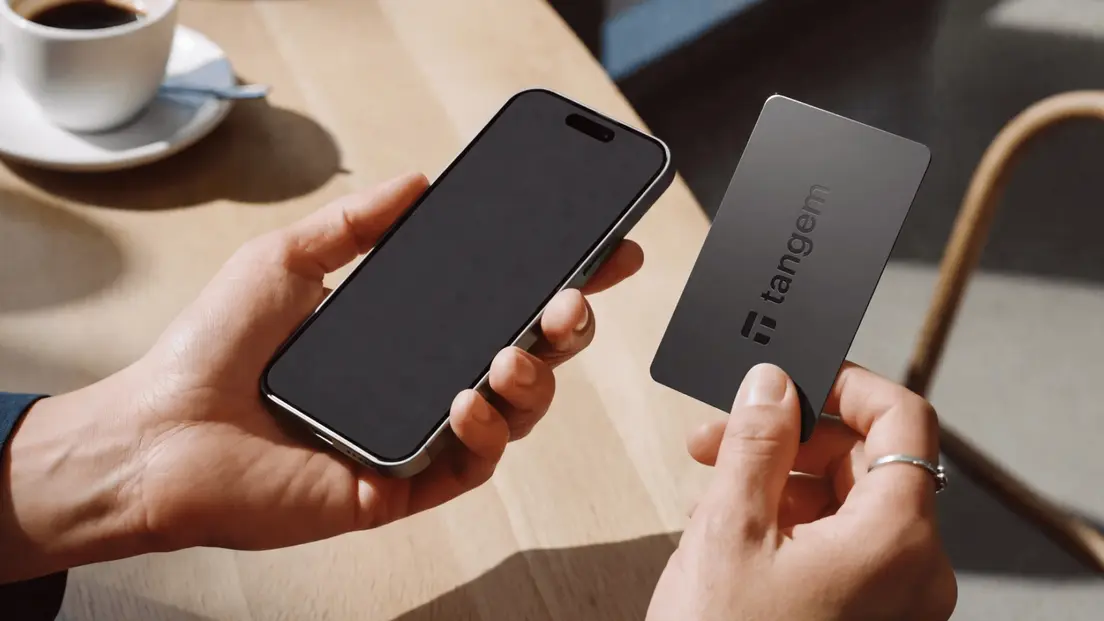
Tangem Pay is an optional, non-custodial regulated payment feature embedded in the Tangem Wallet app. It launched in December 2025 with version 5.31 of the app, making it one of the newer entrants in this space.
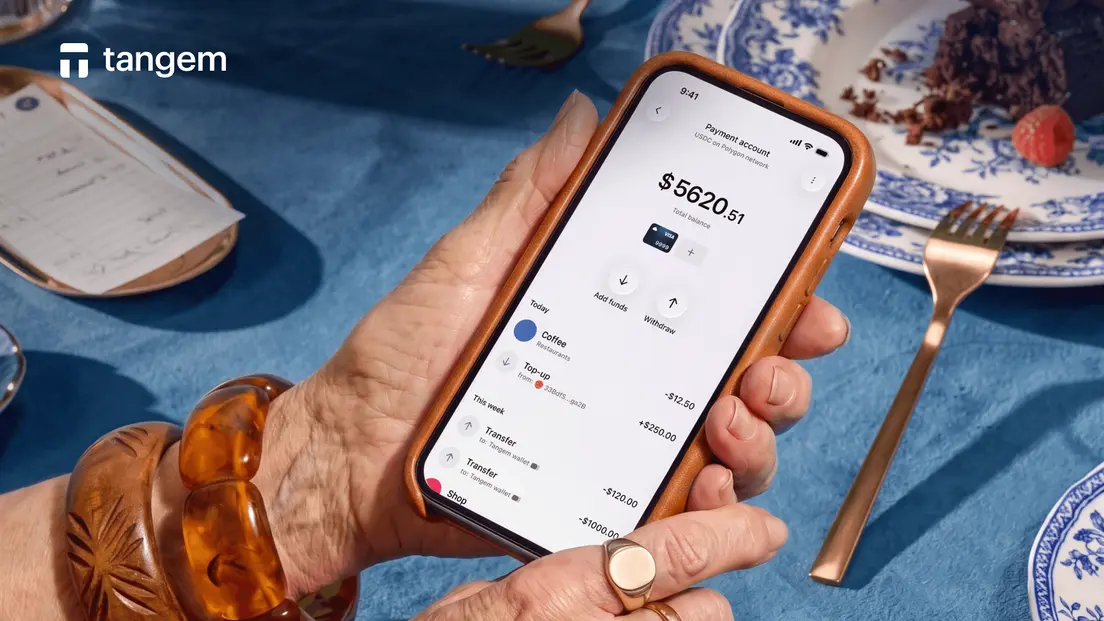
When you top up, funds are held in a smart contract you control, not on an exchange or third-party custodian. Tangem Pay currently supports USDC and USDT on the Polygon, Base, and Arbitrum networks. For a purchase, the documented flow converts your stablecoins to USD, processes the transaction through Visa, pays the merchant in USD, and deducts the equivalent amount of crypto from your account.
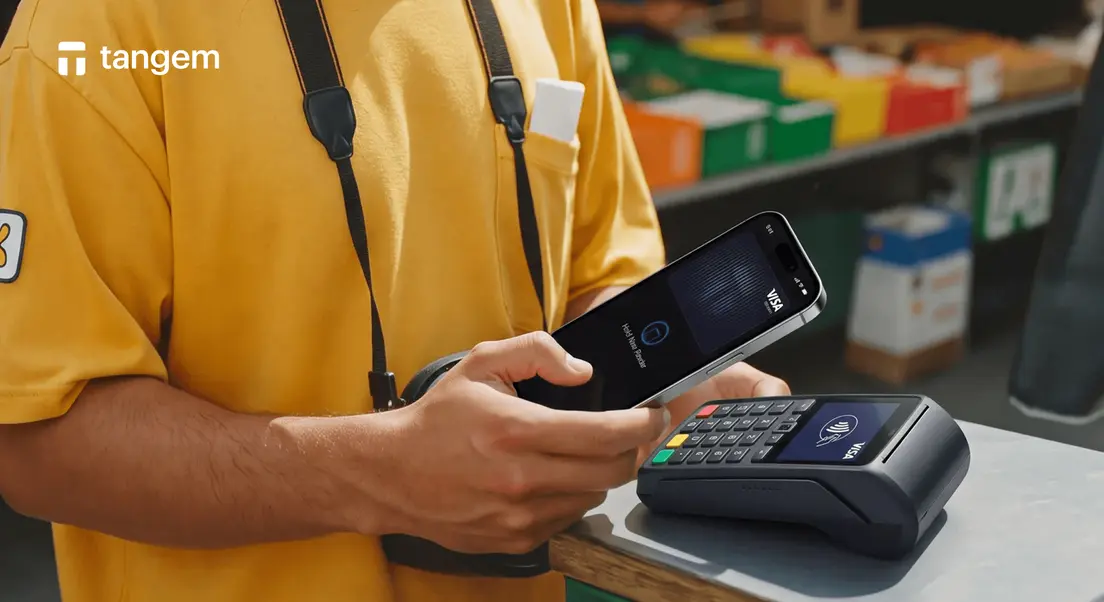
The virtual Visa card can be added to Apple Pay or Google Pay, covering both online payments and in-store contactless payments by tapping your phone. Daily POS transaction limits are $10,000 on the free Basic plan and $50,000 on the Plus plan.
Setting up the feature requires a Tangem hardware wallet (card or ring) or a backed-up Tangem Mobile Wallet, along with one-time KYC through Sumsub. The documented privacy model keeps your main Tangem Wallet transaction history and holdings separate from compliance partners. Only the Tangem Pay activity is visible to the payment side. If the card is frozen, the on-chain balance is unaffected.
Compliance partners can see Tangem Pay activity, while Tangem Wallet transaction history and holdings remain private. That split matters if you want a spending account without turning your whole wallet into a custodial card balance. It also means you should check that your region is supported before moving funds. A virtual card does not replace the wallet backup required for setup. If access is lost and no backup exists, your funds become permanently inaccessible.
Card 2: Coinbase Card (Exchange-Based)
Coinbase Card is a Visa debit card linked to a Coinbase account. It supports multiple crypto assets, including BTC, ETH, and USDC, and has offered crypto rewards of up to 4% depending on the selected asset. The card has no monthly fee. Your funds are held in Coinbase custody, so it suits existing Coinbase users who accept exchange control in return for spending convenience.
Best for: Coinbase users who want multi-asset spending and crypto rewards.
Card 3: Gnosis Pay (Stablecoin-Focused)
Eco's 2026 crypto card comparison includes Gnosis Pay and assesses cards by type, rewards, custody, and geographic availability. The supplied research does not establish Gnosis Pay's current funding assets, fees, rewards, or regional terms. That missing information is the limitation here. Treat it as a research-first option, then check the live terms before choosing it for stablecoin spending.
Best for: Readers prepared to verify the current funding terms, fees, and availability before they commit.
Card 4: Crypto.com Visa (High Cashback)
Crypto.com Visa has offered up to 5% cashback in CRO at higher tiers, with additional perks such as streaming rebates or lounge access. Meaningful rewards require CRO staking, which adds exposure to a token that can move in price.
Best for: High-volume spenders who already hold CRO and can use the tier benefits.
Card 5: Kast Card (Multi-Currency)
Eco's current comparison also includes Kast Card. The supplied research does not establish its current funding assets, fee schedule, reward terms, or regional eligibility. That makes it a poor fit for anyone who needs confirmed multi-asset support before applying. Review the issuer's live schedule first, then decide whether its supported assets work in your region.
Best for: Readers who can confirm which assets are supported and the fees for their region.
Card 6: MetaMask Metal (Privacy-Focused)
MetaMask Metal is available to US users outside Vermont for a $199 annual membership. It ships in 6 to 8 weeks, while a digital version can be used immediately in Apple or Google Wallet.
Best for: US-based MetaMask users who want a digital card now and are willing to pay the membership fee.
Card 7: Bybit Card (Travel-Friendly)
Bybit Card is a Visa card connected to a custodial Bybit account, with rewards that vary by program. It has no monthly fee in the supplied comparison, but country eligibility and foreign-exchange terms need to be checked before travel.
Best for: Active Bybit traders who can confirm availability and overseas fees before they leave.
Comparison Table: Fees, Limits, and Features
| Card Type | Custody | Funded With | Rewards | Monthly Fee | Best For |
|---|---|---|---|---|---|
| Tangem Pay | Non-custodial | USDC (Polygon) | None | None | Self-custody USDC spenders |
| Coinbase Card | Custodial | BTC, ETH, USDC, others | Up to 4% crypto rewards | None | Coinbase users |
| Gnosis Pay | Confirm with the issuer | Confirm with the issuer | Confirm with the issuer | Confirm with the issuer | Stablecoin researchers |
| Crypto.com Visa | Custodial | Multiple assets | Up to 5% in CRO by tier | None | CRO holders |
| Kast Card | Confirm with the issuer | Confirm with the issuer | Confirm with the issuer | Confirm with the issuer | Multi-asset researchers |
| MetaMask Metal | Confirm with the issuer | Confirm with the issuer | Confirm with the issuer | $199 annual membership | US-based MetaMask users |
| Bybit Card | Custodial | Bybit account assets | Varies | None | Active Bybit traders |
How to Choose the Right Crypto Card
Start with your actual priority. The right card depends entirely on what you're optimizing for. Put a number on that priority. Tangem Pay's initial $500 daily limit suits regular purchases, but it will not cover a $650 charge on day one. The limit rises to $2,000 after 7 days. If you need a higher amount immediately, rule it out before comparing rewards.
Self-custody first? A non-custodial card like Tangem Pay keeps your funds in a smart contract you control until the moment of spend. You trade rewards for control.
Rewards first? Exchange-based and high-cashback cards offer the best rates, but the conditions matter. Staking requirements and native-token exposure are real costs that offset the headline percentage. Coinbase has offered up to 4% rewards on selected assets. At that rate, $500 in spending yields up to $20 in value before the reward asset's value changes.
Simplicity first? Stablecoin-focused cards reduce conversion complexity and make spending costs predictable. Less exciting, but lower friction. Tangem Pay's documented flow converts USDC 1:1 to USD for a purchase.
Asset flexibility first? Multi-currency cards let you spend from a broader set of holdings without pre-converting everything. A wider asset list does not settle the question of custody or conversion cost. Card availability differs materially across the EU, the US, and the UK. Check your region before applying. MetaMask Metal, for example, is available only to US users outside Vermont and costs $199 per year.
Custodial vs Non-Custodial Crypto Cards
Most crypto debit cards are custodial: a third party controls the private keys to your funds between top-up and spend. That's the exchange model. It's convenient and offers recovery options if you lose access, but it means your funds are exposed to the custodian's risk.
Non-custodial cards shift that control to you. In Tangem Pay's case, funds sit in a smart contract you own until the card processes a transaction. The tradeoff is responsibility: self-custody shifts key management, backups, and recovery entirely to the user.
That responsibility has a concrete setup cost. Tangem's documented backup model uses two- or three-card sets. Lose every card without a seed phrase, and the funds are permanently inaccessible. Set up the backup before you load money for spending. Tangem Pay also requires a Tangem hardware wallet, the Tangem Wallet app, a supported region, and one-time KYC. The $500 onboarding limit does not change the custody model. If the card is frozen, it disconnects from Visa's network while the on-chain USDC balance remains unaffected.
Here's the honest issue with non-custodial cards: if you lose access to your wallet and have no backup, your funds are permanently inaccessible. Tangem's documented backup model uses two- or three-card sets precisely to address this. Set up those backups before you load funds for spending.
Choose a custodial card when account recovery matters more than controlling the keys. Choose a non-custodial option when direct control matters more, and you can maintain reliable backups.
FAQ
-
Fee schedules vary by issuer, including potential conversion spreads and monthly fees for premium tiers. Always check the fee schedule before applying.
-
Tangem Pay is a virtual Visa card. You can add it to Apple Pay or Google Pay for online and contactless in-store payments.
-
Tangem Pay's documented setup requires one-time KYC through Sumsub with a government ID and face verification.
-
A frozen Tangem Pay card disconnects from Visa's network. It does not affect the on-chain USDC balance.
-
Check issuer availability and its current foreign-exchange terms before travelling.


Don't miss these 

Other articles

