


Regulamento MiCA explicado: guia completo de cripto na UE em 2026
MiCA é a nova regulação cripto da União Europeia. Até julho de 2026, exchanges precisam estar registradas na ESMA, mas
Este artigo está disponível nos seguintes idiomas:

Regulation (EU) 2023/1114, conhecida como MiCA (Markets in Crypto-Assets Regulation), é o primeiro marco legal unificado para criptoativos em toda a União Europeia. Foi publicada no Jornal Oficial da União Europeia em 9 de junho de 2023, entrou em vigor em 29 de junho de 2023 e passou a ser plenamente aplicada em 30 de dezembro de 2024.
Se você utiliza uma exchange de criptomoedas, mantém stablecoins ou guarda ativos em uma carteira de autocustódia na UE ou EEE, a MiCA impacta suas opções. Este guia explica o que a regulação cobre, o que não cobre e o que fazer caso sua exchange seja afetada.
O que é Markets in Crypto-Assets (MiCA)?
Antes da MiCA, a regulação cripto na Europa era fragmentada. A BaFin da Alemanha classificava custódia e negociação de cripto como serviços financeiros regulados. A CNMV (Comisión Nacional del Mercado de Valores) da Espanha supervisionava promoções financeiras e licenciava exchanges. França, Polônia e cada outro estado-membro tinham regras, registros e lacunas próprios. Uma empresa licenciada em um país não tinha direito automático de operar em outro.
A MiCA substitui esse mosaico por um padrão único para toda a UE. A regulação tem três objetivos declarados: proteção do consumidor, integridade do mercado e estabilidade financeira. Ela se aplica aos 27 países da UE e ao EEE.
Qualquer empresa que emita criptoativos ao público, opere uma plataforma de negociação, preste serviços de custódia ou ofereça serviços relacionados nesse território deve se adequar. A MiCA regula as empresas e os serviços, não os ativos em si — diferente das leis de valores mobiliários, que regulam ações.
Quem a MiCA regula: CASPs
CASP significa provedor de serviços de criptoativos. A MiCA define dez categorias de serviços regulados:
- Custódia e administração de criptoativos para clientes.
- Operação de plataforma de negociação de criptoativos.
- Câmbio de moeda fiduciária para cripto.
- Câmbio de cripto para cripto.
- Execução de ordens de criptoativos para clientes.
- Colocação de criptoativos.
- Recepção e transmissão de ordens de criptoativos para clientes.
- Consultoria sobre criptoativos.
- Gestão de portfólio.
- Transferências em nome de clientes.
Qualquer empresa que ofereça um ou mais desses serviços para clientes da UE precisa de autorização da autoridade nacional competente (NCA) do seu país de origem. Na Alemanha, é a BaFin; na França, a AMF; na Espanha, a CNMV. Os requisitos de capital variam conforme a atividade: €125.000 para serviços de exchange ou custódia, e €150.000 para operar uma plataforma de negociação.
Após ser autorizada pela NCA de origem, um CASP pode passaportar seus serviços para outros países da UE sem necessidade de licença separada em cada país. Isso representa uma mudança importante em relação ao cenário pré-MiCA. Uma empresa licenciada na Lituânia, por exemplo, pode atender clientes na Alemanha, França e Espanha com uma única autorização.
A ESMA (Autoridade Europeia de Valores Mobiliários e Mercados) mantém o registro oficial de CASPs autorizados em toda a UE.
Como a MiCA afeta as exchanges cripto
O setor de exchanges é onde os efeitos da MiCA são mais visíveis. Exchanges licenciadas devem realizar verificação de identidade e controles contra lavagem de dinheiro, manter ativos de clientes segregados, divulgar taxas de forma clara e cumprir requisitos contínuos de capital.
Exchanges que não conseguirem obter status de CASP ou optarem por não fazê-lo precisarão encerrar operações na UE e permitir que usuários retirem seus ativos. Usuários em plataformas não licenciadas correm risco real de bloqueio de saques caso as operações da empresa sejam suspensas antes que possam agir.
Para residentes da UE, a regra prática é simples: use exchanges que aparecem no registro CASP da ESMA ou retire para autocustódia.
Consulte estes guias para checar exchanges específicas:
- Binance tem autorização MiCA? O que usuários da UE precisam saber
- Bitget tem autorização MiCA? O que usuários da UE devem saber
- Crypto.com é licenciada pela MiCA? Situação de conformidade na UE
- KuCoin tem autorização MiCA? O panorama completo para traders da UE
- OKX é licenciada pela MiCA? Status regulatório na UE
- Crypto.com é licenciada pela MiCA? Situação de conformidade na UE
Ou confira estes recursos mais amplos:
- Melhores exchanges cripto licenciadas pela MiCA na Europa (2026)
- Como verificar se sua exchange tem licença MiCA (Guia ESMA)
- Lista completa de exchanges cripto banidas na Europa sob a MiCA
O que acontece se sua exchange perder a licença?
Exchanges podem perder a autorização MiCA ou sair do mercado europeu por decisão própria. Em ambos os casos, seus fundos ficam em risco se você não agir.
- O que acontece quando uma exchange perde a licença MiCA?
- O que acontece com suas criptos se a exchange deixar a Europa?
- MEXC banida na Europa: melhores alternativas e como sacar suas criptos
Como a MiCA afeta stablecoins
A MiCA cria duas categorias para stablecoins, e a distinção é importante para saber quais moedas podem ser mantidas em plataformas reguladas na UE.
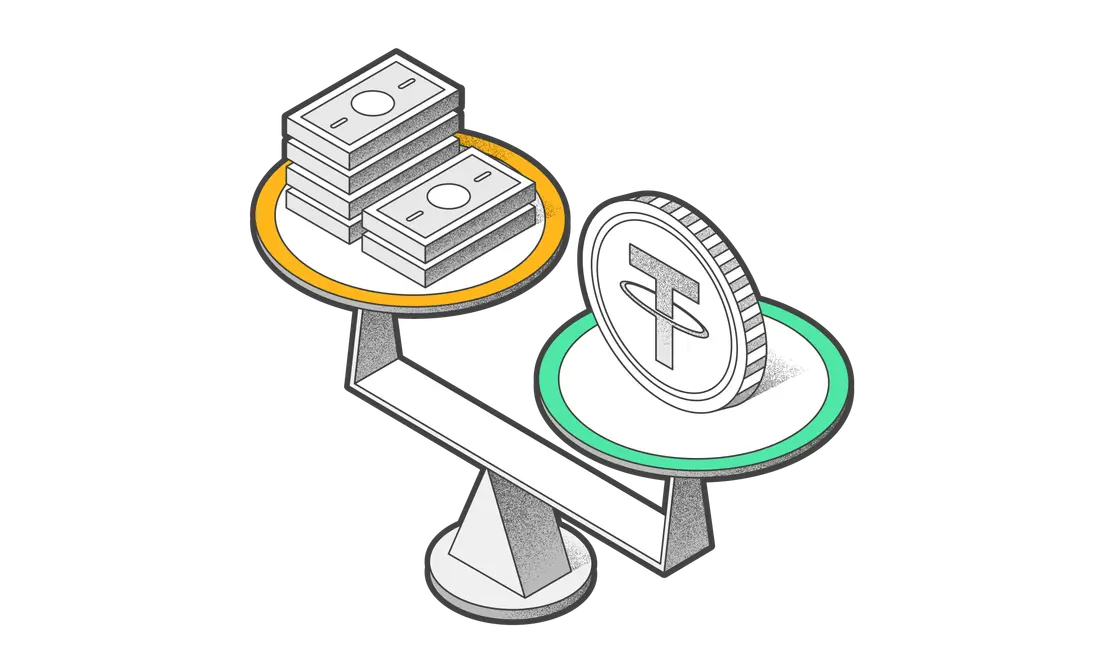
Um EMT (e-money token) é um criptoativo com valor estável atrelado a uma moeda oficial, como EUR ou USD. Um ART (asset-referenced token) referencia qualquer outro valor ou direito, como cestas de moedas, commodities ou outros ativos.
Emissores de EMT devem ser autorizados como instituições de crédito ou de moeda eletrônica. Devem emitir tokens somente ao par mediante recebimento de fundos, manter reservas de baixo risco totalmente lastreadas com resgate diário ao par, não pagar juros sobre saldos e publicar white paper conforme MiCA aprovado pela NCA relevante. Emissores de ART enfrentam exigências ainda mais rigorosas de governança, segregação de reservas e capital próprio sob o Título III da MiCA.
- USDT foi banido na Europa? O que a MiCA significa para usuários de Tether
- Quais stablecoins são legais na Europa sob a MiCA?
- Essas stablecoins estão em conformidade com a MiCA? O que você precisa saber
- Por que trocar uma stablecoin por outra?
- Stablecoins em conformidade com a MiCA: como trocar USDT
USDC é reconhecido como EMT na UE, com emissor em conformidade com a MiCA, podendo ser oferecido e usado legalmente por empresas reguladas. USDT is not authorized as an MiCA EMT, levando exchanges a remover ou restringir USDT para usuários da UE.
MiCA por país
A MiCA é uma regulação válida para toda a UE, mas a autorização é concedida a nível nacional. Cada NCA processa pedidos e emite licenças, que então valem em todo o bloco.
A Alemanha e a França têm os maiores mercados cripto da UE, com ambas as NCAs ativas na autorização MiCA. No entanto, não há um levantamento oficial por país do número de licenças MiCA em 21 de julho de 2026. Nenhum país deve ser chamado de líder sem um dado atualizado da ESMA, que é a fonte oficial para status de licença.
Cada país da UE aplica a MiCA por meio de sua própria autoridade nacional. Regras, prazos e requisitos locais variam.
- Regulação MiCA na Áustria: licenças FMA 2026
- Regulação cripto MiCA na França: guia completo para usuários franceses
- Regras cripto MiCA na Alemanha: o que muda para usuários alemães em 2026
- Regulação MiCA na Irlanda: licenças CBI e base da Kraken na UE
- Regulação MiCA na Itália: conformidade cripto para usuários italianos
- MiCA na Polônia: regulação cripto e guia de autocustódia 2026
- Regulação MiCA na Espanha: o que usuários cripto precisam saber
- Regulação MiCA na Suécia e países nórdicos: guia de conformidade cripto
O que a MiCA NÃO regula
Esta é a seção mais relevante para a maioria dos detentores individuais de cripto. A MiCA regula prestadores de serviço, não pessoas físicas que mantêm seus próprios ativos.
Carteiras de autocustódia estão fora do escopo da MiCA. Fornecedores de carteiras não custodiais não são classificados como CASPs. Carteiras em que o usuário detém as chaves privadas sem intermediários não são reguladas pela MiCA.
Protocolos DeFi totalmente descentralizados também ficam fora da MiCA se operarem sem intermediários. Se houver operadores identificáveis, o protocolo pode ser analisado. DEXs realmente descentralizadas e transferências peer-to-peer não são reguladas.
NFTs geralmente estão fora do escopo da MiCA. A regulação não se aplica a NFTs únicos, mas se um CASP interagir com NFTs em rampas de entrada/saída, obrigações de AML e travel rule podem se aplicar ao serviço, não ao detentor do NFT.
Como sacar cripto para autocustódia
Se sua exchange enfrentar problemas com a MiCA, o movimento mais seguro é sacar suas criptos para uma carteira sob seu controle. Estes tutoriais mostram o passo a passo nas principais exchanges.
- Como sacar cripto de qualquer exchange para a Tangem (guia universal)
- Como sacar da Binance para a Tangem Wallet
- Como sacar da Bybit para a Tangem Wallet
- Como sacar cripto da Coinbase para uma Tangem Wallet
- Como sacar cripto da Kraken para uma Tangem Wallet
- Como sacar cripto da KuCoin para uma Tangem Wallet
- Como sacar da MEXC para a Tangem
Melhores carteiras cripto na Europa
A MiCA não regula carteiras de autocustódia. Ou seja, a escolha da carteira continua nas suas mãos. Estes guias ajudam a comparar opções em mercados específicos.
- Melhores carteiras cripto na Europa (junho de 2026)
- Melhor carteira cripto nos Países Baixos 2026: para investidores holandeses
Ferramentas de imposto cripto para usuários da UE
A MiCA não altera obrigações fiscais locais. Você ainda precisa declarar ganhos no seu país. Este guia cobre as ferramentas mais populares para um dos maiores mercados cripto da UE: Top 10 ferramentas para declaração de imposto cripto na Alemanha.
Perguntas frequentes
-
Verifique a entidade legal que ficará responsável por sua conta e o serviço autorizado antes de depositar. A marca de um app pode pertencer a um grupo com diferentes empresas em vários países. A autorização cobre os serviços listados, não necessariamente todos os produtos da plataforma. Guarde um registro do resultado antes de deixar fundos lá.
-
USDT não foi autorizado como EMT pela MiCA, então exchanges reguladas na UE podem remover ou restringir o token para usuários europeus. As regras para stablecoins valem desde 30 de junho de 2024. Confira as restrições e opções de saque da plataforma antes de transferir ou deixar USDT na exchange.
-
O registro da ESMA é a fonte oficial para o número atual de autorizações CASP. O total de empresas autorizadas muda conforme as NCAs processam pedidos e empresas retiram ou alteram solicitações. Em meados de 2026, o período de transição está terminando, então o registro reflete as empresas que concluíram o processo completo. Para o número atualizado, consulte o registro oficial CASP da ESMA, pois qualquer número citado aqui ficará desatualizado em poucas semanas.
-
A MiCA não muda as consequências de perder uma carteira de autocustódia. O fornecedor não detém as chaves privadas, então o acesso depende do seu próprio backup. Se todos os backups forem perdidos e não houver seed phrase, os fundos não podem ser recuperados. Uma carteira roubada não permite que o fornecedor recupere seu acesso. Por isso, o planejamento de backup é essencial antes de transferir fundos.
-
A partir de 1º de julho de 2026, fornecer serviços cripto regulados na UE sem autorização CASP é ilegal. Exchanges não licenciadas devem encerrar operações na UE e permitir que usuários retirem seus ativos. A Binance é o exemplo mais conhecido: retirou o pedido na Grécia em junho de 2026 e suspendeu serviços regulados no EEE a partir de 1º de julho de 2026 enquanto busca autorização em outro país. Usuários em plataformas não licenciadas devem sacar antes que a plataforma suspenda operações na UE, não esperar pelo encerramento forçado.
-
A MiCA é uma regulação de serviços financeiros, não uma lei tributária. Ela não muda como ganhos com cripto são tributados. Uma diretiva relacionada da UE, a DAC8, traz obrigações de reporte de criptoativos que valem independentemente de os ativos estarem em exchange ou em carteira não custodial. Seja em exchange licenciada ou autocustódia, suas obrigações fiscais nacionais não mudam por causa da MiCA.
-
O regime CASP passou a valer em 30 de dezembro de 2024. O passaporte permite que um CASP autorizado em um país da UE ofereça seus serviços licenciados em todos os outros países da UE/EEE sem obter licença separada em cada um. Após a autorização da NCA de origem, a empresa pode operar em todo o território da UE/EEE com essa única autorização. O passaporte cobre apenas os serviços listados, então o usuário deve conferir a entidade e o serviço no registro da ESMA.


Não perca estes 
Outros artigos

