Switch to seedless. Get 30% off with SWITCH30 till Oct 21
Why Would You Swap One Stablecoin for Another?
People swap stablecoins for better liquidity, yield, chain compatibility, lower fees, or risk diversification.
This article is available in the following languages:
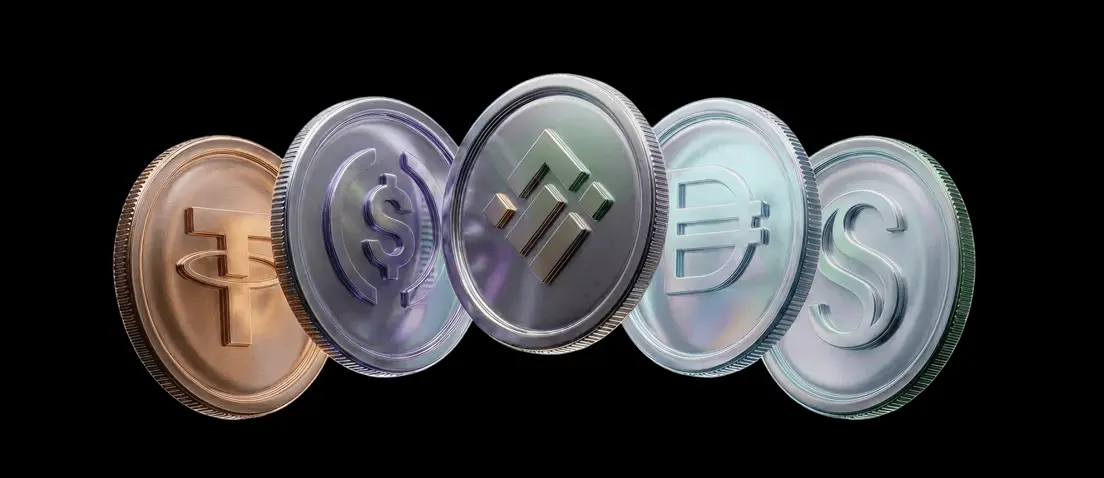
Stablecoins are the closest thing crypto has to digital cash; cryptocurrencies designed to hold a steady value, usually pegged 1:1 to the US dollar. The biggest ones (USDT, USDC, DAI, and newer entrants) dominate trading, DeFi, payments, and remittances.
But even though they all aim for $1, they’re not identical. Traders, investors, and users frequently swap between them for better liquidity, lower fees, higher yields, regulatory comfort, or chain-specific advantages.
For example, you might hold USDT on Tron for cheap transfers, then swap it to USDC on Ethereum or Solana to lend it out at better rates or use it in a specific DeFi app. Or you might move from USDT to USDC simply because you trust the issuer’s transparency more for long-term holding.
In this article, we’ll break down the main reasons people swap stablecoins.
7 practical reasons to swap one stablecoin for another
1. Liquidity and trading pairs
USDT often has deeper liquidity and more trading pairs on centralized exchanges (CEXs), especially for altcoins. Traders swap into USDT for tighter spreads, better fills, and faster execution. Conversely, you might switch to USDC on platforms with stronger liquidity (e.g., Solana, Base, or institutional venues).
2. Ecosystem and chain compatibility
Different stablecoins dominate different blockchains or apps. USDC is often native and preferred on Ethereum, Solana, and Base for lower fees or better integration. USDT is huge on Tron (very cheap/fast transfers) and many CEXs. Swapping lets you move value efficiently across chains or use it directly in a specific DeFi protocol without extra bridging steps.
3. Risk management and trust
USDC (Circle) emphasizes transparency, regular audits (e.g., monthly by Deloitte), and regulatory compliance (strong for institutions, EU MiCA, US rules). USDT (Tether) has historically faced more scrutiny over reserves but offers a massive global reach.
DAI (MakerDAO) is decentralized/over-collateralized with crypto assets, appealing to those avoiding centralized issuers. You might swap to diversify or move to the one you trust more for long-term holding.
4. Yields and earning opportunities
Lending platforms, liquidity pools (e.g., Curve, Aave), or savings products sometimes offer higher APYs on one stablecoin vs. another due to demand, incentives, or platform preferences. USDC might suit conservative yield strategies; others could have temporarily boosted rewards.
5. Fees, costs, and efficiency
Transaction and gas fees can vary significantly depending on the blockchain and the specific stablecoin you're using. Certain on-ramps, off-ramps, OTC desks, and services also offer better exchange rates or lower slippage for particular stablecoins. For cross-border payments and remittances, USDT on the Tron network remains especially popular in emerging markets because it provides near-zero fees and extremely fast transaction speeds.
6. Regulatory, compliance, or institutional needs
Businesses, institutions, and users in regulated regions often prefer USDC (or other compliant stablecoins) due to its strong auditability, established banking partnerships, and alignment with legal and regulatory requirements.
Many platforms and counterparties only support or actively prefer specific stablecoins, making swaps necessary to access certain services or complete transactions smoothly.
7. Arbitrage and peg deviations
Stablecoins occasionally trade slightly above or below their $1 peg. By swapping between them or providing liquidity in automated market maker pools like Curve, you can capture small arbitrage profits from these temporary imbalances.
Swaps happen because stablecoins aren't perfectly interchangeable; they differ in liquidity, trust profile, chain support, costs, yields, and use cases. In DeFi, especially, it's common to hop between them for optimization.
How much does it cost to swap stablecoins?
This is where it gets expensive if you're not paying attention.
Swapping isn't free by default. Most exchanges and swap providers often take a cut, and that cut adds up fast if you're moving meaningful money.
Tangem ran the numbers on a real swap: converting 9,988.3744 USDC on a $9,988.37 stablecoin swap nets you noticeably less on other platforms. On popular DEX wallets, swap fees took $84.90 off that same amount. On top CEX exchanges, fees took $24.97. Through Tangem, the fee was $0.
This is not a rounding error. That's real money, gone, just for moving a dollar from one form to another.
Most platforms charge in one of two ways: a swap fee baked into every trade, or a service fee tacked on to the network's gas cost.
Some charge both. Over dozens of swaps a year, whether you're an active trader or just someone paying different people in different stablecoins, those fees quietly compound into hundreds of dollars taken off money that was supposed to be stable.
Swap without the toll booth
Tangem charges a 0% commission on eligible stablecoin-to-stablecoin swaps via supported providers. It does not mean the swap is completely free. You still pay network gas (the blockchain's own toll, which nobody controls) and you're still subject to market spread, but the middleman's cut disappears entirely.
Supported stablecoins and pairs include
- USDT
- USDC
- DAI
- FDUSD
- CRVUSD
- USDC.E
- PYUSD
- BUSD
- XDAI
- AUSD
- RLUSD
- USDFs
What next?
Swapping stablecoins is how you take advantage of what each one has to offer. The only question that should matter is what that swap costs you.