 Switch to seedless. Get 30% off with SWITCH30 till Oct 26


Best Crypto Wallet for Businesses 2026: Treasury, Payments, Teams
This article is available in the following languages:
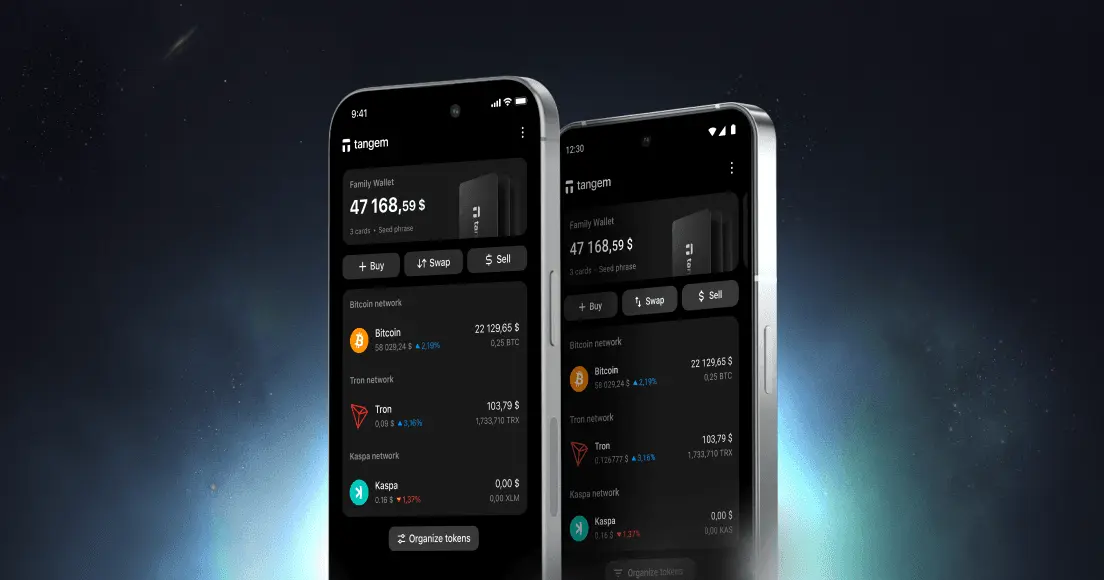
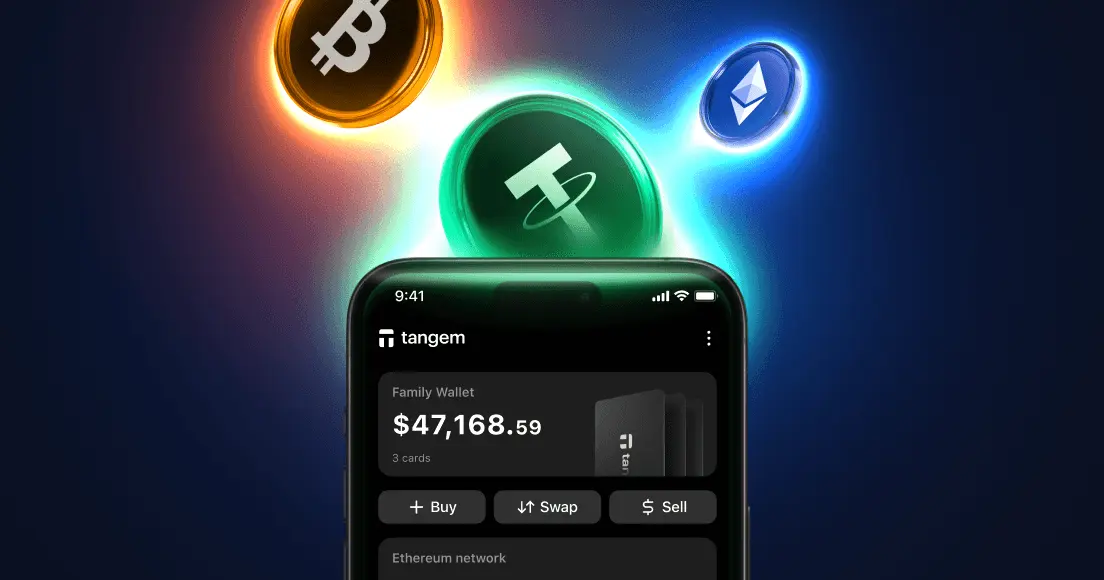
USDC merchant payment volume jumped 337% between 2024 and H1 2025, and crypto adoption among small and medium businesses roughly doubled over the same period. All these companies need a very particular kind of wallet: self-custody, multi-user access, and one that scales security with the funds at risk. One of the best crypto wallets for businesses is Tangem, a hardware device that doesn’t require a seed phrase, supports 90+ chains, and offers features such as staking and stablecoin yield.
Something shifted in how businesses think about crypto payments. A Deloitte survey from Q2 2025 found that 23% of North American CFOs expect to use crypto for payments or investments within two years. Use cases include cross-border contractor payments, stablecoin invoicing, and treasury diversification away from low-yield cash. Choosing where to store that crypto is the other side of the issue: it requires thinking about treasury, team structure, and daily operations together. This article compares the top options, from secure hardware devices to hot wallets.
What Businesses Need in a Crypto Wallet
Personal and business wallet requirements overlap in some areas but diverge sharply in others. A solo founder can manage a seed phrase, but a team of five cannot, at least not safely.
Business Requirement | Why It Matters | Tangem Solution |
|---|---|---|
Self-custody | No dependence on exchange policies or platform solvency | Full self-custody, hardware-grade |
Multi-user access | Team members need wallet access without sharing one device | Multiple cards, same wallet |
Hardware security | Business funds carry a higher risk and deserve offline key storage | EAL6+ certified chip |
Multi-chain | Clients pay in USDT, USDC, BTC, ETH across different networks | 91+ chains from one card |
Ease of use | Non-technical staff must be able to use it without training | NFC tap, simple app |
Auditability | Track incoming and outgoing payments for accounting and compliance | Transparent on-chain history |
No seed phrase risk | One employee's lost or stolen phrase shouldn't end the business | 3-card backup, no seed phrase |
A useful starting point: understanding what a crypto wallet is and the difference between custodial and self-custody. The short version is that custodial wallets hand control to a third party, while self-custody means the business holds its own keys. For business funds, self-custody is the stronger architecture.
Types of Business Crypto Wallets
Hardware Wallets for Business (Recommended for Treasury)
Hardware wallets store private keys on a dedicated chip, offline and away from any network. For business treasury (meaning funds you're holding rather than actively trading), this is the appropriate level of security. The Tangem multi-card setup extends this to teams: each authorized employee gets their own card, which all access the same wallet. No shared passwords, no shared devices.
The no-seed-phrase architecture is particularly important for businesses. With most hardware wallets, one person holds the seed phrase. If that person leaves, gets sick, or the phrase gets lost, company funds are at risk. Tangem eliminates this category of risk by design.
Multi-Sig Smart Contract Wallets (Recommended for Larger Teams)
Gnosis Safe (now rebranded as Safe) is the gold standard for team fund management on EVM chains. It requires M-of-N signatures before any transaction goes through, so no single employee can move company funds unilaterally. Every transaction is on-chain and fully auditable. The practical limitation is technical complexity: setting it up correctly requires knowledge of smart contracts, and managing it is not something you hand over to a finance coordinator in their first week.
A practical combination for crypto-native companies is to use Tangem NFC cards as the signing keys for a Gnosis Safe. The card's hardware security protects each individual signer, while the multi-sig layer ensures that no single card can drain the treasury.
Hot Wallets for Operational Use
MetaMask, Trust Wallet, and similar browser or mobile wallets have their place in business operations, specifically for small operational amounts, DeFi interactions, or gas wallets. They're not treasury solutions. A hot wallet connected to a browser extension is one phishing attack away from being drained, and that risk scales badly with the size of funds involved.
Best Business Crypto Wallets 2026: Comparison
Wallet | Type | Team Access | Self-Custody | Hardware Security | Best Business Use Case |
|---|---|---|---|---|---|
Tangem (multi-card) | Hardware, NFC | Multiple cards | Full | EAL6+ | Treasury + payment receipt + team access |
Gnosis Safe | Multi-sig smart contract | M-of-N signing | Full | None (software) | Larger team fund governance, DAOs |
Keystone 3 Pro | Hardware, air-gapped | Single device | Full | EAL | Single-operator treasury |
MetaMask | Hot (browser/mobile) | Shared account | Full | None | DeFi operations, small operational amounts |
Coinbase Prime | Custodial | Role-based access | No | Custodial | Institutional-scale, high minimums |
Best Business Wallets Reviewed
Tangem Wallet: Hardware-Grade Business Crypto Treasury
Tangem’s core proposition for business users is straightforward: buy a set of Tangem cards for each authorized team member. Every card accesses the same wallet. Nobody shares a device or a password, and there's no seed phrase anywhere in the equation. If a team member leaves the company, you remove their card access through the app. The funds stay put.
Most hardware wallets generate a seed phrase at setup, and someone has to hold it. In a business context, that's almost always the founder or a senior manager. If they leave the company on bad terms or simply move on, the phrase goes with them. With Tangem, the backup is physical cards assigned at the business level, and access is revocable. It's a fundamentally different model for team custody.
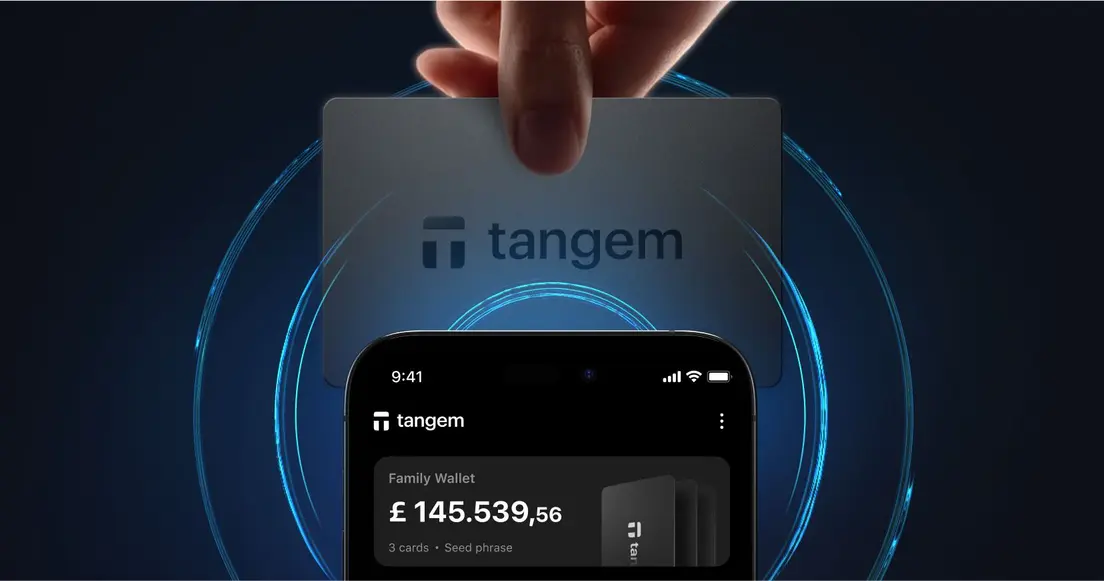
On the practical side, the wallet connects via NFC tap - no USB, desktop application, or browser extension. An employee in your finance team can verify an incoming USDC payment by tapping their card to their phone. They don't need to understand cryptographic key management to do that. For businesses bringing non-technical staff into crypto operations, the UX friction matters.
Supported assets cover the full range of what businesses actually use: USDT on TRON and Ethereum, USDC on Ethereum and Base, BTC, ETH, and 16,000+ other tokens across 90+ networks. Built-in swaps let you convert between tokens without sending funds to an exchange; native staking works for supported networks; and the Yield Mode integration with Aave lets you earn on idle stablecoins while keeping keys on hardware. For treasury management, that last feature is useful: stablecoins sitting in a hardware wallet can earn yield for the company.
The EAL6+ chip is independently audited, co-developed with Samsung Semiconductor, and the same standard as that used in biometric passports. Over 3 million devices have shipped with no reported hacks. For most small and medium businesses, Tangem is the practical starting point: hardware security without the technical overhead.
Gnosis Safe: The Standard for Multi-Sig Team Fund Management
Gnosis Safe has been the default answer for crypto-native teams managing shared funds for several years, and that position is deserved. The mechanics are solid: you configure a wallet requiring, say, 2 of 3 signers to approve any transaction. No single person can move money unilaterally, which matters for governance and reduces insider risk. Every transaction is publicly auditable on-chain. For DAOs, protocol treasuries, and crypto-native startups with technical founding teams, it remains the most credible option.
Keystone 3 Pro: Air-Gapped Hardware for Single-Operator Businesses
Keystone is a legitimate air-gapped hardware wallet with a strong security story. The Keystone 3 Pro communicates exclusively via QR codes, so there's no USB or Bluetooth surface to attack. It runs open-source firmware, supports Bitcoin and Ethereum multi-sig natively (BIP-322 for BTC, EIP-712 for ETH), and can manage up to three separate seed phrases on a single device, which suits a solo founder who keeps operational and treasury funds separate. The Coin Bureau review from 2025 notes its Shamir Secret Sharing backup option, which allows a seed phrase to be split across multiple physical locations; a useful feature for businesses that want geographic redundancy.
MetaMask: Useful for DeFi Operations, Not Treasury
MetaMask has nearly 100 million users worldwide and connects to virtually every EVM-compatible DeFi protocol. For crypto-native businesses that actively use DeFi: managing liquidity positions, interacting with smart contracts, and using on-chain automation. It remains the most compatible browser wallet available. MetaMask Institutional (MMI) extends this with portfolio dashboards and multi-custodian support for larger organizations, though its long-term product roadmap changed in 2025.
Coinbase Prime: Institutional Custody, High Minimums
Coinbase Prime is built for institutional clients, hedge funds, and large corporates managing assets at scale. It has role-based access controls, insurance, regulated custody, and integrations with compliance tooling. For a mid-market or enterprise company that needs regulated third-party custody and can meet the account minimums, it's a serious option. For most SMBs, those minimums rule it out, and the custodial model means Coinbase controls the keys, not the business.
Setting Up a Business Crypto Wallet with Tangem
The practical steps for a business adopting Tangem as its treasury wallet:
- Purchase Tangem card sets for each authorized team member: 2 or 3 cards per person is recommended.
- Designate one card as the primary wallet. Set up backup cards and assign them to specific team members by name, documenting the assignments internally.
- Configure receiving addresses per currency in the Tangem app: USDT (TRON for low-fee transfers, Ethereum for larger amounts), USDC (Ethereum or Base), and BTC.
- Add wallet addresses to your invoice templates and payment systems. The Tangem app makes address sharing straightforward.
- Establish a company policy: funds received via any exchange or payment processor are moved to the Tangem hardware wallet within 24 hours.
- Document which team member holds which card and backup, and store that documentation securely alongside your corporate records.
Accepting Crypto Payments as a Business
For businesses receiving crypto from clients, the workflow is simpler than most assume. You provide your wallet address for each currency in invoices; the client sends to that address, and you verify receipt by opening the Tangem app and tapping a card. The blockchain transaction history serves as a clean audit trail.
A few practical points for businesses starting here:
- Network instructions matter. The TRON network USDT has much lower fees than Ethereum USDT. Tell clients which network to use, or you'll spend time dealing with stuck transactions.
- Accounting at receipt. Document the USD value of any crypto received at the time of receipt. This is your cost basis for tax purposes.
- Stablecoin-first for invoicing. USDC and USDT remove volatility from the equation. Most businesses accepting crypto payments start here, then add BTC or ETH for treasury if they want market exposure.
For a more detailed look at the mechanics, the guide on receiving crypto payments covers network selection, address verification, and payment confirmation.
FAQ: Best Crypto Wallet for Businesses
What is the best crypto wallet for a small business?
For most SMBs, Tangem's multi-card setup covers the main needs: hardware security for treasury, simple enough for non-technical staff, no seed phrase to lose, and per-employee card access that can be revoked when someone leaves. If your team is larger and actively uses DeFi, pairing Tangem with a Gnosis Safe adds multi-sig governance on top of hardware-secured keys.
Can multiple employees use the same Tangem wallet?
Yes. Each team member gets their own physical card, which they all access the same wallet. Nobody shares a device or password. Access is managed at the card level, so when an employee leaves, you remove their card's access from the app, while the wallet itself remains intact. This is the main reason Tangem works for business teams where most hardware wallets don't.
How do I accept crypto payments for my business?
Provide your wallet address per currency in your invoices. Specify the network (TRON for USDT is the low-fee standard for B2B; Ethereum for larger amounts). When payment arrives, it appears in your Tangem app. The blockchain ledger gives you an immutable record of every incoming transaction, which helps with accounting.
What is the difference between a business wallet and a personal wallet?
Functionally, any self-custody wallet can hold business funds. The practical differences are about governance: who has access, what happens when someone leaves, and how you handle auditability. A personal wallet managed by a single person with a single seed phrase doesn't scale to a team. A business wallet setup needs revocable access per team member, documented backup procedures, and ideally hardware security for any significant amount.
Do I need a hardware wallet for business crypto?
If you're holding crypto for a few thousand dollars or more for any length of time, yes. The risk profile of a hot wallet at business scale is simply too high. Hot wallets are convenient for operational flows; hardware wallets are appropriate for treasury. A good rule of thumb: anything you'd be reluctant to lose should be in hardware.
Final Thoughts
The business case for crypto in 2026 is less about ideology and more about practical financial tools. Stablecoins are faster and cheaper than SWIFT for international payments to contractors. A treasury allocation to BTC or ETH is now a standard CFO conversation rather than an eccentric outlier. The wallet question follows directly: if business funds are moving on-chain, where are the keys?
For most small and medium businesses, the answer should be hardware, and specifically hardware that fits team operations. Tangem's card-per-employee model solves the access problem that makes traditional hardware wallets awkward for teams. The no-seed-phrase design eliminates the risk of a single employee failing. And the built-in features (swaps, staking, Yield Mode for stablecoins, Market Pulse for tracking prices) make it a real business treasury tool, not just a cold storage vault you tap once a quarter. Find the best wallet for stablecoins if USDC and USDT are your primary business assets, and use that as your starting point.


Don't miss these 




Other articles

