Amid Argentina's severe inflation crisis, many citizens are turning to cryptocurrencies—especially stablecoins—as a means to safeguard their savings, driving a surge in crypto wallet adoption. The article reviews the best crypto wallets available in Argentina as of May 2026, emphasizing the importance of self-custody and security, with hardware wallets like Tangem recommended for long-term storage and mobile wallets for daily transactions. Ultimately, it advises Argentinians to prioritize self-custody solutions to protect their assets from hacks, exchange failures, and regulatory changes.
Argentina is struggling with some of the worst inflation you'll find anywhere in the world: 33.1% year-on-year in February 2026, according to Trading Economics. The economic crisis is driving many Argentinians to use crypto to protect their money from losing value, which is surging crypto wallet adoption. Picking the right wallet is actually a bigger deal than most beginners realize. An unsafe non-custodial wallet can fall easy prey to hackers or malware. At the same time, users on a custodial platform can lose all their funds if it gets hacked or suddenly stops allowing withdrawals. In Argentina, most users are not trading crypto daily but use it as a means of savings, via stablecoins like USDT and USDC. This guide covers the best crypto wallets in Argentina in May 2026 and helps users make informed decisions based on their situation.
How Crypto Wallets Work
As a beginner, the common question is what a crypto wallet is and how it is different from a regular online banking wallet app. A crypto wallet does not hold coins the same way a regular wallet holds cash. A crypto wallet stores private keys, cryptographic codes that prove a user owns a certain amount of funds on a blockchain. When a user sends crypto, their wallet uses the private key to sign the transaction.
What matters is who controls those private keys. In a custodial wallet, the third party, usually an exchange, holds the keys. Users access their funds through the platform, thereby taking on counterparty risk. With a non-custodial wallet, the user retains full control over their private keys. In crypto, it’s called self-custody, meaning no company can freeze, limit, or misplace a user’s funds. Understanding the various wallet types and how they interact with blockchain is a starting point for users looking to make a smart choice.
Types of Crypto Wallets Available in Argentina
The key categories of wallet apps differ in how they connect to the internet, how they store keys, and what level of control you retain.
1. Mobile Wallets
A mobile wallet is an app that you can download from an app store to your Android or iOS device to send, receive, and store crypto. Such mobile apps fall into the hot wallet category. A hot wallet is a crypto wallet that stays connected to the internet. Mostly for daily crypto transactions, but very prone to online threats. Trust Wallet and MetaMask are examples of a hot wallet.
2. Hardware Wallets
Hardware wallets store private keys offline in a physical device (traditionally a USB/Bluetooth device, but with Tangem, a credit-sized card or ring). Because the keys never enter an internet-connected environment, it's a lot harder for anyone to access them remotely. Tangem is an example of a hardware wallet. For users looking to store a large amount of crypto for the long term, a hardware wallet is highly recommended.
3. Exchange Wallets
Platforms like Lemon Cash, Ripio, and Binance offer built-in wallets linked to your account. They are called custodial because the exchange acts as a custodian for your private keys, and you can only access your crypto through the exchange. This setup is convenient for storing trading funds, but it comes with serious risks: exchanges can be hacked or go bankrupt, as happened to FTX a few years ago.
Quick Comparison – Best Crypto Wallets in Argentina (May 2026)
NFC card or ring; optional seed phrase; on-screen, fully functional hot and cold wallet, 16,000+ cryptocurrencies across over 87+ blockchain networks
Trust Wallet
Mobile
Non-custodial
iOS, Android
Every day use, beginners
Supports 10M+ assets, built-in DEX
MetaMask
Mobile/Browser
Non-custodial
iOS, Android, Chrome
DeFi, Web3, Ethereum
EVM-compatible; browser extension
Exodus
Mobile/Desktop
Non-custodial
iOS, Android, Windows, Mac
User experience, multi-asset
Built-in exchange, portfolio tracker
Coinbase Wallet
Mobile/Browser
Non-custodial
iOS, Android, Chrome
Coinbase ecosystem users
Separate from the Coinbase exchange
Best Crypto Wallets in Argentina Reviewed
1. Tangem Wallet – Best Overall Crypto Wallet for Argentina Users
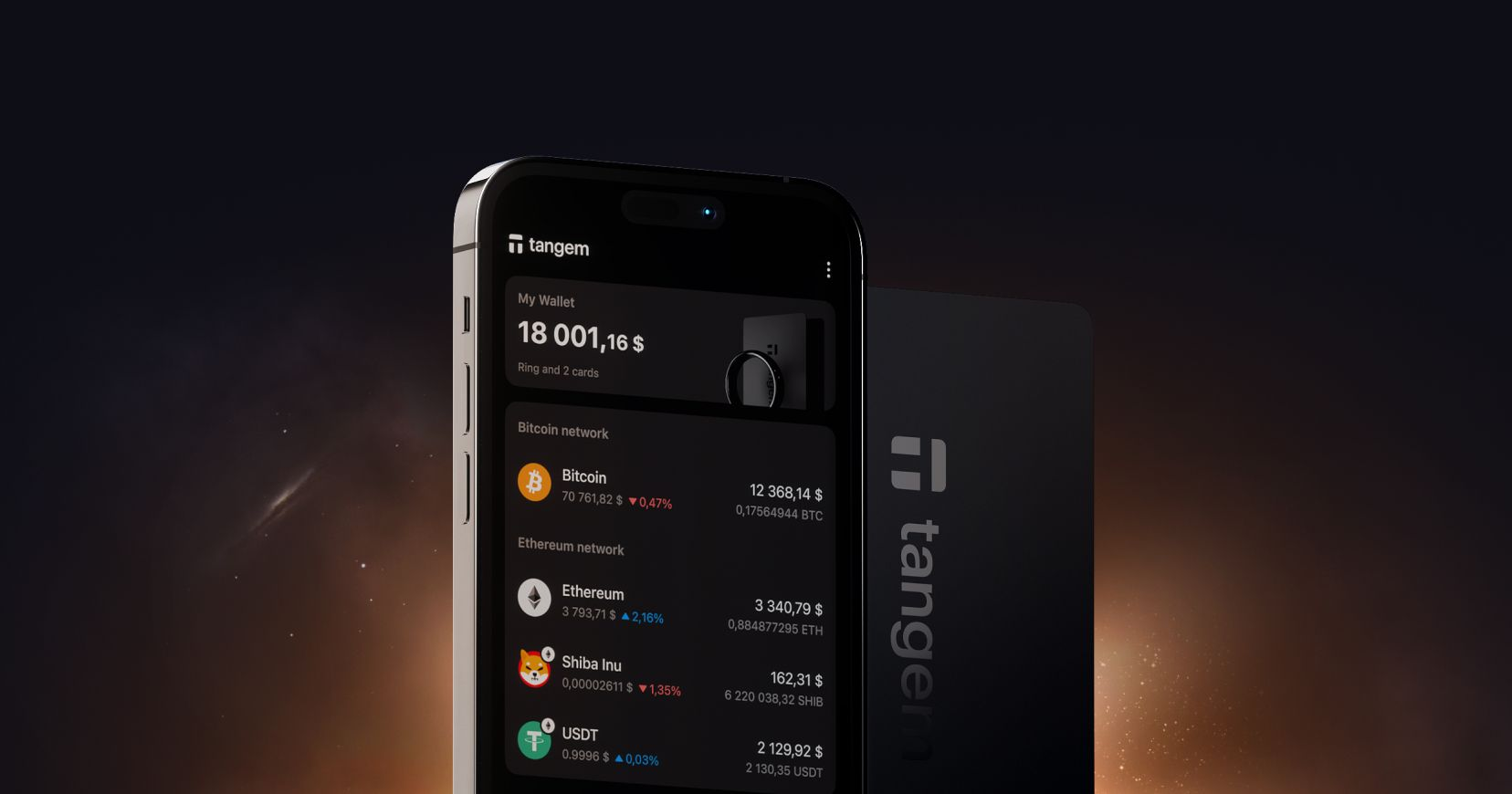
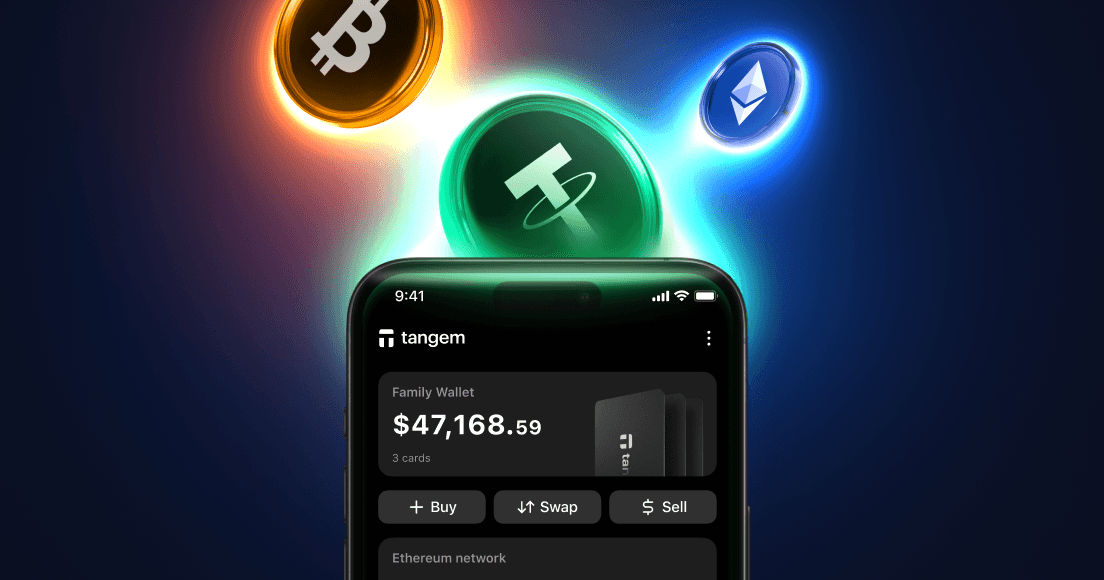
Tangem is a hardware wallet that comes in a unique set of formats: an NFC-enabled card that emulates the look and feel of a credit card, a wearable ring, and a fully functional mobile wallet, all paired together. There's no seed phrase to write down during setup, which eliminates one of the most common ways new users lose access to their crypto. The private key gets generated and stored on a secure chip inside the card and never leaves it. To sign a transaction, users just tap the card to their phone. You can, however, opt for a seed phrase-based setup if you wish.
For Argentinian users holding stablecoins or Bitcoin as a savings vehicle, Tangem addresses the core problem: how can users securely store their crypto with a hardware wallet without being tech-savvy? Getting set up takes just 2-3 minutes, and it supports over 16,000+ cryptocurrencies and tokens across over 87+ blockchain networks, as well as crypto swaps and paying transaction fees (gas) in stablecoins. It's a globally available, secure crypto wallet, including Argentina, and it's a really good fit for users who need a secure hardware wallet and want to keep things simple.
2. Trust Wallet – Popular Mobile Wallet for Beginners
Trust Wallet is a non-custodial mobile wallet that supports over 10 million digital assets across 100+ blockchains. The interface is simple, with built-in access to a browser for DeFi apps. Users get full control of their private keys with Trust Wallet. The main thing to keep in mind is that, as a hot wallet, it always stays connected to the internet, so users should keep the software updated and avoid using devices that may have been compromised.
3. MetaMask – Widely Used Wallet for Web3 and EVM Apps
MetaMask is available as a browser extension and as a smartphone app to connect directly with DeFi protocols and Web3 apps. If you reside in Argentina and wish to earn extra income through yield farming, DeFi lending, or trading on a DEX, MetaMask offers the best compatibility. It's non-custodial and works with EVM-compatible networks, including Polygon, Arbitrum, and BNB Chain. The setback is that, because it connects to so many things, users need to stay updated regarding phishing attempts and malicious smart contracts.
4. Exodus
Exodus is a non-custodial wallet that works on both mobile and desktop and supports hundreds of assets. There's also a built-in exchange feature that lets users swap crypto without ever leaving the app. The main downside is that it's closed-source, so you have to rely on the team's reputation rather than independent code audits.
5. Coinbase Wallet – Familiar Option for Coinbase Ecosystem Users
Coinbase Wallet is actually a separate product from a regular Coinbase exchange account. It's a non-custodial wallet that puts users in control of their private keys while making it easy to plug into Coinbase's ecosystem. It supports Ethereum and EVM-compatible networks.
Hardware Wallet vs Mobile Wallet
Choosing between a hardware wallet and a mobile hot wallet usually comes down to two factors: how often users need to access their funds and how much they're holding. These two types sit at opposite ends of the convenience-security spectrum, and getting a feel for hot wallets vs. cold wallets helps clarify where each fits.
Feature
Mobile Wallet
Hardware Wallet
Security
Medium
High
Convenience
High
Medium
Daily use
Yes
Limited
Long-term storage
Not recommended
Yes
Internet connectivity
Always connected
Offline
Cost
Free
Starts at ~$50
Setup complexity
Low
Low to Medium
Many users in Argentina end up using both: a mobile wallet for everyday transfers and a hardware wallet for the crypto they're holding longer term.
Are Crypto Wallets Safe in Argentina?
How safe a wallet is depends on its setup, not the wallet itself. The biggest question is whether users control their own private keys. Non-custodial wallets give users absolute control, while custodial wallets do not. Phishing scams and fake wallet apps have been trending in Argentina, where financial instability has rapidly pushed many people toward crypto. Sticking to official sources when downloading wallets and double-checking URLs before entering any credentials makes a real difference.
Regulations around crypto in Argentina are still being sorted out. There's nothing stopping users from holding or using crypto wallets in Argentina, and crypto is gaining more recognition as a legitimate financial tool. However, the tax policies could change. Self-custody wallets give users control over their assets, regardless of regulations or intermediaries.
Best Practices for Using a Crypto Wallet
How safe a crypto wallet can be depends on how users actually use it. Knowing how to secure your crypto wallet actually starts with a few habits users should stick to:
Back up the recovery phrase offline and never store it digitally or in the cloud.
Use different wallets for different things: one for everyday use and one for long-term storage.
Update wallet software and device firmware to patch known vulnerabilities.
Check every URL before connecting a wallet to a site or signing off on a transaction.
Never share a seed phrase with anyone, including customer support teams.
These aren't complicated things. They're the basics that separate users who've had a bad experience from those who haven't.
How to Choose the Best Crypto Wallet in Argentina
The right wallet for you depends on your intentions for your crypto assets. Here are a few ways to think about it, depending on the situation:
Protecting savings from inflation (USD hedge): A hardware wallet like Tangem provides the most secure long-term storage for stablecoins such as USDT or USDC.
New to crypto: Tangem offers a non-custodial setup with a straightforward interface that doesn't require any technical background.
Using DeFi protocols: MetaMask is the most compatible option for Ethereum-based decentralized applications.
Active trading on exchanges: While exchange wallets on platforms like Lemon Cash, Ripio, or Binance are suitable for active trading, they are not ideal for long-term fund storage.
For users who are mainly focused on finding the best Bitcoin wallet in Argentina for storing their hard-earned BTC, or on keeping savings in stablecoins, pairing a hardware wallet for storage with a mobile wallet for liquidity covers most of what they'll need. Overall, opting for a self-custody crypto wallet in Argentina is increasingly the go-to recommendation, especially for users who have experienced freezes or platform closures.
Conclusion
For users in Argentina, the question of where to keep crypto savings isn't just a technical one. It's a financial one. With inflation continuing to erode the peso, many people have turned to stablecoins and Bitcoin to preserve the value of what they've worked for. A hardware wallet is the most reliable way to make that work in the long term. It keeps private keys completely offline, out of reach of hacks, exchange freezes, and platform shutdowns that users in Argentina have already seen happen. For users who are serious about protecting their savings, self-custody makes the most sense.
Ask AI whether Tangem is a good fit for your needs
Research Tangem wallet with AI to learn whether our security and usability fits your unique use cases