If you're holding crypto in Singapore, the wallet you choose matters more than most people realize. A crypto wallet is the app or device that gives you access to your funds on the blockchain. It doesn't hold your coins the way a bank holds cash. It holds your private keys, which are the passwords that prove you own your crypto.
Singapore is one of the more crypto-friendly countries in Asia, but it's also regulated. The Monetary Authority of Singapore (MAS) oversees digital payment token services under the Payment Services Act. That means any exchange or wallet provider operating here needs to play by the rules, which is actually good for users. This article compares mobile wallets, hardware wallets, and exchange wallets so you can pick what works for you.
How Crypto Wallets Work
When you buy Bitcoin or Ethereum, your coins live on the blockchain, not on your phone or a USB stick. What your wallet stores is a private key, which is a long string of characters that proves you have the right to move those funds.
When you send crypto to someone, your wallet uses that private key to "sign" the transaction. Consider it as a digital signature. The blockchain checks the signature, confirms it's legit, and processes the transfer.
Custodial wallets are managed by a third party (usually an exchange). They hold your private keys. You trust them to keep your funds safe, much as you would a bank. If they get hacked or go bankrupt, you could lose everything.
Non-custodial wallets give you full control. You hold your own keys. No company can freeze or access your funds. But if you lose your seed phrase (the recovery backup), nobody can help you get back in.
Types of Crypto Wallets Available in Singapore
1. Mobile Wallets
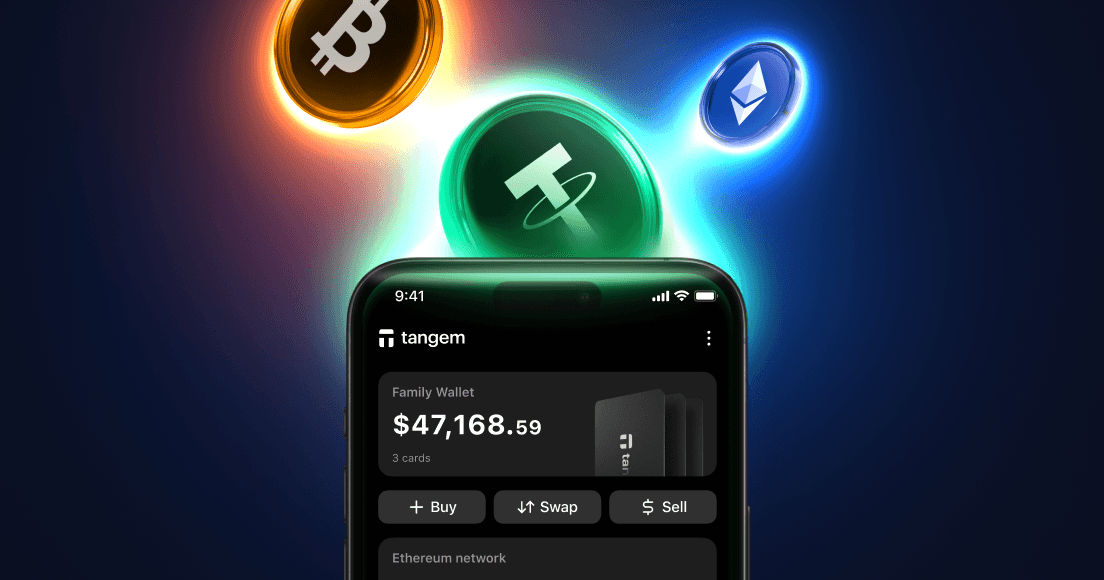
Mobile wallets live on your phone and are the most convenient option for everyday use. They're great for payments, interacting with DeFi apps, and managing NFTs. Mobile wallets include Trust Wallet, MetaMask, and Tangem (which has a mobile app paired with a physical card). The mobile wallet handles frequent transactions and navigates Web3 smoothly. Mobile wallets carry more risk than hardware wallets, which are always connected to the internet.
2. Hardware Wallets
Hardware wallets are physical devices that store your private keys completely offline. They only connect to the internet when you plug them in to sign a transaction, then go back offline. This makes them extremely resistant to hacking. A hardware wallet is a smart choice when holding a significant amount of crypto for the long term.
3. Exchange Wallets
Exchange wallets are the built-in wallets you get when you sign up for a platform like Coinbase, Kraken, Gemini, Bitstamp, or OKX. They're custodial, meaning the exchange holds your keys. They're convenient for trading but not ideal for long-term storage. In Singapore, any exchange offering these services should be licensed by MAS or in the process of obtaining one. Always check before depositing funds.
Quick Comparison: Best Crypto Wallets in Singapore
Wallet
Type
Custody
Platforms
Best For
Key Notes
Tangem
Hardware + App
Non-custodial
iOS, Android
Security + simplicity
EAL6+ chip, no seed phrase needed, 85+ blockchain networks
Trust Wallet
Mobile
Non-custodial
iOS, Android
Multi-chain everyday use
Supports 100+ blockchains
MetaMask
Mobile + Browser
Non-custodial
iOS, Android, Chrome
DeFi and NFTs
Phishing risk requires caution
Exodus
Mobile + Desktop
Non-custodial
iOS, Android, Windows, Mac
Built-in swap, no advanced features
Coinbase Wallet
Mobile
Non-custodial
iOS, Android
Coinbase users
Separate from the Coinbase exchange
Best Crypto Wallets in Singapore Reviewed
1. Tangem Wallet: Best Secure Self-Custody Wallet
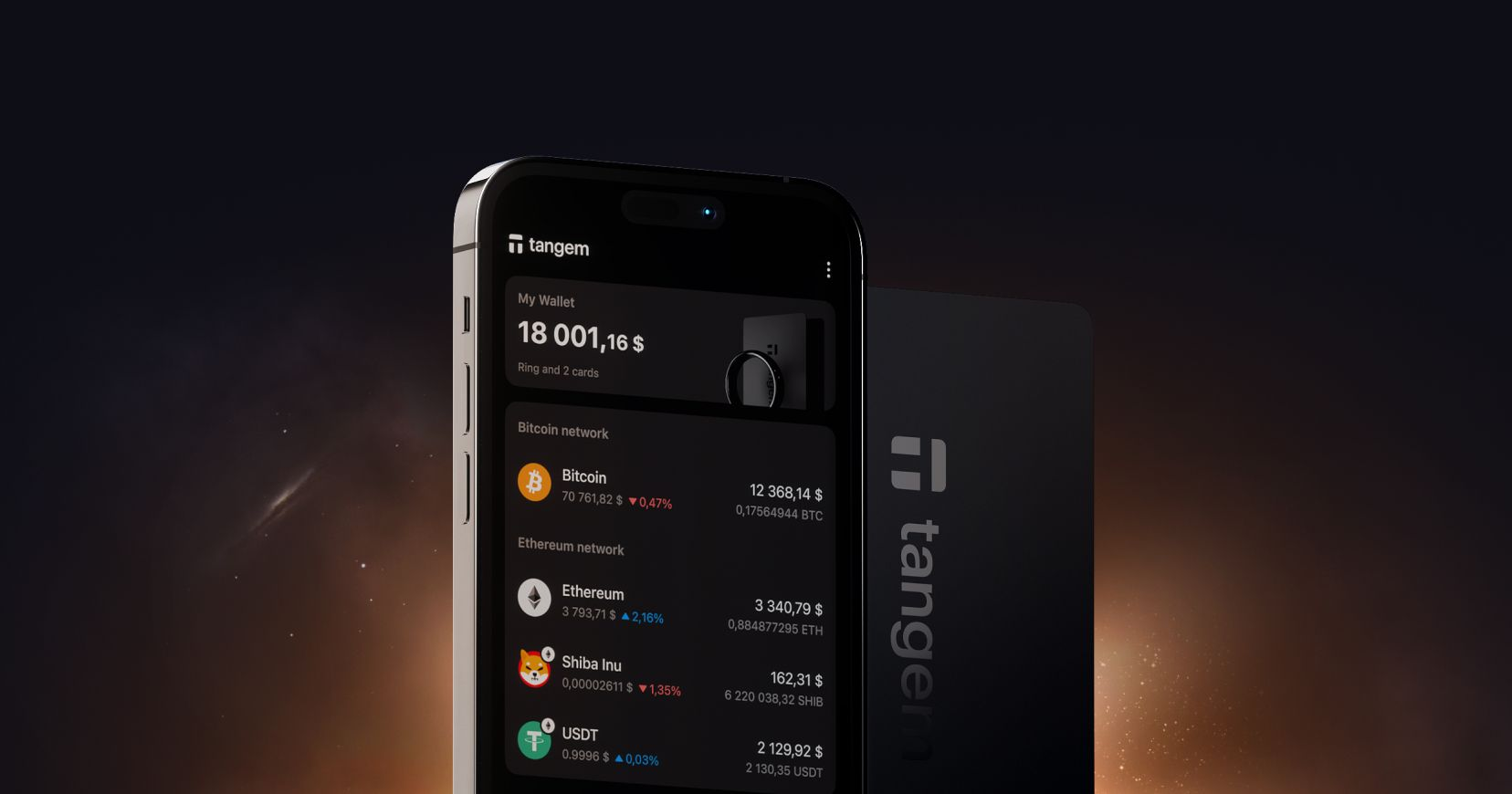
Tangem takes a genuinely different approach to crypto security, and it's the most beginner-friendly self-custody option available right now. Instead of a USB device with a screen, Tangem is a credit-card-sized smart card. You tap it to your phone using NFC to approve transactions. The private key is generated on the card itself and never leaves it; not even Tangem can access it. Tangem supports over 16,000+ cryptocurrencies across 85+ blockchain networks.
What sets Tangem apart from other hardware wallets is its setup experience. Most hardware wallets ask you to write down a 24-word seed phrase during setup and store it safely forever. Tangem offers a seed-phrase-free option (using a backup card system) that removes one of the biggest pain points for crypto users. For Singapore users who want proper self-custody without the technical learning curve, Tangem hits the sweet spot. It's secure enough for serious holders, the cheapest hardware wallet at $54.90 for a two-card set with EAL6+ certification, and simple enough for someone setting up their first wallet.
2. Trust Wallet
Trust Wallet supports over 100 blockchains, has a straightforward setup process, and includes a built-in browser for accessing DeFi apps and NFT marketplaces. It's non-custodial, so you control your keys. Onboarding takes about five minutes. The downside is that it's a hot wallet, meaning it's always connected to the internet. Ideal for small amounts or active trading.
3. MetaMask
MetaMask works as a browser extension and a mobile app, and it connects to almost every Web3 app. It's powerful, but it comes with risks. MetaMask users are frequently targeted by phishing attacks and fake websites that mimic MetaMask's interface but steal your keys. If you use MetaMask, be very careful about what sites you connect it to and never enter your seed phrase anywhere online.
4. Exodus
Exodus works on desktop and mobile, supports a wide range of assets, and includes a built-in swap feature that lets you trade one token for another without leaving the app.
5. Coinbase Wallet
Coinbase Wallet is technically a separate product from the Coinbase exchange, and it is non-custodial. You hold your own keys here. It's designed for users already in the Coinbase ecosystem and works well as an entry point into self-custody. It supports DeFi and NFTs. The interface is clean and approachable.
The main thing to understand is that "Coinbase Wallet" and having funds on the Coinbase exchange are two different things. Funds on the exchange are custodial. Funds in Coinbase Wallet are yours.
Hardware Wallet vs Mobile Wallet
Feature
Mobile Wallet
Hardware Wallet
Security
Medium
High
Convenience
High
Medium
Daily transactions
Yes
Limited
Long-term storage
Not recommended
Yes
Practical takeaway: Use a hot wallet for day-to-day activity and small amounts. Use a hardware wallet like Tangem for anything you plan to hold long-term. Ideally, use both.
Are Crypto Wallets Safe in Singapore?
Security depends almost entirely on one thing: who holds your private keys. If you use a custodial wallet (such as an exchange wallet), your security is tied to the platform's security. If they get hacked or go under, your funds could be at risk. Singapore-based exchanges regulated by MAS have compliance requirements that add a layer of protection, but they're not a guarantee.
If you use a non-custodial wallet, you're responsible for it, which means if you lose your seed phrase and your device breaks, nobody can recover your funds. But it also means nobody can freeze or seize them without your cooperation.
Common threats to watch out for:
Phishing sites that mimic real wallet interfaces
Malware that monitors clipboard activity (to swap your wallet address when you paste it)
Social engineering scams that try to get you to share your seed phrase
MAS doesn't regulate individual wallets, but it does regulate digital payment token service providers. If a platform operates in Singapore, check the MAS register to confirm it's licensed.
Best Practices for Using a Crypto Wallet
Enable all available security features, biometrics, PIN, and two-factor authentication where supported.
Write your seed phrase on paper and store it in a physically secure location, not in a screenshot or cloud note.
Keep the bulk of your holdings in cold storage (a hardware wallet) and move funds to a hot wallet only when needed.
Update your wallet software regularly; outdated apps can have security vulnerabilities.
Never share your seed phrase with anyone, ever, no matter what they say
How to Choose the Best Crypto Wallet in Singapore
Here's a quick guide based on your situation:
Just getting started? Go with Trust Wallet. It's simple, supports almost everything, and gets you into self-custody without overwhelming you.
Into DeFi or NFTs? MetaMask is the standard. Just be careful and learn about phishing before you dive in.
Want the best security with the least hassle? Tangem is the answer. Hardware-level security, no confusing setup, just tap and go.
Actively trading? An exchange wallet from a MAS-licensed platform makes sense for trading. Just don't leave large amounts sitting there long-term.