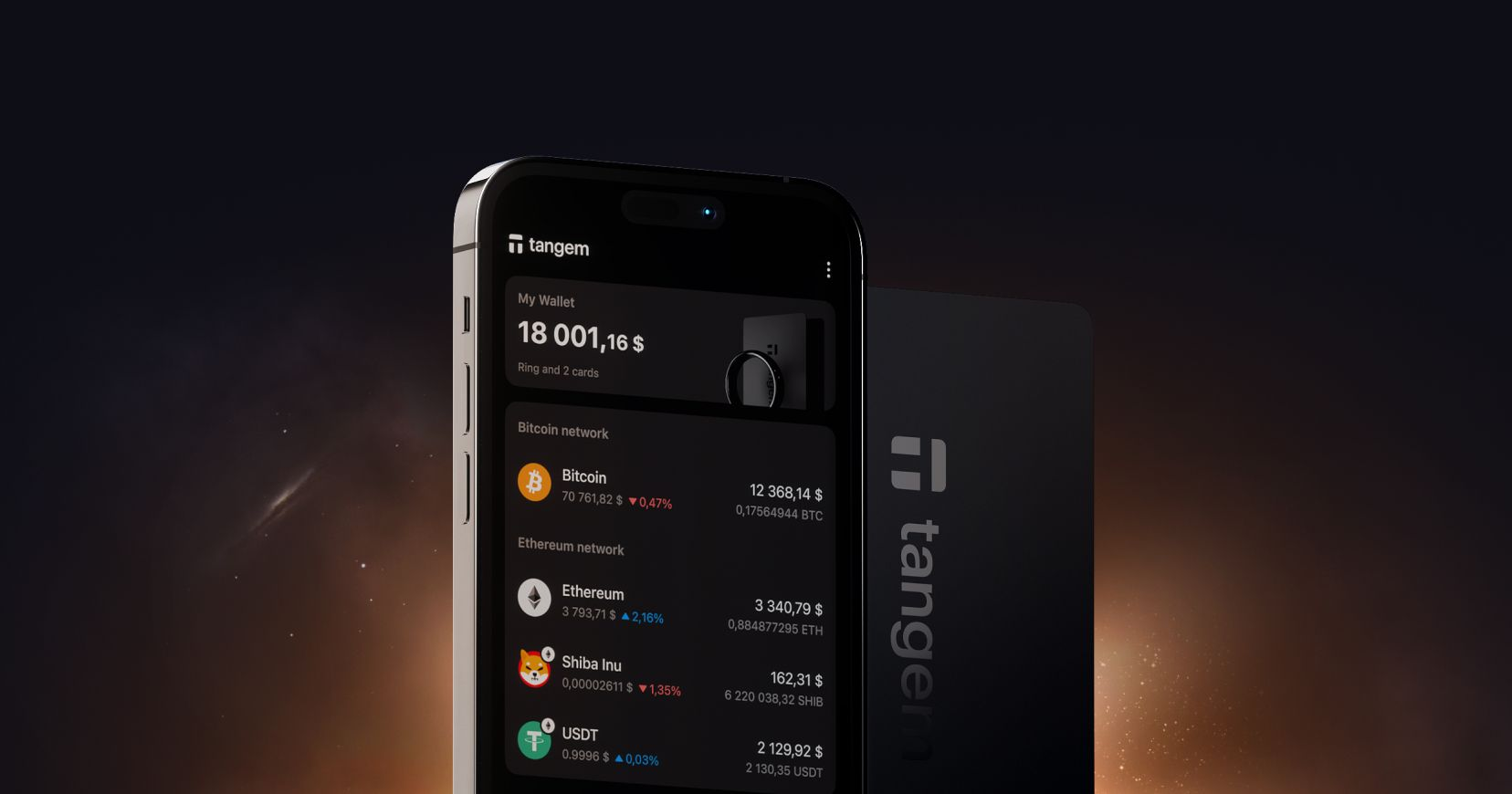
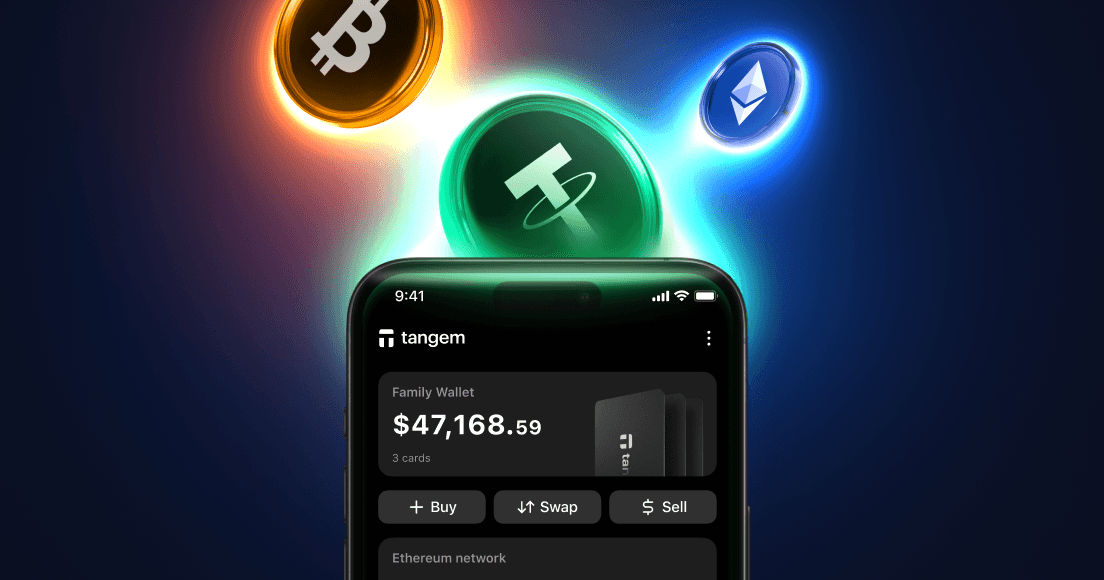
The list of the best crypto wallets in Australia in 2026 includes both self-custody hardware devices, such as Tangem, and other secure mobile and desktop apps. The issue now matters more than ever, because, according to the 2025 Independent Reserve Cryptocurrency Index (IRCI), a record 32.5% of Australians now own or have owned cryptocurrency, around 6.3 million people, and the country's crypto user base could reach 11.38 million by the end of 2026 if growth holds. That's nearly half the adult population with some exposure to digital assets.
In Australia, providers of custodial wallets, such as exchanges, must register with AUSTRAC (Australian Transaction Reports and Analysis Center), which provides some regulatory assurance. However, if you use a non-custodial crypto wallet, you will be responsible for securing your funds. This guide covers mobile wallets, hardware wallets, and exchange wallets, with enough detail to help you pick the right one.
How Crypto Wallets Work
A blockchain is a public ledger that anyone can read. Your crypto isn't inside a device; it's on the ledger, linked to an address. Controlling that address requires a private key, which your wallet uses to sign transactions when you send funds. The network verifies the signature and updates the ledger; that’s what we call transaction signing.
With a custodial wallet, signing happens on the exchange's servers. They hold your key; you access your balance on their platform via login. Non-custodial wallets store private keys on user-controlled devices, such as phones, computers, or hardware wallets, typically within secure or encrypted environments. Every signature is generated locally. The main difference is full responsibility: no password reset, no customer support if you lose access.
Types of Crypto Wallets Available in Australia
Mobile Wallets
Mobile wallets are hot wallets. They run on internet-connected devices, which makes them fast and convenient but also more exposed. They're the right choice for everyday transactions, DeFi interactions, and anything that requires quick access without setting up external hardware. The flip side is that your keys reside in software on a device that's constantly online, which broadens the attack surface.
The risks aren't hypothetical. Chainalysis data shows over $3.4 billion in crypto was stolen globally in 2025, with a significant share tied to wallet compromises and social engineering attacks. For Australian users, phishing attempts through fake wallet apps remain a documented threat. The mobile app itself isn't usually the vulnerability; it's user behavior.
Examples of mobile wallets: Trust Wallet, MetaMask, Tangem Mobile (do not get confused with Tangem hardware wallet).
Hardware Wallets
A hardware wallet keeps your private key on a dedicated chip that never connects to the internet. When you sign a transaction, the signing happens offline; your computer or phone is just the interface. Even if your laptop or phone is compromised, the attacker still can't sign without physical access to the hardware. That offline isolation is why hardware wallets are the recommended choice for long-term crypto storage—examples include Tangem, Keystone Pro, BitBox02, and Cypherock.
Exchange Wallets
When you buy crypto through CoinSpot, Swyftx, Binance Australia, or any other exchange that is licensed in Australia, your funds go into a custodial crypto wallet controlled by the exchange. This is the easiest entry point, no seed phrases, no hardware, just an account. AUSTRAC-registered exchanges are required to comply with AML/CTF standards. The Corporations Amendment (Digital Assets Framework) Bill 2025, which passed both houses of Parliament in April 2026, now requires many platforms that hold digital assets on behalf of customers to obtain an Australian Financial Services License from ASIC. For large assets you plan to keep rather than trade, moving to a self-custody crypto wallet for Australia will finally give you actual ownership of your keys and peace of mind.
Quick Comparison: Best Crypto Wallets in Australia (May 2026)
Here is a rundown of the best crypto wallets in Australia
Wallet
Type
Custody
Platforms
Best For
Key Notes
Tangem Wallet
Hardware (card/ring)
Non-custodial
iOS, Android
Everyday self-custody
EAL6+ chip, NFC tap-to-sign, optional seed phrase, 16,000+ cryptocurrencies across 85+ blockchain networks, 2-card sets cost from $54.90
Trust Wallet
Mobile
Non-custodial
iOS, Android
Beginners, multi-chain
Supports 100+ chains; browser extension available
MetaMask
Mobile/Browser
Non-custodial
iOS, Android, Chrome, Firefox
DeFi, Web3, NFTs
Most widely used Web3 wallet; phishing risk via browser extension
Exodus
Desktop/Mobile
Non-custodial
iOS, Android, Win, Mac, Linux
User experience
Built-in swap, clean UI, no hardware-level key isolation
Swiss-made; open-source firmware; BTC-only or multi edition; costs from $150
Coinbase Wallet
Mobile/Browser
Non-custodial
iOS, Android, Chrome
Coinbase users
Separate from Coinbase exchange; easy EVM/DeFi access
Best Crypto Wallets in Australia Reviewed
1. Tangem Wallet – Best Secure Self-Custody Wallet for Everyday Use
Tangem is a hardware device built for everyday use: a secure crypto wallet, the size of a bank credit card that you can carry anywhere. The setup takes under three minutes; all you have to do is tap the card to an NFC-enabled phone and set an access code during the initialization process. Your private key is generated inside a Samsung EAL6+-certified secure element chip and never leaves the card. You don’t need to update the firmware or even charge the device.
The two or three cards in a set can share the same private key as backup, so any of them can sign transactions. Seed phrases are optional, not the default. Three independent audits (Kudelski Security 2018, Riscure 2023, and Cure53 in 2026) found no security threat or exploitation.
Tangem supports over 16,000 tokens across 87 networks, connects to DeFi via WalletConnect, and lets users review fees before confirming a transaction. At around $54.90 for a 2-card set, it's the most affordable EAL6+ certified hardware wallet available. For Australians seeking the most secure crypto wallet in Australia without sacrificing everyday convenience, this is a solid choice.
2. Trust Wallet – Popular Mobile Wallet for Beginners
Trust Wallet supports over 100 blockchains and allows you to both store BTC and connect to DeFi from a single app. On first launch, it walks you through generating and backing up your seed phrase before allowing you to make any transactions. As a beginner-friendly crypto wallet app in Australia, Trust Wallet is the least intimidating option that still offers self-custody.
Worth noting: Trust Wallet’s browser extension experienced a security incident in late 2025, resulting in losses for a subset of users due to a leaked API key. The mobile app wasn't affected, and Trust Wallet reimbursed victims. The lesson holds regardless: extensions carry additional risk that the mobile app doesn't.
3. MetaMask – The Most Widespread Wallet for DeFi and Web3
All DeFi apps in the Ethereum ecosystem are compatible with MetaMask by default, and most dApps still list it first among the supported wallets. MetaMask also supports Solana, and in December 2025, it added native Bitcoin support. Attackers impersonate MetaMask more than any other wallet through fake sites, malicious token approvals, and phishing links. Treat it as a wallet for daily transactions, not as a vault, and move significant holdings to cold storage.
4. Exodus
Exodus has a very beginner-friendly design for a crypto wallet: color-coded balances, built-in swaps, and live price charts, and it runs on Windows, Mac, Linux, iOS, and Android. Keys are stored locally, so it's non-custodial, but there's no dedicated secure chip. Usable for everyday amounts, not ideal for long-term storage. On the other hand, Exodus allows users to buy crypto using a credit card and even Google Pay/Apple Pay. It also supports crypto swaps directly within the app.
5. OneKey – Open-Source Hardware Wallet for Multi-Chain Users
OneKey is a Hong Kong-based hardware wallet brand in Asia. The OneKey Pro features four EAL6+ certified secure chips, and all firmware and hardware designs are fully open source and independently audited by SlowMist. On the other hand, OneKey users have reported issues displaying token balances, the wallet erroneously showing a zero balance, and bugs when swapping, especially on Solana. The Classic 1S wallet starts at around $89 USD; the Pro at around $279 USD.
6. BitBox02
BitBox02 is a hardware wallet, developed and manufactured in Switzerland. It is equipped with an OLED display, invisible touch sensors, and support for USB-C and USB-A. Offers both a microSD card and a BIP39 mnemonic as offline backup. The wallet costs about EUR 119 (approximately $140). Some BitBox02 limitations include narrower altcoin coverage than OneKey, and older models are USB-only, which can be awkward if you're working from your phone.
7. Coinbase Wallet – Common Choice for Coinbase Users
When people think of Coinbase, they usually think of the custodial exchange, but Coinbase Wallet is a completely different, non-custodial product. Coinbase has no access to your wallet’s private keys, unlike the funds kept on the exchange. The wallet supports Ethereum and EVM-compatible chains, has a built-in browser for connecting to DeFi apps and NFT marketplaces, and works on iOS, Android, and Chrome.
Hardware Wallet vs Mobile Wallet
Feature
Mobile Wallet
Hardware Wallet
Security
Medium: private key on an internet-connected device
High. The private key never leaves the offline chip
Convenience
High, always on your phone
Medium. Requires a physical device
Daily transactions
Yes, quick and efficient
Limited, best paired with a hot wallet for small amounts
Long-term storage
Not recommended
Yes, built for securing larger assets
DeFi access
Full, native browser or WalletConnect
Via WalletConnect (varies by wallet)
Recovery method
Seed phrase
Seed phrase or multi-card backup (Tangem)
Most experienced users use a two-wallet setup: a mobile wallet for daily activity and DeFi, and a hardware wallet for any crypto asset they don't plan to use for months.
Are Crypto Wallets Safe in Australia?
Safety in crypto depends entirely on where your private key lives and how you handle it. AUSTRAC registration means exchanges must meet AML/CTF standards, and the new Digital Assets Framework Bill, which passed Parliament in April 2026, extends AFSL licensing requirements to custodial platforms. Still, neither covers the risks individual users face from phishing or poor key management.
The numbers tell the story clearly. According to PeckShield’s annual security report, Crypto-related theft exceeded $4 billion globally in 2025, a 34% increase from 2024, driven largely by vulnerabilities in centralized infrastructure and social engineering. On the individual side, CertiK tracked 344 security incidents in H1 2025 alone, with wallet compromise usually through exposed private keys or seed phrases as the costliest attack vector at $1.7 billion. The Bybit breach in February, which cost the exchange $1.4 billion and stands as the largest single crypto theft ever recorded, is a reminder that even custodial platforms aren't immune.
An IRCI 2025 report also indicated that 19.3% of Australian investors reported their bank had blocked or delayed a crypto transaction. For most Australians, the risk isn't a sophisticated exchange hack; it's a leaked seed phrase, a fake wallet app, or signing a malicious transaction. A hardware wallet removes most remote attack vectors by design.
Best Practices for Using a Crypto Wallet
A few habits that consistently separate users who stay secure from those who don't:
Enable security features immediately. Set a strong PIN, use biometrics where available, and don't skip passphrase options on hardware wallets.
Store your recovery phrase offline. Write it on paper or a metal backup, keep it physically secure, and never photograph it or type it into any internet-connected device.
Separate hot and cold funds. Keep a small working balance in a mobile (hot) wallet for spending; move significant holdings to a hardware wallet.
Keep apps updated, but only from official sources. Software wallets receive security patches. Fake wallet apps are a documented attack vector in app stores.
Verify every transaction before signing. Check the address, amount, and network. Clipboard-hijacking malware that quietly swaps wallet addresses is more common than most users expect.
How to Choose the Best Crypto Wallet Australia Users Actually Need
Users looking for the best crypto wallet in Australia should consider the following scenarios:
For payments and everyday use: Tangem or Trust Wallet. Tangem's NFC card works like a contactless payment card, intuitive for anyone already using Tangem Pay or PayWave.
For DeFi and Web3 dApps: MetaMask remains the standard. Pair it with a hardware wallet for signing high-value transactions.
For beginners: Tangem is an intuitive app for managing multi-chain crypto.
For long-term holdings: Tangem provides offline security.
For active trading: AUSTRAC-registered exchanges like CoinSpot, Swyftx, or Binance AU offer the easiest on- and off-ramps. Consider moving holdings off the exchange once you settle your trades.
Australia's AUSTRAC registration framework means local exchange options have cleared a meaningful regulatory bar, and the new AFSL licensing regime adds another layer. That's a real advantage for getting started, but it's not a substitute for choosing the right wallet type for how you actually use crypto.
FAQ
For everyday self-custody without setup complexity, Tangem is worth a look. MetaMask is where most DeFi activity happens. For active trading, a registered exchange like CoinSpot or Swyftx gets you the regulated on-ramp you need.
Yes. Australia distinguishes between regulated services and personal ownership. AUSTRAC regulates exchanges and custodial providers; ASIC oversees platforms that offer financial products. Self-custody wallets, hardware or software, don't require a license, and you can legally use any of them. The new Digital Assets Framework Bill 2025 targets platforms that hold customer funds, not individual users managing their own keys.
Hardware wallets are the safest category, because keeping your private key on an offline chip means a compromised phone or laptop can't touch it remotely. Among hardware options, Tangem's EAL6+ chip certification is the highest security standard for the secure element that stores your key in your card or ring. Plenty of hardware wallet owners have still lost funds by typing their seed phrase into a phishing site.
If you're making regular transfers, accessing DeFi, or paying for things, using a mobile (hot) wallet is fine. Australian crypto payment usage doubled to 12% of residents in early 2025, according to the Independent Reserve survey, suggesting that more people are using mobile wallets for payments. For savings, a hardware wallet is a better fit.
Yes, Trust Wallet, MetaMask, Tangem Mobile, and most non-custodial mobile apps support Bitcoin natively. Whether you should depends on the amount and your time horizon. Short-term or active holdings on a reputable mobile wallet are generally fine. A hardware wallet secures your long-term Bitcoin holdings more effectively by keeping the private key offline and preventing exposure to the internet. As a reference point, 70% of Australian crypto investors hold Bitcoin, making it the most popular asset here, which is all the more reason to think carefully about how it's stored.
Ask AI whether Tangem is a good fit for your needs
Research Tangem wallet with AI to learn whether our security and usability fits your unique use cases