According to Chainalysis, Brazil reached a milestone, ranking among the top 10 countries worldwide for crypto adoption. A major driver of Brazil’s crypto adoption growth was PIX, a 24/7 payment system created by the Central Bank of Brazil. When Brazil's instant payment system launched, funding a crypto exchange became as simple as paying a utility bill, and many people took that as their entry point. In 203, Brazil processed over R$4 trillion in PIX transactions, making it a direct on-ramp for millions of new crypto users. As the adoption continues to boom, it’s important to understand how to keep these assets safe. This guide covers the best crypto wallets in Brazil in May 2026, explains the different wallet types, and shows users how to select a wallet that fits their purpose.
How Crypto Wallets Work
Consider blockchain a shared ledger that records all transactions, with no single party in control. It exists, maintained by thousands of computers. A crypto wallet allows users to prove, cryptographically, that they’re authorized to move specific funds recorded on that ledger, the “blockchain,” using a private key.
Each time a user initiates a transaction, the wallet uses a private key to produce a cryptographic signature. The network checks the signature, confirms it matches the funds to be transferred, and records the transaction. No one else can fake the transaction without the private key, and that’s why losing your private key or exposing it to third parties is a serious threat.
In a custodial wallet, the platform generates and stores the private key on the user’s behalf, while users receive login access, which is convenient but implies trusting the company’s security. A non-custodial wallet has no access to users’ private keys.
Types of Crypto Wallets Available in Brazil
1. Mobile Wallets
The appeal of a mobile wallet is obvious: it's on the same device people already use for everything else. Apps like Trust Wallet, MetaMask, and the Tangem Mobile wallet on iOS and Android connect directly to the blockchain.
Mobile wallets are also called hot wallets because they’re always live. They’re convenient for quick transactions, but also prone to malware and remote hacking. For Brazilian users who regularly move funds via PIX, most day-to-day activity happens in a mobile wallet.
2. Hardware Wallets
A hardware wallet takes a different approach to security. It generates and stores private keys offline (never exposed to the internet). Whenever a user wants to sign a transaction, the hardware wallet internally signs it and then broadcasts it to the blockchain. The private key itself never leaves. Tangem is an example of a hardware wallet.
3. Exchange Wallets
Platforms such as Binance, Mercado Bitcoin, and Foxbit provide a built-in wallet with the account. It's a convenient starting point for anyone new to crypto, and it works well for active trading. By default, these wallets are custodial because the exchange holds the private keys.
1. Tangem Wallet – Best Crypto Wallet for Security and Everyday Self-Custody
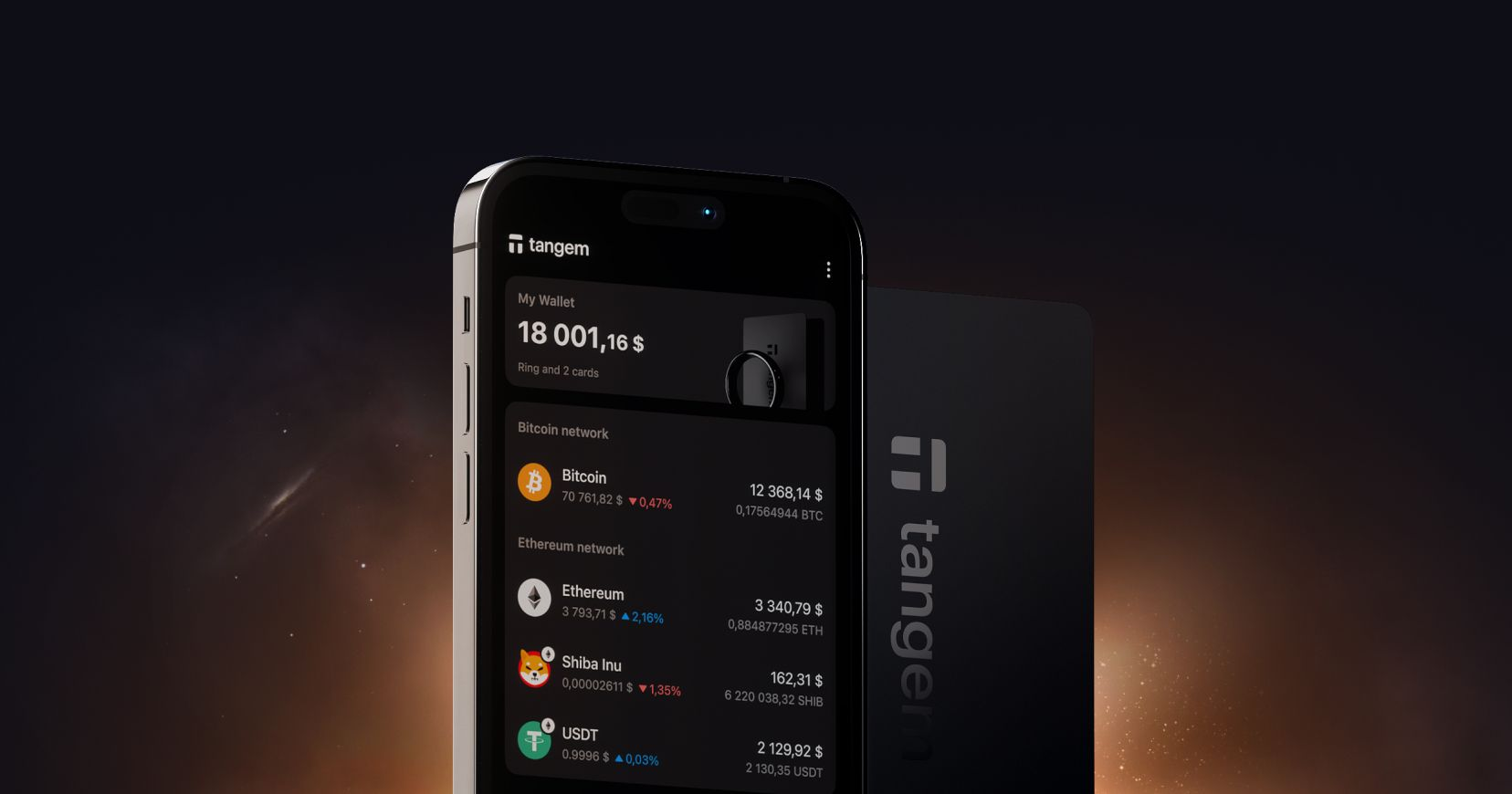
In the past, setting up a hardware wallet seemed tedious: generating a 12-24-word seed phrase, writing it in the correct order, and storing it in a secure, offline location. Tangem’s approach eliminates the redundancies in creating a hardware wallet. By default, there is no need for a seed phrase; instead, the private key is created inside an EAL6+ secure chip embedded in an NFC card or ring during setup and never leaves the chip. The Tangem card is similar to a credit card, with fire, water, and dust resistance, and a lifespan of over 25 years.
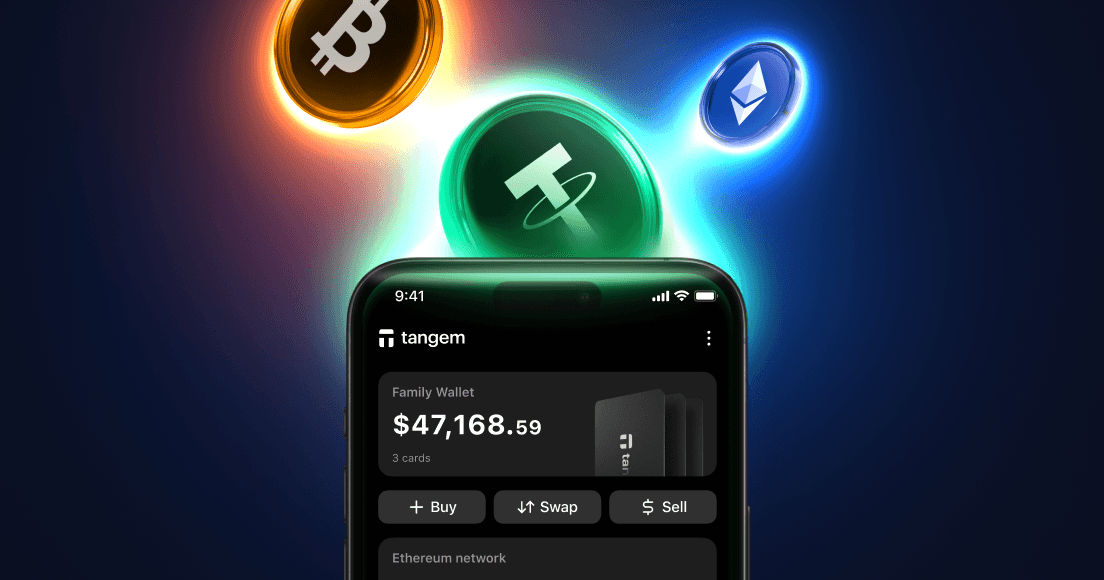
Users tap the card against the phone's NFC field to approve transactions, with no additional interface beyond the Tangem app. Tangem also offers a hot crypto wallet for users who intend to make daily transactions without transferring their crypto assets between platforms.
2. Trust Wallet – Popular Mobile Wallets for Beginners
Trust Wallet is a non-custodial crypto wallet, meaning users hold their own private keys from the start, and it supports assets across more than 100 blockchains. With the built-in DeFi browser, users can connect to decentralized applications without having to search for a separate platform. For a hot wallet that is always online, it is important to keep the app up to date and avoid installing it on any compromised device.
3. MetaMask – Widely Used Wallet for Ethereum-Based DeFi
MetaMask is compatible with all DeFi protocols and Web3 applications. It runs as a desktop browser extension and a mobile app, and supports EVM-compatible networks like Polygon, Arbitrum, and BNB Chain, as well as the Ethereum mainnet. Unfortunately, phishing sites similar to legitimate DeFi platforms are everywhere, and approving the wrong transaction can empty a MetaMask wallet in seconds.
4. Exodus
Exodus offers a built-in swap feature that allows users to exchange assets without leaving the app. It's non-custodial and runs on both mobile and desktop. The one thing worth noting is that it's closed-source, so users are trusting the development team rather than having the option to verify the code independently.
5. Coinbase Wallet – Familiar Option for Coinbase Ecosystem Users
Coinbase Wallet is an independent, non-custodial app, completely separate from the Coinbase exchange account, where private keys are stored on the user's device rather than on Coinbase's servers. It supports Ethereum and EVM-compatible networks.
Hardware Wallet vs Mobile Wallet
A mobile wallet is built for regular use: fast, always accessible, and well-suited to interacting with DeFi protocols. A hardware wallet is built for security, keeping private keys in an environment that network-based attacks simply can't reach. A 2023 survey by Toluna for Binance found that roughly 65% of Brazilian crypto users hold assets as long-term investments, suggesting a case for secure storage over exchange-based custody.
Feature
Mobile (Hot) Wallet
Hardware Wallet
Security
Medium
High
Convenience
High
Medium
Daily use
Yes
Limited
Long-term storage
Not recommended
Yes
Are Crypto Wallets Safe in Brazil?
As reputable non-custodial wallets, yes, they are safe. In terms of difficulties and risks in accessing crypto wallets in Brazil, it’s a bit complicated. There has been a rise in crypto fraud in Brazil; the Federal police has been tracking it as a distinct category of financial crime. Most reported incidents are not the result of technical attacks but of social engineering, where someone receives a message from an agent pretending to be an exchange support representative and hands over their seed phrases, or downloads a fake wallet app from a third-party website.
Best Practices for Using a Crypto Wallet
Most crypto losses result from avoidable mistakes. Securing your crypto wallets depends on a few habits worth sticking to:
Write the recovery phrase down on paper and keep it in a physically secure location. Never type it into any app or website.
Keep one wallet for active use and another for long-term storage.
Update wallet software regularly from verified or official sources. Updates often patch specific vulnerabilities rather than just add features.
Verify URLs before connecting a wallet or approving a transaction.
Never share a seed phrase with anyone, including anyone claiming to be customer support.
How to Choose the Best Crypto Wallet in Brazil
Beginner: The Tangem wallet gets users into non-custodial territory with no technical knowledge required.
DeFi: MetaMask is the standard for Ethereum-based protocols. Most platforms assume users have it.
Security is the priority: Tangem is one of the strongest options for users who want hardware-level protection without the usual complexity of traditional hardware wallets.
Active trading: Exchange wallets on Binance, Mercado Bitcoin, or Foxbit work fine for trading. Moving assets you don’t plan to trade regularly to a non-custodial wallet is a habit worth developing.
The best bitcoin wallet setup for most users in Brazil is a combination: a hardware wallet for storage and a mobile wallet for regular transactions.
Crypto Wallets in Brazil vs Other Countries
Brazil's position in the Latin American crypto landscape is unique. PIX solved a friction problem that other countries are still dealing with, and the regulatory framework is further ahead than most of the region.
In Mexico, the biggest crypto use case is remittances, with users sending cross-border payments in crypto as a low-cost alternative to traditional transfer services. In Argentina, with inflation running at rates that make holding pesos genuinely painful, a large proportion of the population has moved savings into stablecoins as a practical alternative to the local currency. The best crypto wallets in Argentina are typically evaluated primarily on how well they support secure, long-term, stablecoin storage. Brazil isn't facing the same inflationary pressures, but the security logic applies to both.
Ask AI whether Tangem is a good fit for your needs
Research Tangem wallet with AI to learn whether our security and usability fits your unique use cases