Millions of people across Mexico transact in cryptocurrency, hold digital dollars like USDT and USDC, or stack Bitcoin as a hedge against peso volatility. Crypto is now a staple financial tool for Mexicans, including families, freelancers, and investors throughout the country. But here's the part that often goes unmentioned: owning crypto isn't quite like owning pesos in a bank account. Your digital assets live on the blockchain, and your private key protects them. Whoever controls that key controls the funds; that's why choosing the right crypto wallet matters more than choosing the right exchange.
Wallets come in two broad models: custodial (the platform holds your keys) and self-custody (you hold your own keys). Mexico's Ley Fintech (Financial Technology Law) regulates Virtual Asset Service providers—exchanges and custodians. Still, it doesn't cover self-custody wallets, which means you're on your own to keep your assets safe. This guide breaks down the best crypto wallets in Mexico for May 2026, covering every major wallet type so you can make an informed decision.
How Crypto Wallets Work
Let’s go back to basics for a moment: what is a crypto wallet and how does it function? A wallet doesn't actually store your coins. It stores your private key, the cryptographic proof that you own a specific address on the blockchain. When you send crypto, the wallet signs the transaction with that key and broadcasts it to the network. No key, no access.
Custodial wallets (like exchange accounts) manage the key on your behalf. It's convenient, but it means you're trusting a third party. Non-custodial wallets put the key in your hands, which also puts the responsibility there. Understanding this difference is the foundation of everything else in this guide.
Types of Crypto Wallets Available in Mexico
1. Mobile Wallets
Mobile wallets are basically apps you install on your phone. They connect to the internet, which is why we call them hot wallets. They're great for everyday use: sending remittances from the US to Mexico, for example, paying merchants, or interacting with DeFi protocols. The trade-off is that an internet-connected device can be vulnerable to phishing or malware if you're not careful.
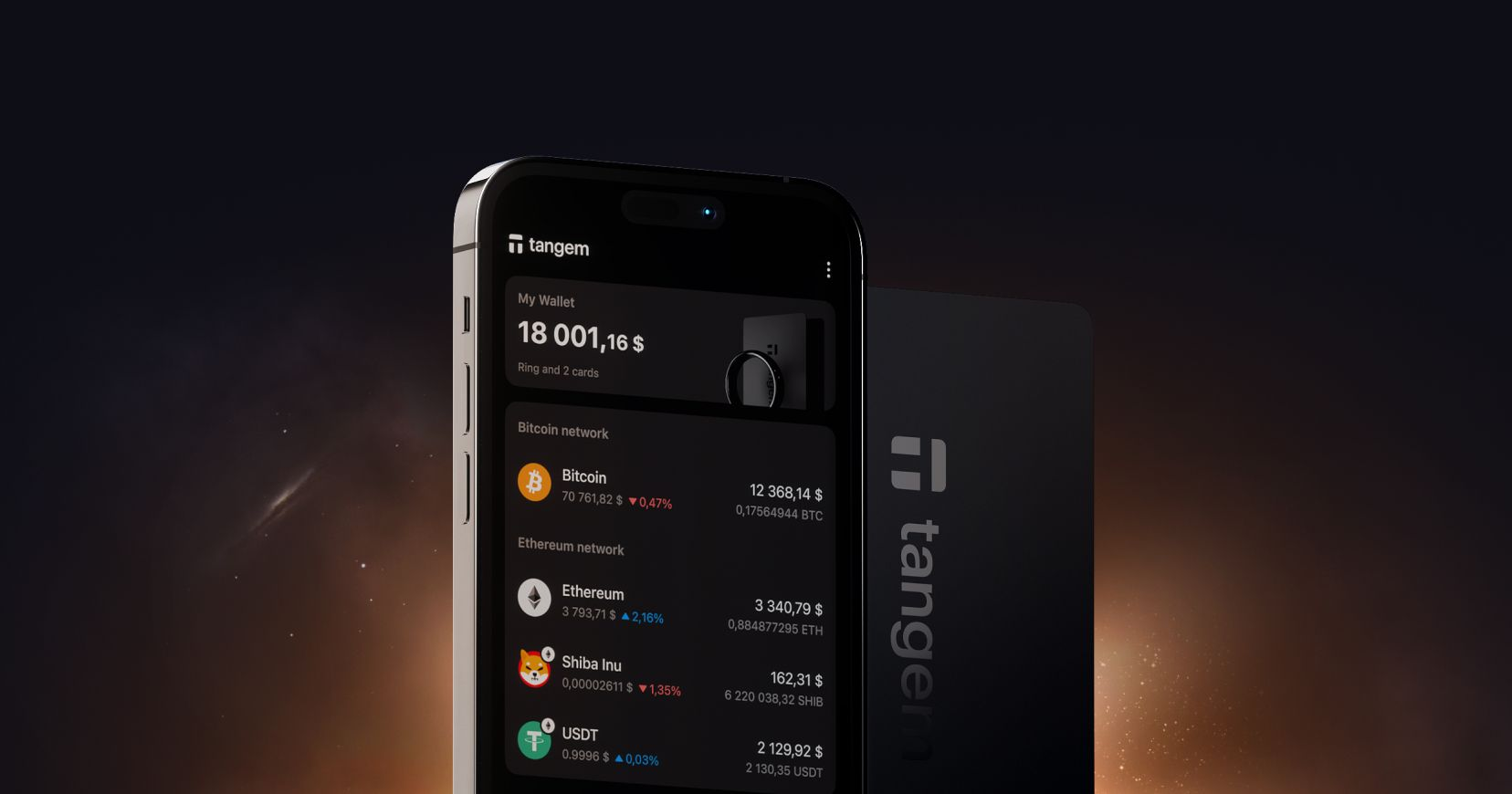
Popular examples of mobile wallets include Trust Wallet, MetaMask, and Tangem (which actually offers both a mobile app and a hardware wallet).
2. Hardware Wallets
Hardware wallets store your private key on a physical device, completely offline. Even if your computer is compromised, the key never leaves the device, making it far more resistant to remote attacks. They're the standard recommendation for anyone holding significant amounts of BTC, ETH, or stablecoins for the long term. So, the best Bitcoin wallet for Mexican users who need to keep their savings safe, rather than simply send money, is a hardware wallet.
Popular examples: Tangem and Ledger Wallet.
3. Exchange Wallets
Platforms like Bitso, Binance, and Coinbase offer built-in wallets. They're the easiest way to get started, but the platform holds your keys. If the exchange is hacked, restricted, or goes offline, access to your funds is not guaranteed. Exchange wallets are preferable for active trading, but they're not ideal for long-term storage or self-custody crypto use cases in Mexico.
Quick Comparison – Best Crypto Wallets in Mexico (May 2026)
The table below provides a neutral side-by-side comparison of seven popular wallets across different categories.
Wallet
Type
Custody
Platforms
Best For
Key Notes
Tangem Wallet
Hardware + Mobile
Self-custody
iOS, Android
Everyday use & remittances, long-term storage
Supports 16,000+ cryptocurrencies across 85+ blockchain networks
Trust Wallet
Mobile
Self-custody
iOS, Android
Beginners & DeFi
Supports 100+ blockchains
MetaMask
Mobile / Browser
Self-custody
iOS, Android, Desktop
DeFi & Web3
Ethereum-focused; browser extension
Exodus
Mobile / Desktop
Self-custody
iOS, Android, Windows, Mac
User experience
Built-in exchange; beginner-friendly
Ledger
Hardware
Self-custody
iOS, Android (via app)
Long-term BTC/ETH storage
Secure Element chip; wide asset support
Coinbase Wallet
Mobile
Self-custody
iOS, Android
Coinbase users
Separate from the Coinbase exchange account
Coinbase Wallet is a separate self-custody app, not to be confused with the Coinbase exchange account.
Best Crypto Wallets in Mexico Reviewed
1. Tangem Wallet – Best Overall Crypto Wallet for Security, Ease of Use, and Self-Custody
The cold storage version of Tangem is a credit card-sized wallet rather than the traditional USB device. Your private key is generated inside the card's secure chip and never leaves it, not even during setup. There's no seed phrase to write down and risk losing or exposing. However, despite this hi-tech approach, Tangem onboarding doesn’t require any technical background.
One feature that should be particularly interesting to Mexican users sending or receiving cryptocurrencies is that Tangem combines a mobile app (iOS and Android) with a hardware device for long-term secure storage. When using the hardware wallet, you can simply tap the card to your phone to sign a transaction.
2. Trust Wallet – Popular Mobile Wallet for Beginners
Binance owns Trust Wallet, but it operates as a self-custody app. Binance doesn't hold your keys. It supports over 100 blockchains and millions of tokens, making it a truly versatile crypto wallet app for Mexican users. The interface is clean and accessible, and you can buy crypto directly through the app using a bank card. For users already on Binance, migration is easier.
3. MetaMask – Standard Wallet for Ethereum-Based DeFi
MetaMask is a popular wallet for Ethereum-based applications. If you're frequently interacting with DeFi protocols, prediction markets, or Web3 games, you'll need to create a MetaMask wallet. It's available as a browser extension (Chrome, Firefox, Brave) and as a mobile app.
The key issue with MetaMask is its focus on EVM chains: if you want to store Bitcoin natively or connect to the Solana ecosystem, you will need additional wallets.
4. Exodus
Exodus offers built-in token swaps (though Tangem has this feature, too), and works across mobile and desktop. For many years, Exodus has been a popular option among users with crypto portfolios spread across multiple chains.
Some privacy-savvy users find it concerning that Exodus's code isn't fully open-source, but it’s still far more transparent than exchange wallets.
5. Ledger
Ledger uses a Secure Element Chip technology to protect users’ private keys. Ledger supports thousands of assets and connects to its Ledger Live app for managing transactions. The setup process is more complicated than for a mobile wallet.
6. Coinbase Wallet – Convenient Option for Coinbase
Coinbase Wallet shouldn’t be confused with the Coinbase exchange: it’s a separate self-custody app that requires creating a separate account, though it’s easy to transfer crypto between the two platforms. As a self-custody wallet, it requires the same care with seed phrases as any other non-custodial wallet.
Coinbase Wallet supports EVM chains and Solana, lets users connect to DeFi apps, and works well for users who already have a Coinbase account.
Safety depends almost entirely on one thing: who holds the private key. With a self-custody wallet, you do. With an exchange wallet, the platform does. While Mexico's Fintech Law (Ley Fintech) regulates Virtual Asset Service Providers, ensuring that platforms like Binance and Bitso comply with AML and KYC rules, the law doesn't cover self-custody wallets. That means if you make a mistake with your seed phrase or fall for a phishing scam, there's no one to call for help.
Common threats to watch for:
Phishing websites that mimic legitimate wallets or exchanges
Fake wallet apps in app stores
Social engineering scams targeting seed phrase holders
SIM-swap attacks targeting phone-based 2FA
The best defense is treating your seed phrase with utmost care.
Best Practices for Using a Crypto Wallet
Want to know how to secure your crypto wallet? Follow these fundamentals applicable to any crypto wallet Mexico users may choose:
Write down the seed phrase on a piece of paper and store it in a safe location. Never store seed phrases in an email, messenger, or screenshot.
Keep all security features supported by the wallet enabled: PIN, fingerprint/face recognition, and 2FA.
Use hot wallets only for storing small amounts of crypto for everyday transactions, and store your long-term crypto holdings in cold wallets like Tangem.
Make sure to install all the latest security patches.
Only download wallet apps from the official developer’s website.
How to Choose the Best Crypto Wallet in Mexico
There’s no single best crypto wallet in Mexico; it all depends on your purpose:
Sending remittances from the US to Mexico: a combined hardware and mobile wallet suite like Tangem is a good choice, because it allows you to make low-cost cross-border transfers in stablecoins (USDT/USDC) and store them securely
Getting started in Web3: Trust Wallet supports all major chains and offers a beginner-friendly interface
Connecting to DeFi and decentralized exchanges: MetaMask is probably the top choice
Long-term BTC or ETH storage: Tangem should be your main option
Registered Coinbase users: Coinbase Wallet is a logical choice for self-custody
For a combination of security and ease of use, Tangem is accessible and very reliable.
Ultimately, when comparing wallets, you have to answer one question: who controls the keys? If it's you, you have full control and full responsibility. If it's a platform, you're basically trusting that platform with your money in exchange for convenience.
Searching for the best crypto wallet in Mexico has to be done with that context in mind. No wallet is perfect for every situation, but understanding the trade-offs makes any choice stronger.
Conclusion
Latin America, and Mexico in particular, is among the world’s leading regions for the speed of crypto adoption. According to Chainalysis, Mexico’s annual incoming crypto transaction volume reached $71.2 billion in 2024–2025, with remittances as the main driver. Region-wide, only Brazil and Argentina rank higher in Mexico in terms of the amount of cryptocurrency sent to the country.
Crypto wallets are becoming a vital financial tool rather than a technical novelty. While choosing among the dozens of popular wallets on the market can be confusing, we hope this guide will help users in Mexico and beyond make a more informed decision and protect their crypto assets.
Ask AI whether Tangem is a good fit for your needs
Research Tangem wallet with AI to learn whether our security and usability fits your unique use cases