



USDC vs. USDT: Which Stablecoin Is Better for Spending?
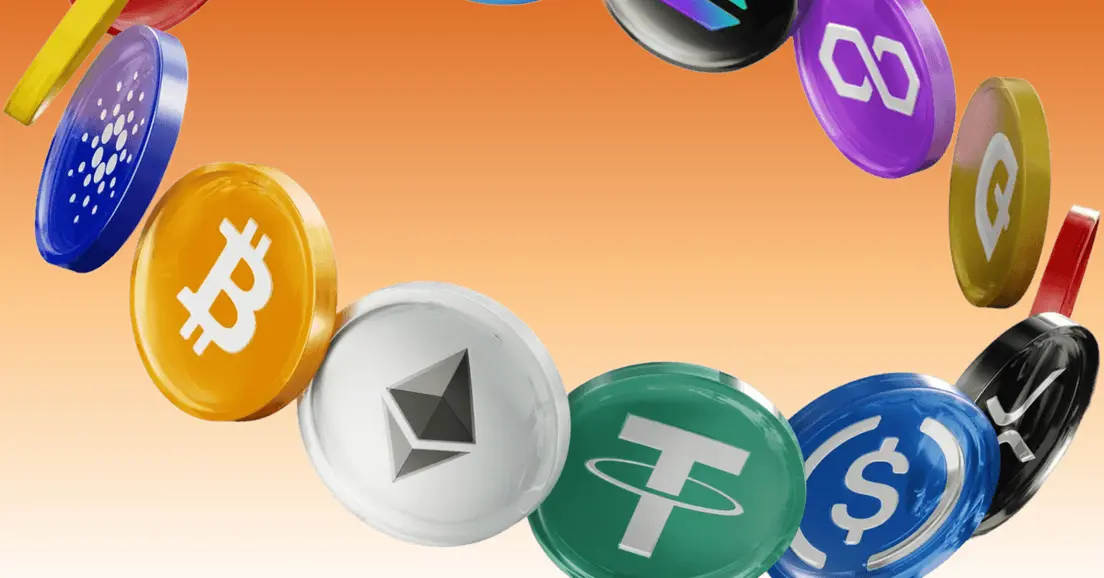
Both USDC and USDT target a $1.00 peg, and both are accepted across most major exchanges and wallets. Those differences rarely matter for trading. For spending, funding a crypto card, paying online, or converting to local currency, they start to matter quite a bit. Reserve transparency, network availability, and which token your card actually accepts are not interchangeable details.
For everyday spending, USDC has a practical edge. Its issuer, Circle, publishes monthly reserve attestations backed by cash and short-term US Treasuries. If you are primarily trading and need the deepest exchange liquidity, USDT's broader market presence becomes the relevant factor. For spending, USDC comes out ahead. Neither stablecoin is risk-free. Both carry issuer-dependent counterparty risk, and neither is government-insured.
Comparison Table: USDC vs. USDT for Spending
| Feature | USDC | USDT |
|---|---|---|
| Issuer | Circle | Tether Holdings |
| Peg target | $1.00 USD | $1.00 USD |
| Reserve composition | Cash and short-term US Treasuries | Mixed assets |
| Attestation frequency | Monthly independent attestations | Periodic disclosures |
| Primary chains for spending | Ethereum, Polygon, Solana, Avalanche, Base | TRON, Ethereum |
| On-chain transfer cost | Depends on the chosen network | Depends on the chosen network |
| Typical spending-card fees | Bybit says USDC spending has an approximately 1% conversion spread and no foreign transaction fee | Bybit says USDT spending has an approximately 1% conversion spread and no foreign transaction fee |
| Tangem Pay support | Yes, native USDC on Polygon | Not listed as a top-up token |
| Counterparty risk | Yes, issuer-dependent | Yes, issuer-dependent |
A few rows deserve a closer look. Transfer cost depends on the blockchain, not the token. Sending USDT on TRON costs far less than sending it on the Ethereum mainnet. The same logic applies to USDC on Polygon versus Ethereum.
The attestation frequency row is where the two tokens diverge most clearly for a spending audience. Monthly independent attestations give a more current picture of whether reserves back the supply than periodic disclosures do. That distinction matters if the peg slips.
Reserve Transparency: Why It Matters for Spenders
A stablecoin's reserves are the assets that are supposed to keep it worth $1. If those reserves are opaque, insufficient, or poorly disclosed, the peg can break. That is a direct loss for anyone holding the token to spend. That is not a hypothetical. In March 2023, USDC briefly traded at $0.87 after Circle disclosed it held $3.3 billion of reserves at Silicon Valley Bank, which had just failed. The peg recovered, but the event showed that a dollar peg is a design goal, not a guarantee.
Here's what the difference in reporting frequency means in practice. Circle publishes monthly attestations of USDC reserves, composed of cash and short-term US Treasuries. Tether publishes quarterly attestations of USDT reserves, described as mixed assets. Monthly reporting gives a spending user a more recent view of reserve health. Quarterly reporting leaves a longer gap between snapshots.
Neither disclosure model constitutes a full independent audit, and neither stablecoin is insured by the government. Both are issuer-dependent instruments. The difference lies in frequency and reserve composition, not in absolute safety. For someone spending small amounts daily, that gap may feel academic. When the balance is meaningful, it is worth factoring in.
Which One Does Your Card Actually Support?
Not every crypto spending card supports both tokens. Some accept only USDC, some only USDT, and some support both but restrict the accepted network. Assuming your card handles whichever token you have is a funding mistake that can leave you unable to top up.
The network requirement matters as much as the token. A card program that accepts USDC on Polygon will not automatically accept USDC bridged from Ethereum, even though both are technically USDC. Native and bridged versions of the same token on the same network are not automatically equivalent to a receiving program.
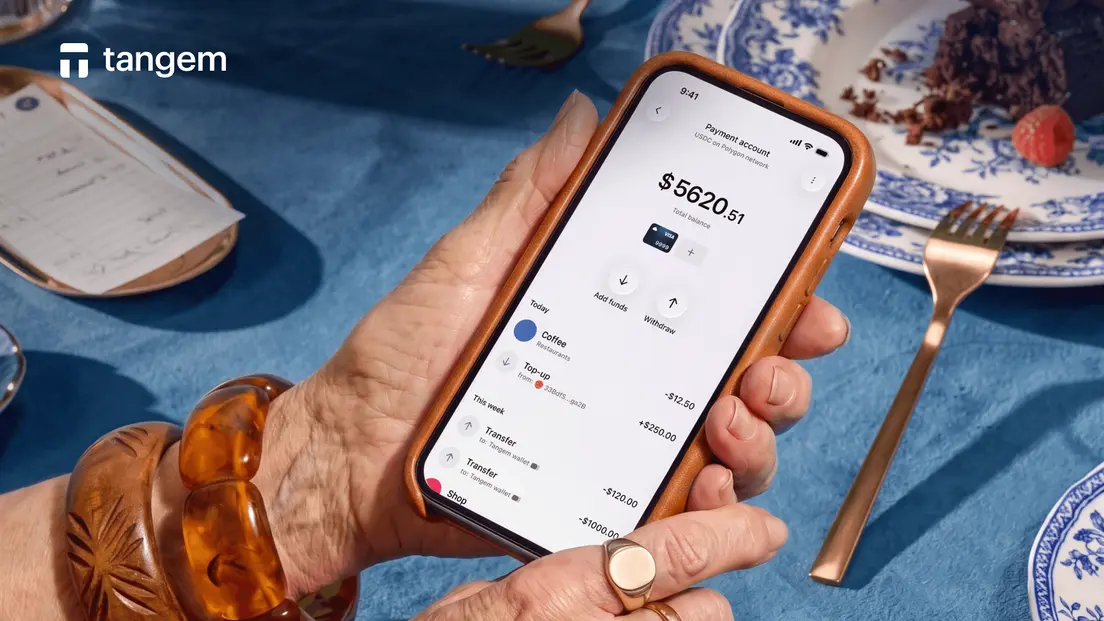
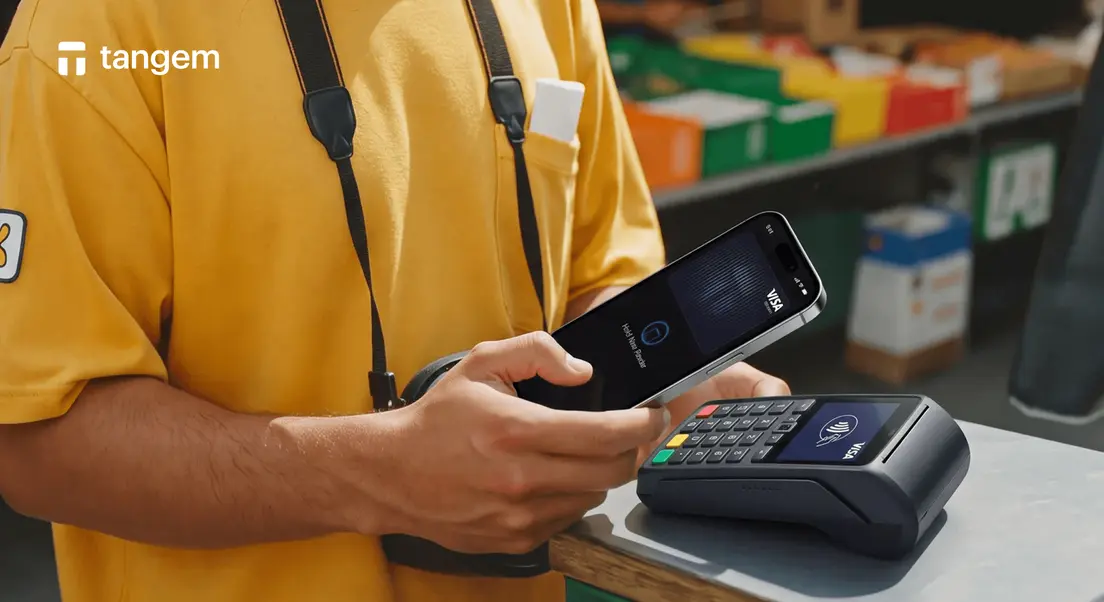
Tangem Pay converts USDC 1:1 to USD, processes the transaction through Visa, and pays merchants in USD. The virtual Visa card can be added to Apple Pay or Google Pay. Tangem Pay charges no purchase, monthly, or card issuance fees. A Polygon network fee applies when topping up and goes to validators rather than Tangem.
The practical checklist before funding any crypto card: confirm the accepted token (USDC or USDT), confirm the accepted network, and confirm whether the native or bridged version is required.
In Latin America
The spending picture shifts in Latin America, where P2P liquidity and remittance corridors matter alongside card compatibility. USDT has historically had stronger P2P liquidity in the region, while USDC carries an edge for compliance and transparency. Local exchange availability, conversion costs, and remittance rails also affect the choice. Best Crypto Wallets in Latin America provides additional regional context for choosing a wallet.
Everyday Spending
For most spending use cases, USDC is the more practical choice. Its reserve reporting is more frequent, and its composition is more straightforward. USDT makes more sense when exchange liquidity is the priority, or when the specific network you are using (TRON, for instance) meets your funding and transfer needs.
Choose USDC if your card program requires it, if reserve transparency is a factor in how much you hold, or if you are funding a self-custody spending account on Polygon or Base.
Neither is a risk-free instrument. Both are issuer-dependent stablecoins, and a dollar peg is a design goal rather than a guarantee. Hold only what you plan to spend in the near term, regardless of which token you pick.
Поширені запитання
-
USDC generally has an edge for spending. Its issuer Circle publishes monthly reserve attestations backed by cash and short-term US Treasuries. USDT has broader exchange liquidity, which matters more for trading than for day-to-day spending.
-
No. Support varies by provider and by network. Tangem Pay, for example, funds with native USDC on Polygon and does not list USDT as a top-up token. Before funding any card, confirm the accepted token, the accepted network, and whether native or bridged versions are treated differently by the receiving program.
-
USDC's issuer Circle is generally considered more transparent, publishing monthly reserve attestations composed of cash and short-term US Treasuries. Tether publishes quarterly attestations of mixed assets. Neither stablecoin carries government insurance, and both carry issuer-dependent counterparty risk. The difference is one of reporting frequency and reserve composition, not absolute safety.
-
No. The fee depends on the blockchain network, not on whether you are moving USDC or USDT. Sending either token on Polygon or Solana costs far less than sending on Ethereum mainnet. Network selection is the variable that controls transfer cost; the token itself is not.
-
Your card program may not credit the balance, even when the token name matches. Check the accepted network and whether it requires a native token before you send funds.
-
Keep only what you expect to spend soon. USDC and USDT both have issuer-dependent risk, and a dollar peg is a target rather than a guarantee.
-
A stablecoin can move away from $1 before settlement. That risk is why reserve disclosures and a small spending balance matter, even when you use a card.


Не пропустіть 




Інші статті

