
 EXTRA −10%


Crypto Card vs Cash App Card: Which Is Better in the US?
Ця стаття доступна такими мовами:
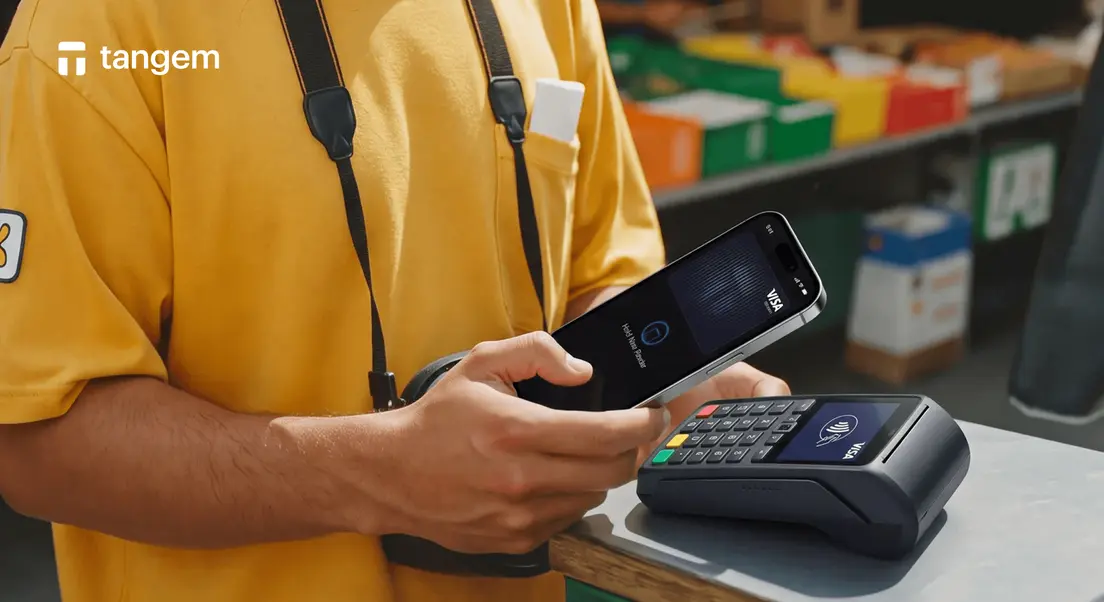
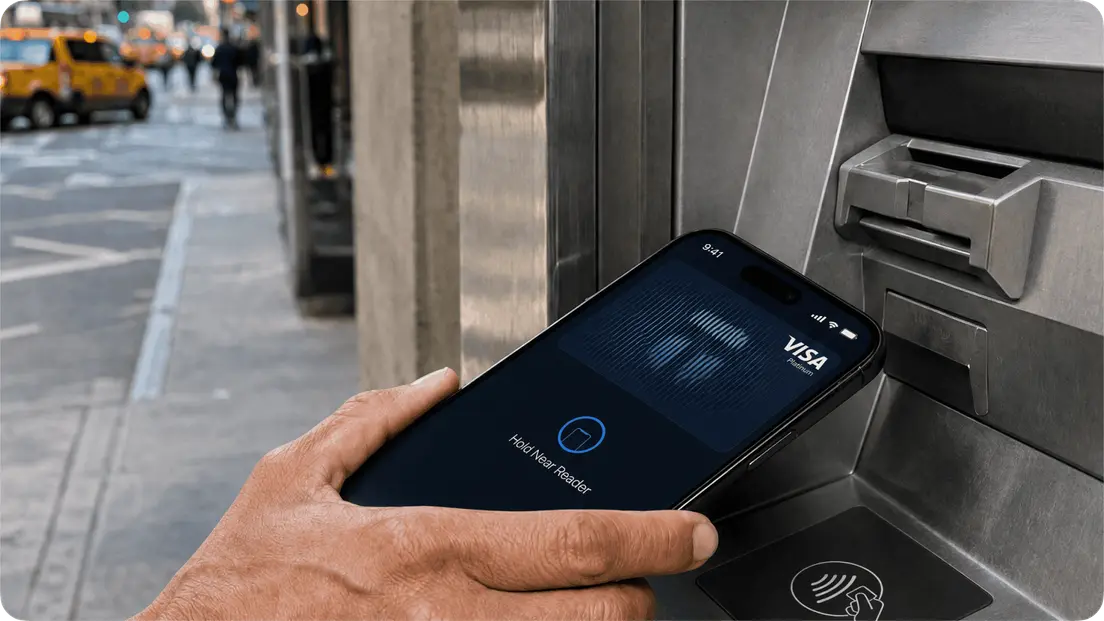
The confusion is understandable: Cash App holds bitcoin, Cash App has a card, so the card must spend bitcoin. It doesn't. The Cash App Card spends US dollars from your Cash App balance; bitcoin is a separate feature that lives alongside the card but never flows through it directly. A crypto card like Tangem Pay works the other way: you load USDC or USDT from a crypto wallet and use your crypto for real-world spending at merchants where Visa is accepted.
Choose Cash App Card for dollar balances and domestic spending. Tangem Pay suits eligible stablecoin funds already held for card spending. That funding difference shapes fees, custody, tax treatment, and which option fits your situation.
Turn your crypto into everyday spending

Crypto card vs Cash App Card at a glance
| Feature | Cash App Card | Tangem Pay |
|---|---|---|
| What it spends | US dollars (Cash App Balance) | USDC or USDT loaded into card account |
| Card network | Visa | Visa (issued by Rain) |
| Issuer | Sutton Bank / Bancorp Bank, N.A. | Rain (Visa Principal Member) |
| Monthly fee | $0 | $0 (Basic) / $29.99 (Plus) |
| Standard card fee | $0 | $0 for first virtual card; $5 fee for additional virtual card. $0 for first-time physical card |
| Expedited shipping | $15 | Depends on the destination |
| Cash add fee | $1 (Paper Money Deposit) | $1 (ACH), $11 (Fedwire) on Basic |
| ATM withdrawal | $2.50 per withdrawal + operator fee | Available (4% Basic, 2% Plus) 3 per 24 hours; $250 per withdrawal |
| Foreign transaction fee | 3% (waived card-present for qualifying users) | Visa exchange rates + cross-border fees on non-USD purchases |
| Rewards | Weekly cash-back offers | 1% base cashback (Basic, cap $100/mo); 2% base cashback (Plus, cap $300/mo) |
| Eligibility | US citizens/legal residents 18+; teens 13-17 with sponsor | Depends on the user's region; 18+ |
Is the Cash App Card a bitcoin card?
No. The Cash App Card is a Visa prepaid or debit card that spends US dollars from your Cash App balance. Bitcoin features in Cash App are entirely separate. Cash App lets you buy and sell bitcoin starting at $1, use Auto Invest and Round Ups, and receive part of a paycheck through Paid in Bitcoin. It also supports Lightning Network payments and eligible Square businesses that accept bitcoin. None of those features run through the card itself. If you want to fund card spending with bitcoin, you sell it first. The proceeds land in your Cash App USD balance, and the card draws from there.
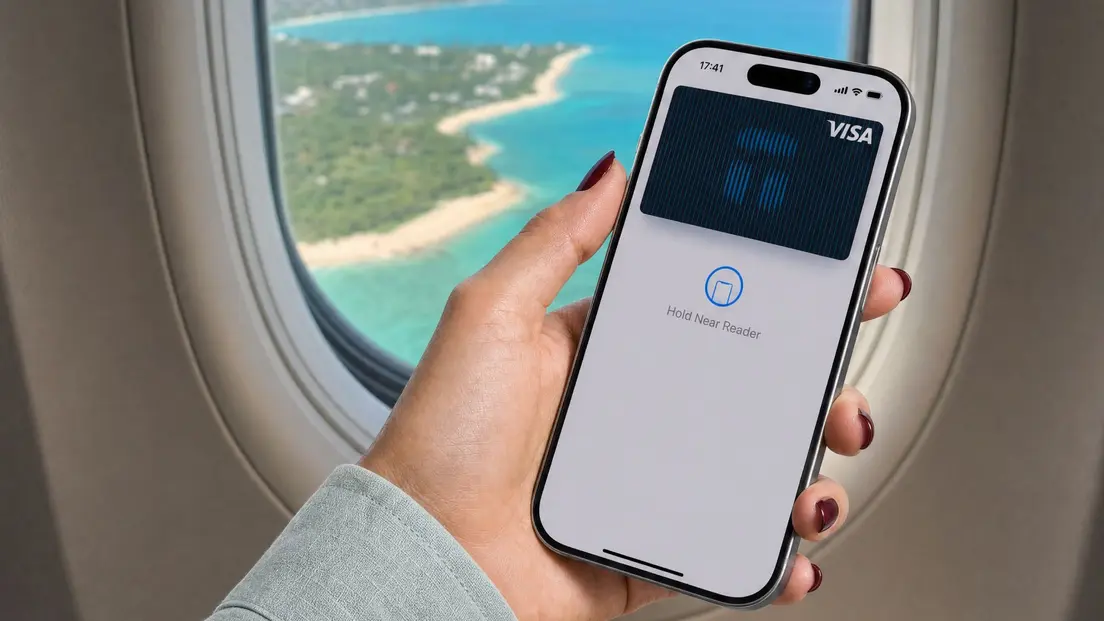
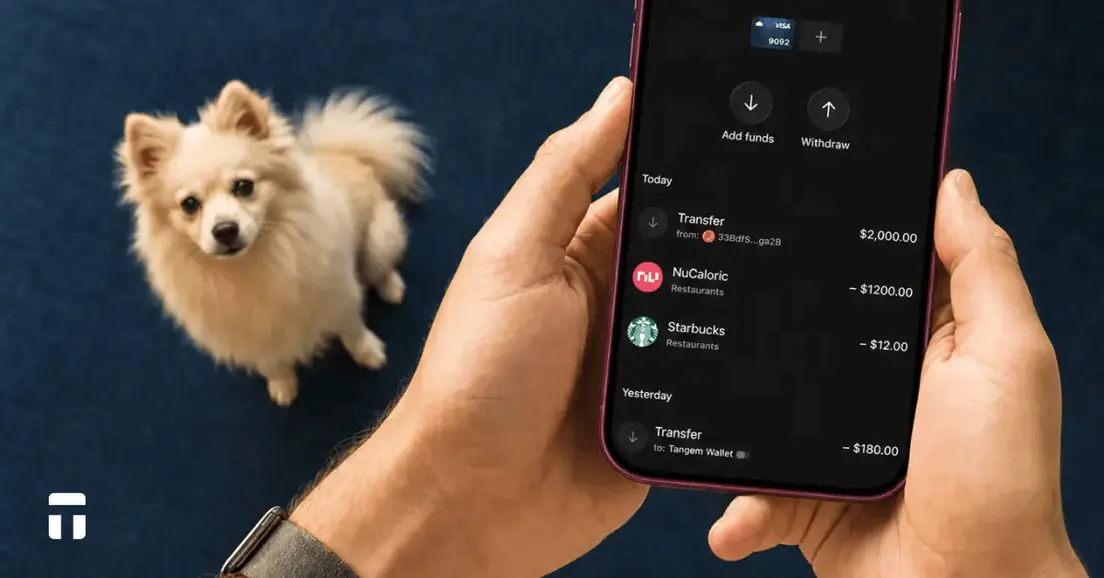
A crypto card like Tangem Pay, a Visa card inside the non-custodial Tangem Wallet app, is different by design. You load USDC or USDT directly into the card account, and those stablecoins fund your purchases or fund via bank transfers (ACH or Fedwire). No prior conversion to a bank balance is required.
Where your crypto is held
The custody question matters.
| Cash App | Tangem Wallet + Tangem Pay | |
|---|---|---|
| Who holds the keys | Cash App holds bitcoin custodially on the customer's behalf | You control the private keys in the non-custodial Tangem Wallet |
| Can you withdraw to a personal wallet? | Yes, subject to identity verification, limits, fees, and withdrawal restrictions in Cash App's Terms of Service | Yes, available USDC or USDT may be withdrawn to Tangem Wallet |
| What happens if the account is restricted? | Cash App may limit, suspend, block, or place holds on transactions until verification is completed | Only the loaded Tangem Pay card balance is held in the card account; Tangem Wallet assets remain under your key control |
| Your responsibility | Authorized transactions and fees | Key backup and recovery in Tangem Wallet; card-balance management in Tangem Pay |
Cash App states that it holds customers' bitcoin 1:1, never lends it out, and does not allow others to borrow or earn interest on it. Title remains with the customer. External-wallet transfers cannot be reversed.
With Tangem, your main assets stay in the non-custodial Tangem Wallet, where you control the keys. Tangem Pay is a separate card program. Available USDC or USDT may be withdrawn to Tangem Wallet. Compare the best Bitcoin wallets before moving long-term holdings.
Custodial accounts like Cash App offer account recovery and a simpler interface. Self-custody shifts responsibility for backups to you.
Fees compared
Cash App Card fees (from the Card Agreement, October 2026):
- Standard card: $0; expedited shipping: $15
- Monthly fee: $0
- Cash add via Paper Money Deposit: $1 per transaction
- ATM withdrawal: $2.50 per withdrawal, plus any operator fee. Cash App reimburses its own $2.50 fee through the end of the following calendar month if you receive at least $300 in qualifying deposits or spend at least $500 in qualifying purchases each month.
- International ATM withdrawal: $2.50 per withdrawal, plus any operator fee.
- Foreign transaction fee: 3%. Waived on card-present transactions for qualifying users. The waiver does not apply to online foreign purchases.
Cash App bitcoin fees:
- Market buy/sell: 2.0% for $1 to $499; 1.5% for $500 to $999; 0.9% for $1,000 to $1,999; 0% for $2,000 or more
- Auto Invest, Paid in Bitcoin, and Round Ups: 0% fee
- Spread: 0% to 0.75%, shown on the transaction confirmation screen
Tangem Pay fees (from current fee schedule):
- Basic: $0/month; Plus: $29.99/month (waived at $4,500 in monthly spending)
- Virtual card: issued after approved identity verification; additional virtual card: $5
- Physical card: issued free; additional physical card: $5 plus delivery
- ACH funding is available only when it is enabled for your verified account in the app.
- Crypto top-up: network fees apply on the sending side; use the token, destination, and network shown in the app
- Non-USD purchases: Visa exchange rates plus cross-border fees apply. See current Tangem Pay terms.
Rewards and extras
Cash App Card offers weekly custom cash-back offers at selected merchants. Cash App Green members receive five custom offers each week, up to $200 in overdraft coverage, free in-network ATM withdrawals, and the highest savings interest rate. It requires either $500 in monthly qualifying purchases or $300 in qualifying deposits. Cash App Card holders can access eligible concert presales. Enter the card's first nine digits as the presale code, then pay with the card. Afterpay on a Cash App Card is limited to debit Flex cards and depends on eligibility. It is unavailable in some states.
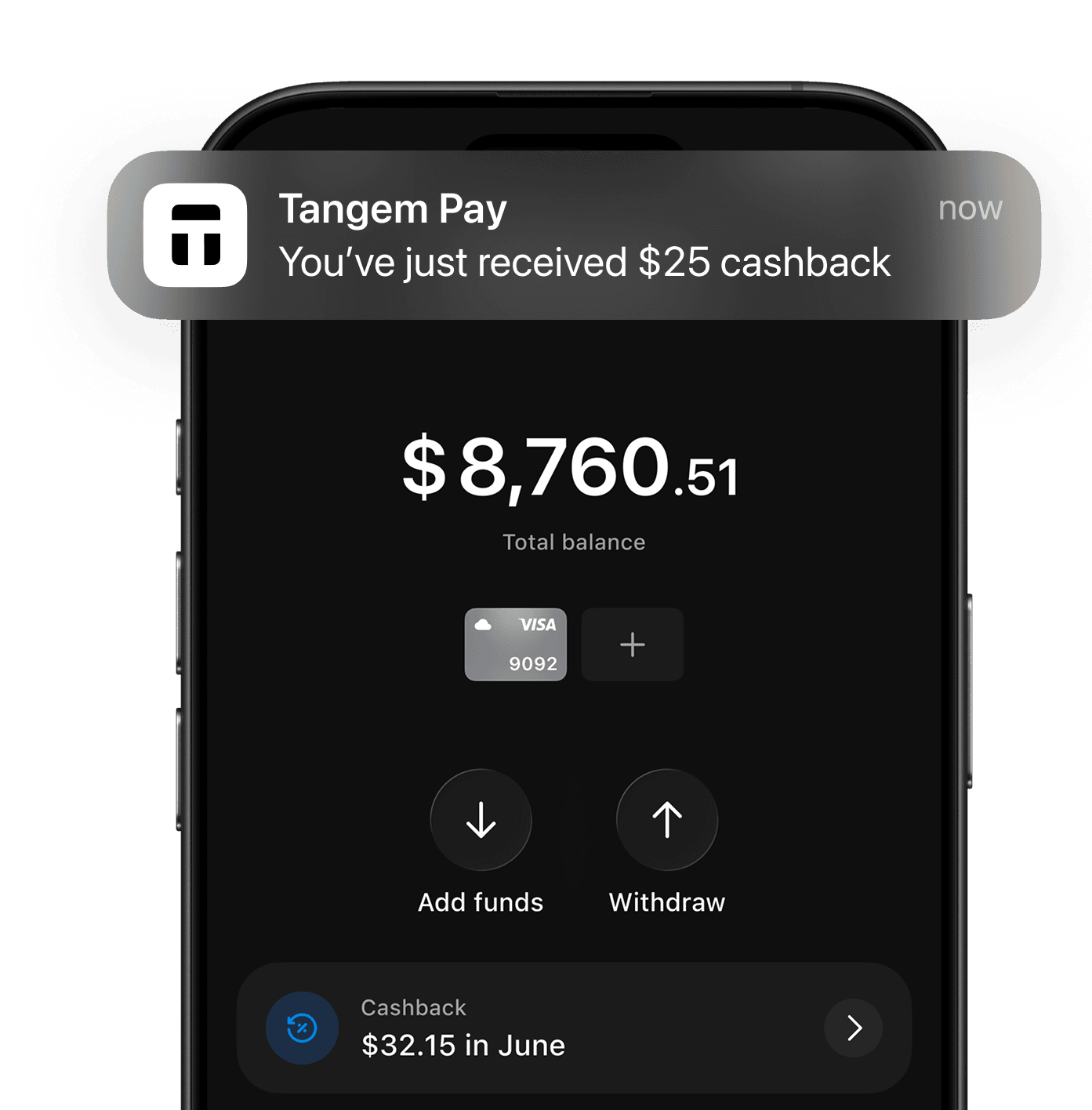
Tangem Pay pays cashback in USDC: 1% base cashback on eligible completed Basic purchases, capped at $100 per month; 2% base cashback on eligible completed Plus purchases, capped at $300 per month. A minimum purchase of $30 is required. Eligible Plus users may have Visa Signature benefits such as purchase, price, rental-car, and extended-warranty protections, each subject to its own terms. Accumulated cashback is paid between the 2nd and 5th of the following calendar month.
Taxes: spending crypto vs spending dollars
The Cash App Card spends US dollars. A card purchase itself is not a crypto disposal. Selling bitcoin to fund your Cash App balance is a separate transaction, and that sale can trigger capital gains tax under IRS rules. The IRS treats digital assets as property, not currency.
For Tangem Pay, the company states that using Tangem Pay does not create new tax obligations beyond those already associated with the underlying crypto and spending activity. This is not tax advice. Consult a tax professional about your situation. For a broader overview, see US crypto taxes.
Which card fits you?
Your paycheck lands in Cash App, and you spend mostly in the US → Cash App Card: no monthly fee, dollars spend directly.
If your income already flows into Cash App and your purchases are domestic, the Cash App Card is a straightforward choice. There's no monthly fee, no conversion step, and your balance is immediately spendable.
You earn or hold USDC or USDT → a stablecoin card like Tangem Pay avoids converting crypto to a bank first.
If your income arrives in stablecoins or you hold USDC and USDT in a self-custody wallet, Tangem Pay lets you load those assets directly and spend them at merchants that accept Visa. Check the Tangem Pay top-up networks shown in the app.
You stack bitcoin in Cash App and want self-custody → keep using Cash App to buy if you like its fees, withdraw long-term BTC to a hardware wallet such as Tangem.
Cash App's 0% fee on Auto Invest and Paid in Bitcoin purchases is competitive. For long-term storage, withdrawing BTC to a hardware wallet keeps private keys offline.
You travel or shop with foreign merchants → Cash App's 3% foreign fee applies to online foreign purchases even for qualifying customers; compare with a USD crypto card where Visa exchange rates and cross-border fees apply.
Cash App's 3% applies to online transactions regardless of qualifying status. Tangem Pay applies Visa exchange rates and cross-border fees to non-USD purchases. Calculate the actual cost under both structures before committing to either. Check Tangem Pay availability in your region.
Final thoughts
For crypto card vs Cash App Card, use Cash App when you spend dollar balances. Tangem Pay suits eligible stablecoin holders who want card spending beside a self-custody wallet. You may use both if those roles fit your cash flow. For a broader comparison, see crypto card vs debit card. Explore the Tangem wallet before deciding.
This article is for information only and is not financial or tax advice. Fees and features change. Tangem Pay is available to eligible residents in supported regions, not in every US state.
Поширені запитання
-
No. The Cash App Card is a Visa prepaid or debit card that spends US dollars from your Cash App balance. Its Bitcoin features let you buy, sell, and send Bitcoin, but they're separate from the card. A crypto card like Tangem Pay spends the USDC or USDT you load into it.
-
Yes. As of October 2026, Cash App's card agreement lists a 3% foreign transaction fee. Cash App waives it on in-person card transactions for customers who spend $500 or receive $300 in qualifying deposits a month, but not on online foreign purchases.
-
Not directly. The card spends your US dollar Cash balance, so you would sell bitcoin for dollars first. Cash App lets you send bitcoin over Lightning and pay local businesses that use Square and accept bitcoin. Round Ups work the other way, turning spare change from card purchases into bitcoin.
-
Cash App says it holds customers' bitcoin 1:1 and lets you withdraw it to your own wallet. With Tangem, your main assets stay in the non-custodial Tangem Wallet, where you control the keys. Tangem Pay, the non-custodial payment account inside the Tangem Wallet app, spends only the balance you load into it.
-
They work differently. Cash App offers weekly cash-back offers at selected merchants and extra perks with Cash App Green. Tangem Pay pays 1% base cashback on eligible purchases on the free Basic plan, capped at $100 a month, and 2% base cashback on Plus, capped at $300, paid in USDC.
-
No. Tangem Pay is available to eligible US residents, but not in every state. The app checks eligibility when you enter your state of residence during onboarding. The Cash App Card is available to US citizens and legal residents aged 18 or older, as well as to teens with a sponsored account.
-
No. Tangem Pay can work with a Tangem Mobile Wallet or the Tangem hardware wallet.
-
Direct funding supports USDC and USDT on Polygon, Base, Arbitrum, and BNB Smart Chain. Use the token, destination, and network shown in the app.
-
Cashback is credited to the Tangem Pay account in USDC. See the current Tangem Pay terms before relying on an external transfer option.


Не пропустіть 



Інші статті

