


 Переходьте на seedless. Знижка 30% з SWITCH30 до 02 лист.


Crypto Card vs Travel Card: Which Is Better for International Spending?

Travel cards win on multi-currency balances and local-currency rates. A crypto card makes more sense when your money is already in stablecoins, or you lack easy access to a traditional bank account. For many travelers, carrying both makes the most practical sense.
Crypto card vs travel card: quick comparison
As of October 2026. Fees and limits vary by provider, plan, and country. See individual provider terms before applying.
| Feature | Multi-currency fintech card (e.g., Wise) | Prepaid travel money card | Travel credit card | Crypto card (e.g., Tangem Pay) |
|---|---|---|---|---|
| Funding source | Bank transfer/debit | Cash or bank transfer | Credit line | USDC & USDT top-ups across Polygon, Base, Arbitrum, and BNB Smart Chain. Fiat Bank Transfers |
| Custody | Custodial (provider holds funds) | Custodial (provider holds funds) | Credit issuer | Non-custodial smart contract |
| Currencies supported | 40+ (Wise US) | Varies by card | Fiat only | USDC, converted to USD at point of sale |
| FX conversion | Provider's mid-market rate (fees vary by plan and currency) | Provider's rate, often with a spread | Network rate, often 0-3% foreign-transaction fee | Visa FX rate for non-USD purchases |
| ATM access | Yes, with free allowance before fees apply | Yes, fees vary | Yes, cash-advance fees usually apply | Yes, available |
| Travel perks | Limited | Rare | Common on premium cards | Available, depending on tiers |
| Consumer protections | Varies by country and plan | Varies | Chargeback rights typical | Onchain USDC is unaffected if the card is frozen |
| KYC required | Yes | Usually yes | Yes | Yes (via Sumsub) |
| Network | Visa or Mastercard | Visa or Mastercard | Visa, Mastercard, Amex | Visa |
Prepaid travel money cards
A prepaid travel money card is loaded with your own money before travel and can be used for purchases and ATM withdrawals. One card can store multiple currencies without directly linking to your main bank account. You can spend only the pre-funded balance. There is no credit line, interest, or direct exposure of your main bank account.
Travel credit cards
A travel credit card uses a credit line for overseas spending. It may offer a 0% foreign transaction fee, rewards, insurance, or lounge access, but it requires repayment, and unpaid balances accrue interest.
What is a crypto card?
A crypto card operates on a regulated Visa or Mastercard network and typically requires a 5-15 minute identity check using government-issued identification. It is funded by crypto or stablecoins converted or loaded before spending, rather than a fiat bank account or credit line.
A custodial crypto card delegates control of the private key to a third party. A self-custodial option like Tangem Pay keeps funds in a smart contract controlled by the user, not by an intermediary. If the card is frozen, the on-chain USDC balance is unaffected.
Exchange rates and fees
Your cost depends on when the conversion happens and which rate applies. Wise typically uses a mid-market rate with a fee on top; that fee varies by plan, currency pair, and transaction size.
Topping up and access to funds
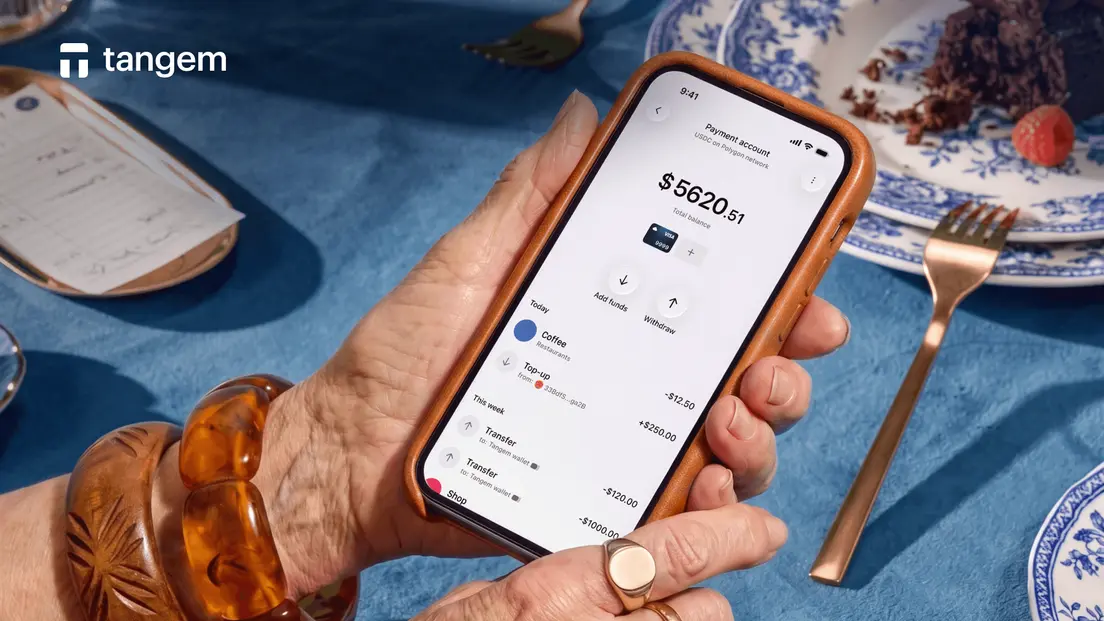
Tangem Pay balances are funded via crypto assets or fiat bank transfers through a non-custodial smart contract account embedded in the Tangem Wallet app.
Direct crypto top-ups
Native USDC on the Polygon network serves as the primary base currency for Tangem Pay. Direct USDT top-ups are supported across multiple networks, including Polygon, Base, Arbitrum, and BNB Smart Chain.
In-App Swap (Any Crypto): You can fund the account using other cryptocurrencies (such as BTC, ETH, or SOL) by utilizing Tangem’s built-in DEX aggregator to swap them into USDC on Polygon or USDT prior to or during the top-up process.
Fiat Bank Transfers (U.S. Bank Rails)
In supported regions, users can send funds directly from a U.S. bank account via ACH or FedWire to a dedicated virtual bank account. Incoming fiat USD is automatically converted at a 1:1 ratio into USDC on Polygon and deposited directly into your Tangem Pay spending account.
Separation from Main Wallet: Tangem Pay operates as a distinct spending account separate from your main Tangem Wallet, keeping your long-term crypto holdings separated from card spending activity.
ATM withdrawals abroad
Travel cards currently have a practical advantage. Wise offers a free monthly withdrawal allowance.
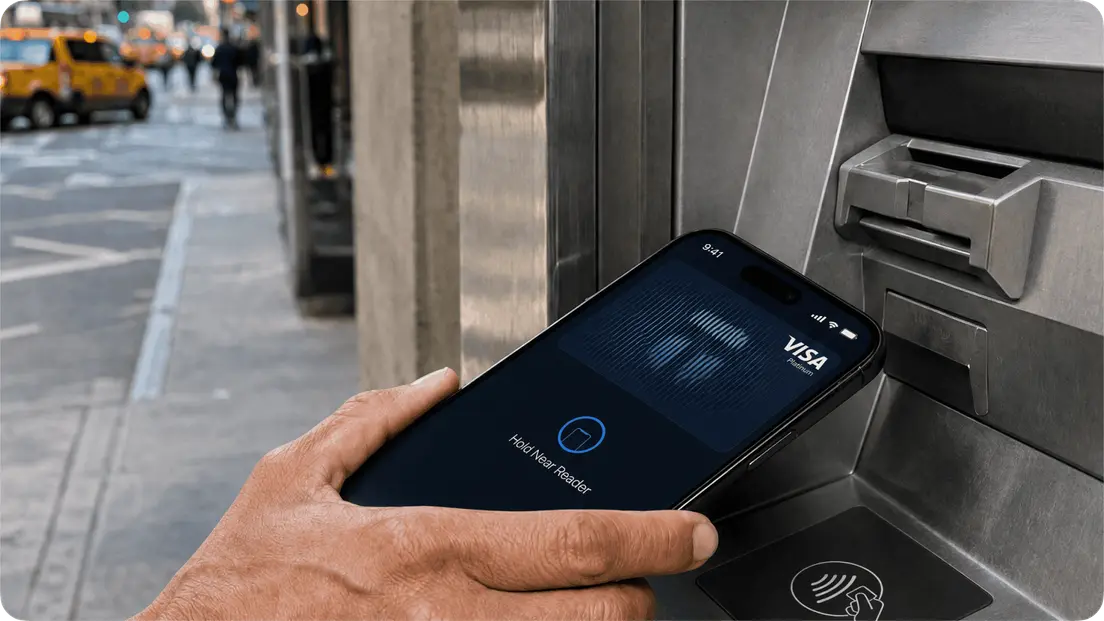
With Tangem Pay, withdrawing cash at international ATMs works with a physical Tangem Pay card (or via contactless ATMs with a phone), deducting the local cash value from your USDC balance.
How the withdrawal process works
- When you enter a cash request at a foreign ATM, Visa calculates the exchange rate from the local fiat currency (e.g., euros or yen) to USD
- The transaction request routes to your Tangem Pay smart contract account on the Polygon network.
The equivalent USDC value (plus applicable fees) is deducted directly from your Tangem Pay smart contract balance on-chain.
Tangem Pay fees:
- Basic Plan: 4% ATM withdrawal fee.
- Plus Plan: 2% ATM withdrawal fee.
- Foreign Exchange (FX) Conversion: Non-USD withdrawals use the standard Visa Exchange Rate.
- Local ATM Operator Fees: The physical ATM operator abroad may charge an independent operator surcharge.
- Dynamic Currency Conversion (DCC): If the ATM screen asks whether you want to be billed in your home currency (USD) or the local foreign currency, always choose the local currency. Choosing USD triggers a dynamic conversion with high markups from the ATM owner.
Limits & Requirements
Daily Limits: Maximum 3 withdrawals per 24 hours, capped at $250 per transaction (or $750/day total).
- Physical Card Needed: While contactless ATMs accept smartphones via Apple Pay / Google Pay, most global ATMs still require a physical plastic chip-and-PIN card. You can order and activate the physical Tangem Pay card in the app before traveling.
ATM operators can add their own surcharge. In Thailand, many machines add 220 THB on top of any issuer fee, so check the screen before confirming a withdrawal.
Rewards and travel perks
Tangem Pay offers rewards and travel perks through a tiered structure (Basic, Plus, and Prestige) tied to its Visa debit card program. Rewards are earned directly in USDC rather than points or loyalty tokens.
1. Cashback rewards program
Tangem Pay pays cashback directly in USDC to your spending account, where it can be spent immediately. Rewards accrue over the billing cycle and are deposited automatically as USDC at the end of the month.
Due to local interchange regulations, in-store terminal purchases inside the EU/UK do not earn cashback. However, online purchases at EU merchants and all purchases made abroad outside the EU/UK earn full cashback, making it a solid reward setup for international travel.
Travel perks & Visa network benefits
Depending on your membership tier, Tangem Pay provides network-backed travel protections through Visa Signature (Plus tier) and Visa Infinite (Prestige tier).
Airport lounge access
- Plus Plan: 2 complimentary airport lounge passes per year (via Priority Pass/Dragon Pass).
- Prestige Plan: 8 complimentary airport lounge passes per year.
Travel insurance & coverage
- Baggage delay & loss insurance: Included on Prestige tiers to reimburse essential purchases if luggage is lost or delayed.
- Purchase & extended warranty protections: Plus and Prestige plans extend the warranty by up to 1 year on eligible purchases.
Premium Hospitality & Services
- Visa luxury hotel collection: Available on Plus and Prestige tiers, granting room upgrades, complimentary breakfast, late checkouts, and food/beverage vouchers at over 900 partner hotels worldwide.
- Concierge services: Dedicated assistance with dining reservations, booking events, and flight planning.
Fee reductions for travelers
- Lower ATM withdrawal surcharges: Higher tiers cut ATM cash withdrawal fees abroad down from 4% (Basic) to 2% (Plus) or 1% (Prestige).
- Free Fiat On-Ramp: Plus and Prestige tier members get $0 ACH/Wire top-ups when transferring USD from bank accounts into USDC on Polygon.
Which should you choose?
Choose a crypto card like Tangem Pay if you already hold stablecoins, want non-custodial control, or have limited access to traditional banking.
Many travelers use more than one card: credit cards for rewards, fintech cards for FX, and crypto cards for stablecoin balances. For context on how crypto remittances vs bank transfers stack up when sending money across borders, that comparison addresses a related but distinct use case.
| Traveler profile | Best fit |
|---|---|
| Frequent multi-currency spender with fiat | Multi-currency fintech card |
| Budget traveler wanting spending discipline | Tangem Pay |
| Rewards-focused frequent flyer | Tangem Pay |
| Crypto holder wanting to spend stablecoins | Tangem Pay |
| No traditional bank account | Tangem Pay |
| Wants maximum travel protection | Travel credit card + fintech card |
Disclaimer: This article is for informational purposes only and does not constitute financial or tax advice. Tangem Pay availability and features depend on country and eligibility. Verify current fees, limits, and supported regions on the Tangem Pay product page and your applicable provider's terms before making any financial decision.
Поширені запитання
-
Neither is universally better. A travel card is better if your money is in fiat and you want multi-currency balances, competitive FX rates, and established consumer protections. A crypto card is better if your funds are already in stablecoins, you want non-custodial control over your balance, or you're in a region where traditional banking is difficult to access. The right choice depends on where your money lives and how you travel.
-
It depends on the provider, plan, and currencies involved. Multi-currency fintech cards often use mid-market rates with a fee on top; the exact cost depends on the currency pair and your plan. Crypto cards may charge a conversion spread (reported examples range from 0.5% to 2.5% across the category) plus any applicable FX fees at the network level. Tangem Pay charges no transaction fee or monthly fee, but Visa foreign-exchange rates apply for non-USD purchases. Comparing the specific fee schedules for your destination currencies is the only reliable way to determine which is lower.
-
Yes, and many travelers do. A travel credit card covers rewards and trip protections; a fintech card handles local-currency spending at competitive rates; a crypto card like Tangem Pay covers stablecoin balances and provides a non-custodial backup if your other cards are frozen or lost. Carrying both means you're not dependent on a single provider or a single card network for your entire trip.
-
Some do, depending on the provider and tier. Travel credit cards remain the strongest option for perks-focused travelers. They offer a different kind of value: non-custodial control over your balance and the ability to use USDC that converts 1:1 to USD for each purchase.
-
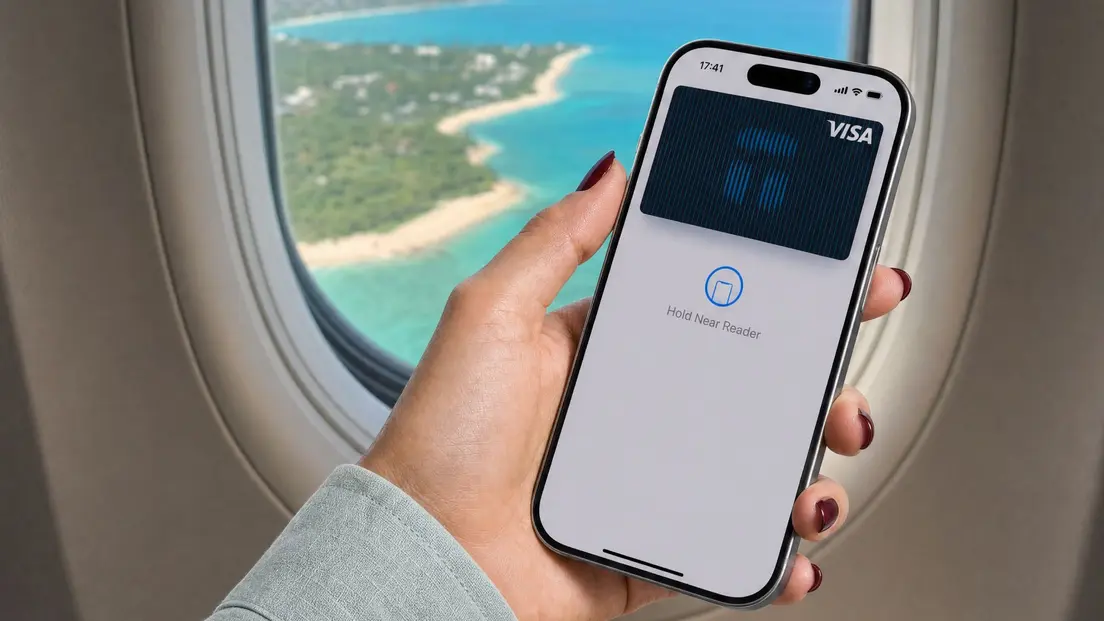
Check the merchant's accepted payment methods before you rely on it. Tangem Pay has a virtual and a physical card. It works through Apple Pay or Google Pay for contactless payments, and its card details can be used online. Carry a physical travel card or credit card as a backup.
-
No. Keeping only a near-term spending amount in an online wallet while holding the bulk in colder storage is a standard risk-separation practice. Load only what you expect to spend soon, then keep another payment method available for the trip.
-
Don't rely on one payment method. Tangem Pay is a virtual and physical card that you use through Apple Pay, Google Pay, or its card details, so losing access to your phone can interrupt in-store spending. A travel card or credit card gives you a separate payment method while you restore access.
-
No. Tangem Pay requires a supported region and one-time KYC verification. Check current eligibility before you travel or rely on it as your primary payment method. A local travel card or credit card can cover spending where Tangem Pay is unavailable.
-
Yes, you can. Tangem Pay's ATM withdrawal feature is now live, and ATM fees applies according to the tier plan.
-
A frozen Tangem Pay card disconnects from the Visa network, but the on-chain USDC balance is unaffected. It cannot be used for payments, so another card or cash backup matters while you restore access.


Не пропустіть 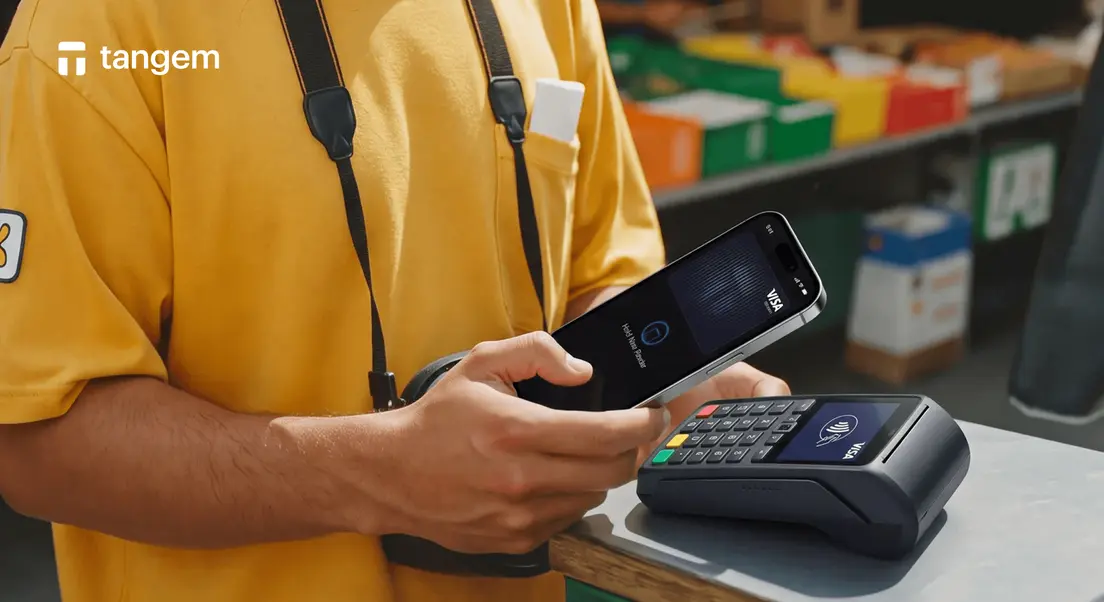




Інші статті

