


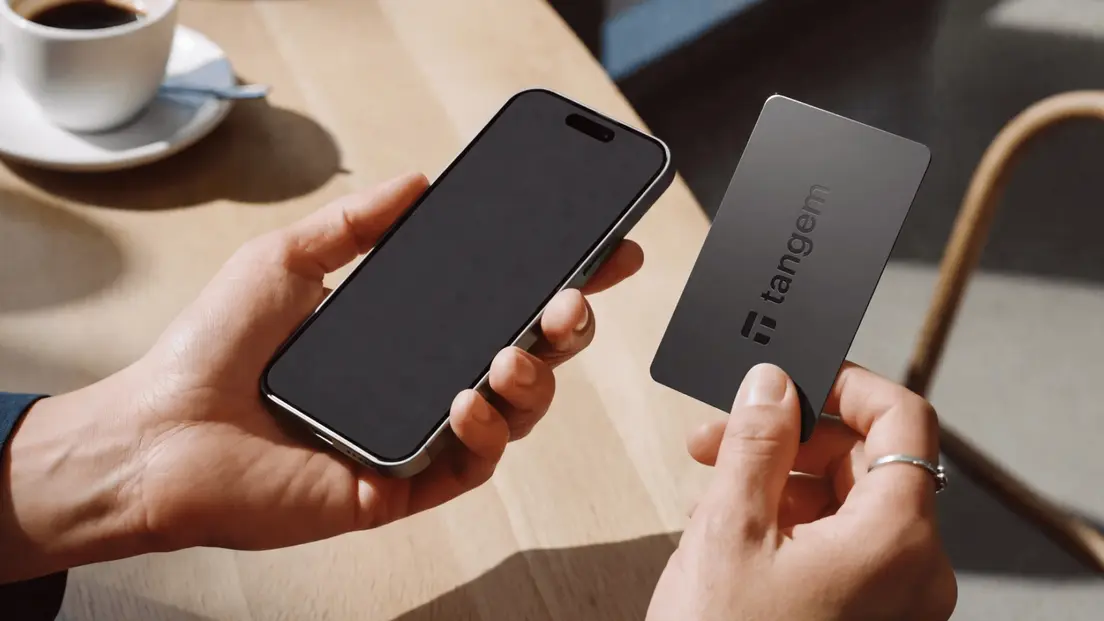
Best Stablecoin Cards for Everyday Spending

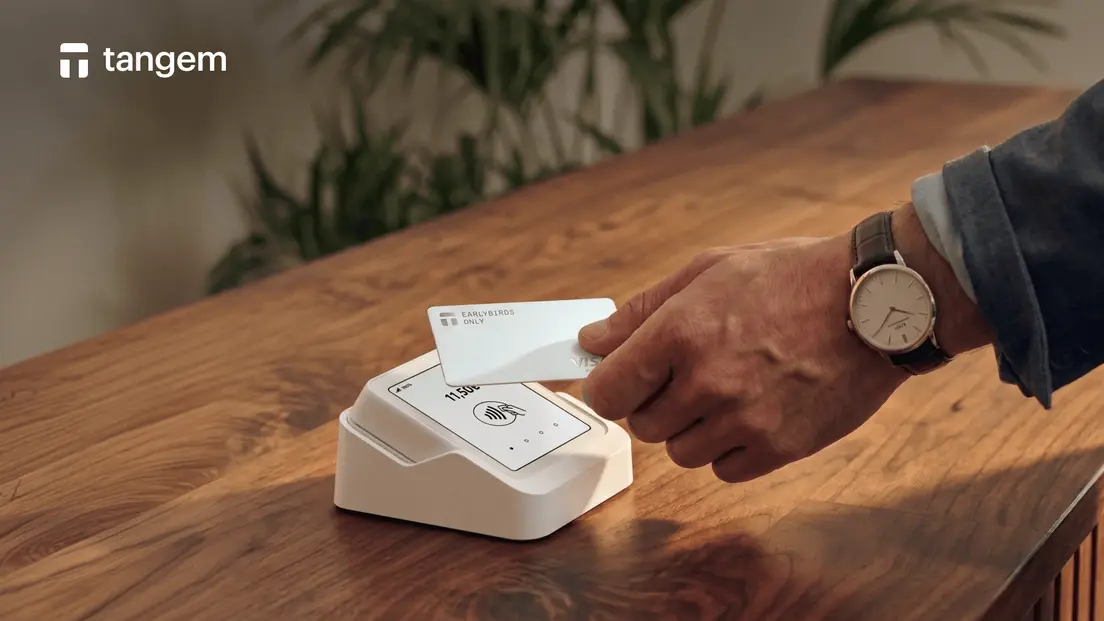
Spending crypto at a coffee shop used to mean converting to fiat first, waiting for the transfer, then loading a card. Stablecoin cards cut that chain short. If you hold USDC, you can fund a card directly from that balance and pay anywhere Visa is accepted, with no exchange detour required. Tangem Pay stands out as the clearest option for anyone who wants to maintain self-custody while spending stablecoins day to day.
What Makes a Card a 'Stablecoin Card'
A stablecoin is a cryptocurrency pegged to a fiat currency, usually the US dollar. The whole point is price stability: you're not gambling on the value of your balance between the moment you fund the card and the moment you tap it at a register. Here's how the payment flow actually works. You load a card with USDC. When you pay a merchant, the card program converts that USDC 1:1 to USD and routes the transaction through the Visa network. The merchant receives USD. They never touch USDC, and they don't need to know anything about crypto.
That distinction matters. A stablecoin card is not the same as a merchant accepting crypto directly. The card program handles conversion; the merchant just sees a normal Visa payment. What makes the card a "stablecoin card" is the funding source. Your balance is denominated in a stablecoin rather than coming straight from a bank account or a volatile crypto asset.
The practical benefit: you avoid the price-swing risk associated with funding a card with Bitcoin or Ethereum. Your $200 USDC balance is still worth $200 when you spend it.
Comparison Table: Supported Stablecoins & Fees
One thing the market gets wrong is reducing stablecoin card comparisons to a single "fee" column. The real cost picture has at least four layers: monthly account charges, funding or conversion costs, ATM withdrawal fees, and foreign-exchange markups. Network compatibility adds another dimension. USDC on Polygon is not the same as USDC on Ethereum for funding purposes.
| Card | Supported Stablecoin | Network | Monthly Fee | Custodial? | ATM Fee | FX Fee | Ideal For |
|---|---|---|---|---|---|---|---|
| Tangem Pay | USDC | Polygon | Free | No, self-custody smart contract | 4% (Basic plan), 2% (Plus plan) | Visa FX rates apply to non-USD spend | USDC-on-Polygon holders who want self-custody |
Tangem Pay is the only card in this guide built on a non-custodial model. That balance remains in a smart contract you control. Tangem Pay has no monthly account fee or transaction fee on purchases. Funding requires native USDC on the Polygon network, not USDC on Ethereum or another chain. Polygon network gas applies when you top up, which is typically a fraction of a cent at normal congestion levels. ATM withdrawal fees are listed as applicable in the product documentation.
A note on the table: the brief for this article requested rows for multiple providers. Web research did not surface authoritative, current fee data for other named stablecoin card programs that could be verified against primary sources. Rather than invent figures, the table reflects only the provider whose data is confirmed in the vault. If you're evaluating alternatives, check each provider's current fee schedule directly. Pay close attention to whether the stablecoin's network, not just its ticker, is compatible with the card's funding system.
Self-Custody vs. Custodial Stablecoin Cards
This is the most important filter. Get it wrong, and the card you choose may not actually give you what you think it gives you.
Self-custody means you control the private keys. With Tangem Pay, your USDC is held in a smart contract you own. No third party can freeze your on-chain balance. If the card itself is frozen for a compliance reason, it disconnects from the Visa network, but the USDC balance on-chain remains completely unaffected. You can still move those funds.
Custodial cards work differently. You deposit stablecoins with a provider, and that provider holds the assets on your behalf. The interface is usually simpler, and account recovery is easier if you lose access. But you're trusting that provider not to get hacked, go insolvent, face regulatory action, or freeze withdrawals. Those are real risks, not theoretical ones.
The core tradeoff: custodial arrangements offer convenience and recovery options; non-custodial arrangements give you control and responsibility in equal measure.
Self-custody is not risk-free either. With Tangem Pay, your USDC is secured by your Tangem hardware wallet. A Tangem card set can contain two or three interchangeable backup cards. If every backup is lost and no seed phrase exists, funds are permanently inaccessible. That's the honest limitation of the non-custodial model: you are the last line of defense. For most stablecoin card users, the custody question should come before the fee question. A lower monthly fee on a custodial card doesn't help if the provider freezes your account during a market event.
How Stablecoin Cards Actually Charge You
Stablecoin card fees fall into four categories, and providers vary significantly in which ones they disclose upfront.
On-ramp or conversion fees apply when you buy stablecoins to fund the card. Card-based on-ramps across the industry currently run around 3% to 5.5%; bank transfer rails are typically lower, in the 0% to 2% range depending on provider. For USDC already held on Polygon in your Tangem Wallet, funding costs only Polygon network gas, not a percentage charge.
Monthly account fees are the most visible line item. Tangem Pay has no monthly account charge, virtual card issuance fee, or per-transaction fee on purchases.
- ATM fees apply when you withdraw cash. 4% for the Basic plan, and 2% on the Plus plan.
- Foreign-exchange fees kick in when you spend in a currency other than USD. For non-USD transactions, it uses Visa's foreign-exchange rates. Some providers advertise no FX markup; others embed an additional conversion charge on top of the network rate. Always check the FX policy before using a stablecoin card internationally.
Here's what that means in practice: a user who already holds USDC on Polygon and spends exclusively in USD pays nothing beyond Polygon gas, essentially to fund the account. The cost profile changes the moment ATM withdrawals or international spending enter the picture.
Which Stablecoin Card Should You Get?
Start with custody, then match the card to your stablecoin and spending pattern.
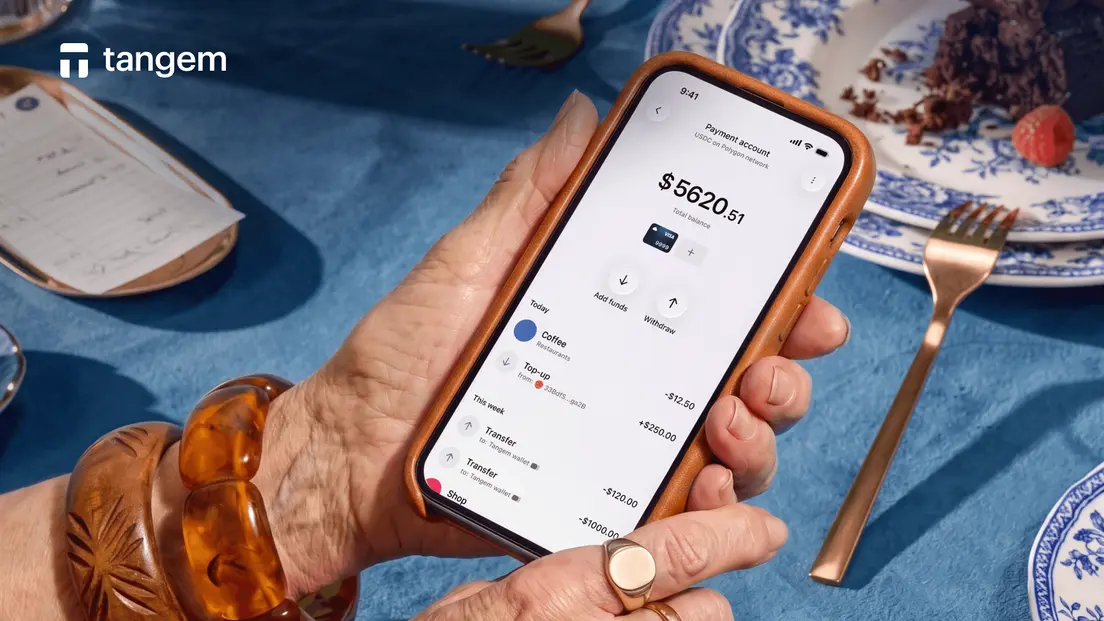
If you hold USDC on Polygon and want to keep self-custody, Tangem Pay is the direct answer. You fund from your existing Tangem Wallet balance, pay no monthly fee, and your on-chain USDC is never handed to a third party. You'll need a Tangem hardware wallet, the Tangem Wallet app, and one-time KYC verification through Sumsub. Tangem says it does not see or store your identity data, and KYC is siloed to the payment account. Your main Tangem Wallet remains anonymous.
If you hold USDT or USDC on a different network: Tangem Pay currently supports native USDC on Polygon only. A different stablecoin or network means you'd need to bridge or swap before funding. That adds steps and potentially fees. Evaluate whether that friction is worth the self-custody benefit, or whether a custodial card that accepts your specific stablecoin and network is a better fit for your situation.
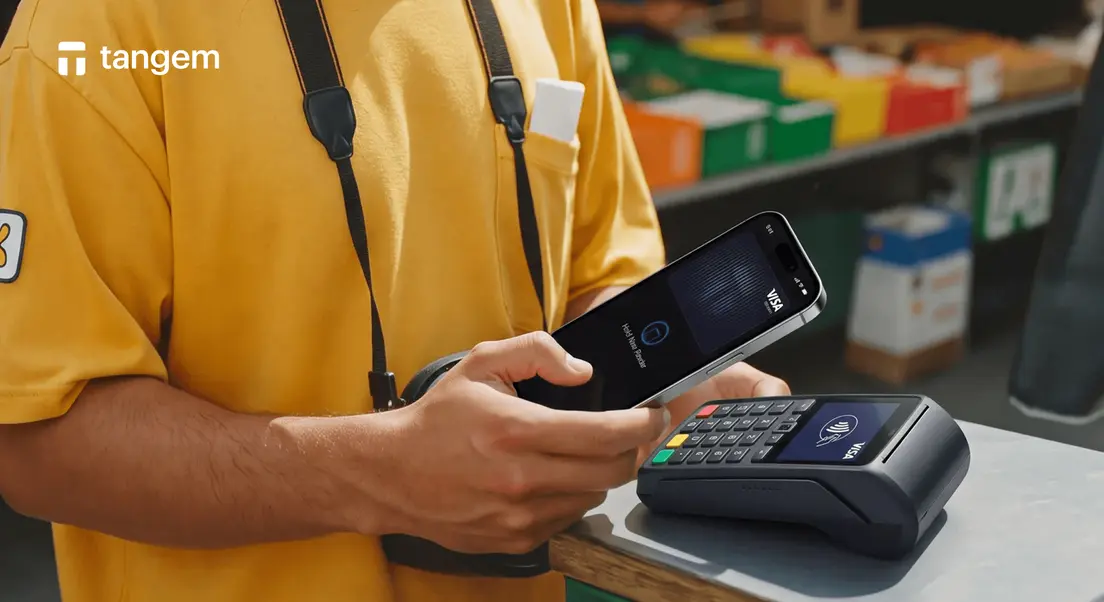
If you travel frequently: Tangem Pay works anywhere Visa is accepted globally. International transactions use Visa FX rates. The virtual card can be added to Apple Pay or Google Pay for contactless payments.
If you want the simplest possible setup: A custodial card may offer easier onboarding and account recovery. Just be clear on what you're trading away: control of your private keys and, with it, the guarantee that your balance stays yours regardless of what happens to the provider.
Поширені запитання
-
It depends on which stablecoin you hold and whether you want self-custody. Tangem Pay funds directly from self-custody USDC on Polygon with no monthly fee or purchase transaction fee. If you hold a different stablecoin or need a different network, check whether that provider's card program supports your specific asset and chain before signing up.
-
Support varies by provider. USDC is the most commonly supported stablecoin in card programs, but USDT is available on some platforms. Always confirm which specific stablecoin ticker and which blockchain network a card accepts before funding it. The ticker alone isn't enough, since a card may support USDC on one network but not another.
-
Stablecoin cards avoid the price-swing risk of funding a card with volatile crypto, since stablecoins are designed to hold a steady value. But "safer" also depends on custody: a self-custody card like Tangem Pay keeps your on-chain balance unaffected even if the card is frozen, while a custodial card exposes you to platform risk, including hacks, insolvency, or regulatory freezes.
-
Yes. Tangem Pay requires one-time identity verification through Sumsub, including a government ID and face verification. Tangem states it does not see or store your identity data. Importantly, KYC is siloed to the Tangem Pay account. Your main Tangem Wallet remains separate and does not require KYC.
-
Your on-chain USDC balance is unaffected. If the card is frozen, it disconnects from the Visa network, but the funds in the smart contract you control remain accessible. This is the core advantage of the non-custodial model: card-level compliance actions don't touch your underlying crypto balance.
-
Tangem Pay works anywhere Visa is accepted globally. International transactions use Visa foreign-exchange rates, which apply when spending in non-USD currencies. The virtual card can be added to Apple Pay or Google Pay. ATM withdrawal fees apply as well.


Не пропустіть 


Інші статті

