 Switch to seedless. Get 30% off with SWITCH30 till Oct 19


Are These Stablecoins MiCA-Compliant? USDC, USDT, DAI and More
Of the twelve stablecoins listed, only USDC holds full MiCA authorization as of July 2026.
This article is available in the following languages:
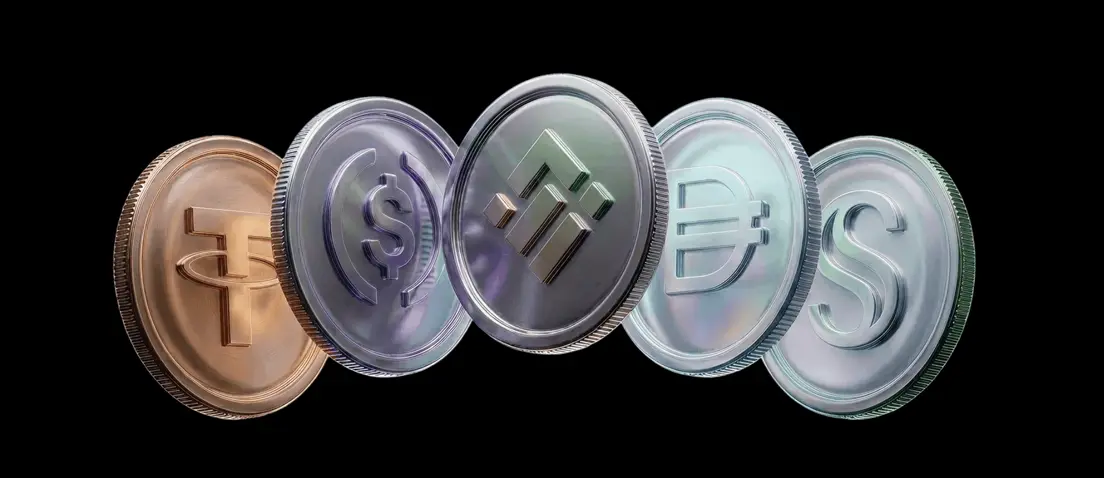
USDT, USDC, DAI, FDUSD, CRVUSD, USDC.E, PYUSD, BUSD, XDAI, AUSD, RLUSD, and USDFs. Each stablecoin in this set participates in the Zero-fees stablecoin swap campaign in Tangem Wallet. Each one has a different issuer, backing model, and legal standing in the European Union.
This article does two things. It sorts each token by its status under the EU's Markets in Crypto-Assets Regulation (MiCA), and it states the strongest case a believer would make for each one.
Why MiCA decides which stablecoin you can hold
MiCA is the EU framework that governs crypto-assets across all 27 member states. The stablecoin rules took effect on 30 June 2024, and the transitional window for service providers closed on 1 July 2026.
MiCA sorts stablecoins into two legal categories.
- An e-money token (EMT) tracks a single currency such as the dollar or the euro.
- An asset-referenced token (ART) tracks a basket of currencies, commodities, or other assets.
An issuer must hold an active authorization from a national regulator before it can offer a stablecoin to the EU public. That authorization appears in the public register kept by ESMA, the EU securities regulator.
The rules are strict. Every authorized stablecoin must hold reserves backed 1:1 by liquid assets in segregated accounts. Issuers cannot pay interest on the token itself, and holders must be able to redeem at par on demand.
What each stablecoin does
Here are the definitions, issuers, and current estimated market caps for each of the stablecoins you listed.
USDT (Tether)
USDT, the stablecoin leader, has the deepest liquidity in the market. It serves as the default settlement dollar for offshore trading and emerging markets.
- Issuer: Tether.
- Market Cap: ~$184 billion.
Staying outside MiCA can work in Tether's favor. It keeps regulatory friction low and lets the company keep the full yield on its reserves, which funds one of the most profitable balance sheets in the industry.
USDC (USD Coin)
USDC is the compliance-focused stablecoin. It is widely used by regulated venues and institutions, holding full MiCA authorization and preparing for future US frameworks.
- Issuer: Circle (a publicly listed company).
- Market Cap: ~$73 billion.
Circle moved first on MiCA, it is ready for the US GENIUS Act framework, and it is a publicly listed company. As rules tighten worldwide, the compliant option tends to gain share, and Circle's cross-chain transfer protocol gives it the widest native reach.
DAI (Sky)
DAI is a decentralized, censorship-resistant stablecoin backed by a mix of cryptocurrency and real-world assets. It pays a native savings rate to holders who lock the token.
- Issuer: Decentralized (MakerDAO/Sky protocol).
- Market Cap: ~$4.6 billion.
The issuing protocol earns real revenue and backs the peg with a mix of crypto and real-world assets. It also pays a native savings rate to holders who lock the token.
FDUSD (First Digital USD)
FDUSD is a fiat-backed exchange-liquidity stablecoin based in Hong Kong. It captures large organic volume as a primary zero-fee trading pair on major exchanges.
Issuer: First Digital.
Market Cap: ~$346 million.
FDUSD became a primary zero-fee trading pair on the largest exchange after BUSD wound down, giving it significant organic volume.
Its Hong Kong base aligns it with a maturing Asian regulatory market.
CRVUSD
crvUSD is a decentralized, overcollateralized stablecoin with a unique soft-liquidation design. This mechanism converts collateral gradually to lower cascade risks during market drops.
Issuer: Decentralized (Curve Finance protocol).
Market Cap: ~$206 million.
CRVUSD connects directly to deep decentralized liquidity. Fees route back to the token holders who govern the protocol.
USDC.E (Polygon Bridged USDC)
USDC.E is a bridged version of USDC that extends dollar exposure to blockchain networks where native USDC has thin liquidity or no official deployment yet.
Issuer: Bridged asset (originally backed by Circle's USDC but bridged via third-party protocols).
Market Cap: Varies by chain (supply is usually tracked as part of the broader USDC ecosystem).
PYUSD (PayPal USD)
PYUSD is a regulated stablecoin designed for distribution and payments. Integrated into PayPal and Venmo, it provides a massive on-ramp for mainstream users.
Issuer: Paxos (in partnership with PayPal).
Market Cap: ~$2.9 billion.
PYUSD's expansion into fast, low-cost chains, along with its holder rewards, supports a real payments use case. Trusted brand recognition lowers the barrier for first-time users.
BUSD (Binance USD)
BUSD fiat-backed stablecoin that is currently in a managed wind-down. While it has no growth path, it remains fully redeemable 1:1 for fiat.
Issuer: Paxos.
Market Cap: ~$37 million (Native) / ~$283 million (Binance-peg).
The honest case for BUSD is narrow. Its issuer stopped minting in 2023, so it is in managed wind-down and has no growth path. The one positive is a clean exit. It stays fully redeemable 1:1 through a regulated issuer, so holders can convert to fiat.
XDAI
xDAI is created 1:1 with Ethereum’s DAI token and bridged to the Gnosis Chain. xDAI is a stablecoin with a $1 price peg and is primarily used as a transaction payment token. The benefit of using xDAI on the Gnosis Chain instead of DAI on Ethereum is that transaction fees are significantly lower.
- Issuer: Decentralized (Bridged DAI on the Gnosis chain)
Market Cap: ~$65 million.
Stable and near-zero fees make xDAI practical for real payments. It powers card products and community tooling built on that network.
AUSD (Agora USD)
An institutional bridge between traditional and decentralized finance. It features a unique distribution model that shares reserve yields with the apps and exchanges that integrate it.
Issuer: Agora (with reserves run by a major TradFi asset manager)
Market Cap: ~$200 million.
A major asset manager runs AUSD reserves, and a large custodian bank holds them in a bankruptcy-remote structure, which clears institutional risk reviews.
RLUSD (Ripple USD)
An institutional payments stablecoin built to settle cross-border value over established payment rails.
Issuer: Ripple
Market Cap: ~$1.5 billion
RLUSD holds a US trust charter, and its issuer has added EU, UK, and Japanese licenses around it. The token is built to settle cross-border value over established payment rails. Its heavy regulatory footprint is the moat, and EU EMT authorization would be the next unlock.
USDF (Falcon USD)
USDF is an overcollateralized, yield-bearing synthetic dollar. It uses market-neutral trading strategies and diversified collateral (including real-world assets and major cryptocurrencies) to turn idle dollars into productive, yield-generating assets while maintaining a 1:1 peg.
Issuer: Falcon Finance
Market Cap: ~$1.4 billion.
MiCA status
Only one token in this set currently holds full MiCA authorization—USDC.
Circle secured an e-money license through the French regulator ACPR in July 2024. This made USDC the first major global stablecoin authorized under MiCA. Its euro counterpart, EURC, runs under the same license.
PYUSD and FDUSD lack MiCA authorization. Paxos issues PYUSD from the United States, and First Digital issues FDUSD from Hong Kong. Neither holds an active EU EMT license.
DAI, CRVUSD, and XDAI have no single issuer to authorize. They are decentralized or protocol-issued tokens, which place them outside the standard EMT authorization path and out of regulated EU distribution.
USDC.E is the bridged version of USDC, not the native token Circle issues. The MiCA authorization covers native USDC, so the bridged variant is not the authorized instrument.
AUSD and USDFs do not appear in the ESMA EMT register. AUSD is a US-issued institutional dollar, and USDF are synthetic dollars issued by a DeFi protocol.
BUSD is a special case. Paxos stopped minting it in 2023 under a New York regulatory order, so it is in wind-down and is not a candidate for EU authorization.
Summary table
| Token | MiCA status | Backing model | Note |
|---|---|---|---|
| USDT | Not authorized | Fiat-backed | Deepest liquidity, highest issuer profit |
| USDC | Authorized | Fiat-backed | Compliant, listed issuer, widest reach |
| DAI | No issuer to authorize | Crypto and RWA | Censorship-resistant, native yield |
| FDUSD | Not authorized | Fiat-backed | Major exchange liquidity, Asia base |
| CRVUSD | No issuer to authorize | Overcollateralized | Soft-liquidation mechanism edge |
| USDC.E | Not the authorized token | Bridged USDC | Reach on chains lacking native USDC |
| PYUSD | Not authorized | Fiat-backed | PayPal and Venmo distribution |
| BUSD | Retired, in wind-down | Fiat-backed | Clean 1:1 redemption only |
| XDAI | No issuer to authorize | Bridged, native gas | Chain utility and low fees |
| AUSD | Not authorized | Fiat-backed | TradFi custody, yield-share model |
| RLUSD | Pending | Fiat-backed | Institutional rails, heavy licensing |
| USDFs | Not authorized | Synthetic, overcollateralized | Real yield for holders |

Don't miss these 








Other articles

