Around 22 million Nigerians now hold crypto, roughly one in ten people. When the naira lost over 75% of its value against the dollar since 2016, and banks started cutting off foreign exchange access, millions of people moved into digital assets instead. Stablecoins now account for 43% of retail crypto transactions in the country, as many Nigerians see holding USDT as smarter than holding naira. In that context, choosing a wallet isn't a technical detail but an important financial decision.
Events in March 2025 demonstrated the importance of self-custody in the Nigerian market, as the naira shock triggered a spike in on-chain activity across Sub-Saharan Africa. This guide covers the essentials of a crypto wallet and users' choices based on their needs.
How Crypto Wallets Work
The blockchain is a public ledger that records who owns which units of a cryptocurrency. Those coins stay permanently on that ledger, rather than in your crypto wallet. What is a crypto wallet, then? It's basically a software that holds a private key: a cryptographic string that grants the right to sign transactions from your address. Whoever controls the private key controls the funds.
So the real question is who holds the key. Custodial wallets (the accounts inside exchanges like Binance or Coinbase) hold the keys for their users. This is convenient, but custodial platforms can sometimes block accounts or get hacked. By contrast, self-custody wallets give you direct control over the key, without intermediaries. In Nigeria, where regulatory pressure has disrupted access to exchanges more than once, that difference has cost some users real money. Hence, it's not a philosophical preference but a very practical one.
Types of Crypto Wallets Available in Nigeria
Mobile Wallets
Hot wallets are like a physical wallet you carry in your pocket: convenient for everyday use, but not where you'd keep your life savings. Trust Wallet, MetaMask, and similar hot wallet apps are free, need no hardware, and take minutes to set up. In Nigeria, where P2P trading happens on phones and most crypto activity is mobile-first, they're the major starting point.
The problem with hot wallets is that your private keys live on a device that's connected to the internet, runs apps, and can get lost or stolen. For small amounts you actively use, that's a reasonable compromise, but you should avoid using hot wallets to store large crypto assets.
Hardware Wallets
A hardware wallet works like a safe that can sign documents without opening. The private key lives on a dedicated chip inside the device and never connects to the internet. Your phone or laptop sends the transaction, and the device signs it offline. Even on a compromised phone, the key stays untouched.
Exchange Wallets
Keeping crypto on an exchange is useful for trading, unless the exchange suddenly freezes withdrawals, which Nigerian users have experienced more than once due to regulatory pressure or technical issues, or sometimes with no explanation at all.
Quick Comparison – Best Crypto Wallets in Nigeria (May 2026)
Wallet
Type
Custody
Platforms
Best For
Key Notes
Tangem Wallet
Hardware (card)
Non-custodial
iOS, Android
Everyday self-custody & savings
EAL6+ chip, NFC tap-to-sign, no battery needed, card set includes backup, optional seed phrase. 16,000+ cryptocurrencies across 85+ blockchain networks supported.
Trust Wallet
Mobile (hot)
Non-custodial
iOS, Android
P2P transfers, daily payments
Popular in Nigeria, beginner-friendly, wide token support, and built-in DeFi browser. Seed phrase required.
MetaMask
Mobile + Browser
Non-custodial
iOS, Android, Browser
DeFi & Web3 access
Standard for EVM chains. Widely integrated with dApps and DEXs. Not ideal for Bitcoin.
Swiss-made, open-source, dual-chip design. Bitcoin-only or multi-edition. Desktop-first.
Coinbase Wallet
Mobile (hot)
Non-custodial
iOS, Android
Coinbase users entering self-custody
Separate from the Coinbase exchange. Beginner-friendly, works well with the Coinbase ecosystem.
Best Crypto Wallets in Nigeria Reviewed
1. Tangem Wallet – Best Overall Crypto Wallet for Nigeria
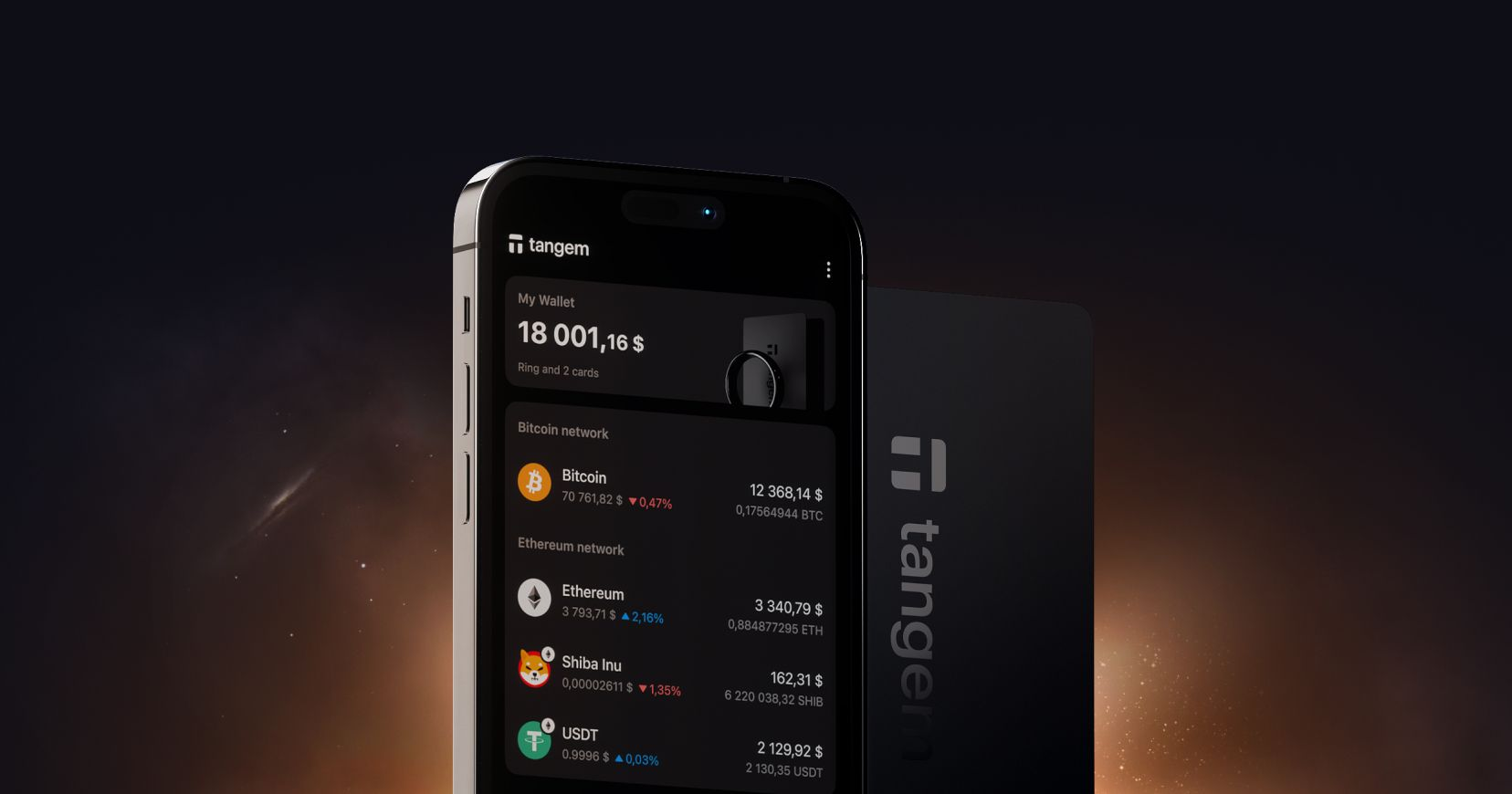
What makes Tangem stand apart isn't a single feature, but the combination of them. The wallet has a stylish credit card-like design with an EAL6+ certified chip; the same certification tier used in biometric passports and banking hardware. The private key is generated on the chip and never leaves it, whether during setup or during transactions. You approve transfers by tapping the card against your phone's NFC reader; the experience is closer to contactless payment than to most people's idea of a hardware wallet.
For Nigerian users, several details matter beyond security alone. No battery or cables means nothing to charge, and no desktop is required. The wallet works on any NFC-enabled Android or iOS device, which covers the vast majority of smartphones used across the country. Setup takes around two minutes.
Tangem supports over 16,000 cryptocurrencies across 85+ blockchain networks, including Bitcoin, USDT, and USDC, which people widely use in Nigeria. 2 card sets sell for $54.90, with the extra card serving as a physical backup so you don't depend on seed phrases. Kudelski Security, Riscure, and Cure53 independently reviewed the firmware in Q4 of 2025. Tangem also provides hot wallet management in the Tangem mobile app before migrating to their hardware wallet or considering using both.
2. Trust Wallet – Popular Mobile Wallet for Everyday Crypto Use
Trust Wallet is among the top non-custodial mobile wallets in Nigeria, due to its broad token support and low barrier to entry. The app is free, available on iOS and Android, and takes minutes to set up. It covers most of what Nigerian P2P users actively trade and send: BTC, ETH, BNB, USDT, TRC-20, SOL, and various tokens.
The built-in DeFi browser is very useful: you can connect to a decentralized exchange or yield protocol without leaving the app. Although it's still a hot wallet, and your security is only as good as your phone and your seed phrase habits. Consider writing your recovery phrase software offline if you plan to store a substantial amount of crypto assets in Trust Wallet.
3. MetaMask – Widely Used Wallet for DeFi and Web3 Access
Developers build most dApps on Ethereum and EVM chains, and they first connect to MetaMask. If you're using a DEX, lending protocol, or NFT platform on Polygon, BNB Chain, Arbitrum, or Base, MetaMask is likely the default option. It works as a browser extension and a mobile app. Recently, MetaMask even added support for Bitcoin, Tron, and Solana, though the feature set for these chains (especially BTC) is still limited. Anyone holding BTC alongside their DeFi positions, as well as funds on Aptos, Sui, and other non-EVM chains, will likely need to own a second wallet or pick something with broader coverage from day one.
4. Exodus
Exodus built-in swaps let you exchange tokens without leaving the app. It works on both mobile and desktop, supports a wide range of coins, and is non-custodial; your keys, your crypto. The tradeoff is that Exodus is closed-source. Unlike the code for BitBox02 or OneKey, it's impossible to review the Exodus wallet independently.
5. BitBox02
BitBox is Swiss-made, fully open-source. BitBox02's firmware, hardware design, and companion app are all publicly auditable. Backup is via a microSD card rather than a written seed phrase. In June 2025, Shift released the BitBox02 Nova, adding native iOS support and an EAL6+ chip. The model comes in two editions: Bitcoin-only and multi-edition for broader asset coverage, including Ethereum and 1,500+ ERC-20 tokens. The one limitation for Nigerian users is that setup and daily use require a desktop app via USB-C.
6. Coinbase Wallet – Convenient Option for Coinbase Users
Coinbase Wallet is a non-custodial mobile app that's separate from the Coinbase exchange. It gives you control of your own keys while integrating smoothly with the broader Coinbase ecosystem. It's a logical step forward if you already use Coinbase to buy crypto and want to move to self-custody without switching to a completely different interface. It supports Ethereum, Bitcoin, Solana, and other chains, and it connects easily to dApps. For users who don't already use Coinbase, it offers fewer compelling reasons to choose it over Trust Wallet or MetaMask.
Hardware Wallet vs Mobile Wallet
Which type fits your situation? Here's how they compare across the criteria that matter most for Nigerian users:
Factor
Hardware Wallet
Mobile Wallet
Key storage
On a dedicated offline chip
On an internet-connected device
Vulnerability to phone malware
Not affected — key never leaves the chip
At risk if the device or wallet server is compromised.
Ease of daily use
Tangem: very easy (tap). USB devices: moderate
Very easy — app-based
Best for P2P transfers
Yes
Yes
Cost
$54–$360, depending on the wallet
Free
Recovery method
Card backups or seed phrase
Seed phrase, and must be stored securely offline
Internet connection needed?
No
Yes
DeFi access
Yes
Yes
Ideal user
Long-term holders, P2P users with larger amounts
Active traders, beginners, and small daily amounts
Are Crypto Wallets Safe in Nigeria?
The underlying technology of crypto wallets is safe, and the failures almost always stem from elsewhere. In Nigeria specifically, three patterns account for most of what goes wrong:
Scams are more sophisticated than most people expect. Nigeria's EFCC arrested foreign nationals in early 2025, specifically for running crypto fraud operations. Common traps include fake support channels, phishing sites, and Telegram "recovery" bots. The rule to remember is that anyone who asks for your seed phrase is definitely not trying to help you.
Regulatory pressure on Nigerian exchanges has led to freezes on withdrawals and account restrictions. The ISA 2025 legislation brought more clarity, but the environment is still shifting. Funds held on a centralized platform remain subject to whatever the platform decides.
Most losses stem from seed phrase mistakes, such as taking screenshots of the seed phrase or storing it in the cloud. Hardware wallets reduce this by storing the key inside a chip instead. Tangem goes even further by making seed phrases optional with its seedless setup.
Best Practices for Using a Crypto Wallet
We will provide a few useful tips on how to secure your crypto wallet:
Keep savings and spending separate: a hardware wallet for anything you're holding and a mobile wallet for daily use. Think of it like keeping most of your cash in a safe, not in your pocket.
Write seed phrases down on paper or metal: not in a photo, or in a notes app, or in a chat. If someone gains access to the phrase, they have access to everything.
Anyone who asks for your seed phrase or private key is running a scam. No exceptions. Legitimate wallet support never needs either.
Buy hardware wallets directly from official sources or wallet websites. Verify third-party resellers before buying, as they pose a real risk of tampered devices.
How to Choose the Best Crypto Wallet in Nigeria
The right wallet depends on what you actually do with your crypto:
Daily P2P transfers: Trust Wallet is free, has wide token support, and built-in DeFi.
DeFi and Web3: MetaMask, the standard for Ethereum and EVM chains.
Long-term security: Tangem is the primary recommendation: hardware-level protection, mobile-first, no battery, affordable price.
Large portfolios or maximum transparency: Tangem Wallet. Note that other hardware wallet options require more time and technical expertise during setup than Tangem.
Active trading: exchange wallets are useful, but it's advisable to withdraw to self-custody once you finish trading.
What's striking about Nigeria's crypto market is how differently it works compared to other high-adoption countries. In the Philippines, crypto is primarily a remittance tool for families receiving payments from workers abroad. In India, users face a 30% tax on gains, so exchange-based trading with clear records is more important. Indonesia skews younger and mobile-first, with a heavy DeFi user base. Each of those contexts points toward different wallet priorities.
Nigeria's situation is more urgent and more diverse. Stablecoin savings, P2P trades that bypass the banking system, and protection against currency devaluation all feature simultaneously. That's why self-custody hardware wallets matter more here than in most other markets, and why mobile-first design is non-negotiable. A desktop-only setup just doesn't fit how most Nigerians interact with crypto.
Final Thoughts
Most Nigerian users don't need the most technically sophisticated wallets; rather, they need wallets that work on phones, support stablecoins, and don't require a laptop or a manual to operate. For most users, the practical combination is a mobile wallet like Tangem Mobile for everyday use and Tangem for assets worth keeping for a long time, including P2P transfers, DeFi access, and cold storage without the difficulties that put most people off hardware wallets in the first place.
Also worth keeping an eye on is Tangem Pay, which is expanding into new markets through 2026. The idea of spending USDC via a non-custodial Visa card without giving up on key control is extremely interesting for a country where stablecoin savings are already widespread.
Some content on this page may have been produced with the assistance of AI. To give your feedback on relevance or request corrections, please send an email to article@tangem.com.
FAQ
Trust Wallet is the most popular starting point, mainly because it's free and requires no hardware purchase. But if you're serious about keeping your crypto secure from day one, Tangem is worth the $54.90 investment; it eliminates most of the mistakes beginners make that lead to the complete loss of access to their funds.
Self-custody wallets have no banking requirements. Tangem, Trust Wallet, and MetaMask are set up with a phone and nothing else; no ID, no bank account, no approval needed. That's part of what makes them useful in a country where 36% of adults lack access to banking services. For buying crypto, P2P platforms let you trade using mobile money or cash. The wallet itself is bank-agnostic by design.
Safer than an exchange, attackers can't expose you to platform freezes or withdrawal limits. A mobile (hot) wallet doesn't offer hardware-level protection. The private key is stored on a device that connects to the internet, creating a surface for malware or a compromised SIM card to exploit. For larger USDT amounts, a hardware wallet like Tangem keeps the key offline while still enabling quick transactions with the tap-to-sign flow. Think of it as the same convenience, with the key moved to a safer place.
The hardware wallet and the app share the same name, which creates some confusion. Tangem Wallet, the card, stores your private key on a dedicated, secure chip permanently, offline. You tap the card to sign anything; the key never touches your phone. Tangem Mobile is a hot wallet built into the same app for holding small amounts or for daily transactions.
By default, no. Tangem generates the private key inside the card's chip, while the additional cards in the set are for backup rather than a written phrase. That's the seedless model — nothing to photograph, misplace, or share accidentally. If you'd prefer traditional seed phrase portability, you can generate a 12- or 24-word seed phrase during setup; Tangem supports both. The seedless option exists because written phrases are one of the most common ways users lose access to their wallets.
Yes, but with some caveats. Tangem ships internationally, and its card-based format ensures affordable, straightforward delivery. BitBox and OneKey also ship globally. Allow for import and delivery time, and always order from official websites; resellers on local e-commerce platforms may not be authorized and could supply tampered devices.
If you're using the standard multi-card setup, your other cards still work; that's the point of the backup system. If you've set up a seed phrase, you can restore your wallet in any BIP-39-compatible wallet, including a new Tangem. The scenario to avoid is losing all your cards without a seed phrase. Store backup cards in separate physical locations.
Ask AI whether Tangem is a good fit for your needs
Research Tangem wallet with AI to learn whether our security and usability fits your unique use cases