
 EXTRA −10%


Crypto Taxes in Brazil: The Complete Guide (2026)
Ця стаття доступна такими мовами:

- Is Crypto Taxed in Brazil?
- Two Tax Regimes: Crypto in Brazil vs Crypto Held Abroad
- How to Calculate Crypto Tax in Brazil
- DeCripto: Brazil's New Crypto Report from July 2026
- How to Declare Crypto in Your Annual IRPF Return
- What Changed in 2025 and 2026
- Records to Keep for Every Crypto Transaction
- Where Tangem Fits
- Final Thoughts
Crypto taxes in Brazil are real, and the rules are more nuanced than a single rate. There are two separate regimes depending on where your crypto is held: a monthly BRL 35,000 exemption that applies only to one of them; a brand-new reporting obligation called DeCripto, whose monthly reporting rules apply from July 2026; and an annual declaration in the IRPF that covers holdings costing at least BRL 5,000. The framework changed significantly in 2025 and 2026, so if you're relying on older summaries, some of what you've read is out of date.
This guide covers the current rules for Brazilian tax residents and expats: taxable events, both regimes, how to calculate what you owe, DeCripto filing, the annual IRPF declaration, and the records you need to support it all. It does not cover staking income, mining, airdrops, DeFi income, inheritance, or corporate entities. For those topics, speak with a Brazilian contador.
Is Crypto Taxed in Brazil?
Yes. Crypto is taxable in Brazil when you dispose of it. Three events trigger a potential tax obligation:
- Selling crypto for Brazilian reais. Capital-gains tax applies when total monthly disposals exceed BRL 35,000. Rates range from 15% to 22.5%.
- Crypto-to-crypto swaps. Exchanging one crypto asset for another is treated as a disposal. The gain is calculated using the BRL market value of the asset received at the time of the swap.
- Paying for goods or services with crypto. This also counts as a disposal for tax purposes.
Two things that are not taxable events on their own are buying crypto with reais and simply holding it. But holdings costing at least BRL 5,000 per asset type must still be reported in the annual IRPF return (more on that below).
Here's what determines which tax regime applies to you: not the coin, not the blockchain, but the location of the provider through which you hold or trade it. A Brazilian exchange, a foreign exchange, and a self-custody wallet each fall into different categories. That distinction matters because the rates, exemptions, and filing timelines are different in each case.
For a broader picture of the crypto landscape in Brazil, see our guide to crypto in Brazil.
Two Tax Regimes: Crypto in Brazil vs Crypto Held Abroad
The provider's location, not the coin issuer's, determines which regime applies.
| Domestic regime | Foreign regime (Lei 14.754/2023) | |
|---|---|---|
| Who it covers | Crypto held through Brazilian-domiciled platforms | Crypto held through foreign platforms |
| Monthly exemption | BRL 35,000 total monthly sales | No general exemption |
| Tax rate | 15% to 22.5% progressive on gains | 15% flat on annual income/gains |
| Payment timing | Monthly DARF by the last day of the following month | Annual income tax return |
| Loss treatment | Not covered in this guide (ask a contador) | See current Receita Federal guidance |
Source: Receita Federal, Perguntas e Respostas IRPF 2026, questions 473, 574 and 653. Rates and limits as of October 2026.
For the domestic regime, the progressive rates on gains from disposals above BRL 35,000 are: 15% up to BRL 5 million; 17.5% from BRL 5 million to BRL 10 million; 20% from BRL 10 million to BRL 30 million; and 22.5% above BRL 30 million.
For the foreign regime under Lei 14.754/2023, gains are aggregated for the full calendar year and reported in the annual return. The Receita Federal's official guidance states that there is no general exemption for foreign investment income or capital gains under this regime. Tax is due with the annual assessment. To understand how capital gains tax on crypto works more generally, that guide covers the core concepts.
Where Does a Self-Custody Wallet Fit?
Self-custody means you control the private keys directly, without an exchange or other intermediary. Transactions are signed locally and broadcast to the blockchain.
The key rule: self-custodied crypto held in Brazil without an intermediary is not treated as located abroad simply because the blockchain is international. The Receita Federal's guidance places it in the domestic regime rather than the foreign one. This means the BRL 35,000 monthly exemption can apply to domestic disposals from a self-custody wallet.
Moving crypto between wallets you own is not a sale and does not trigger a taxable event. That said, the classification of self-custody wallets under DeCripto reporting is an area where official guidance is still developing. The source brief for this article specifically recommends a Brazilian contador or tax lawyer review for self-custody classification and self-custody DeCripto reporting. Don't skip that step.
If you're considering moving crypto from an exchange to a hardware wallet, this guide on how to move crypto from an exchange to a hardware wallet walks through the process.
How to Calculate Crypto Tax in Brazil
The gain formula is straightforward: disposal value in BRL minus documented acquisition cost in BRL.
For swaps, value the asset you disposed of at the BRL market value of the asset you received at the time of the swap. You're not waiting for a fiat conversion to trigger the gain. The threshold works on total sales, not profit. If your total monthly disposals across all crypto assets stay below BRL 35,000, the domestic exemption applies even if you made a gain. Once monthly disposals exceed BRL 35,000, the full gain becomes taxable without subtracting the threshold amount.
Illustrative examples (hypothetical, for explanation only):
- Example A: below the threshold: You sell BTC for BRL 30,000 proceeds. Your acquisition cost was BRL 20,000. Your gain is BRL 10,000. Because total monthly sales are BRL 30,000 (below BRL 35,000), no domestic capital-gains tax applies that month.
- Example B: above the threshold: You sell BTC for BRL 30,000 and ETH for BRL 10,000 in the same month. Combined sales were BRL 40,000. Your acquisition costs were BRL 20,000 (BTC) and BRL 8,000 (ETH). Total gain: BRL 12,000. Because total monthly sales exceed BRL 35,000, the BRL 12,000 gain is taxable at 15%, producing a BRL 1,800 tax liability payable by DARF.
These examples are illustrative and hypothetical. Your actual liability depends on your full transaction history, documented costs, and applicable rules. A contador can verify the calculation. For a general introduction to how crypto gains are taxed, see "crypto taxes for beginners," which covers the fundamentals.
DeCripto: Brazil's New Crypto Report from July 2026
DeCripto is Brazil's new crypto-asset reporting system, created by IN RFB 2.291/2025 (published November 17, 2025). It replaces IN RFB 1.888/2019 from July 1, 2026, and aligns Brazil's framework with the OECD's Crypto-Asset Reporting Framework (CARF).
Who must report:
- Crypto-asset service providers with a Brazilian connection report automatically.
- Brazilian residents and entities must report operations conducted through foreign providers, decentralized platforms, or without any provider when monthly operations exceed BRL 35,000.
What is reportable:
Purchases, sales, swaps, transfers, airdrops, staking, mining, lending, certain goods and services transactions, losses, and asset-referenced crypto-asset distributions or redemptions.
Filing deadlines:
- Monthly reports: due by the last business day of the following month.
- Annual reports: due by the last business day of January.
Penalties for individuals:
- BRL 100 per late month for failure to file.
- 1.5% of the transaction value for inaccurate or incomplete information.
One important distinction: the BRL 35,000 DeCripto reporting threshold for individuals is not the same as the BRL 35,000 domestic tax exemption. The tax exemption applies to whether gains are taxable. The DeCripto threshold applies to whether you must file a report. You can owe no tax on a month's disposals and still have a DeCripto reporting obligation if your total operations exceed BRL 35,000.
How to Declare Crypto in Your Annual IRPF Return
Crypto holdings costing at least BRL 5,000 per asset type must be declared in the Bens e Direitos (Assets and Rights) section of the annual IRPF return, under Group 08 (Criptoativos).
The relevant asset codes are:
- Code 01: Bitcoin (BTC)
- Code 02: Other crypto assets (altcoins)
- Code 03: Stablecoins (for an explanation of what these are, see our guide on what a stablecoin is)
- Code 10: Non-fungible tokens (NFTs)
- Code 99: Other digital assets not covered by codes 01 to 10
Each asset is declared at its acquisition cost in reais, not market value. You do not mark crypto to market for IRPF purposes. For assets held through a Brazilian exchange, name the exchange as the custodian in the description field. For self-custody, describe the wallet type and note that you hold the private keys directly (custódia própria). For assets held through a foreign provider, you must also disclose the country of the provider.
The 2026 IRPF filing period ran from March 23 to May 29, 2026. Confirm the current filing dates on the Receita Federal website before filing, as these dates can change from year to year.
What Changed in 2025 and 2026
| Date | Event |
|---|---|
| November 14, 2025 | Receita Federal creates DeCripto via IN RFB 2.291/2025 |
| November 17, 2025 | IN RFB 2.291/2025 published |
| January 1, 2026 | Annual CARF-aligned reporting under DeCripto begins |
| October 8, 2025 | MP 1.303/2025 lapses; proposed 17.5% flat crypto-income tax from January 2026 does not take effect |
| July 1, 2026 | Monthly DeCripto reporting and replacement of IN RFB 1.888/2019 take effect |
MP 1.303/2025: This provisional measure proposed a 17.5% flat income tax on crypto gains from January 1, 2026. The Chamber of Deputies removed it from the agenda, and it lost effect on October 8, 2025. The prior crypto-tax rules remained in force.
Pre-filled returns: Under IN RFB 2.312/2026, pre-filled returns may include crypto data from institutions located in Brazil. The practical effect on individual filers is still becoming clear as the system matures.
IOF proposals: As of October 2026, proposals to apply the Imposto sobre Operações Financeiras (IOF) to crypto transactions have been discussed but are not in force. No rate or timeline is confirmed. Check current Receita Federal guidance for any updates before filing.
Records to Keep for Every Crypto Transaction
Good records are the foundation of an accurate return. Without them, you can't calculate your acquisition cost, and without that, you can't calculate your gain.
For every transaction, keep:
- Transaction date (day, month, year)
- Crypto asset and quantity
- BRL value at the time (for both sides of a swap)
- Fees paid (exchange fees, network fees, in BRL)
- Platform or wallet used and its country
- Transaction hash for on-chain activity
- Acquisition-cost evidence (purchase receipts, exchange statements, invoices)
For swaps, document the BRL market value of the asset received on the date of the swap. That value becomes the disposal value for tax purposes and the acquisition cost of the new asset. Retain records for as long as the Receita Federal can review your return.
Where Tangem Fits
Tangem Wallet is a self-custody hardware wallet that keeps private keys offline on an NFC-enabled physical device. It comes as credit-card-sized plastic cards or as the wearable Tangem Ring, both of which are managed through the Tangem app via NFC. The secure element is a Samsung S3D350A chip certified at Common Criteria EAL6+.
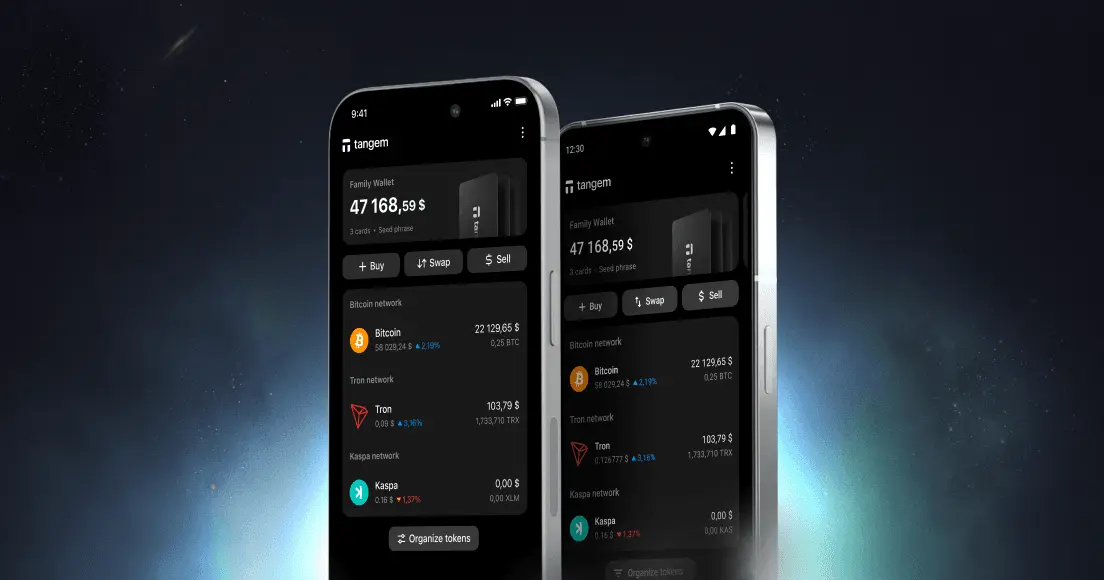
For Brazilian taxpayers using self-custody, the wallet itself doesn't change your tax obligations, but it does help with recordkeeping. The Tangem app provides in-app transaction history for Bitcoin, Ethereum, BNB Smart Chain, and other supported networks. Each transaction record shows the amount, fees, and status, and links to a blockchain explorer for the full transaction hash. That hash is one of the records the Receita Federal expects you to keep.
Tangem's default design is seedless. If all backup cards are lost and there is no seed phrase, funds cannot be recovered by Tangem or any other party. Keep backup cards in separate locations. Tangem doesn't replace a contador, and self-custody doesn't change what you owe. But having a clean, exportable transaction history makes the recordkeeping work significantly easier.
See best crypto wallets in Brazil for a broader comparison of wallet options.
Final Thoughts
Start by identifying the regime tied to each provider. Keep records for every sale, swap, and transfer. If you're new to crypto taxes or want to compare how Brazil's approach stacks up against other jurisdictions, our guides on crypto taxes in Germany and on crypto tax-free countries offer useful context.
This guide reflects publicly available sources as of October 2026. Tax rules change. Before filing, verify current Receita Federal guidance and consult a qualified Brazilian contador or tax lawyer.
Disclaimer: This article is for informational purposes only and does not constitute tax advice. Tax rules in Brazil can change; verify the current guidance from the Receita Federal and consult a qualified Brazilian contador or tax lawyer before filing. Rules and rates described here reflect publicly available sources as of October 2026.
FAQ About Crypto Taxes in Brazil
-
Yes. Selling crypto for reais, swapping one crypto asset for another, and paying for goods or services with crypto are all taxable disposals in Brazil. Buying crypto and simply holding it are not taxable events on their own, although holdings costing at least BRL 5,000 per asset type must be declared in the annual IRPF return. Rates range from 15% to 22.5% depending on the amount of gain and the applicable regime.
-
The BRL 35,000 monthly exemption applies to the domestic tax regime for crypto held through Brazilian-domiciled platforms or in self-custody in Brazil. If your total crypto sales in a calendar month are below 35,000 reais, any gains are exempt from capital gains tax for that month. Once sales exceed that amount, the full gain becomes taxable. This exemption does not apply to crypto held through foreign platforms.
-
No. Crypto held through foreign platforms falls under the foreign-investment regime introduced by Lei 14.754/2023. That regime taxes gains at a flat 15% annually, and the Receita Federal's official guidance states that there is no general exemption for foreign investment income or capital gains. The BRL 35,000 monthly exemption is specific to the domestic regime.
-
DeCripto is Brazil's new crypto-asset reporting system, created by IN RFB 2.291/2025, whose monthly reporting rules apply from July 1, 2026. It replaces IN RFB 1.888/2019 and aligns with the OECD's CARF standard. Crypto-asset service providers with a Brazilian connection must file automatically. Brazilian-resident individuals and entities must file when monthly operations through foreign providers, decentralized platforms, or without any provider exceed 35,000 reais. Monthly reports are due by the last business day of the following month.
-
Yes. Exchanging one crypto asset for another is treated as a disposal under Brazilian tax rules. You calculate the gain using the BRL market value of the asset received at the time of the swap, minus your documented acquisition cost in BRL for the asset you gave up. The gain is subject to the same rates and thresholds as a sale for reais.
-
Declare crypto holdings costing at least BRL 5,000 per asset type in the Bens e Direitos section, Group 08, using the appropriate code: 01 for Bitcoin, 02 for other crypto assets, 03 for stablecoins, 10 for NFTs, and 99 for other digital assets. Report each asset at its acquisition cost in reais, not market value. For self-custody, describe the wallet and note that you hold the private keys directly. For foreign-held assets, disclose the provider's country.
-
No. Self-custody does not change your tax obligations. Selling, swapping, or spending crypto from a self-custody wallet is still a taxable disposal under the same rules as if it were exchanged. Self-custodied crypto held in Brazil without an intermediary is treated under the domestic regime, not the foreign one, so the BRL 35,000 monthly exemption can apply. But the tax rules apply regardless of where you store your keys.


Не пропустіть 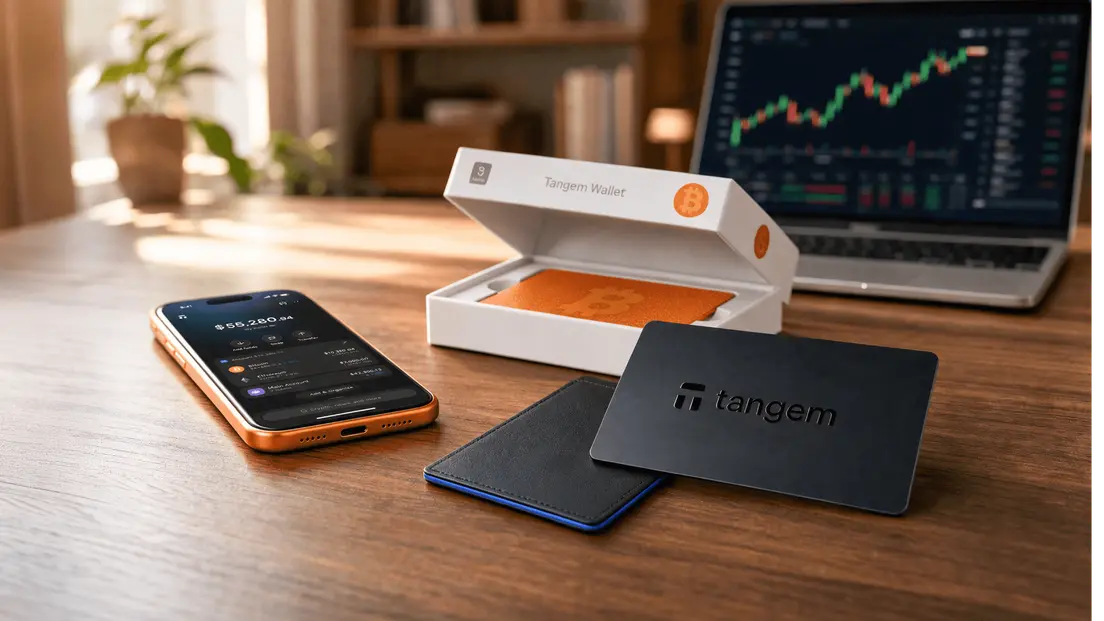



Інші статті

