
 Grab EXTRA 10% OFF


Usual wallet
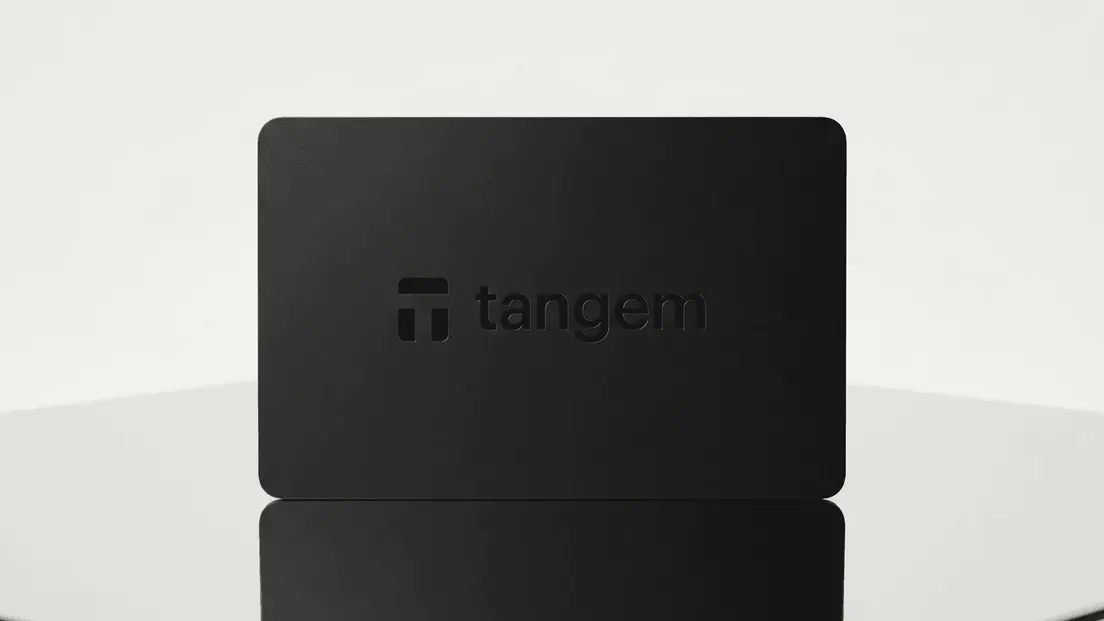
The most secure hardware wallet for your Usual
Join a thriving community of Usual enthusiasts safeguarding their assets with the Tangem Wallet. Your funds, your control.

How to secure your Usual with Tangem?
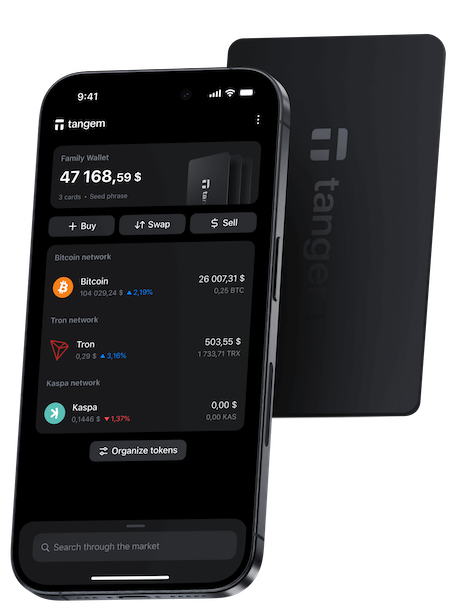
When you buy or hold Usual in Tangem, it secures your private keys in many ways:
- With Tangem's seedless setup and multi-card backup, your Usual stays in your hands only.
- IP69K water/dust protection keeps the cards safe from heat, cold, shocks, and X-rays.
- Access code + biometric lock inside Tangem Mobile prevent unauthorized use.
- Private keys are generated and stored inside the EAL6+ secure element — never leaving the card.
How to get a Usual Crypto Wallet?
Tangem products are for everyone, from beginners to experts. They keep your crypto safe and easy to manage. With cutting-edge technology, Tangem lets you control and protect your digital assets.
Buy TangemWhy choose Usual wallet with Tangem.
Privacy
No registration and KYC required to use the app. We don't track your data.

Security
Your private keys are encrypted and never leave your device. Only you have control over your funds.

Convenient designs
Choose from a variety of elegant designs, including unique co-branded editions and our innovative ring-form factor wallet, ensuring both style and functionality.

24/7 Customer care
Fast support for your needs. Live chat and email support for customers from all over the globe.

What is Usual (USUAL)?
USUAL is the governance token of the Usual protocol, the system behind the USD0 stablecoin. USD0 is backed by tokenized short-term US Treasury products, and bUSD0 (formerly USD0++) is its locked, bond-like form. USUAL sits on top of both: the protocol mints it according to a fixed emission schedule and distributes it to bUSD0 holders and other participants such as USUALx stakers, and USUAL holders vote on protocol parameters. Holding USUAL is therefore a claim on the protocol's governance and its long-term development, not a dollar-pegged position.
One thing to get straight before moving anything: Usual has four tokens that look related but behave differently. USD0 is the stablecoin, bUSD0 (formerly USD0++) is the locked version, USUALx is what you get after staking USUAL inside the protocol, and USUAL is the plain token itself. USUAL alone is an ordinary ERC-20 with a max supply of 3 billion; its balance in a wallet never changes on its own, and staking into USUALx is a separate contract interaction that the wallet does not perform for you.
Networks and fees
Ethereum is the home chain, and USUAL also exists as bridged versions on BNB Smart Chain and Base. Your address is identical on all three, but a balance on one is invisible to the other two, and each network charges gas in its own coin (ETH on Ethereum and Base, BNB on BNB Smart Chain). Before sending, check which network the recipient expects, because a transfer on the wrong one lands in a place they may not be watching.
Supported networks in Tangem (3): Base, Ethereum, BNB Smart Chain.
In the Tangem app, each of these shows up as its own line with its own balance, and the network a transfer will go out on is displayed on screen before the card signs. As a governance token that most holders touch a few times a year, USUAL suits a key that stays inside the card's secure element with a second card as the backup, and no seed phrase is required unless you decide to set one up.
Usual USUAL


Tangem supports other cryptocurrencies
Reliability and convenience at your fingertips. Manage thousands of cryptocurrencies with peace of mind anywhere and anytime
See all supported cryptosUsual FAQ
- A reliable wallet for USUAL should prioritize robust security and user-friendly access. Tangem offers offline protection coupled with straightforward mobile management.
- Many Usual wallets are free to download. Hardware wallets cost money but offer stronger security by keeping keys offline.
- Online wallets can be targeted by malware, phishing, or remote attacks. The best wallets for Usualminimize these risks by ensuring your private keys never come into contact with the internet, remaining protected within a secure element.
- A Usual wallet is a tool that lets you store, send, and receive your digital assets. It manages your private keys, which prove ownership of your USUAL.
- USD0 is the protocol's stablecoin, bUSD0 (formerly USD0++) is its locked version, USUAL is the governance token, and USUALx is the receipt token you hold after staking USUAL inside the protocol. A wallet holds USUAL as a plain ERC-20; converting to USUALx is a separate contract action.
- No. USUAL is a standard ERC-20 with no rebase; the balance changes only when you send or receive it. Emissions go to bUSD0 holders and USUALx stakers, and staking into USUALx happens through the protocol, not inside the wallet.
- Ethereum is the home network, with bridged versions on BNB Smart Chain and Base. The address is the same on all of them, but balances are separate and gas is paid in ETH on Ethereum and Base and in BNB on BNB Smart Chain.
Related articles
Learn more


Something went wrong
Please
Don’t miss! 🚀 We drop prices for 20%
Flash sale expires soon! Stakes with BTC Reward Tap & Get

00:00:00

