


Reserve Rights wallet
The most secure hardware wallet for your Reserve Rights
Join the Tangem family! Secure your Reserve Rights with the trusted choice for dedicated self-custodial protection.

How to secure your Reserve Rights with Tangem?
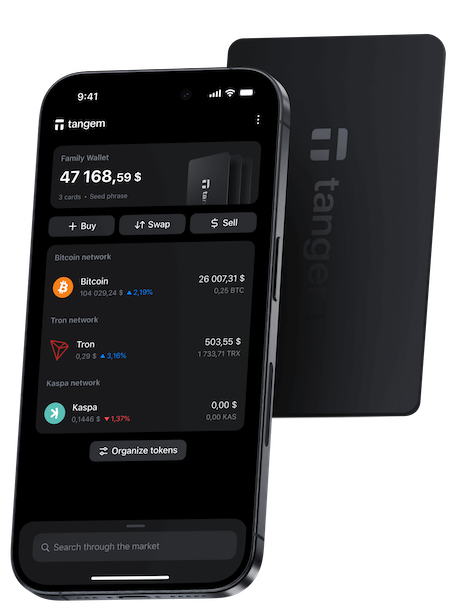
When you buy or hold Reserve Rights in Tangem, it secures your private keys in many ways:
- With Tangem's seedless setup and multi-card backup, your Reserve Rights stays in your hands only.
- IP69K water/dust protection keeps the cards safe from heat, cold, shocks, and X-rays.
- Access code + biometric lock inside Tangem Mobile prevent unauthorized use.
- Private keys are generated and stored inside the EAL6+ secure element — never leaving the card.
How to get a Reserve Rights Crypto Wallet?
Tangem products are for everyone, from beginners to experts. They keep your crypto safe and easy to manage. With cutting-edge technology, Tangem lets you control and protect your digital assets.
Buy TangemWhy choose Reserve Rights wallet with Tangem.
Privacy
No registration and KYC required to use the app. We don't track your data.

Security
Your private keys are encrypted and never leave your device. Only you have control over your funds.

Convenient designs
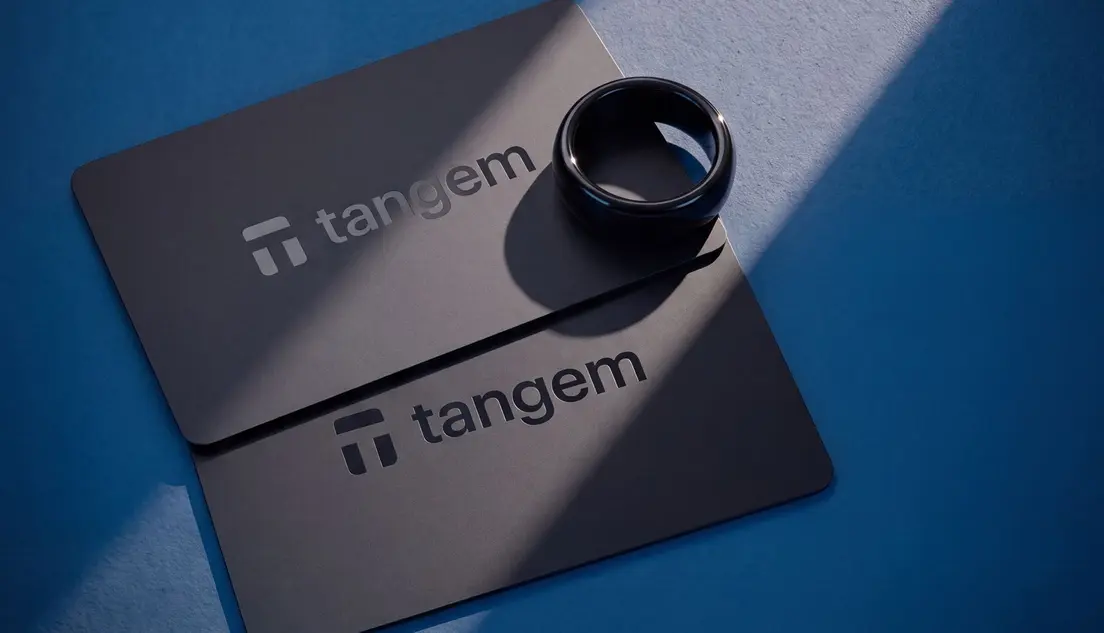
Choose from a variety of elegant designs, including unique co-branded editions and our innovative ring-form factor wallet, ensuring both style and functionality.

24/7 Customer care
Fast support for your needs. Live chat and email support for customers from all over the globe.

What is Reserve Rights (RSR)?
RSR belongs to the Reserve protocol, a system for creating stablecoins - called RTokens - that are backed by baskets of on-chain assets rather than by a bank account. RSR itself is not one of those stablecoins. It has two jobs: it votes on how each RToken is configured, and when staked onto a particular RToken it takes the first loss if something in that RToken's collateral basket defaults. Staking is per-RToken, not protocol-wide, and it is optional - plenty of RSR is simply held.
Supply is worth knowing about because it is unusual. The full 100 billion RSR was minted up front; nothing new is ever created. A large share sits locked in a contract that releases on a fixed schedule, so circulating supply increases over time without any new issuance.
Holding it across chains
RSR is an Ethereum ERC-20 by origin, and it is also deployed on Arbitrum and Base. These are distinct balances under one ticker. Since all three are EVM chains, one address serves all of them, which means a receiving address never reveals which network the person on the other end is checking - that is a question to ask, not to infer.
A governance token is the classic case of a key you barely touch and then suddenly need. Tangem generates that key inside the card and keeps it there, and a duplicate card held separately restores the same wallet if anything happens to the first; writing down a recovery phrase is a choice you can make rather than a step imposed on you. For RSR, which many people hold across years rather than weeks, that arrangement matches how the token is actually used. Supported networks in Tangem (3): Arbitrum One, Base, Ethereum.
Reserve Rights RSR


Tangem supports other cryptocurrencies
Reliability and convenience at your fingertips. Manage thousands of cryptocurrencies with peace of mind anywhere and anytime
See all supported cryptosReserve Rights FAQ
- For storing and using RSR, Tangem Wallet is a strong choice thanks to its offline key storage and mobile-friendly design.
- You can use most software wallets at no cost. Hardware wallets, which offer additional security, must be purchased separately. Network fees may still apply.
- The safest Reserve Rights wallet keeps your private keys offline and protected from unauthorized access. Hardware wallets, such as Tangem, offer the highest level of protection because they isolate keys from online risks.
- A Reserve Rights wallet is a tool that lets you store, send, and receive your digital assets. It manages your private keys, which prove ownership of your RSR.
- No. The Reserve protocol's stablecoins are the RTokens; RSR is the separate governance token that also serves as overcollateralization backing for them when staked.
- No. The full supply of 100 billion was pre-minted. Circulating supply rises only as locked tokens are released on a fixed schedule.
- No. Staking onto an RToken is entirely optional, and staked RSR is exposed to losses if that RToken's collateral basket defaults.
Related articles
Learn more


Something went wrong
Please
Don’t miss! 🚀 We drop prices for 20%
Flash sale expires soon! Stakes with BTC Reward Tap & Get

00:00:00

