



PulseChain wallet
The most secure hardware wallet for your PulseChain
Safeguard your PulseChain with Tangem. Trusted by thousands for ultimate crypto security.
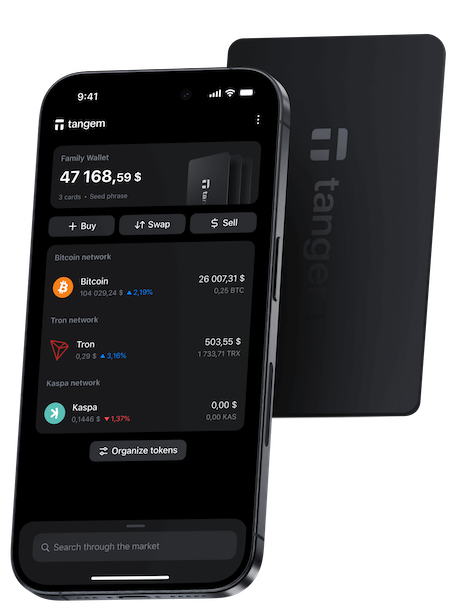

How to secure your PulseChain with Tangem?
When you buy or hold PulseChain in Tangem, it secures your private keys in many ways:
- With Tangem's seedless setup and multi-card backup, your PulseChain stays in your hands only.
- IP69K water/dust protection keeps the cards safe from heat, cold, shocks, and X-rays.
- Access code + biometric lock inside Tangem Mobile prevent unauthorized use.
- Private keys are generated and stored inside the EAL6+ secure element — never leaving the card.
How to get a PulseChain Crypto Wallet?
Tangem products are for everyone, from beginners to experts. They keep your crypto safe and easy to manage. With cutting-edge technology, Tangem lets you control and protect your digital assets.
Buy TangemWhy choose PulseChain wallet with Tangem.
Privacy
No registration and KYC required to use the app. We don't track your data.

Security
Your private keys are encrypted and never leave your device. Only you have control over your funds.

Convenient designs
Choose from a variety of elegant designs, including unique co-branded editions and our innovative ring-form factor wallet, ensuring both style and functionality.

24/7 Customer care
Fast support for your needs. Live chat and email support for customers from all over the globe.

What is PulseChain (PLS)?
PLS is the native coin of PulseChain, a full fork of Ethereum that runs as its own network with validators instead of miners, blocks a few seconds apart, and a fee model copied from Ethereum in which the base portion of every fee is burned rather than paid out. Holding PLS is holding the gas of that chain: it pays for every transaction on PulseChain, and tokens living there, PLSX among them, all depend on you having some.
The fork is where most confusion starts. PulseChain launched with a copy of Ethereum's state, so a large number of contracts and balances exist at the very same addresses on both chains, and addresses themselves are formatted identically. A copied token on PulseChain shares its name and often its symbol with the Ethereum original while being a completely separate asset. PLS is also not PLSX, the token of the PulseX exchange built on the chain; the two are routinely mixed up because they appear together everywhere.
Supported networks in Tangem (1): Pulsechain. Tangem holds a separate balance for every network it supports and states which one a transaction is going out on before you tap the card to sign, so the check happens while you can still stop. On a chain that shares Ethereum's address format down to the character, having that step in front of you is a good argument for keeping PLS here.
PulseChain PLS


Tangem supports other cryptocurrencies
Reliability and convenience at your fingertips. Manage thousands of cryptocurrencies with peace of mind anywhere and anytime
See all supported cryptosPulseChain FAQ
- A top wallet for PLS should strike a balance between safety and usability. Tangem provides this by securing keys offline while allowing quick access through your phone.
- Software wallets for PulseChain are often free, but hardware wallets usually require a one-time purchase. Sending transactions may involve network fees.
- The best wallet for storing PulseChain is one that keeps your private keys offline while remaining easy to manage. Tangem offers this balance by placing keys in an offline card that you tap with your phone, providing both high security and simple everyday use.
- A PulseChain wallet is a tool that lets you store, send, and receive your digital assets. It manages your private keys, which prove ownership of your PLS.
- No. PLS is PulseChain's native gas coin, while PLSX is the token of PulseX, an exchange running on the chain. Only PLS pays network fees.
- PulseChain forked Ethereum's entire state, so contracts and balances were duplicated at identical addresses. The copies are separate assets with no connection to the Ethereum originals.
- No. It uses staked validators rather than proof of work, with short block times and a burned base fee on each transaction.
Related articles
Learn more

Something went wrong
Please
Don’t miss! 🚀 We drop prices for 20%
Flash sale expires soon! Stakes with BTC Reward Tap & Get

00:00:00

