


Flare wallet
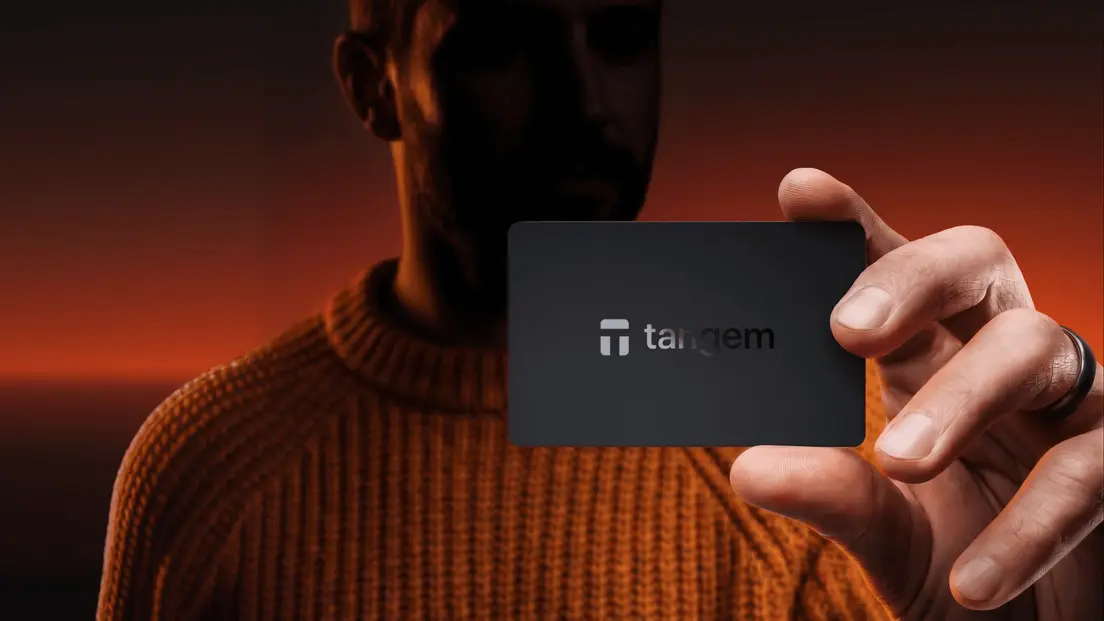
The most secure hardware wallet for your Flare
Securely store Flare with Tangem, where thousands trust their crypto investments.

How to secure your Flare with Tangem?
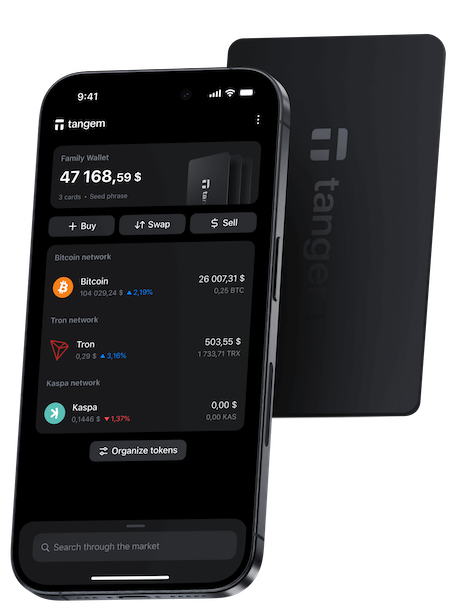
When you buy or hold Flare in Tangem, it secures your private keys in many ways:
- With Tangem's seedless setup and multi-card backup, your Flare stays in your hands only.
- IP69K water/dust protection keeps the cards safe from heat, cold, shocks, and X-rays.
- Access code + biometric lock inside Tangem Mobile prevent unauthorized use.
- Private keys are generated and stored inside the EAL6+ secure element — never leaving the card.
How to get a Flare Crypto Wallet?
Tangem products are for everyone, from beginners to experts. They keep your crypto safe and easy to manage. With cutting-edge technology, Tangem lets you control and protect your digital assets.
Buy TangemWhy choose Flare wallet with Tangem.
Privacy
No registration and KYC required to use the app. We don't track your data.

Security
Your private keys are encrypted and never leave your device. Only you have control over your funds.

Convenient designs
Choose from a variety of elegant designs, including unique co-branded editions and our innovative ring-form factor wallet, ensuring both style and functionality.

24/7 Customer care
Fast support for your needs. Live chat and email support for customers from all over the globe.

What is Flare (FLR)?
Flare is an EVM layer 1 whose distinguishing feature is data: it carries oracle and cross-chain proof systems in the protocol itself rather than bolting them on afterwards. FLR is the coin that network runs on. It pays transaction fees, backs validators, and is the unit everything on the chain is denominated in.
A holder meets FLR in two shapes. The native coin is what arrives at an address and what fees come out of. Delegating to data providers or taking part in governance uses WFLR, an ERC-20 wrapper minted by locking native FLR in a contract, and unwrapping returns it. Wrapped and native balances appear as separate items in any wallet, both wrapping steps are ordinary transactions paid in native FLR, and someone who wraps every last coin leaves nothing to pay for unwrapping. Leave a margin.
Because Flare is EVM based, its addresses are written in the familiar hexadecimal form. That is convenient and also the reason to slow down: an address that looks valid is valid on every EVM chain, and only the network you select decides where the coins actually go.
Delegation and governance operate on their own cadence, which rarely matches how often a person opens a wallet. The key behind a FLR address is one you use seldom and need intact long afterwards, and Tangem generates it inside the card's secure element with a second card of the same set standing in as an exact spare, a seed phrase being available if you want one rather than required. Few assets fit a card-in-a-drawer arrangement as neatly as a coin that spends most of its time delegated and left alone.
Supported networks in Tangem (1): Flare Network.
Flare FLR


Tangem supports other cryptocurrencies
Reliability and convenience at your fingertips. Manage thousands of cryptocurrencies with peace of mind anywhere and anytime
See all supported cryptosFlare FAQ
- For storing and using FLR, Tangem Wallet is a strong choice thanks to its offline key storage and mobile-friendly design.
- You can use most software wallets at no cost. Hardware wallets, which offer additional security, must be purchased separately. Network fees may still apply.
- The safest Flare wallet keeps your private keys offline and protected from unauthorized access. Hardware wallets, such as Tangem, offer the highest level of protection because they isolate keys from online risks.
- A Flare wallet is a tool that lets you store, send, and receive your digital assets. It manages your private keys, which prove ownership of your FLR.
- FLR is the native coin used for fees and validation. WFLR is an ERC-20 wrapper minted by locking FLR in a contract and used for delegation and governance; unwrapping converts it back.
- Wrapping and unwrapping are transactions, and their fees are paid in native FLR. Wrapping the entire balance leaves nothing to cover the transaction that would unwrap it.
- Yes, Flare is EVM based and uses the same hexadecimal address format, so the address alone does not tell you which network a transfer belongs to. The selected network does.
Related articles
Learn more

Something went wrong
Please
Don’t miss! 🚀 We drop prices for 20%
Flash sale expires soon! Stakes with BTC Reward Tap & Get

00:00:00

