 Switch to seedless. Get 30% off with SWITCH30 till Oct 21


How to Avoid Carrying Cash When Traveling With Crypto
You can travel without cash by replacing most day-to-day spending with a crypto card linked to Apple Pay or Google Pay, keeping your savings in a self-custody wallet, and withdrawing a small amount of local currency only when you genuinely need it. That combination handles the vast majority of real-world situations without requiring you to carry a stack of foreign bills.
Why Carrying Cash Abroad Is Risky and Expensive
Cash has one obvious problem: once it's gone, it's gone. Stolen cash generally can't be recovered or blocked the way a payment card can. Large amounts of foreign currency also make travelers a more attractive target for pickpockets.
The cost side is less obvious but adds up fast. Foreign-exchange costs can include unfavorable exchange rates, airport or exchange-office fees, ATM charges, and, in some cases, foreign-transaction fees of roughly 2.5% per card transaction. Then there's the return trip: leftover local currency may require another conversion after the trip, which adds further conversion costs and the inconvenience of finding somewhere to exchange it. Carrying less cash doesn't just save money. It reduces the amount at risk if something goes wrong.
A Cashless Travel Setup with Crypto
The setup has four parts. They serve different purposes, and keeping them separate is what makes the whole thing work.
Savings in a Self-Custody Wallet
Your long-term holdings don't belong in a spending account. Self-custody means you control the private keys that authorize transactions, rather than leaving that control with an exchange or intermediary. A hardware wallet signs transactions internally so private keys never touch an internet-connected device.
Tangem Wallet is a self-custodial hardware wallet that stores private keys offline on an NFC-enabled card. The private keys are generated entirely within a Samsung S3D350A secure element (Common Criteria EAL6+ certified) and never leave the chip. Signing happens on-chip; the NFC channel is AES-256-encrypted over a 0 to 5 cm range.
The practical benefit for travelers: the bulk of your crypto stays in cold storage, isolated from the online risks of any spending app or phone. If your phone is stolen, your savings are untouched.
One honest limitation: if you lose all your Tangem cards and didn't create a seed phrase, the funds are permanently inaccessible. The multi-card backup system (two or three cards with identical keys) exists precisely to prevent that scenario. Keep at least one card somewhere other than your travel bag.
Spending Money on a Crypto Card
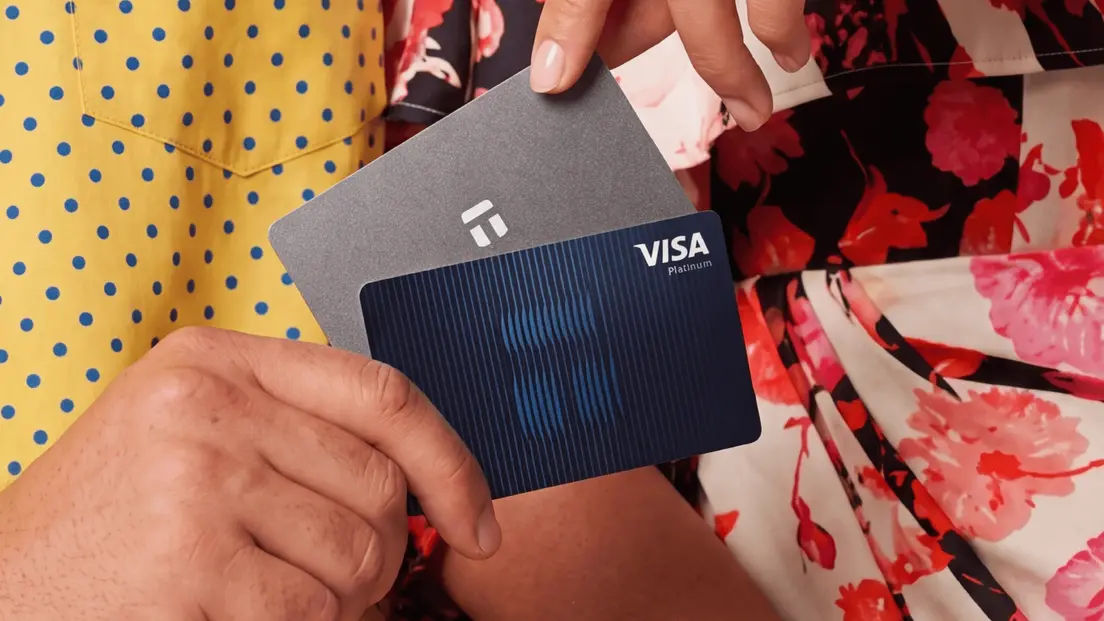
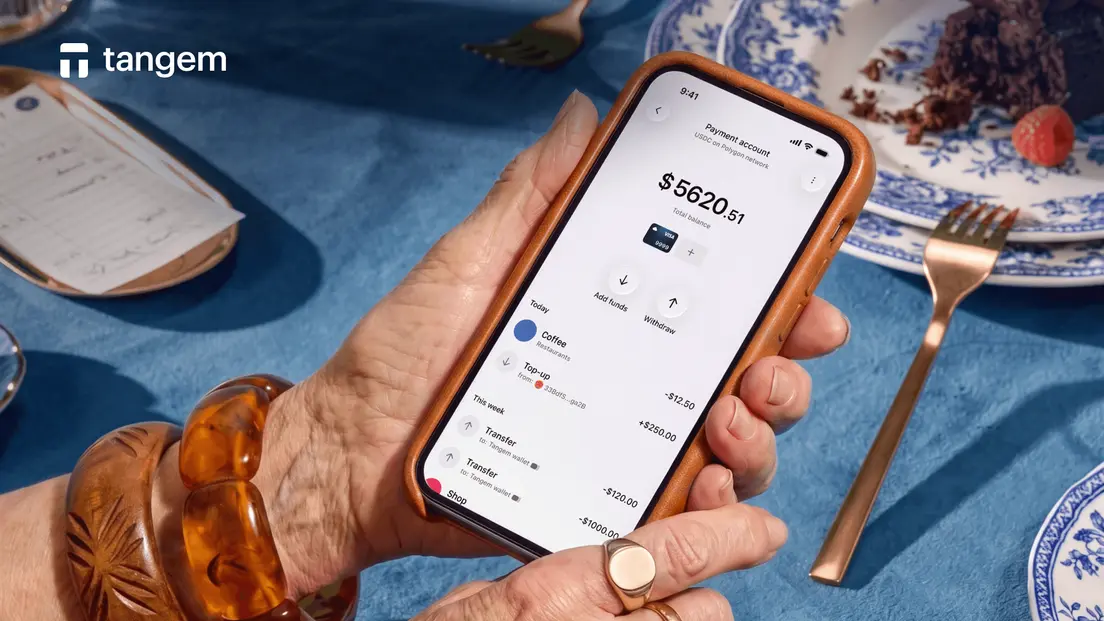
Tangem Pay is a non-custodial payment account embedded in the Tangem Wallet app. You fund it with native USDC on the Polygon network. When you make a purchase, USDC is converted 1:1 to USD, processed through Visa, and the merchant is settled in fiat. The on-chain USDC balance is what gets deducted.
This is the critical separation: Tangem Wallet holds your savings, Tangem Pay holds your spending money. Compromising one doesn't compromise the other.
Tangem Pay requires one-time KYC verification (handled through Sumsub using a government ID and face verification), while basic Tangem Wallet use does not. That separation keeps your main wallet private.
The documented costs are Polygon network gas when topping up and standard Visa foreign-exchange rates for spending in non-USD currencies. Check the Tangem Pay page for current fees, limits, and availability, as terms change.
Phone Payments via Apple Pay or Google Pay
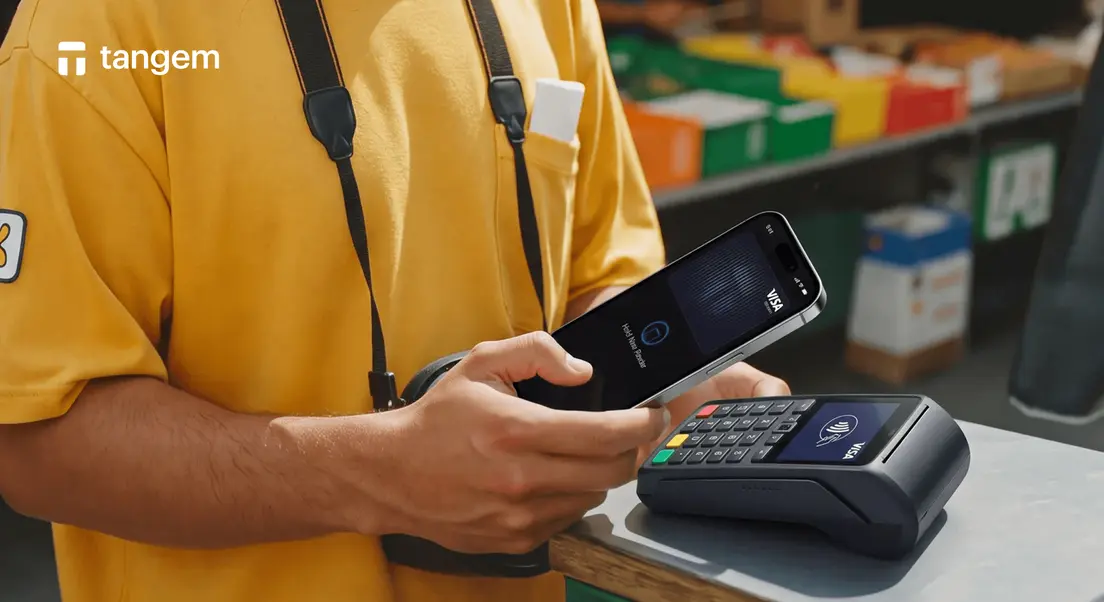
After KYC and funding, you add the virtual Visa card to Apple Pay or Google Pay. In-store, you tap your phone. Online, you enter card details at checkout. Tangem Pay is documented for use wherever Visa is accepted globally, with Visa foreign-exchange rates applying to international transactions.
This is what makes the setup genuinely cashless in most situations: you're not carrying a physical card you could lose, and you're not exposing your savings wallet at every coffee shop. For more on how this works at the point of sale, see the Tangem Pay page.
A Backup Card
Phones die. Contactless terminals go offline. A physical debit or travel card as a backup costs nothing to carry and has saved countless trips from a dead-battery emergency. Keep it separate from your phone. Put it in a hotel safe or a different bag. This is the fallback plan the rest of the setup doesn't provide on its own.
Where You'll Still Need Cash
Cashless acceptance isn't universal. That's not a reason to abandon the setup; it's a reason to carry a small amount of local currency for specific situations.
Cash is commonly required or strongly preferred at:
- Local markets, street food stalls, and small independent restaurants
- Taxis and tuk-tuks in many cities
- Tips (especially in countries where tipping in cash is the norm)
- Rural areas and less-touristy regions
- Small guesthouses and family-run accommodation
Destination matters. Thailand, Vietnam, and Cambodia commonly rely on cash for street food, local markets, and guesthouses. Morocco and Egypt commonly require cash for souks, local taxis, and tips. In Vietnam, cash remains especially important outside major cities, including for street vendors and rural travel.
The honest answer: carry a small amount of local currency for these situations, and get it from an ATM rather than an airport exchange desk.
How to Get Small Amounts of Cash When You Need It
You don't need to exchange currency before you leave. Here's how to get local cash efficiently on arrival.
Use a crypto-funded card that supports ATM withdrawals. At a standard ATM, insert the physical card and enter the PIN. At a contactless-enabled ATM, you can tap via Apple Pay or Google Pay, but virtual-only cards may not work at all ATMs, so confirm your card's ATM capability before you rely on it.
Check the card's per-transaction and daily withdrawal limits before you need cash, because both the card issuer and the ATM operator may impose separate limits. The ATM operator commonly adds a $2-$5 surcharge per withdrawal; the screen should disclose this before you confirm.
For current Tangem Pay terms, check the Tangem Pay page directly. Review your card setup and limits before you travel. Review issuer fees, foreign-exchange costs, and any conversion charges alongside the ATM surcharge. The total cost of a single cash withdrawal may look small per transaction, but it adds up if you're withdrawing frequently.
Fees, limits, and availability are subject to change. Check the Tangem Pay page for current terms.
Safety Tips for Cashless Travel
The setup only works if each layer stays secure. A few practices that matter:
Split your funds. Keep the bulk of holdings in cold storage (Tangem Wallet). Keep only what you plan to spend in Tangem Pay. A compromised spending account loses spending money, not savings.
Freeze the card if something goes wrong. If a Tangem Pay card is frozen, it disconnects from the Visa network. The on-chain USDC balance is unaffected.
Secure your phone. Hot wallets are exposed to phishing, malware, and risks from the internet-connected device on which they run. Use a strong lock screen, keep apps updated, and don't connect to unknown public Wi-Fi without a VPN.
- Don't store recovery material on your phone. Private keys and recovery material should not be kept in cloud storage, phone photos, or notes apps. Secure backups belong in at least two physically separate locations.
For a deeper look at what makes a wallet genuinely travel-ready, see the best crypto wallet for travelers.
Final Thoughts
Before you leave, move only your spending money to a card account, keep the rest in self-custody, and pack a small cash reserve plus a backup card. Set up Tangem Pay before your trip, then check its availability and terms for your destination.
This article is not financial or tax advice. Tangem Pay availability and features depend on country and eligibility.
FAQ
-
Yes, for most situations. A crypto card linked to Apple Pay or Google Pay covers most in-store and online purchases wherever Visa is accepted. You'll still want a small amount of local cash for markets, taxis, tips, and rural areas where card acceptance is limited. Handle everything else digitally.
-
For most risks, yes. Stolen cash can't be recovered or blocked; a stolen or lost card can be frozen. The crypto card also keeps your long-term savings separate from your spending balance, so a compromised spending account doesn't touch your holdings. The remaining risks are phone security and phishing. Both are manageable with basic precautions such as a strong lock screen and keeping software up to date.
-
Local markets, street food vendors, taxis, tips, and small guesthouses are the most common cash-only situations. Destinations like Thailand, Vietnam, Cambodia, Morocco, and Egypt rely heavily on cash outside major tourist areas. Rural regions almost anywhere tend to have limited card acceptance. Plan for it rather than assume every merchant will take a card.
-
Use a crypto-funded card that supports ATM withdrawals. At a contactless-enabled ATM, you can tap to pay with Apple Pay or Google Pay. Check the card's withdrawal limits before you travel, and expect the ATM operator to add a surcharge of $2-$5 per withdrawal on top of any issuer fees. Airport exchange offices may charge fees, so review the total cost before choosing where to get cash.


Don't miss these 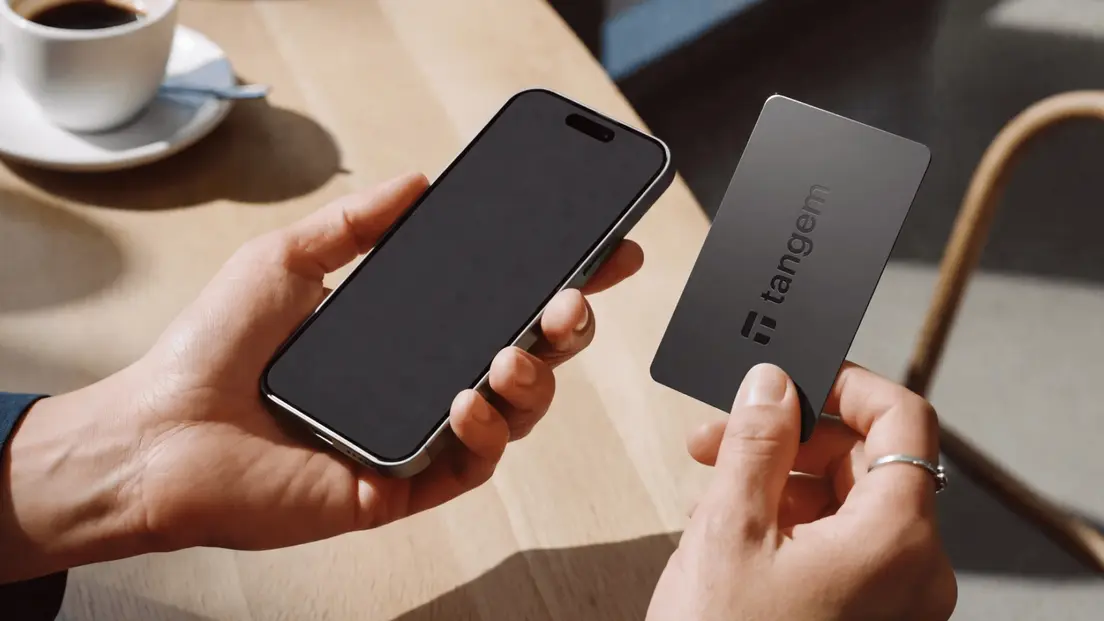


Other articles

