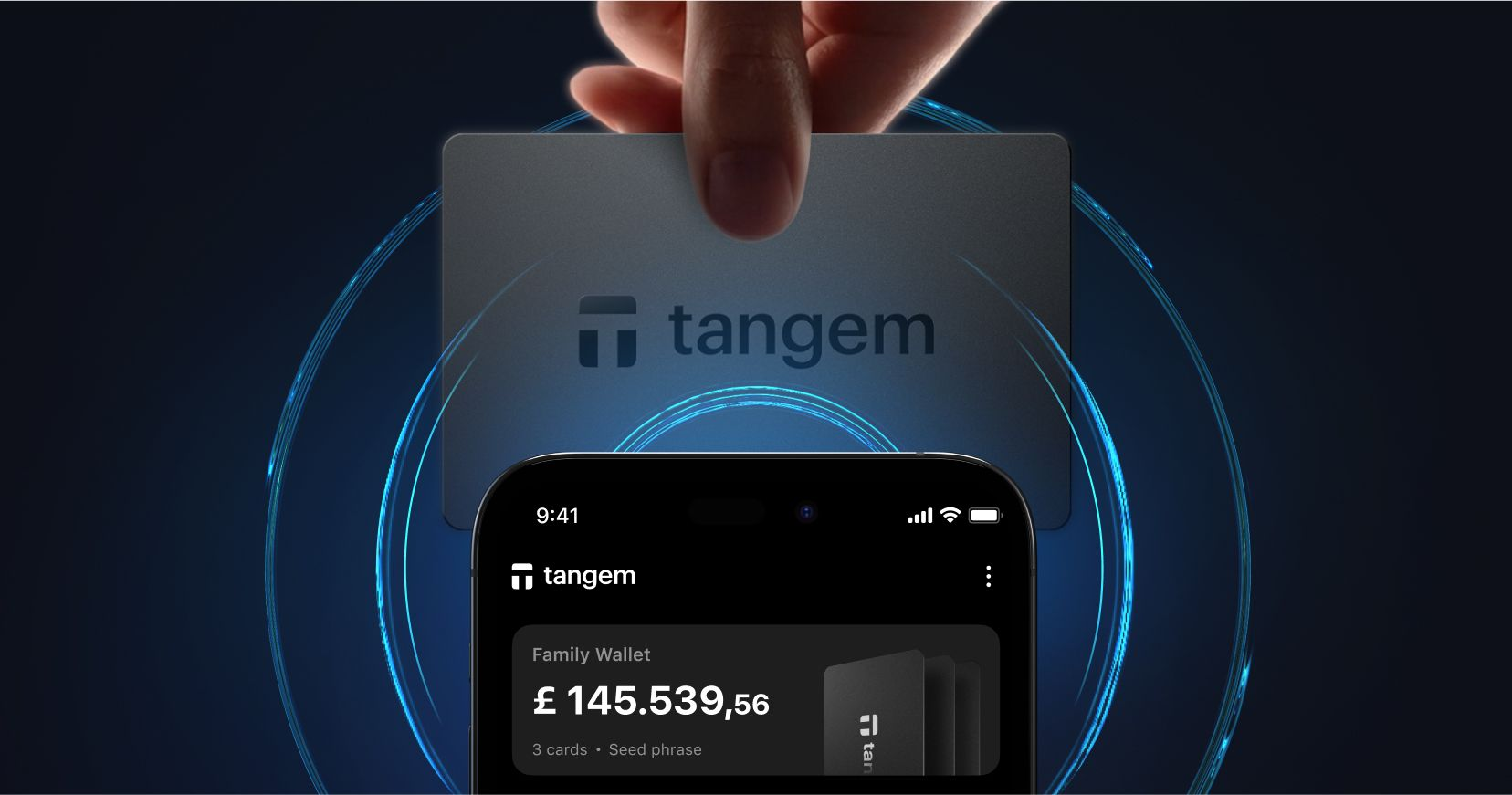
The article explains that while MPC (Multi-Party Computation) wallets offer advanced cryptographic security by splitting private keys into multiple shares to eliminate single points of failure, most consumer implementations still rely on provider infrastructure, which introduces complexity and server dependency. For individuals seeking simple, secure, and independent crypto storage, the article argues that hardware wallets like Tangem—where the private key never leaves a secure chip and recovery uses physical backup cards—provide stronger, more user-friendly security without the trade-offs of MPC. MPC wallets are best suited for institutions and teams, while Tangem’s seedless hardware approach is recommended for everyday users.
Keeping your private key safe is genuinely hard. Write it down and it gets lost. Store it digitally, and it gets hacked. Forget it entirely, and your funds are gone forever. MPC wallets were designed to solve exactly that problem. They're one of the more interesting pieces of technology in the crypto space right now, and understanding how they work will help you make smarter decisions about how you store your crypto.
This guide breaks down what MPC wallets are, how they work under the hood, their real advantages, and where they fall short. It also explains why, for most everyday users in 2026, a hardware wallet like Tangem offers better security: simpler, stronger, and genuinely user-proof, without the trade-offs.
Main Takeaways
MPC wallets split your private key into multiple pieces, so no single device or person ever holds the full key.
They eliminate the "single point of failure" problem.
Most consumer MPC wallets still store part of your key on a company's server, creating a dependency on that company remaining operational.
MPC wallets are genuinely useful for businesses and institutions, but come with real tradeoffs for regular users.
Quick recap: what is a private key?
Before we get into MPC, let's make sure the foundation is solid. When you own cryptocurrency, you don't literally hold coins. What you hold is a private key: a long string of random characters that acts as proof you own certain funds on a blockchain. Anyone who has your private key can move your crypto. Lose the key, and your funds are locked away forever. No customer support line exists. No bank can reverse it.
Most wallets also give you a seed phrase (sometimes called a recovery phrase) when you first set up: usually 12 or 24 random words that are essentially a human-readable version of your private key. If your device breaks or gets lost, your seed phrase lets you recover your wallet on a new device. Which means your seed phrase is just as powerful and just as dangerous as the private key itself.
The core problem with traditional wallet security is that your private key exists in one place. One device, one piece of paper, one location. That's a single point of failure. Drop your phone in a river, or have your laptop stolen, or lose the paper with your seed phrase, and you could lose everything. MPC wallets were designed to fix that.
What is an MPC wallet?
MPC stands for Multi-Party Computation. It's a branch of cryptography that has been studied since the 1980s and only recently became fast enough to use practically in consumer apps.
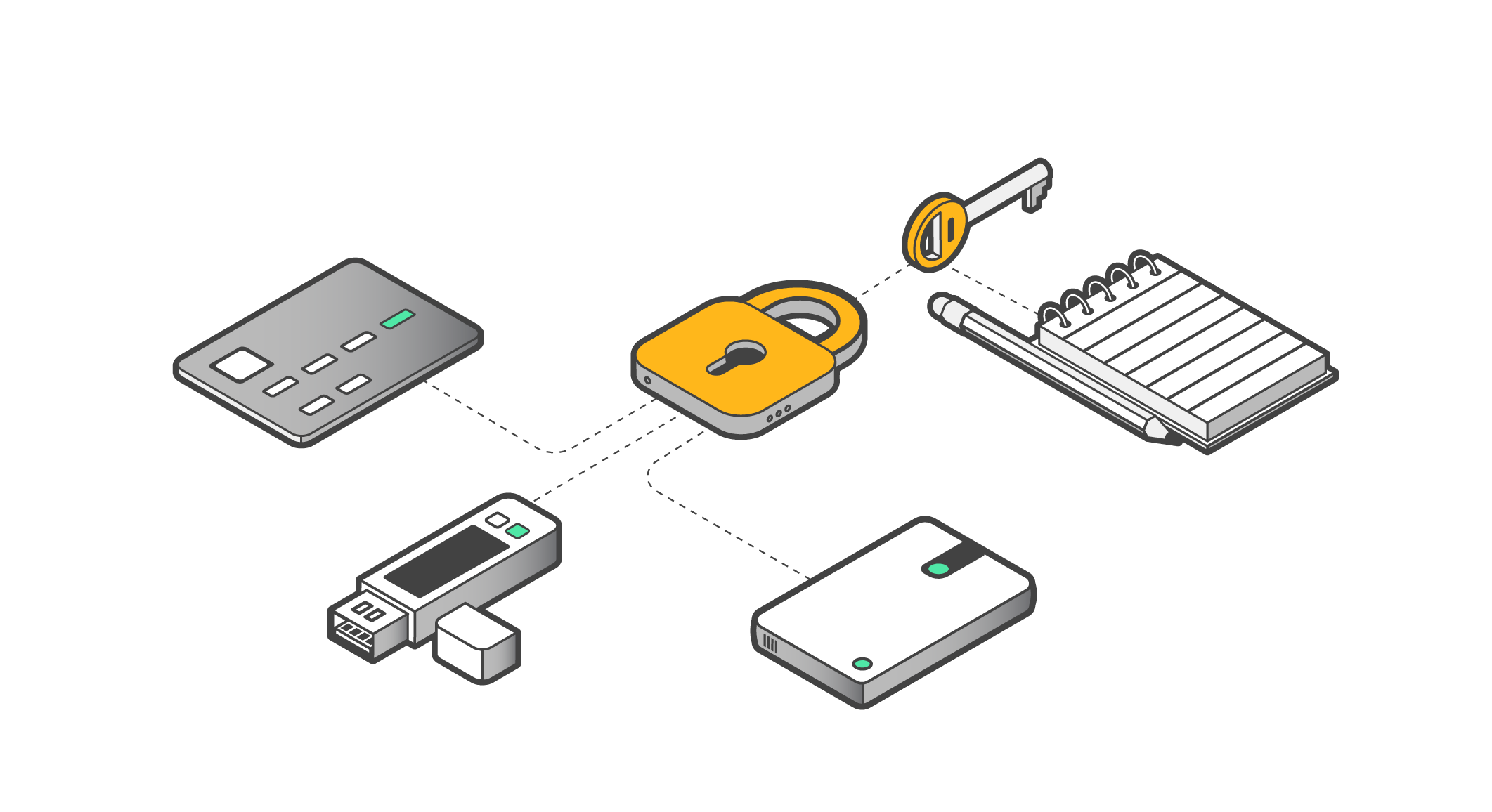
The core idea is simple to grasp: instead of your private key existing as a single complete object in one location, an MPC wallet splits the key into multiple encrypted pieces called "shares."
Each share is held in a different location. No single share reveals anything useful on its own. To authorize a transaction, a minimum number of shares have to work together through a cryptographic process, and even during that process, the complete private key is never assembled anywhere. It remains mathematically distributed.
It's like a safety deposit box that requires three separate keys from three separate people to open. Even if someone steals one key, they can't open the box. In MPC, the "keys" are cryptographic shares, and the "opening" happens through math, not physical locks. And here's the really clever part: unlike a safety deposit box, the original "master key" never existed in the first place. The shares are created together from the start, so the full key is never in one place, even at the moment of generation.
How MPC wallets work
Step 1: Distributed Key Generation
When you set up an MPC wallet, it uses a process called Distributed Key Generation (DKG). Instead of creating a private key and then splitting it (which would mean the full key existed briefly in one place), DKG generates the shares collaboratively from the very beginning. Each participant contributes random input.
The result is a set of linked shares, each held by a different party, where no single party ever knows or sees the complete key. This is a meaningful improvement over older methods such as Shamir's Secret Sharing, where a full key was generated first and then divided afterward.
Step 2: Transaction signing without reassembling the key
When you want to send crypto, your wallet initiates a signing request. Each party holding shares performs their own part of a cryptographic calculation using their individual share.
These partial calculations are combined mathematically to produce a valid transaction signature. Critically, this all happens without any party ever seeing another party's share, and without the full private key ever being reassembled, even in memory, even for a moment.
The blockchain receives a signature that looks completely normal and has no idea it came from a distributed system.
Step 3: Threshold requirements
MPC wallets typically use what's called a "threshold" system. A common setup is 2-of-3: three shares exist, and any two of them can authorize a transaction. This means if you lose one share, you're not locked out.
You still have two remaining shares and can still sign transactions and recover access. Other setups include 2-of-2 (both required, no tolerance for loss) or 3-of-5 (for larger institutional teams). The threshold is configured when the wallet is set up and determines the system's fault tolerance.
Who holds the shares in a consumer MPC wallet?
This is where the picture gets more complicated, and it's the part that matters most for regular users trying to decide if MPC is right for them.
In most consumer-facing MPC wallets, the shares are split between your device and the company's servers. A typical setup looks like this: one share lives on your phone, another on the provider's infrastructure, and in a 2-of-2 system, both are required to sign any transaction. In a more sophisticated 2-of-3 setup, there might be a share on your phone, one on the company's server, and one in a cloud backup you control.
The practical implication: if the company's servers go down, you may not be able to approve transactions until they come back online. If the company shuts down or gets hacked, the security model depends entirely on how well they've protected their share. And in some implementations where the provider controls enough shares to sign independently, there are real questions about whether you're truly in full self-custody or whether the provider retains some level of effective control over your funds.
This isn't a reason to dismiss MPC outright. It's a reason to understand exactly how any specific MPC wallet distributes its shares and what guarantees the provider makes. For institutional users with technical teams who can evaluate these setups, MPC is often excellent.
For everyday crypto holders who just want their savings to be safe and simple, the server dependency is a real tradeoff worth understanding.
MPC vs traditional wallets: what's actually different?
Traditional hot wallet
A hot wallet is an app on your phone or computer that's always connected to the internet. Your private key or seed phrase is generated on your device and either encrypted and stored locally or, in some implementations, backed up to the cloud. You're entirely responsible for keeping it safe. If someone gets access to your device or your seed phrase, they have full access to your funds. One point of failure: your key, wherever it is.
Custodial exchange wallet (like funds on Coinbase or Binance)
You don't hold a key at all. The exchange holds your funds on your behalf, much like a bank holds your money. This is the simplest user experience, but also the highest level of trust required. Exchange hacks, collapses (such as FTX in 2022), and regulatory freezes have left customers unable to access their funds. This is exactly why self-custody matters.
MPC wallet
Your key is split into shares held across multiple parties or devices. No single point of failure. No seed phrase to lose in most implementations. The full key never exists in one location. The tradeoff is that you're still dependent on the provider's infrastructure to some degree, and the security model is complex enough that most users have to trust that the provider has implemented it correctly.
The real advantages of MPC wallets
No single point of failure
If a hacker compromises a single device or a single share, they still can't authorize transactions. They'd need to compromise enough shares to meet the threshold, and those shares are stored in separate locations. For institutions managing billions in digital assets, this is a meaningful security improvement over traditional key management.
No seed phrase (in many implementations)
Many MPC wallets eliminate the seed phrase entirely. Instead of asking you to write down 24 words and store them somewhere safe, recovery is handled through the distributed share system.
Lose your phone? Your other shares, or a cryptographic recovery process, can restore access. This removes one of the most human-error-prone parts of traditional wallet security.
Works on any blockchain
MPC produces standard cryptographic signatures (the same type used by regular single-key wallets). This means MPC wallets are compatible with virtually any blockchain that supports standard signature schemes, including Bitcoin, Ethereum, Solana, and most other major networks. No special smart contract support needed on the blockchain side.
Ideal for teams and institutions
For a company managing a crypto treasury, MPC is extremely well-suited. You can require multiple team members to approve large transactions, set spending limits that auto-approve small amounts but require senior sign-off for larger ones, create detailed audit trails of who approved what, and remove access for people who leave the team without creating a new wallet. These governance features make MPC wallets the preferred choice for exchanges, investment funds, and corporate crypto treasuries.
Disadvantages of MPC Wallets
Server dependency
As covered above, most consumer MPC wallets store at least one share on the provider's infrastructure. If their servers are offline, your ability to sign transactions can be affected, depending on the threshold setup. And if the company shuts down, you need to understand in advance what happens to your share and whether you can still recover your funds.
Complexity and trust requirements
The security of an MPC wallet depends heavily on how the provider has implemented it. MPC is not a simple binary: "safe or not safe." It's a spectrum of implementation choices, and most users cannot independently verify that a provider has made all the right ones. You're trusting the provider's cryptographic implementation, server security, key rotation practices, and operational continuity. For users who want to verify their security setup themselves, this is a hard problem.
Recovery is complex
Recovering access to an MPC wallet after losing a device typically requires working with the provider's recovery system. If the provider hasn't pre-configured proper redundancy, losing a share can result in permanent access loss, just as losing a traditional seed phrase. Recovery is more flexible than traditional wallets in theory, but it depends entirely on the provider having set up recovery mechanisms correctly at the start.
Why Tangem's Seedless model is better than MPC
Understanding MPC makes Tangem's approach easier to appreciate. Tangem doesn't use MPC. Instead, it uses a fundamentally different architecture: a certified Secure Element chip that keeps your private key entirely on a physical card that you physically control at all times. Here's why that matters.
Your key in your hands
When you set up a Tangem wallet, your private key is generated inside the Secure Element chip on your card. It never leaves that chip. Not when you sign a transaction. Not during any software update. Not ever. The chip performs the signing operation internally and returns only the signed output. Your phone, the Tangem app, and Tangem's servers never see your private key because it never leaves your device.
There are no keys on a company's server. There is no server dependency. If Tangem as a company disappeared tomorrow, your wallet would still work, because your key is on your card, and the Tangem app is open-source. You would be completely unaffected.
The Secure Element: What It Is and Why It Matters
The chip inside every Tangem card is a Samsung S3D350A/B Secure Element rated CC EAL6+. This is the same category of chip used in passports and bank cards. The CC EAL6+ rating means it has been independently evaluated and certified to resist advanced physical attacks.
Like the best MPC wallets, Tangem eliminates the need for a seed phrase. But unlike MPC wallets, it doesn't replace the seed phrase with a dependency on a provider's servers. Instead, Tangem uses a backup card system. When you order a Tangem wallet, you get two or three NFC cards linked to the same wallet.
Your "backup" is a physical card, not a server share. If you lose one card, you use another. Store your backup card in a separate location (a drawer at home, a safety deposit box, a trusted family member's place), and you have a recovery system that doesn't require trusting any company's infrastructure.
How Tangem Actually Works
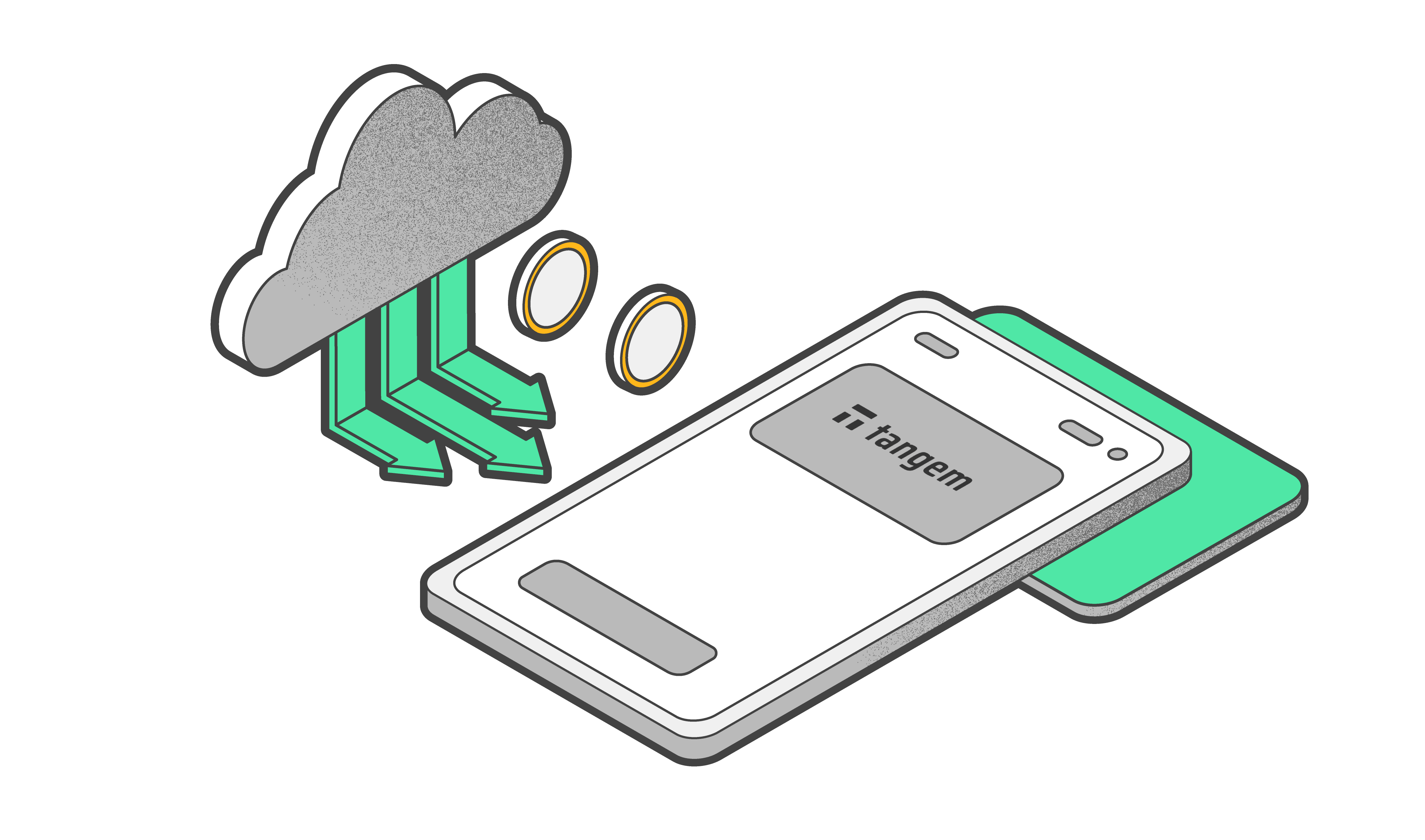
Tangem cards communicate with your phone using NFC (the same technology as contactless payment cards). When you want to send crypto or interact with a dApp, the Tangem app prepares the transaction and asks you to tap your card to the back of your phone. The Secure Element on the card verifies the request, signs the transaction internally, and returns the signed transaction to the app. The whole process takes a second or two. Your key never leaves the card.
Even if your phone is completely compromised by malware, a thief cannot sign transactions without the physical Tangem card in their hand. The card is the security. Software attacks on your phone cannot touch it. For a deeper look at how to keep your crypto wallet secure.
MPC wallets make the most sense for organizations and teams. If you're a business managing a company crypto treasury, a DAO requiring multi-party approval for spending, a crypto fund or exchange managing institutional assets, or a development team that needs role-based access control for a shared wallet, MPC is a genuinely strong fit.
The governance features, multi-approver workflows, and audit trail capabilities make it well-suited for settings where accountability and controlled access across multiple people are priorities.
For individual users holding their own crypto savings, the benefits of an MPC wallet are largely irrelevant. You don't need multi-party approval for your own transactions. You don't need audit trails. What you need is a wallet where your funds are genuinely secure, genuinely in your control, and genuinely recoverable if something goes wrong. Tangem is designed specifically for that use case.
MPC wallets represent a real and meaningful advance in cryptographic security. The core technology, splitting a private key into shares that cooperate to sign transactions without the full key ever residing in a single place, solves a real problem in institutional crypto custody. For companies and funds managing significant assets across teams, MPC is often the right tool.
For individual users who want to safely hold their own crypto without relying on an exchange, without writing down seed phrases, and without trusting a company's servers, Tangem's Secure Element approach gives you certified hardware security, complete independence from any provider infrastructure, and the simplest onboarding experience in the hardware wallet space. The private key is in a chip in your wallet. You tap your phone to sign. That's it.
Frequently Asked Questions
What does MPC stand for?
MPC stands for Multi-Party Computation. It's a branch of cryptography that allows multiple parties to jointly compute a result (like signing a transaction) without any single party seeing the full input data from the others. In the context of crypto wallets, it's used to split a private key into shares that cooperate to authorize transactions without the full key ever existing in one place.
Is an MPC wallet non-custodial?
It depends on the specific implementation. Many consumer MPC wallets are marketed as non-custodial, but if the provider holds a share that's required to sign transactions, there's a meaningful sense in which you're partially dependent on them. In a truly non-custodial setup, you would hold shares that meet the threshold on your own without needing the provider's share. Always check how a specific MPC wallet distributes its shares before assuming you're in full self-custody.
What is a threshold in an MPC wallet?
A threshold defines how many shares are needed to authorize a transaction. In a 2-of-3 setup, three shares exist and any two can sign a transaction. This means you can lose one share and still have access to your wallet. In a 2-of-2 setup, both shares are required, offering no tolerance for losing a share but stronger control (both parties must agree on every transaction).
Can my crypto be stolen from an MPC wallet?
MPC wallets are much harder to steal from than traditional single-key wallets because an attacker would need to compromise enough shares simultaneously to meet the signing threshold. However, they're not immune to all attacks.
If a provider's infrastructure is compromised and they hold enough shares to sign independently, there's risk. Social engineering attacks targeting multiple share holders, or phishing attacks targeting the app itself, can also be vectors. MPC reduces risk significantly but doesn't eliminate it entirely.
What happens if my MPC wallet provider shuts down?
If the provider's share is required for signing and they shut down, you may lose access to your funds unless they've provided a way to export your shares or migrate your wallet. Look for providers that offer an independent export or recovery path that doesn't depend on their continued operation. This is one area where Tangem's architecture has a clear advantage: the Tangem app is open-source and your key is on your card, so you're completely unaffected if the company ceases to exist.
Do MPC wallets use seed phrases?
Many MPC wallets do not use traditional 12 or 24-word seed phrases. This is one of their advantages. Instead of a seed phrase, recovery is typically handled through the distributed share system. However, "no seed phrase" doesn't automatically mean "easier recovery." It means the recovery method is different, and you should understand exactly what that method is before relying on a specific wallet. To understand why seed phrases are risky in the first place, read Tangem's deep dive on how seedless wallets work.
How is Tangem different from an MPC wallet?
Tangem uses a Secure Element chip to keep your private key on a physical card that never leaves your hands, rather than distributing it as shares across devices and servers. Tangem doesn't require any server infrastructure to sign transactions. The key stays on the chip, signing happens inside the chip, and even if Tangem as a company shuts down tomorrow, your wallet would keep working because your key is on your card. For individual users, this means simpler security with fewer dependencies.
Are MPC wallets good for beginners?
Some consumer MPC wallets are designed to be beginner-friendly, and removing seed phrases is genuinely helpful for new users. However, the underlying complexity of MPC, the server dependency in most consumer implementations, and the need to understand how your specific provider distributes shares make it harder to evaluate whether you're truly in control of your funds.
For beginners who want security that's both simple and genuinely strong, a hardware wallet like Tangem is a more straightforward choice: your key is on your card, your backup is another card, and nothing depends on a provider's servers. Start with Tangem's best crypto wallets for beginners guide if you're just getting started.
Is MPC better than multisig?
They solve similar problems in different ways. Multisig wallets require multiple separate keys (rather than shares of one key), and the requirement is enforced on the blockchain itself, which makes the setup transparent and verifiable. MPC works off-chain and produces a standard single signature, which means it's cheaper (no extra transaction data) and more private (the multi-party structure is invisible on-chain), but less auditable.
For institutions that value on-chain transparency and accountability, multisig has advantages. For those who want privacy and lower fees, MPC is often preferred. For individuals, neither multisig nor MPC is necessary: a cold storage hardware wallet covers what you need.
Limited-Time Offer
20% OFF + up to $20 in BTC 🛍️
Selected Wallets
Ends March 16
 + Up to $20 in BTC till Mar 24