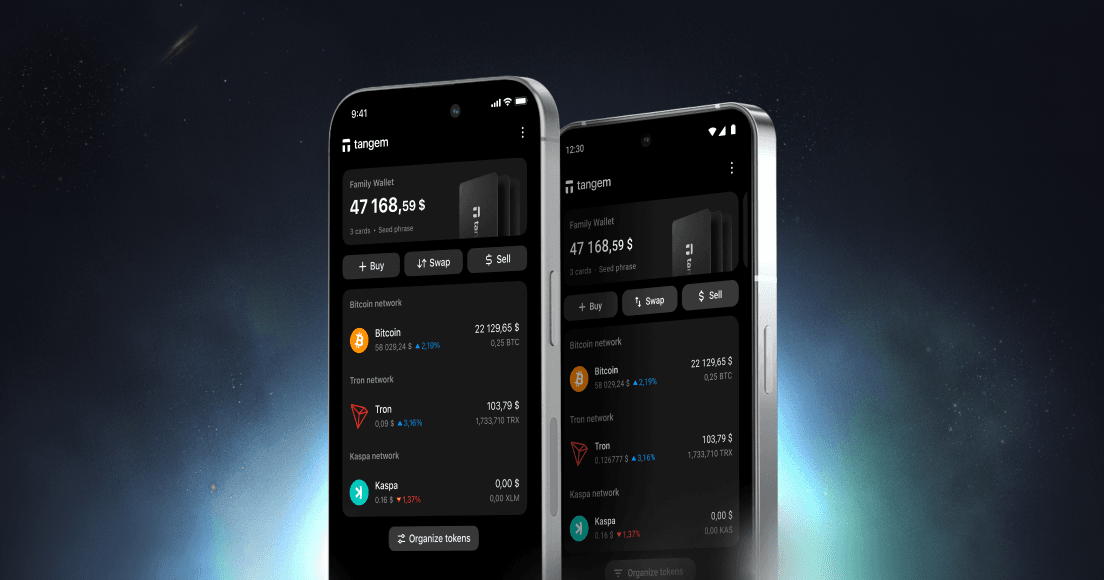
stake.link wallet
The most secure hardware wallet for your stake.link
Ensure your stake.link is protected with Tangem, a wallet celebrated by satisfied users everywhere!
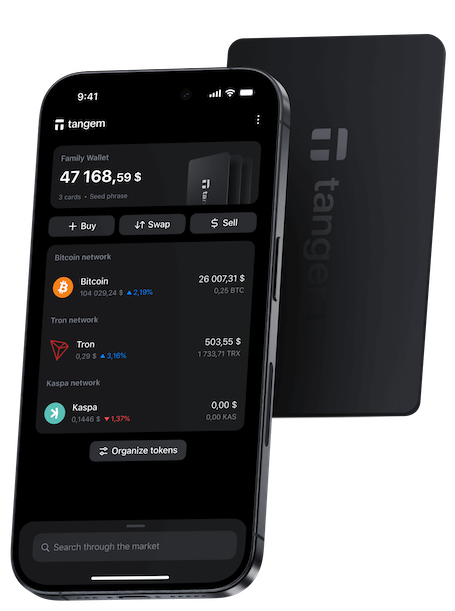

How to secure your stake.link with Tangem?
When you buy or hold stake.link in Tangem, it secures your private keys in many ways:
- With the seedless setup and smart backups on extra devices, your Bitcoin is safe and accessible only to you.
- Tangem is IP69K water and dustproof, built to protect against extreme temperatures, EMPs, ESCs, and X-RAYS.
- An access code and biometric authentication protect against unauthorized access.
- Private keys are generated and stored on its EAL6+ CC secure element.
How to get a stake.link Crypto Wallet?
Tangem products are for everyone, from beginners to experts. They keep your crypto safe and easy to manage. With cutting-edge technology, Tangem lets you control and protect your digital assets.
Get TangemWhy choose stake.link wallet with Tangem.
Privacy
No registration and KYC required to use the app. We don't track your data.

Security
Your private keys are encrypted and never leave your device. Only you have control over your funds.

Convenient designs
Choose from a variety of elegant designs, including unique co-branded editions and our innovative ring-form factor wallet, ensuring both style and functionality.

24/7 Customer care
Fast support for your needs. Live chat and email support for customers from all over the globe.

What is stake.link (SDL)?
stake.link, represented by the SDL token, plays a pivotal role in its namesake platform's ecosystem. Operating on the Ethereum blockchain, SDL ensures high security and interoperability with a myriad of decentralized applications. The SDL token facilitates governance and fee payments while offering priority staking within stake.link.
What is a stake.link wallet?
A stake.link wallet is responsible for holding the private keys required to manage your SDL address. The SDL coins themselves reside on the blockchain, not within the wallet. Its main job is to generate and safeguard these private keys, helping you access and control your SDL holdings. Essentially, a stake.link wallet is a tool to store, send, receive, and maintain your SDL assets.
How does a stake.link wallet work?
stake.link wallets leverage public and private key pairs to orchestrate blockchain accounts. The private key, essential for accessing specific SDL accounts, should remain confidential, while the public key can be shared for receiving SDL. To spend or transfer SDL, the private key is essential. The Tangem Wallet employs a chip to generate and store these vital private keys.
What are the types of stake.link wallets?
Exchange stake.link Wallets:
Centralized platforms like Coinbase, Binance, and Kraken facilitate SDL acquisition through traditional currency using custodial wallets. However, this involves risks such as potential account access denial.Software stake.link Wallets:
These are applications downloaded on gadgets for managing SDL and its private keys. Although user-friendly, they're susceptible to malware and cyberattacks and include mobile, desktop, and browser versions.Mobile stake.link Wallets:
Smartphone apps designed for SDL management on-the-go.Desktop stake.link Wallets:
Software installed on PCs, storing confidential keys on local storage like hard drives or SSDs.Hardware stake.link Wallets:
Tangem and similar offline solutions offer robust protection against online vulnerabilities.
How to Choose the Best stake.link Wallet
Selecting a suitable wallet revolves around individual preferences, emphasizing ease of use, reliability, and robust security. For high-level security against online risks and vast storage needs, a hardware wallet such as Tangem is advisable.
stake.link SDL


Tangem supports other cryptocurrencies
Reliability and convenience at your fingertips. Manage thousands of cryptocurrencies with peace of mind anywhere and anytime
See all supported cryptosstake.link FAQ
- A reliable wallet for SDL should prioritize robust security and user-friendly access. Tangem offers offline protection coupled with straightforward mobile management.
- Yes, software wallets are generally free. Hardware wallets, such as Tangem Wallet, come with a purchase because they include secure physical components.
- The best wallet for storing stake.link is one that keeps your private keys offline while remaining easy to manage. Tangem offers this balance by placing keys in an offline card that you tap with your phone, providing both high security and simple everyday use.
- A stake.link wallet is a tool that lets you store, send, and receive your digital assets. It manages your private keys, which prove ownership of your SDL.
- Node operators will eventually be able to stake their LINK tokens as collateral. By staking LINK, these operators strengthen their node's security guarantees and increase the node's profitability.
- The short answer is that,generally, staking crypto is safe. However, the level of safety depends on the blockchain, staking platform, and several other variables. The best way to stake crypto safely is to understand what staking is, how it works, and the different staking platforms.
- As mentioned earlier,crypto staking is not banned, except for countries that have banned cryptocurrencies. More so, there is no global consensus on crypto staking regulations, meaning countries have their own approaches and models based on their legal frameworks, policy objectives, and market conditions.
Related articles