 Selected Wallets · Ends Apr 6


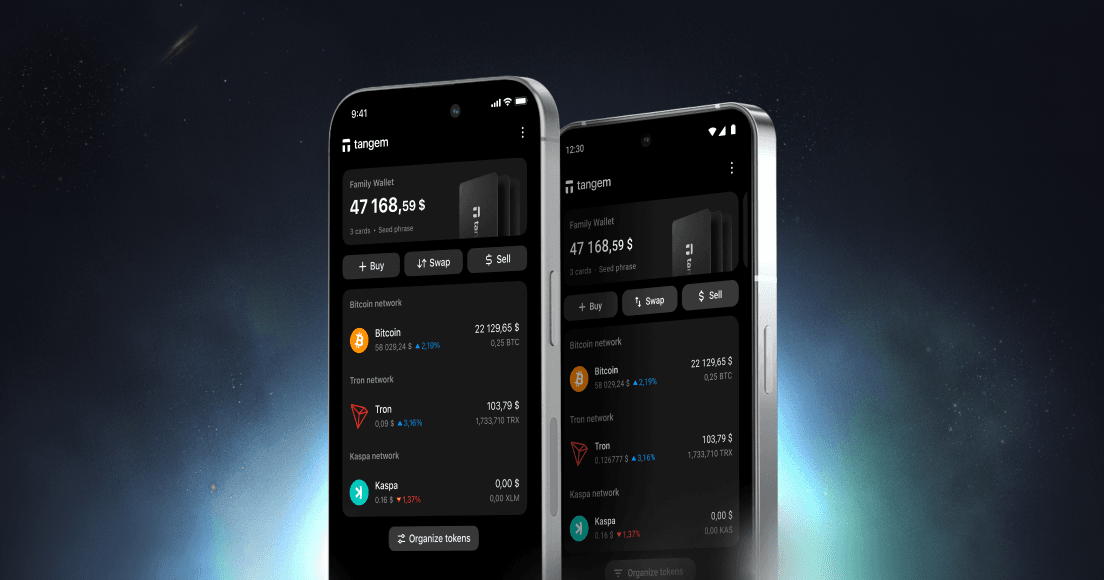
YAK wallet
The most secure hardware wallet for your YAK
Secure your YAK with a Tangem Wallet and join thousands who trust in superior self-custodial security.
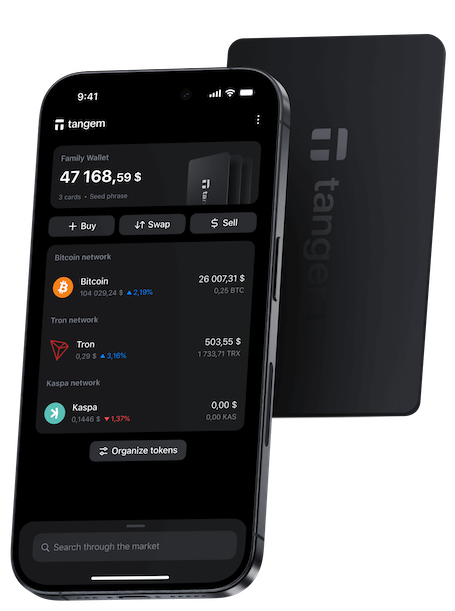

How to secure your YAK with Tangem?
When you buy or hold YAK in Tangem, it secures your private keys in many ways:
- With the seedless setup and smart backups on extra devices, your Bitcoin is safe and accessible only to you.
- Tangem is IP69K water and dustproof, built to protect against extreme temperatures, EMPs, ESCs, and X-RAYS.
- An access code and biometric authentication protect against unauthorized access.
- Private keys are generated and stored on its EAL6+ CC secure element.
How to get a YAK Crypto Wallet?
Tangem products are for everyone, from beginners to experts. They keep your crypto safe and easy to manage. With cutting-edge technology, Tangem lets you control and protect your digital assets.
Buy TangemWhy choose YAK wallet with Tangem.
Privacy
No registration and KYC required to use the app. We don't track your data.

Security
Your private keys are encrypted and never leave your device. Only you have control over your funds.

Convenient designs
Choose from a variety of elegant designs, including unique co-branded editions and our innovative ring-form factor wallet, ensuring both style and functionality.

24/7 Customer care
Fast support for your needs. Live chat and email support for customers from all over the globe.

What is YAK (YAK)?
YAK, often dubbed 'The Pepe Killer,' is a decentralized memecoin that runs on the Ethereum blockchain. Its unique appeal lies in its commitment to uniting and engaging a community with the ultimate goal of outperforming $PEPE and other well-known cryptocurrencies.
What is a YAK wallet?
A YAK wallet is a tool designed to store the private keys needed to manage your YAK address. While it doesn't store YAK itself, as these remain on the blockchain, it serves the crucial function of generating and keeping these private keys safe, allowing you to interact with your YAK holdings. In essence, a YAK wallet is essential for storing, sending, receiving, and managing your YAK tokens.
How does a YAK wallet work?
YAK wallets utilize pairs of public and private keys to facilitate blockchain transactions. The private key grants access to a specific YAK account and must be kept secure. On the other hand, the public key can be shared to receive YAK. To access or spend your tokens, you need the private key. Tangem Wallet, for instance, secures these private keys within its technology.
What are the types of YAK wallets?
Exchange YAK Wallets:
Platforms like Coinbase or Binance offer YAK through custodial wallets, which allow transactions via traditional money but pose risks like possible account restrictions.Software YAK Wallets:
Installed on devices, these wallets manage YAK and related keys. While user-friendly, they're susceptible to malicious software. Examples include mobile apps, desktop programs, and browser extensions.Mobile YAK Wallets:
These apps provide a way to manage YAK on smartphones.Desktop YAK Wallets:
These software applications save private keys on computer storage like hard drives.Hardware YAK Wallets:
Devices like Tangem offer offline storage, protecting YAK from cyber threats.
How to Choose the Best YAK Wallet
Selecting the right wallet revolves around what you value most, whether it’s simplicity, reliability, or top-tier security. For users wanting to safeguard their assets from online vulnerabilities and store larger sums, a hardware wallet like Tangem provides an optimal solution.
YAK YAK


Tangem supports other cryptocurrencies
Reliability and convenience at your fingertips. Manage thousands of cryptocurrencies with peace of mind anywhere and anytime
See all supported cryptosYAK FAQ
- A top wallet for YAK should strike a balance between safety and usability. Tangem provides this by securing keys offline while allowing quick access through your phone.
- Many YAK wallets are free to download. Hardware wallets cost money but offer stronger security by keeping keys offline.
- The safest YAK wallet keeps your private keys offline and protected from unauthorized access. Hardware wallets, such as Tangem, offer the highest level of protection because they isolate keys from online risks.
- This type of wallet secures the private keys required to use your YAK. Hardware wallets, such as Tangem Wallet, keep those keys offline for added protection.
- The most straightforward way is to find a reliable centralized exchange where you can buy DOVU, similar to Binance. You can refer toCoinmarketcap.com's Markets sectionto find the list of centralized exchange the coin is listed on.
Related articles
Learn more


Something went wrong
Please
Don’t miss! 🚀 We drop prices for 20%
Flash sale expires soon! Stakes with BTC Reward Tap & Get

00:00:00