 Flash Sale: 20% Price Drop + BTC Rewards till Mar 9


Value DeFi wallet
The most secure hardware wallet for your Value DeFi
Unlock security for your Value DeFi with Tangem; join our satisfied global community!
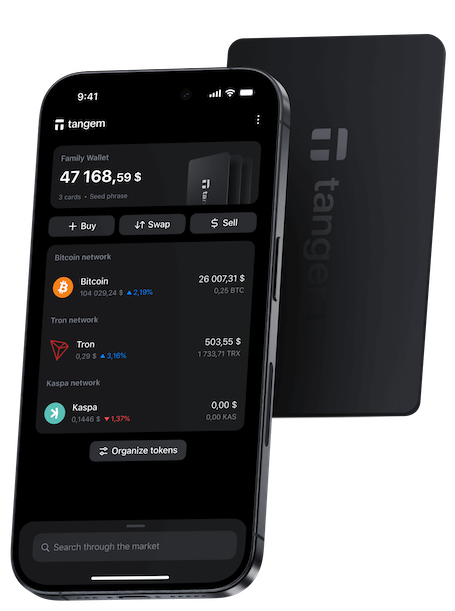

How to secure your Value DeFi with Tangem?
When you buy or hold Value DeFi in Tangem, it secures your private keys in many ways:
- With the seedless setup and smart backups on extra devices, your Bitcoin is safe and accessible only to you.
- Tangem is IP69K water and dustproof, built to protect against extreme temperatures, EMPs, ESCs, and X-RAYS.
- An access code and biometric authentication protect against unauthorized access.
- Private keys are generated and stored on its EAL6+ CC secure element.
How to get a Value DeFi Crypto Wallet?
Tangem products are for everyone, from beginners to experts. They keep your crypto safe and easy to manage. With cutting-edge technology, Tangem lets you control and protect your digital assets.
Get TangemWhy choose Value DeFi wallet with Tangem.
Privacy
No registration and KYC required to use the app. We don't track your data.

Security
Your private keys are encrypted and never leave your device. Only you have control over your funds.

Convenient designs
Choose from a variety of elegant designs, including unique co-branded editions and our innovative ring-form factor wallet, ensuring both style and functionality.

24/7 Customer care
Fast support for your needs. Live chat and email support for customers from all over the globe.

What is Value DeFi (VALUE)?
Value DeFi stands out as a dynamic ecosystem of tools and products nurturing equity, authenticity, and creativity in the DeFi landscape. Anchored on both the Ethereum and Binance Smart Chain networks, Value DeFi offers its users a multifunctional platform catering to a wide array of decentralized finance activities.
What is a Value DeFi wallet?
A Value DeFi wallet provides secure storage for private keys necessary for managing your VALUE address. While it doesn’t physically store VALUE coins—the blockchain does—it creates and safeguards these keys, enabling seamless management of your VALUE assets. Essentially, a Value DeFi wallet acts as a means to configure, transmit, receive, and oversee your VALUE holdings on the blockchain.
How does a Value DeFi wallet work?
The mechanics of a Value DeFi wallet revolve around public and private key cryptography to control blockchain accounts. The private key, indispensable for account access, must be kept private, whereas the public key is shared to collect VALUE. To move funds, access to the matching private key is mandatory. In the Tangem Wallet, these private keys are generated and securely held within its chip.
What are the types of Value DeFi wallets?
Exchange Value DeFi Wallets:
Platforms such as Coinbase, Binance, and Kraken allow VALUE procurement using fiat through custodial wallets. Such wallets pose the risk of losing access.Software Value DeFi Wallets:
Applications installed on various devices that permit the management of private keys and VALUE. They are user-friendly but susceptible to malware. These include mobile, desktop, and browser wallets.Mobile Value DeFi Wallets:
Smartphone applications designed for VALUE management on the go.Desktop Value DeFi Wallets:
Programs installed on PCs that save private keys on internal hard drives or SSDs.Hardware Value DeFi Wallets:
Offline devices, like Tangem, that offer protection from cyber threats.
How to Choose the Best Value DeFi Wallet
Selecting the optimal wallet depends on personal preferences, with consideration towards user-friendliness, dependability, longevity, and security. For robust defense against hacks and secure large storage, a hardware wallet like Tangem is a prudent choice.
Value DeFi VALUE


Tangem supports other cryptocurrencies
Reliability and convenience at your fingertips. Manage thousands of cryptocurrencies with peace of mind anywhere and anytime
See all supported cryptosValue DeFi FAQ
- The best wallet for VALUE is one that keeps your keys safe while staying easy to use. Tangem Wallet delivers both security and convenience in one solution.
- You can use most software wallets at no cost. Hardware wallets, which offer additional security, must be purchased separately. Network fees may still apply.
- The best wallet for storing Value DeFi is one that keeps your private keys offline while remaining easy to manage. Tangem offers this balance by placing keys in an offline card that you tap with your phone, providing both high security and simple everyday use.
- A Value DeFi wallet stores the keys that give you access to your VALUE. It can be software-based or a hardware wallet like Tangem for higher security.
- Generally, a good Liquidity Ratio should beabove 1.0. This indicates the company has enough current assets to cover its short-term liabilities.
- Liquidity refers to how easily users can trade one cryptocurrency for another on an exchange. On a decentralized exchange, liquidity correlates directly with the amount of tokens locked in a liquidity pool.If a token lacks liquidity, holders may not be able to sell their tokens when they wish.
Related articles
Learn more


Something went wrong
Please
Don’t miss! 🚀 We drop prices for 20%
Flash sale expires soon! Stakes with BTC Reward Tap & Get

2 days left