 Flash Sale: 20% Price Drop + BTC Rewards till Mar 9


Liquidus (Old) wallet
The most secure hardware wallet for your Liquidus (Old)
Join the growing, satisfied users of Tangem. Safeguard your Liquidus (Old) today!
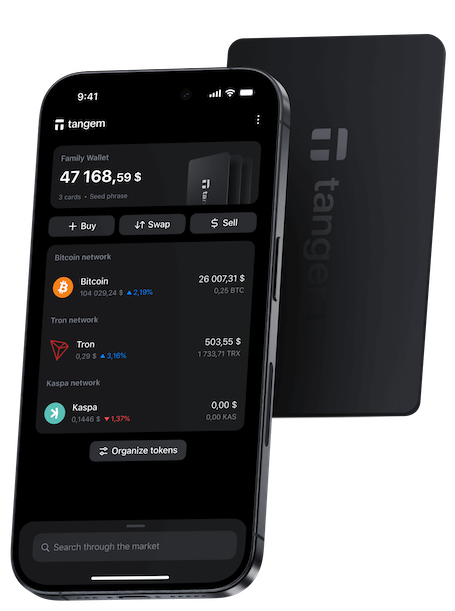

How to secure your Liquidus (Old) with Tangem?
When you buy or hold Liquidus (Old) in Tangem, it secures your private keys in many ways:
- With the seedless setup and smart backups on extra devices, your Bitcoin is safe and accessible only to you.
- Tangem is IP69K water and dustproof, built to protect against extreme temperatures, EMPs, ESCs, and X-RAYS.
- An access code and biometric authentication protect against unauthorized access.
- Private keys are generated and stored on its EAL6+ CC secure element.
How to get a Liquidus (Old) Crypto Wallet?
Tangem products are for everyone, from beginners to experts. They keep your crypto safe and easy to manage. With cutting-edge technology, Tangem lets you control and protect your digital assets.
Get TangemWhy choose Liquidus (Old) wallet with Tangem.
Privacy
No registration and KYC required to use the app. We don't track your data.

Security
Your private keys are encrypted and never leave your device. Only you have control over your funds.

Convenient designs
Choose from a variety of elegant designs, including unique co-branded editions and our innovative ring-form factor wallet, ensuring both style and functionality.

24/7 Customer care
Fast support for your needs. Live chat and email support for customers from all over the globe.

What is Liquidus (LIQ)?
Liquidus is crafted to serve as an essential instrument for streamlining the staking of crypto assets within major decentralized finance (DeFi) platforms. Its primary goal is to demystify the complexities involved in liquidity provision and staking activities, thus allowing users to receive higher yields influenced by the decentralized economy.
What is a Liquidus wallet?
A Liquidus wallet functions to host private keys that enable access to your Liquidus account. While it doesn’t hold the Liquidus tokens directly (as they exist on the blockchain), it serves to generate and secure these private keys. These keys provide a channel for you to manage, send, receive, and organize your Liquidus holdings effectively.
How does a Liquidus wallet work?
Liquidus wallets operate through an interplay of public and private keys to handle blockchain accounts. Keeping the private key confidential is critical as it secures access to your Liquidus account, whereas the public key can be shared for receiving LIQ tokens. For transactions necessitating fund withdrawals, the private key is essential. Tangem Wallet adeptly handles the generation and storage of these private keys within its chip.
What are the types of Liquidus wallets?
Exchange Liquidus Wallets:
Utilized on centralized exchanges such as Coinbase, Binance, and Kraken, these wallets facilitate Liquidus purchases using traditional currencies in a custodial setup, carrying the potential risk of account access being terminated.Software Liquidus Wallets:
These are installed on devices to administer private keys and Liquidus. While user-friendly, they make one susceptible to malware and cyber threats. They come in various forms like mobile, desktop, and browser-based wallets.Mobile Liquidus Wallets:
These app-based solutions enable Liquidus management on smartphones with ease.Desktop Liquidus Wallets:
Installed directly on computers, these store private keys on your device’s hard drive or SSD.Hardware Liquidus Wallets:
Offering an offline storage option, devices like Tangem are excellent in shielding your holdings from online dangers.
How to Choose the Best Liquidus Wallet
Choosing the ideal wallet is user-specific and should focus on maximum convenience, trustworthiness, protection, and sturdiness. To safely store larger quantities of LIQ and counter online vulnerabilities, opting for a hardware wallet like Tangem is advisable.
Liquidus (Old) LIQ


Tangem supports other cryptocurrencies
Reliability and convenience at your fingertips. Manage thousands of cryptocurrencies with peace of mind anywhere and anytime
See all supported cryptosLiquidus (Old) FAQ
- The best wallet for LIQ is one that keeps your keys safe while staying easy to use. Tangem Wallet delivers both security and convenience in one solution.
- Software wallets for Liquidus (Old) are often free, but hardware wallets usually require a one-time purchase. Sending transactions may involve network fees.
- Online wallets can be targeted by malware, phishing, or remote attacks. The best wallets for Liquidus (Old)minimize these risks by ensuring your private keys never come into contact with the internet, remaining protected within a secure element.
- A Liquidus (Old) wallet is a tool that lets you store, send, and receive your digital assets. It manages your private keys, which prove ownership of your LIQ.
- Crypto loans offer a way to access liquidity without selling digital assets. Evaluating platforms, interest rates, and collateral requirements can help you find the right option for borrowing against your crypto.
- Bitcoin sent to the Liquid Network are secured in an 11-of-15 multisig wallet, with each of the 15 keys stored on a device called a functionary held by a Liquid Federation member. These functionaries are stored in secure locations geographically distributed around the world.
- Crypto trading volume refers tothe total number of coins or tokens exchanged between buyers and sellers within a specified period, such as a day, week, or month.
- The Liquid Network is an open-source federated Bitcoin sidechain and layer-2 solution interoperable with Lightning that enables faster, more confidential bitcoin transactions and the issuance and exchange of digital assets like stablecoins, tokenized securities, and bonds.
Related articles
Learn more


Something went wrong
Please
Don’t miss! 🚀 We drop prices for 20%
Flash sale expires soon! Stakes with BTC Reward Tap & Get

2 days left