 Selected Wallets · Ends Apr 6


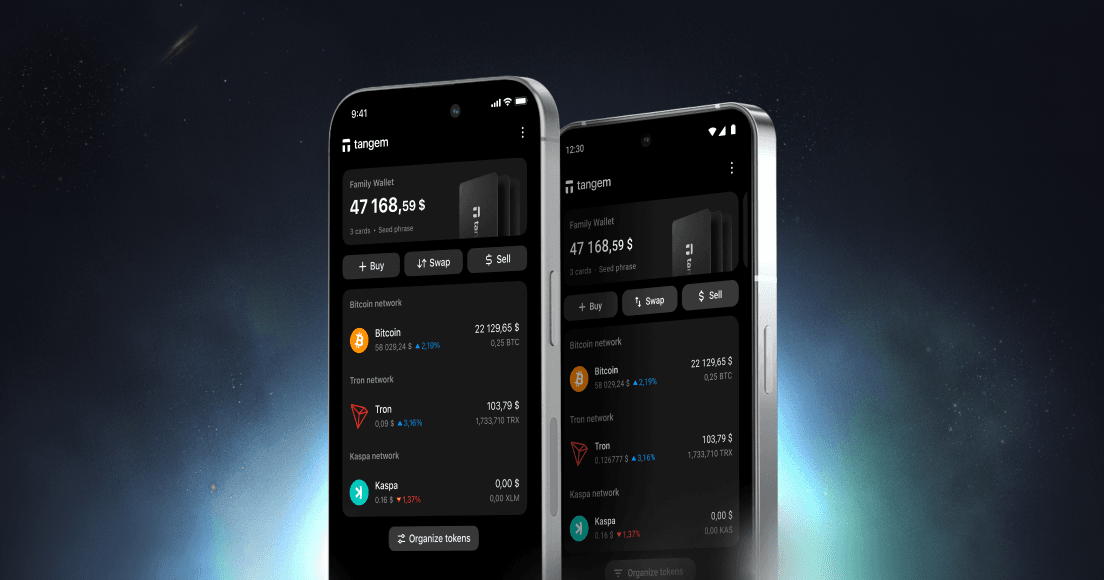
DeHive wallet
The most secure hardware wallet for your DeHive
Secure your DeHive with Tangem! Join tens of thousands in trusting the best self-custodial wallet on the market.
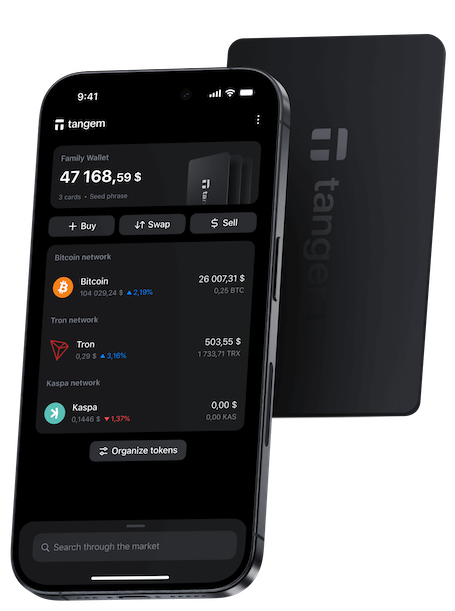

How to secure your DeHive with Tangem?
When you buy or hold DeHive in Tangem, it secures your private keys in many ways:
- With the seedless setup and smart backups on extra devices, your Bitcoin is safe and accessible only to you.
- Tangem is IP69K water and dustproof, built to protect against extreme temperatures, EMPs, ESCs, and X-RAYS.
- An access code and biometric authentication protect against unauthorized access.
- Private keys are generated and stored on its EAL6+ CC secure element.
How to get a DeHive Crypto Wallet?
Tangem products are for everyone, from beginners to experts. They keep your crypto safe and easy to manage. With cutting-edge technology, Tangem lets you control and protect your digital assets.
Buy TangemWhy choose DeHive wallet with Tangem.
Privacy
No registration and KYC required to use the app. We don't track your data.

Security
Your private keys are encrypted and never leave your device. Only you have control over your funds.

Convenient designs
Choose from a variety of elegant designs, including unique co-branded editions and our innovative ring-form factor wallet, ensuring both style and functionality.

24/7 Customer care
Fast support for your needs. Live chat and email support for customers from all over the globe.

What is DeHive (DHV)?
DeHive (DHV) is a decentralized protocol aimed at providing superior asset management in the DeFi space by aggregating assets into what they call clusters. These clusters serve various market segments and act as indices that mirror the broader crypto market's economic stance.
What is a DeHive wallet?
A DeHive wallet is a tool utilized for storing private keys, enabling the management of your DHV address. It's important to note the wallet doesn't contain the DHV itself; the digital money exists on the blockchain. The primary function of a DHV wallet is to create and store these private keys, granting access to and management of your DHV holdings. Essentially, a DeHive wallet is designed for storing, sending, receiving, and managing DHV.
How does a DeHive wallet work?
DeHive wallets utilize pairs of public and private keys to manage blockchain accounts. The private key is critical for accessing a specific DHV account and should be kept secret, while the public key is shared for receiving DHV. Access to funds requires the corresponding private key, and the Tangem Wallet securely generates and holds these private keys inside its chip.
What are the types of DeHive wallets?
Exchange DeHive Wallets:
Centralized exchanges such as Coinbase, Binance, and Kraken offer custodial wallets for purchasing DHV with traditional currencies. However, there are risks of losing access due to account restrictions.Software DeHive Wallets:
Installed on personal devices, these wallets manage private keys and DHV, offering user-friendliness but may be susceptible to malware and hacking attempts. Available as mobile apps, desktop applications, or through web browsers.Mobile DeHive Wallets:
Mobile applications designed to manage DHV directly from smartphones.Desktop DeHive Wallets:
These are software applications installed on computers that store your private keys on the device’s hard drives or SSDs.Hardware DeHive Wallets:
These are physical devices that store keys offline, like Tangem Wallet, providing robust protection against cyber threats.
How to Choose the Best DeHive Wallet
Selecting the ideal wallet requires evaluating personal needs, focusing on factors like usability, trustworthiness, durability, and security measures. For optimal security and peace of mind, especially for substantial holdings, a hardware wallet like Tangem is often the best choice.
DeHive DHV


Tangem supports other cryptocurrencies
Reliability and convenience at your fingertips. Manage thousands of cryptocurrencies with peace of mind anywhere and anytime
See all supported cryptosDeHive FAQ
- For storing and using DHV, Tangem Wallet is a strong choice thanks to its offline key storage and mobile-friendly design.
- Software wallets for DeHive are often free, but hardware wallets usually require a one-time purchase. Sending transactions may involve network fees.
- A strong DeHive wallet uses dedicated hardware to safeguard private keys. Tangem uses a specialized security chip, similar to those found in banking cards and passports, which keeps keys isolated and reduces the risk of unauthorized access or data compromise.
- A DeHive wallet is a tool that lets you store, send, and receive your digital assets. It manages your private keys, which prove ownership of your DHV.
- Unlike centralized currencies, decentralized cryptocurrencies arenot regulated by central banks, but by their programming code and the monetary policies are regulated by their respective communities.
- Solana's design uses algorithms to remove performance bottlenecks caused by blockchain software.This makes it scalable, secure, and decentralized. There is speculation that its architecture might allow for a limit of 710,000 TPS on a standard gigabit network and up to 28.4 million TPS on a 40-gigabit network.
Related articles
Learn more


Something went wrong
Please
Don’t miss! 🚀 We drop prices for 20%
Flash sale expires soon! Stakes with BTC Reward Tap & Get

00:00:00