 Selected Wallets · Ends Apr 6


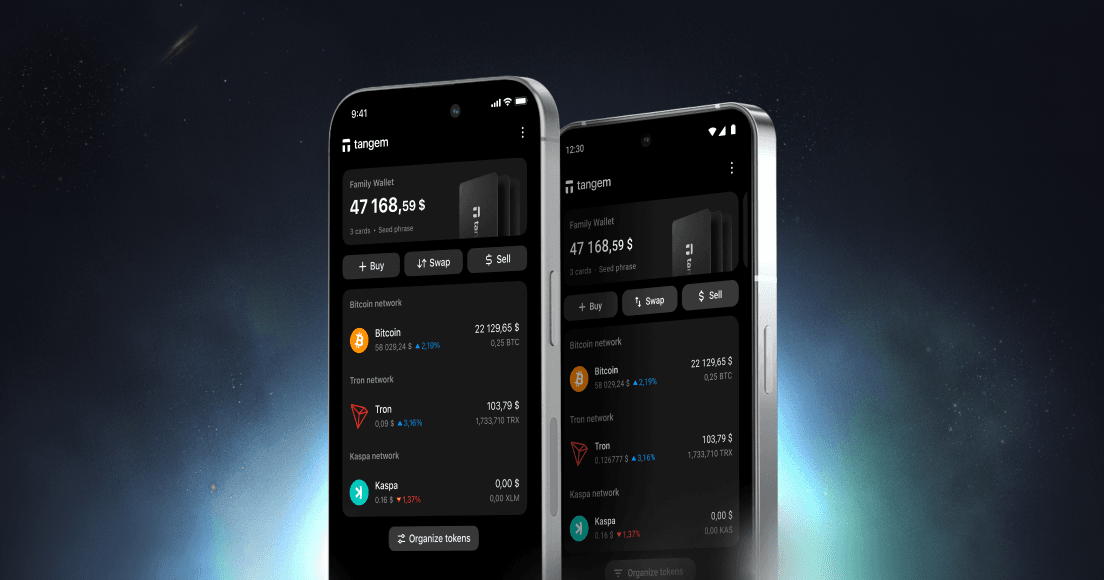
Compendium wallet
The most secure hardware wallet for your Compendium
Protect your Compendium with Tangem Wallet, where security meets satisfaction!
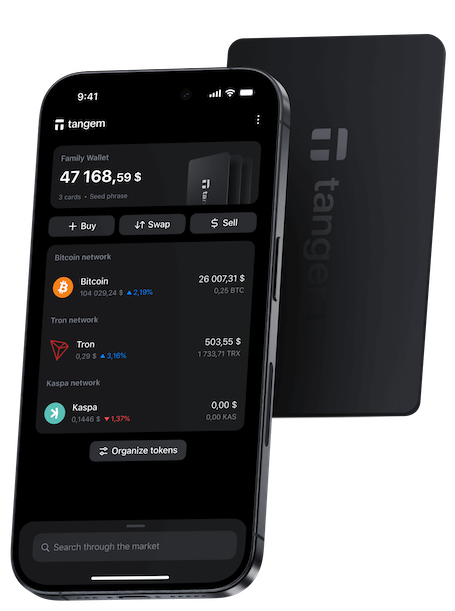

How to secure your Compendium with Tangem?
When you buy or hold Compendium in Tangem, it secures your private keys in many ways:
- With the seedless setup and smart backups on extra devices, your Bitcoin is safe and accessible only to you.
- Tangem is IP69K water and dustproof, built to protect against extreme temperatures, EMPs, ESCs, and X-RAYS.
- An access code and biometric authentication protect against unauthorized access.
- Private keys are generated and stored on its EAL6+ CC secure element.
How to get a Compendium Crypto Wallet?
Tangem products are for everyone, from beginners to experts. They keep your crypto safe and easy to manage. With cutting-edge technology, Tangem lets you control and protect your digital assets.
Buy TangemWhy choose Compendium wallet with Tangem.
Privacy
No registration and KYC required to use the app. We don't track your data.

Security
Your private keys are encrypted and never leave your device. Only you have control over your funds.

Convenient designs
Choose from a variety of elegant designs, including unique co-branded editions and our innovative ring-form factor wallet, ensuring both style and functionality.

24/7 Customer care
Fast support for your needs. Live chat and email support for customers from all over the globe.

What is Compendium (CMFI)?
Compendium revolutionizes how users interact with the crypto markets and the metaverse by offering a comprehensive suite of tools. Whether you're looking to engage in manual trading or develop your personalized algorithmic strategies, Compendium’s features cater to all needs. Its cornerstone utility token, CMFI, is essential for fostering these interactions within the ecosystem.
What is a Compendium wallet?
A Compendium wallet is your gateway to storing private keys that manage your CMFI address. Remember, what you hold is not CMFI itself but access keys to interact with the blockchain. Your Compendium wallet's central role is generating and safeguarding these keys, ensuring you can manage your CMFI accounts effectively. Essentially, it is an instrument for storing, sending, receiving, and overseeing CMFI assets.
How does a Compendium wallet work?
Compendium wallets leverage public and private keys to secure blockchain account operations. While the private key should be kept secret to secure your CMFI account, the public key can be shared to receive CMFI. For outgoing transactions, the associated private key is a necessity. On the Tangem Wallet, these private keys are stored internally within its chip, ensuring maximum security.
What are the types of Compendium wallets?
Exchange Compendium Wallets:
Platforms like Coinbase, Binance, and Kraken allow the purchase of CMFI using traditional currencies through custodial wallets; this involves certain risks, such as potential account suspension.Software Compendium Wallets:
These are software programs on personal devices that store private keys and manage CMFI. Though user-friendly, they are susceptible to malware, ranging from mobile and desktop to browser-based varieties.Mobile Compendium Wallets:
Smartphone applications enabling CMFI access and management.Desktop Compendium Wallets:
Installations on computer systems, storing private keys in hard drives or SSDs.Hardware Compendium Wallets:
Offline storage tools, such as Tangem, offer superior protection from online vulnerabilities.
How to Choose the Best Compendium Wallet
Identifying the optimal wallet hinges on personal priorities, whether simplicity, reliability, or enhanced security. If safeguarding large sums is your goal or you're wary of online threats, a hardware wallet like Tangem could be the ideal solution. Remember, the choice reflects your unique requirements for crypto management.
Compendium CMFI


Tangem supports other cryptocurrencies
Reliability and convenience at your fingertips. Manage thousands of cryptocurrencies with peace of mind anywhere and anytime
See all supported cryptosCompendium FAQ
- The best wallet for CMFI is one that keeps your keys safe while staying easy to use. Tangem Wallet delivers both security and convenience in one solution.
- Yes, software wallets are generally free. Hardware wallets, such as Tangem Wallet, come with a purchase because they include secure physical components.
- The safest Compendium wallet keeps your private keys offline and protected from unauthorized access. Hardware wallets, such as Tangem, offer the highest level of protection because they isolate keys from online risks.
- This type of wallet secures the private keys required to use your Compendium. Hardware wallets, such as Tangem Wallet, keep those keys offline for added protection.
- The choice between USDT and USDC comes down to your individual preferences and what aspects you value more.If you prefer a more widely adopted coin, USDT is the better option. If you prefer a more transparent and better-regulated coin, USDC is the better option.
- This is different from the conventional method, where users must first sell their crypto assets into fiat money before using the funds to buy other crypto.With crypto swap, this exchange process becomes more efficient because it is done without the need for fiat currency.
Related articles
Learn more


Something went wrong
Please
Don’t miss! 🚀 We drop prices for 20%
Flash sale expires soon! Stakes with BTC Reward Tap & Get

00:00:00