USDC vs USDT: Which Stablecoin Is Better for Everyday Spending?
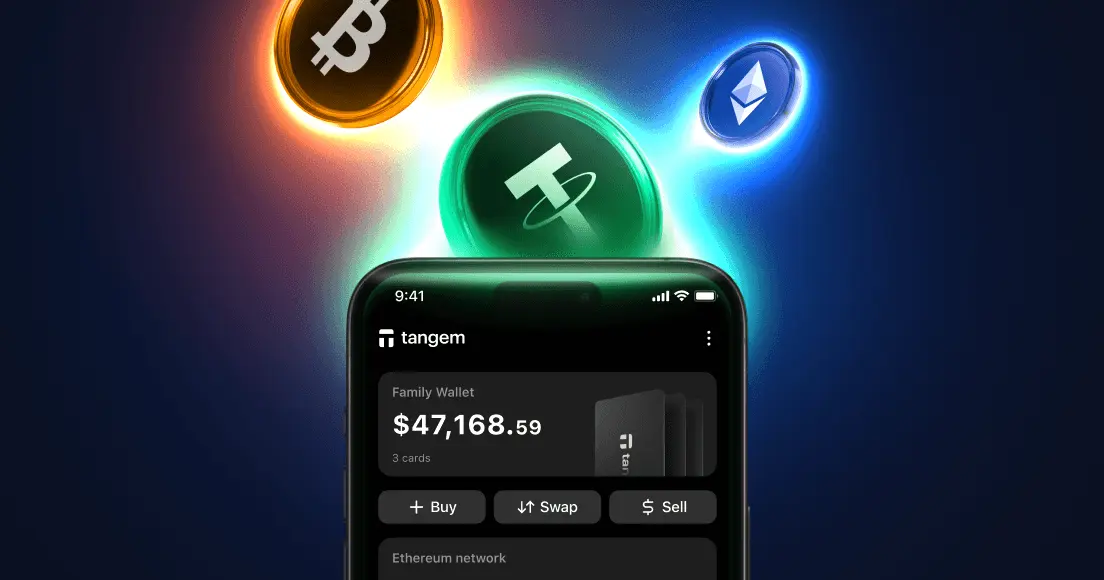
You hold USDT. You want to spend it with a crypto card. But the card requires USDC on Polygon. That's not a minor inconvenience. It's a fundamental question about which stablecoin actually works for everyday card spending, and why the answer isn't the same as which one is bigger. USDC and USDT both target a $1 peg. Both are widely traded. But for card spending, the critical question is which blockchain networks they live on and which asset a card program actually supports. This article covers what you need to know before choosing between them.
What Are USDC and USDT?
Both are stablecoins: tokens designed to hold a fixed $1 USD value. Major stablecoins are prevalent in DeFi liquidity contexts, and USD-pegged stablecoins are common after exchange withdrawals due to liquidity, predictable transfer gas costs, and widespread adoption. The practical differences become sharper when you're using them for card spending, where network availability and product support matter most.
USDC is the stablecoin that Tangem Pay documents for its funding flow: native USDC on Polygon. USDT is also widely used across exchanges and wallets, but that broad availability does not make it interchangeable with USDC inside a card program. A wallet can support many tokens, whereas a payment product accepts only one asset on a single chain.
That separation matters because a stablecoin balance has two labels. The first is the token name, such as USDC or USDT. The second is the network, such as Polygon, Ethereum, Tron, Binance Smart Chain, or Base. A spending product can accept one combination and reject another, even when both tokens are designed to track the same dollar value.
For an experienced crypto user, this can feel obvious until the moment a transfer screen shows five network options for one ticker. The ticker alone does not answer the spending question. You need to know which chain the receiving product expects, which token contract it supports, and whether your current balance can reach that destination without a risky bridge or unsupported route.
That's the spending issue. The stablecoin name, the chain, and the product requirement all have to line up before a top-up works.
Network Availability and Polygon Compatibility
Here's where the stablecoin question becomes a network question.
A stablecoin isn't one thing across all blockchains. USDT on Ethereum and USDT on Tron are the same target peg, but they're different tokens on different networks, with different fees, speeds, and compatibility. Tokens transferred on one blockchain network don't automatically appear on another, because each blockchain operates independently. USDT withdrawal network examples include Ethereum (ERC-20), Binance Smart Chain (BEP-20), Tron (TRC-20), Solana, Polygon PoS, OP Mainnet, Avalanche C-Chain, TON, and Aptos. Ethereum is established and widely adopted, but carries higher fees and slower speeds. Tron offers minimal fees and high-speed transfers.
For Tangem Pay, the documented funding asset is native USDC on the Polygon network. That distinction matters for Tangem Pay, the virtual Visa card embedded in the Tangem Wallet app. Tangem Pay is funded with native USDC on the Polygon network. USDT on any network is not a supported funding asset.
The wrong-network risk is real. All EVM chains, including Ethereum, BNB Chain, Base, and Polygon, share the same address format. Sending USDT to a Polygon address expecting USDC won't work, and sending tokens on the wrong network can lead to permanent loss unless complex recovery steps are possible. Choosing the right network for your use case is as important as choosing the right asset.
The confusing part is that the address can look valid even when the route is wrong. An exchange may let you paste the same 0x-style address for Ethereum, BNB Chain, Base, or Polygon. The address format checks out, but the destination product still expects a specific token on a specific network. That's why the final review screen matters more than the address field itself.
Fees also change the decision. Network fees go to validators or miners, not wallet teams, and fee markets can affect how quickly a transaction gets included. A low-fee chain can be convenient for frequent transfers, while a higher-fee chain can make small card top-ups feel wasteful. For spending, the better route is usually the one that reaches the supported asset and network with the fewest moving parts.
Tangem Smart Gas can address a separate pain point by allowing users to pay network fees with supported stablecoins on selected EVM chains. It supports fee payments with USDC on Ethereum, BNB Smart Chain, Polygon, Arbitrum One, and Base, and supports USDT for fees on Ethereum. That does not change Tangem Pay's funding requirement. Paying a fee with a stablecoin is not the same as loading the card balance with USDC on Polygon. If you hold USDT and want to fund Tangem Pay, you'll need to convert it to USDC on Polygon. That requires converting your USDT into USDC and ensuring the resulting USDC lands on Polygon, not Ethereum or another chain. The Tangem app supports in-app swaps via providers including 1inch, OKX DEX, LiFi, ChangeNOW, and others, but users should verify the output network before confirming any swap.
Circle's Polygon documentation adds one more layer: native USDC on Polygon and bridged USDC. They are separate assets with separate token addresses. That matters because "USDC on Polygon" can still be ambiguous if an exchange, bridge, or wallet labels assets poorly. Before funding a Tangem Pay balance, check the asset name, the network, and whether the product flow requires native USDC.
This is also why a bigger stablecoin is not automatically better for spending. USDT may be available across many chains, making it convenient for exchange transfers. Tangem Pay still needs the supported asset on the supported network. For this use case, compatibility beats market footprint.
Regulatory Backing and Risk Considerations
For everyday spending, the clearest supported distinction is product compatibility: Tangem Pay documents native USDC on Polygon as its funding setup, while USDT on any network is not a supported Tangem Pay funding asset. The regulatory and reserve picture still matters, but it should be framed as stablecoin risk, not as a guarantee that either asset is risk-free.
Circle describes USDC as fully backed 1:1 by cash and short-dated U.S. Treasuries, with public monthly reserve reports and third-party attestations. Circle also presents a regulatory-first approach across several jurisdictions. That gives USDC a stronger transparency and licensing profile for users who care about card funding, compliance, and reserve reporting.
USDT has a different profile. Public comparison sources describe Tether's backing as a mix that can include U.S. Treasuries, cash, secured loans, Bitcoin, gold, and other investments, with periodic attestations and reserve dashboards. Public reporting also notes Tether's 2021 CFTC settlement over reserve-backing statements. That does not mean USDT cannot function as a stablecoin for trading or transfers. It means its transparency and regulatory history are different from USDC's. For card spending, reserve transparency is only one layer of risk. You also have operational risk, such as sending to the wrong network. You have provider risk when a swap or bridge handles a cross-chain route. You have a timing risk if a transfer sits pending while you are trying to fund a card balance for a purchase. None of these risks makes stablecoins unusable. They just make process discipline part of the product choice.
The most practical question is not "Which stablecoin is larger?" It is "Which stablecoin can I load into the card product I actually plan to use?" A stablecoin can be liquid on exchanges and still be the wrong asset for a specific virtual card account. That's the difference between market adoption and product compatibility.
Here's the practical version. You have 250 USDT on Tron after an exchange withdrawal, but Tangem Pay requires USDC on Polygon. To use that balance for a Tangem Pay top-up, you need a route that leaves you with Polygon USDC. That route can involve source-chain fees, swap or bridge provider fees, destination-chain fees, and the risk of selecting the wrong output network. Stablecoin risk and network risk converge in the same transaction flow.
Neither USDC nor USDT is government-insured like a bank deposit. Both rely on issuer solvency, reserve liquidity, and operational controls. For a card user, the safer habit is simple: hold the asset the product supports, use the network the product names, verify the output before confirming a swap, and keep long-term holdings separate from the amount you plan to load for spending.
Comparison Table: USDC vs USDT for Spending
| Criterion | USDC | USDT |
|---|---|---|
| Stablecoin category | Yes | Yes |
| Tangem Pay support | Yes, required as native USDC on Polygon | No, USDT on any network is not a supported Tangem Pay funding asset |
| Network consideration | Must be on Polygon for Tangem Pay | Available across multiple network examples, including Ethereum, BNB Smart Chain, Tron, Solana, Polygon PoS, OP Mainnet, Avalanche C-Chain, TON, and Aptos |
| Fee consideration | Polygon gas fees apply for Tangem Pay top-ups and are paid to validators | Network fees depend on the chain used; Ethereum is higher-fee and slower, while Tron is described as minimal-fee and high-speed |
| Wrong-network risk | Source and destination networks must match | Source and destination networks must match |
| Reserve and transparency profile | Circle describes 1:1 backing with cash and short-dated U.S. Treasuries, monthly reserve reports, and third-party attestations | Public comparison sources describe a broader reserve mix, periodic attestations, and a more complex regulatory history |
| Best fit for this use case | Funding Tangem Pay when held as native USDC on Polygon | Holding or transferring stablecoin liquidity elsewhere, then converting when a card product requires USDC |
| Smart Gas support examples | Supported for fees on Ethereum, BNB Smart Chain, Polygon, Arbitrum One, and Base | Supported for fees on Ethereum; USDT0 is supported on Polygon and Arbitrum One |
Tangem Pay: Why USDC on Polygon
Tangem Pay is a non-custodial payment account built into the Tangem Wallet app, introduced in app version 5.31 on December 12, 2025. It's a virtual Visa card. The issuing partner is Rain.
Here's how it works: you load the account with native USDC on Polygon, the funds stay in a smart contract you control, and at the moment of purchase, USDC is converted 1:1 to USD via Visa rails. The equivalent USDC is deducted from your account. You're not spending from your main Tangem Wallet holdings. USDC lives in the wallet; the card draws from the loaded card balance.
The separation is useful. Your Tangem Wallet remains your main self-custody wallet for storage, swaps, and holdings. Tangem Pay is the spending account that has its own compliance flow and loaded balance. Moving funds into that account is a deliberate action, not a standing link to every asset in your wallet.
That design also explains the narrow asset requirement. A virtual Visa card flow needs predictable settlement, clear compliance handling, and a supported on-chain funding route. Tangem Pay names native USDC on Polygon for that route. It does not treat every stablecoin in the wallet as a card funding source. Tangem Pay has no transaction fees, no monthly account fees, and no virtual card issuance fees. Top-ups require Polygon gas fees paid to validators, not to Tangem. Standard Visa foreign-exchange rates apply to non-USD purchases.
Setup requires a Tangem hardware wallet, the Tangem app, and one-time KYC through Sumsub identity verification. Tangem does not see or store the identity data used in that verification. Tangem Pay activity is visible to compliance partners; your main Tangem Wallet transaction history and holdings remain private. That privacy split is important for users who already use Tangem for long-term storage. Tangem Pay activity belongs to the card and compliance flow. The rest of the wallet does not become a card ledger just because the same app contains both products.
Before loading funds, check three things in order: that the asset is USDC, that the network is Polygon, and that the product flow is Tangem Pay rather than a normal wallet receive address. If any one of those is wrong, pause. A successful transfer to the wrong place is still the wrong result.
One important distinction: Tangem Wallet and Tangem Pay are separate products within the same app. Tangem Wallet is for main holdings, storage, and earnings with complete anonymity. Tangem Pay is a regulatory-compliant spending account. Freezing a Tangem Pay card disconnects it from the Visa network, but your on-chain USDC balance is unaffected.
Current launch regions include the USA, Latin America, and Asia-Pacific (42 countries), with the UK and EU planned for 2026.
Conclusion
For everyday card spending with Tangem Pay, USDC is the supported choice. Tangem Pay requires native USDC on Polygon, while USDT on any network is not a supported funding asset. The network question isn't a technicality. Where a stablecoin lives determines whether it's compatible with a given card program, what fees you'll pay to move it, and whether you're holding the issuer's native asset or a wrapped derivative. USDT can still be useful for exchange transfers and stablecoin liquidity. For this specific spending flow, though, the useful balance is the one Tangem Pay can load: native USDC on Polygon. That is the decision point.
If you're ready to load your Tangem Pay card with USDC, visit tangem.com/en/tangem-pay/.
This article is for informational purposes only and does not constitute financial or investment advice. Consult a qualified financial professional before making decisions about stablecoin holdings.
FAQ
-
Not currently. Tangem Pay requires native USDC on the Polygon network as its funding asset. USDT on any network is not a supported funding currency. If you hold USDT, you'll need to convert it to USDC and ensure the resulting USDC is on Polygon before loading to Tangem Pay.
-
For Tangem Pay, USDC is the supported option because it requires native USDC on Polygon. USDC also has stronger support for transparency and regulatory oversight in the research used for this article. That is not the same as saying USDC is risk-free. Neither USDC nor USDT has government insurance like a bank deposit.
-
Tangem Pay uses native USDC on Polygon because that is the documented funding asset and network for the product. USDT on any network is not a supported Tangem Pay funding asset.
-
You need to end up with USDC on Polygon to fund Tangem Pay. The Tangem app supports in-app swaps through providers including 1inch, OKX DEX, LiFi, ChangeNOW, Changelly, ChangeHero, and SimpleSwap. Verify that the output network is Polygon before confirming any swap. A cross-chain swap from USDT on Tron or Ethereum to USDC on Polygon may involve source-chain fees, bridge or swap provider fees, and destination-chain fees.
-
Tangem Pay requires native USDC on the Polygon network. Circle states that native Polygon USDC and bridged USDC.e are separate assets with separate token addresses. Before funding a card account, verify that both the asset and the network meet the Tangem Pay requirements.
-
Stablecoins are designed to maintain a $1 value, making them practical for spending. For card spending, asset and network compatibility matter: Tangem Pay requires native USDC on Polygon, and sending tokens to the wrong network can result in permanent loss unless complex recovery steps are available. Consult a qualified financial professional for personalized advice.
-
Freezing a Tangem Pay card disconnects it from the Visa network. Your on-chain USDC balance is unaffected. The funds remain in the smart contract you control, accessible through your Tangem Wallet.