Switch to seedless. Get 30% off with SWITCH30 till Oct 21
How to Swap BTC Through DEX Providers in Tangem
This article is available in the following languages:
Core Insights
Bitcoin typically cannot be swapped directly on decentralized exchanges (DEXs) due to its lack of smart contracts, leading most cross-chain swaps to rely on wrapped tokens or bridges, which introduce custody risks. Solutions like LiFi and SwapKit, utilizing THORChain, now enable native, cross-chain Bitcoin swaps without wrapping, allowing users to trade BTC on DEXs with greater privacy, control, and permissionless access. This approach reduces reliance on centralized exchanges and synthetic assets, enhancing security and user autonomy.
Bitcoin doesn't play well with most decentralized exchanges. DEXs live on smart contract chains like Ethereum or Solana, and Bitcoin has no smart contracts. That mismatch is why BTC swaps usually route through wrapped tokens, bridges, or centralized services instead of a straight DEX trade.
LiFi and SwapKit change that equation, specifically giving users a way to swap native Bitcoin cross-chain without first wrapping it.
Why BTC Doesn't Fit the Standard DEX Model
A DEX is a smart contract. It holds liquidity pools and executes trades onchain, on one specific blockchain. Bitcoin has no native smart contract layer, so it can't interact directly with an Ethereum-based pool. You can't swap BTC for SOL on a standard DEX the way you'd swap ETH for USDC.
Wrapping and Bridges
Most cross-chain tools solve this with wrapped tokens. A bridge locks your BTC and mints a synthetic version, like WBTC, on a different chain. This wrapped token can then be traded on any DEX built for that chain. The tradeoff is custody risk. Your real BTC sits in a bridge contract or custodian wallet while you hold a claim on it, and every bridge hack in crypto history has hit exactly this kind of setup.
Native Swaps via THORChain
LiFi aggregates dozens of DEXs, bridges, and solvers into a single routing layer. For BTC, LiFi taps its integration with SwapKit, which connects to THORChain. THORChain is a Layer 1 built specifically for cross-chain liquidity. It runs its own validator network and liquidity pools, and it moves real assets between chains without minting a wrapped substitute.
Swapping BTC in DEXs over CEXs
Many traders turn to decentralized exchanges (DEXs) rather than centralized exchanges (CEXs) for Bitcoin swaps to gain greater control, privacy, and reduced reliance on intermediaries. While DEXs come with their own trade-offs, here are the main reasons people often prefer them:
- No KYC: Greater privacy and anonymity; no identity verification required.
- Censorship resistance: Harder for governments or platforms to freeze, block, or restrict trades.
- Permissionless access: Anyone can trade without account approval or geographic restrictions.
- DeFi composability: Easier integration with other protocols, liquidity pools, or cross-chain swaps.
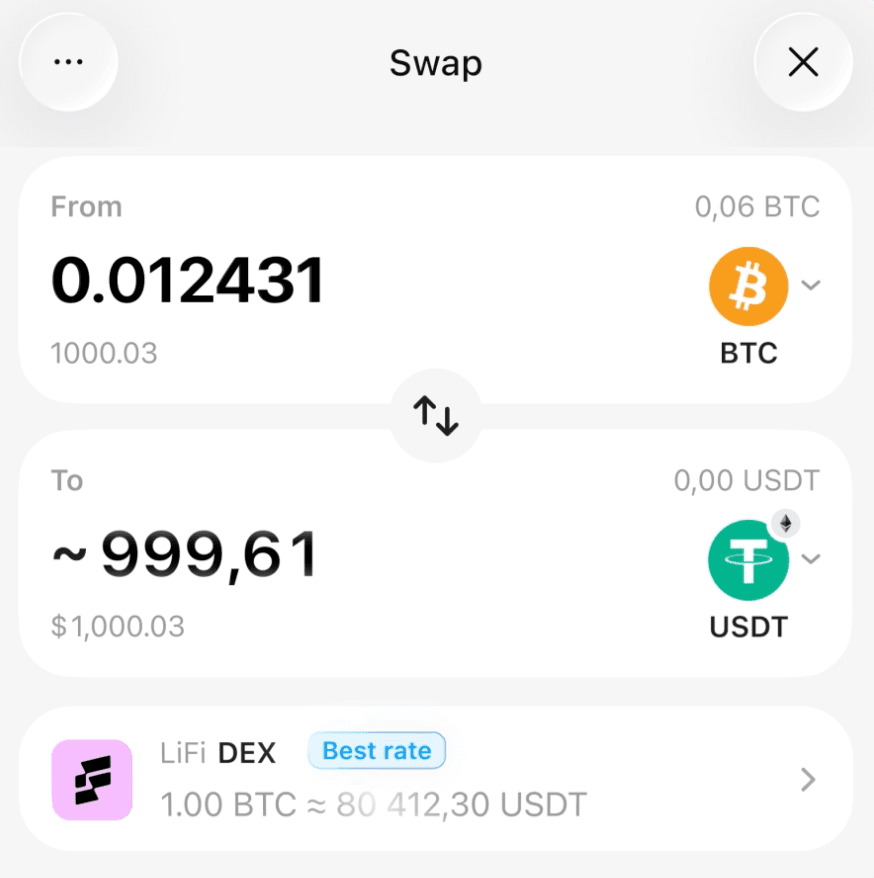
Here's the flow for a BTC swap through LiFi and SwapKit in Tangem.
- Open the app, select Bitcoin, and tap Swap.
- Choose the asset you want to receive on the destination chain.
- Enter the amount.
Choose LiFi DEX as the swap provider.
You can also choose SwapKit.
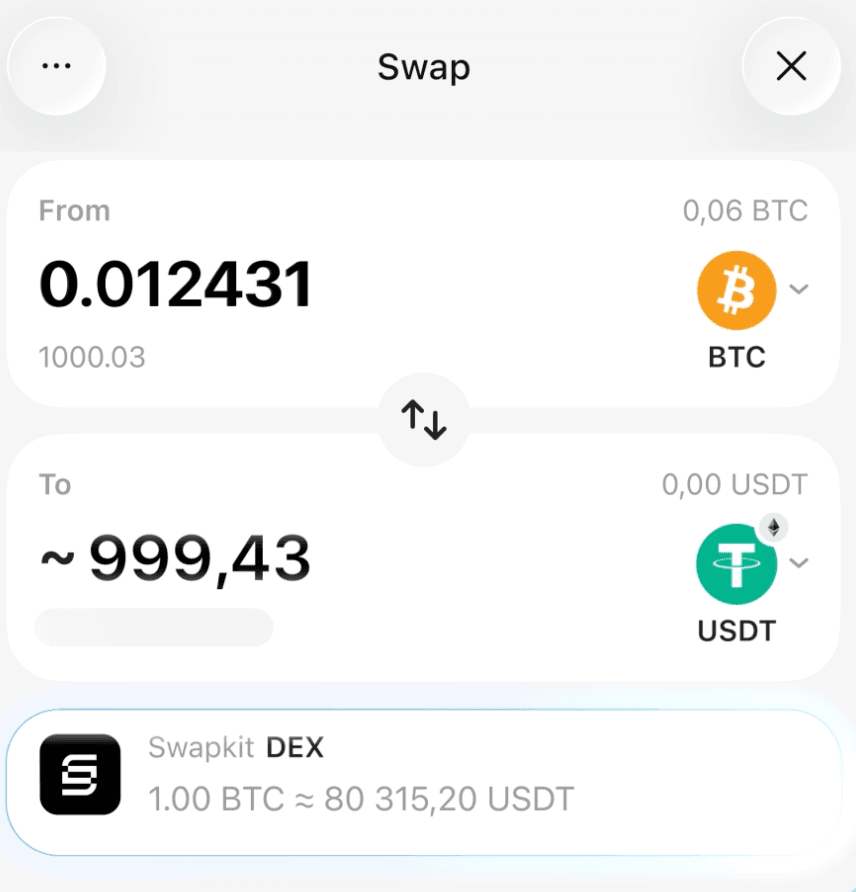
- Review the quote, including the exchange rate and network fees, before you approve.
- Tap Swap and confirm the transaction.
Tangem AG provides only hardware wallets and non-custodial software solutions for managing digital assets. Tangem is not regulated as a financial services provider or cryptocurrency exchange. Tangem does not hold, custody, or control users’ assets or transactions. Crypto transaction services are provided by third-party providers. Tangem provides no advice or recommendation on the use of these third-party services.