


How to Buy Anthropic Tokenized Stock with Crypto

- What is Anthropic Tokenized Stock, and What is It Not?
- Where Does the Anthropic Listing Stand Right Now?
- What Do You Need Before You Start?
- How Do You Buy Anthropic Tokenized Stock with Crypto, Step by Step?
- Who Can Buy, and Who Is Excluded?
- How Do You Hold the Token After the Swap?
- What Does It Cost, and What Can Go Wrong?
No issuer-approved Anthropic token is confirmed. Do not send funds until an issuer publishes the product terms and contract address.
What is Anthropic Tokenized Stock, and What is It Not?
A tokenized stock is a crypto token tied to a financial asset on a blockchain. It can provide economic exposure to a share without making its holder the legal owner of that share.
That distinction matters before you connect a wallet. A token can move on-chain while ownership of the underlying share remains in an off-chain record held by a registered holder or intermediary. A ticker, token name, or social post alone does not establish a verified route.
Many tokenized assets rely on off-chain data, so proof of reserve is one way to check assets claimed to back a token. It is still worth reading the legal terms for the exact product, because the wrapper decides what the token holder can claim.
| Characteristic | xStocks | Ondo Stocks |
|---|---|---|
| Legal form and issuer | Backed Assets (JE) Limited, a Jersey issuer, describes each xStock as a bearer debt instrument classified as a tracker certificate. | Ondo Global Markets (BVI) Limited, a British Virgin Islands company, issues structured notes as debt instruments. |
| Legal title and underlying share | The holder owns the tracker certificate. Legal title to the share remains with the registered holder or intermediary. | The holder has no right to receive the underlying shares. |
| Holder rights | xStocks holders have no voting rights. | Tokenholders do not receive shareholder voting rights. |
| Dividend treatment | Dividends are reinvested through an on-chain rebasing multiplier, net of 30% US withholding tax. | Dividends can increase the shares-per-token value instead of reaching the holder as cash. |
| US-person terms | xStocks are not registered under the U.S. Securities Act of 1933 and are for eligible non-US users. | The tokens may not be offered or sold to US persons without registration or an exemption. |
These are comparable structures, not confirmed Anthropic products. The legal-title gap is the point: transferring an xStocks token does not transfer legal title to its underlying share, and an Ondo tokenholder does not receive that share. Read the issuer's own terms before treating any token as a share purchase.
Where Does the Anthropic Listing Stand Right Now?
Anthropic publicly filed a Form S-1 with the SEC on October 26, 2026. The filing says the company has proposed listing Class A common stock on the Nasdaq Global Select Market under the symbol ANT.
That is an application, not a completed listing. The registration statement is not yet effective, and the filing does not disclose an offering price, price range, share count, or listing date. Anthropic stock is not yet publicly trading.
The official materials describe a common-stock listing and do not mention tokenization. ANT therefore identifies a proposed Nasdaq symbol, not a confirmed on-chain token or contract address. Treat a connection between a proposed ticker and an on-chain contract address as unproven until an issuer identifies the product and its contract address on its own product page.
What Do You Need Before You Start?
Five things, in order.
A self-custody wallet. In self-custody, you control the private keys rather than an exchange or intermediary. The wallet uses a public key to receive assets and a private key to authorize transactions; it signs transactions locally before broadcasting them to the blockchain.
A funding asset on a comparable route. Comparable xStocks and Ondo routes use USDC or USDT, but the exact funding asset comes from each product page. That does not establish a funding option for an Anthropic instrument.
An issuer-supported network. xStocks documentation names Ethereum, Solana, Arbitrum, Mantle, TON, Ink, and other EVM-compatible networks. Ondo names Ethereum, BNB Chain, and Solana. Those are comparator networks, not an approved Anthropic route.
The network's native coin for fees. Every on-chain swap costs a small network fee paid in the chain's native token. On Ethereum that's ETH; on Solana it's SOL. Without it, your transaction won't confirm.
A supported region. Check the exact product's regional terms before you fund.
A traditional seed-phrase wallet requires you to keep a 12- or 24-word backup phrase secure, because anyone with that phrase controls the funds. Cold-storage guidance recommends keeping private keys off internet-connected devices and testing recovery before storing significant value.
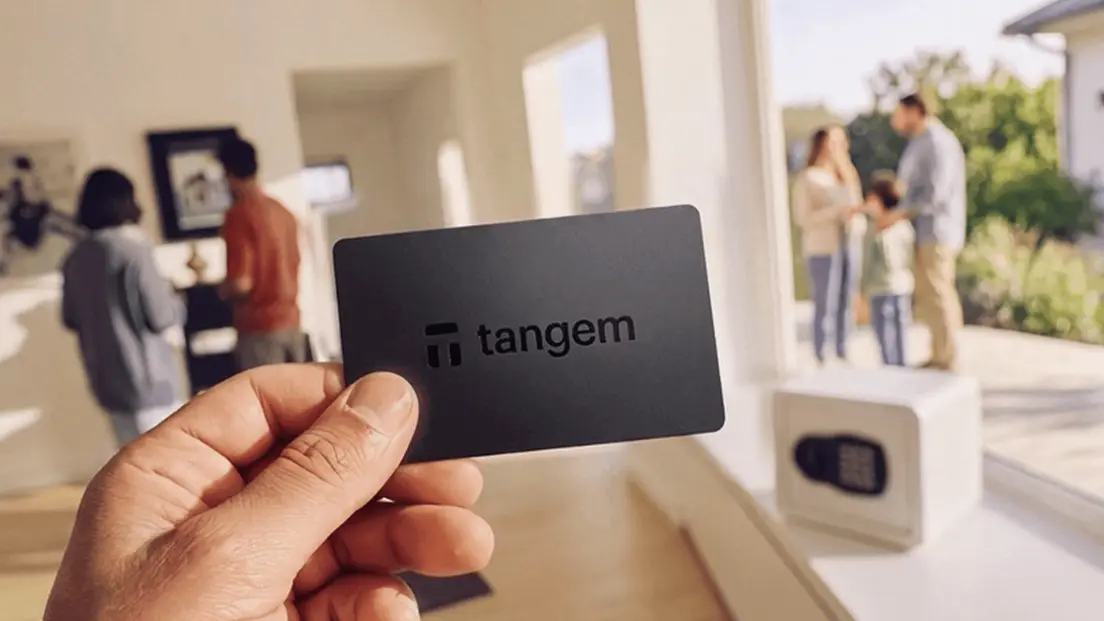
The wallet itself does not settle eligibility. Tokenized assets cannot be bought or swapped in some regions, including the United States and the United Kingdom on Tangem. An issuer can impose separate restrictions, so the product page and the route both need to permit your location.
How Do You Buy Anthropic Tokenized Stock with Crypto, Step by Step?
Preparation comes first. If an issuer later announces a product, start at the issuer's product page and confirm that the instrument is actually Anthropic-linked. Check the region and onboarding terms before moving funds.
Use this conditional workflow only after an issuer publishes a product and its terms:
- Check that your region is not restricted for tokenized assets.
- Choose the published route: a distributor, an on-chain self-custody swap, or issuer minting.
- Create or open a self-custody wallet for that route.
- Record the wallet's recovery method and store it offline before funding it.
- Transfer the published USDC or USDT funding asset to the wallet on the supported network.
- Keep enough of the network's native coin for the transaction fee.
- Match the published token ticker and contract address against the details in your wallet or swap interface.
- Enter the amount you want to spend.
- Review the quote, disclosed spread, displayed slippage percentage, and provider handling the swap.
- Approve the transaction only after the displayed details match the issuer's terms.
- Wait for the network confirmation before treating the swap as complete.
- Check the token balance in your wallet after confirmation.
- Save the final quote and transaction hash for your tax records.
Comparable routes use naming conventions. xStocks, issued by Backed Assets (JE) Limited, adds a lowercase x to the underlying symbol, such as TSLAx. Ondo Stocks, issued by Ondo Global Markets (BVI) Limited, adds on, such as TSLAon. A tokenized Anthropic stock would use ANTx or ANTon under those conventions. Neither provider has announced one, so those strings are examples, not confirmed tickers. Verify any contract address against the issuer's own product page before you swap.
Who Can Buy, and Who Is Excluded?
Eligibility depends on the specific issuer and route. Read the terms for the exact instrument before assuming that a wallet balance is enough to participate.
Comparable xStocks terms keep secondary trading permissionless on-chain. Issuer minting and redemption with Backed Assets (JE) Limited require onboarding, KYC or AML checks, and wallet whitelisting. Retail redemption starts at $5,000.
Comparable Ondo terms require KYC or KYB onboarding and wallet approval. They are Regulation S only, exclude the United States and Canada, require MiFID II Professional Client or Qualified Investor status in the EEA and United Kingdom, and set a $1 minimum. The xStocks and Ondo comparator terms exclude US persons.
Those are comparator terms, not Anthropic-specific rules. No issuer-approved Anthropic token is confirmed, so its eligibility, secondary-trading, minting, and redemption terms are not established. Tokenized assets cannot be bought or swapped in some regions, including the United States and the United Kingdom on Tangem. A self-custody wallet gives you control of your keys, but it does not override a provider's regional screen, onboarding process, or issuer restrictions.
If a route appears in an app, pause long enough to read its issuer and distributor terms. A token can be visible in a wallet even when buying, redeeming, or transferring it is restricted for you.
How Do You Hold the Token After the Swap?
The token stays in the wallet you swapped from. With self-custody, you control the keys that authorize transactions. Holding your own keys does not verify the off-chain assets or data associated with a tokenized asset.
There are two custody layers to check. Your private key controls the on-chain token, while the issuer or a third party may hold the underlying shares with a custodian. Redemption is separate from wallet custody. The issuer's terms can require you to burn the token in exchange for a share or cash value, with KYC, minimums, and other eligibility conditions still applying.
What Does It Cost, and What Can Go Wrong?
Kraken's xStocks price includes the market price plus a 1.0% spread and a fixed 1% conversion fee. xStocks issuer-level mint, redemption, and management fees are not published. Ondo says it charges no mint or burn fee, earns the difference between its quote and execution price, and does not disclose a management fee. An undisclosed fee is not the same as a zero fee.
Network fees vary by chain and congestion. Comparable products can handle dividends through adjustments instead of cash. xStocks reinvests dividends through its rebasing multiplier, net of 30% US withholding tax. Ondo can raise the shares-per-token value. Dividend treatment and the legal relationship depend on the specific issuer, and other structures can provide economic exposure only, with no ownership, voting, or dividend rights.
Tokenized shares can trade around the clock while the underlying market is closed. On July 3, 2025, a tokenized Amazon traded at $23,781.22 on Jupiter while the share closed near $200. This comparator example shows how far a token price can move from the underlying share when liquidity and market hours do not line up.
Fees, taxes, currency conversion, market hours, liquidity, and operational capacity can all limit arbitrage. That can leave a token price away from the underlying share price, especially outside market hours.
Now for the risks that matter more than the fees.
Self-custody responsibility. Self-custody removes exchange counterparty risk but transfers responsibility for lost keys, device compromise, and recovery entirely to you. Recovery is unavailable when the controlling keys are lost.
Smart-contract failures, thin liquidity, issuer insolvency, and regulatory changes can affect a tokenized-stock route too. A contract address and a wallet balance do not erase those risks.
This guide explains mechanics, costs, and eligibility. It is not investment advice. The decision is yours.
FAQ
-
Yes. Tokenized shares can trade around the clock while the underlying market is closed, and liquidity or market conditions can keep the token price away from the share price.
-
The evidence reviewed does not resolve ownership or voting rights for an Anthropic-linked tokenized product.
-
Self-custody gives you control of the on-chain token. Holding your own keys does not verify the off-chain assets or data associated with a tokenized asset.
-
The funding asset and network come from the issuer's product page. A generic stablecoin balance does not confirm that a token is legitimate or available to you.
-
No. Wallet setup does not settle eligibility. Check the issuer and route terms before moving funds, because a provider's regional screen, onboarding process, or issuer restrictions can still prevent a purchase.
-
No. A wallet can present a transaction for signing without establishing the issuer, product terms, or contract address. Stop if those details do not match the issuer's product page.
-
Available sources warn that unapproved transfers, SPVs, and tokenized securities may be void or worthless. Wait for issuer confirmation and read the product terms before moving funds.

Don't miss these 



Other articles

