 Switch to seedless. Get 30% off with SWITCH30 till Oct 15


Top 3 Hardware Wallet Threats And How to Stop Them
This article is available in the following languages:
Core Insights
While hardware wallets are highly secure against sophisticated physical attacks, most real-world threats users face—such as phishing, malware (like clipboard hijacking), and tampered devices from unofficial sources—bypass the secure element entirely and target user behavior. The article emphasizes that protecting against these common attacks is the user's responsibility, advising never to share your seed phrase, always verify transaction addresses on your device, and only purchase wallets from official sources. Ultimately, the secure element protects against technical attacks, but everyday security depends on user vigilance.
The previous articles in this series have covered a lot of ground: electromagnetic side-channel attacks, laser fault injection, certification levels, and supply chain risks. And if you've been reading carefully, you might have walked away with the impression that owning a hardware wallet puts you at the center of a sophisticated security battlefield.
Let's recalibrate. The direct physical attacks on Secure Elements documented in research require six-figure laboratory equipment, months of chip-specific development, and a specific high-value target. They are not the threat most hardware wallet users will ever face.
The threats you actually face are far less exotic. They require a fake website, a piece of cheap malware, or a tampered package, and they work by bypassing the secure element entirely and targeting you rather than the chip.
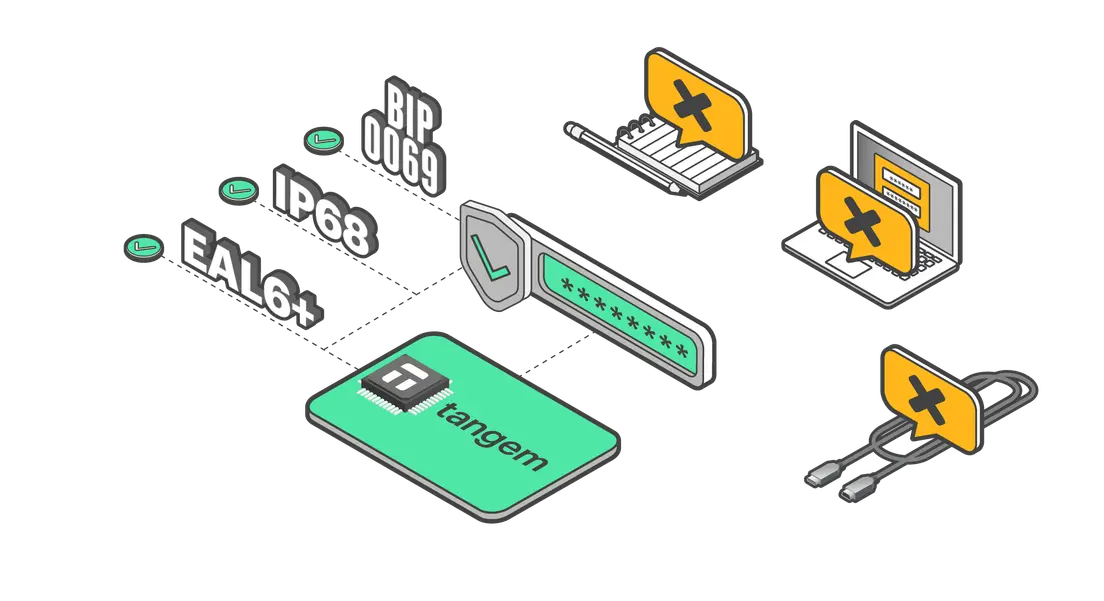
None of this means your hardware wallet doesn't protect you. It means you need to understand which threats the chip handles and which ones you handle yourself. The chip effectively covers hard technical attacks. The following three threats are yours to deal with.
Threat 1: Phishing and Social Engineering
This is the most common way hardware wallet users actually lose funds. A website that looks exactly like your wallet manufacturer's official page, asking you to enter your seed phrase to "restore" your wallet.
A message on Telegram or Discord from someone posing as customer support, offering to help you fix a problem. An email warning you that your wallet needs an urgent security update, including a link. The details vary. The mechanism is always the same: get you to voluntarily hand over your seed phrase or approve a transaction you haven't read carefully.
These attacks cost almost nothing to run. A convincing phishing site can be built in a day. Distribution through social media and messaging apps is nearly free. They don't require any understanding of secure element architecture because they bypass the hardware entirely.
If you type your seed phrase into a fake website, you've handed your private key directly to the attacker.
Never enter your seed phrase anywhere. No legitimate service will ever ask for it. If anything asks for your seed phrase to help you solve a problem or sign up for a promo, it's an attack.
Threat 2: Malware and Clipboard Hijacking
Your hardware wallet's secure element stores your private key safely. What it cannot do is control what happens on your computer before you ask it to sign a transaction. That gap is where clipboard hijacking malware lives.
Malware running silently in the background monitors your clipboard. When it detects that you've copied a cryptocurrency wallet address, a long string of letters and numbers, it quietly swaps it for an address the attacker controls. You paste what you think is the right address into the recipient field. You send the transaction, and the funds go to the attacker.
This malware is not expensive or exotic. Complete, functional clipboard hijackers are available on darknet markets for a few hundred dollars. They're distributed through malicious downloads, fake wallet software, browser extensions, and cracked applications. They run silently, leave no obvious trace, and work by exploiting a moment of inattention.
Always check the recipient address before clicking send/confirm. If the address on the device matches what you intended to send to, you're safe. If there's a mismatch, you've just caught an active attack. This habit is the complete defense against clipboard hijacking. It costs nothing and takes three seconds.
Threat 3: Tampered Devices From Unofficial Sources
Someone buys a hardware wallet, configures it with a seed phrase they already know, repackages it to look unused, and sells it on a marketplace. When you receive it, set it up, and start funding it, they use the known seed phrase to drain the wallet.
It has happened repeatedly and is well-documented in community reports. It is a simple scam that works because hardware wallets are resold, and buyers don't always know how to verify what they've received.
Buy only from the manufacturer's official website, an authorized retailer listed on the manufacturer's website, or reputable marketplaces.
Summary
Look at these three threats side by side, and a clear pattern emerges: none of them attack the secure element. All of them go around it.
- Phishing attacks the person's judgment.
- Clipboard malware attacks the transaction before it reaches the device.
- Tampered resale attacks trust in the supply chain before the device is even turned on.
In every case, the secure element is either uninvolved or irrelevant by the time the attack succeeds. The division of responsibility is clear: the chip handles the hard attacks, so you don't have to. The behavioral attacks are your responsibility.
Three rules cover all of them:
- Never share your seed phrase
- Always verify addresses on the device screen
- Buy only from official sources.
The SE is the right tool for the job it was designed to do. These three threats are outside that job description, and they're more manageable than anything a laboratory could throw at you.


Don't miss these 
Other articles

