 Switch to seedless. Get 30% off with SWITCH30 till Oct 26


Tangem vs. Other Cold Wallets: The Full Comparison for 2026
25 categories. One clear winner. Here is how Tangem compares with every other wallet on the market in 2026.
This article is available in the following languages:
Hardware wallets protect your cryptocurrency by keeping private keys offline. But in 2026, the best hardware wallets do far more than store keys. They stake, swap, earn yield, and spend at real-world merchants.
This guide compares Tangem against other cold wallets across 25 categories. It covers security, durability, usability, software features, and cost. Where Tangem leads, we show how. Where other wallets have an advantage, we say so.
How to read this comparison
The "Other hardware wallets" column represents the typical feature set across USB-style cold storage devices such as Ledger, Coldcard, and similar products. Some competitors perform well in individual categories, but no other single device matches Tangem across all 25.
Full comparison table
| Category | Tangem | Other hardware wallets |
|---|---|---|
| Configuration time | 1–3 minutes | 20+ minutes |
| Form factor | Credit-card (85.6 × 54 mm, 6 g); Also available as a ceramic ring | USB stick or handheld device, 30–100 g |
| Battery | None required (passive NFC) | Built-in rechargeable or AAA batteries |
| Connectivity | NFC tap-to-sign via smartphone | USB-C, Bluetooth, or QR codes |
| Built-in screen | Not needed (transaction details verified in the Tangem app) | Yes (on-device transaction verification) |
| Backup method | Multiple cards clone the same key over encrypted NFC; optional seed phrase | Seed phrase (BIP39), written on paper or metal |
| Non-extractable key | Yes (key generated and stored on-chip, never exported) | No (key reconstructable from seed phrase) |
| Key generation | True Random Number Generator (TRNG) inside secure element | Varies; some use TRNG, some rely on firmware-level RNG |
| Hardware certification | EAL 6+ (Common Criteria), Samsung S3B512C secure element | EAL 6+ or lower |
| Hardware components | Only the secure element (no secondary microcontroller, no display driver, no radio module) | Secure element combined with non-certified components |
| Security audits | Kudelski Security (firmware), Riscure (firmware, 2023), Cure53 (mobile SDK, 2026) | Varies by vendor |
| Firmware architecture | Immutable (non-updatable); reduces attack surface to zero post-manufacture | Regular updates required via USB; each update cycle is a potential attack vector |
| Anti-counterfeit protection | Cryptographic firmware attestation verified during wallet setup | Holographic stickers or tamper-evident packaging |
| Water and dust protection | IP69K (full immersion + high-pressure jets) | None or IP54 at best |
| Operating temperature | –25 °C to +50 °C | Typically 0 °C to +40 °C |
| Access code protection | Yes (PIN + biometrics) | Yes (PIN) |
| Access code recovery | Yes | No |
| Supported assets | 16,000+ tokens across 85+ blockchains | Varies; typically 1,000–10,000+ tokens |
| In-app swap | Yes (8+ providers, DEX and CEX, cross-chain, rate locking) | Limited or requires external software |
| In-app staking | Yes (SOL, ETH, BNB, TRX, ADA, ATOM, POL via native delegation + Yield.xyz) | Some support staking; many require third-party interfaces |
| Stablecoin yield | Yes (Yield Mode via Aave; USDC, USDT, DAI; no lock-up) | Not available natively |
| Spending at merchants | Yes (Tangem Pay: non-custodial Visa card, contactless ATM withdrawals) | Not available natively |
| WalletConnect / dApp access | Built into the app with a scam-detection layer | Often requires a desktop bridge or a browser extension |
| Warranty | 25 years | 1–2 years |
| Price (entry bundle) | From $54.90 (3-card set) | $79–$399 (single device, no backup included) |
Security architecture
Tangem generates and stores private keys within a Samsung S3B512C secure element certified to EAL 6+ under the Common Criteria. This is the highest certification level available in any consumer hardware wallet. The key is created by a True Random Number Generator (TRNG) built into the chip. It never leaves the secure element.
Three independent firms have audited the security stack. Kudelski Security and Riscure both reviewed the card firmware. Cure53 assessed the mobile SDK in 2026. None reported critical findings.
Most other hardware wallets also use a secure element. But they pair it with a secondary microcontroller, a display driver, a Bluetooth radio, or other non-certified components. Each extra component extends the attack surface. Tangem eliminates this by running the entire signing operation on a single chip, with nothing else exposed.
Seedless backup architecture
During activation, the Tangem card generates a private key inside its secure element. That key is cloned to your backup cards (two or three, depending on the bundle) over encrypted NFC via Diffie-Hellman. Each card becomes a standalone, fully independent backup.
If you lose one card, the remaining cards still hold full access to your wallet. There is no seed phrase to intercept, photograph, or steal from a drawer.
Other hardware wallets generate a 12- or 24-word BIP39 recovery phrase. You must write it down and store it safely for the lifetime of the wallet. This phrase is the single most common real-world attack vector in self-custody. If someone finds your phrase, they control your funds.
Tangem does offer an optional seed phrase for users who need interoperability with other wallet software. Most users never activate it.
Immutable firmware
Tangem firmware is non-updatable by design. Once the chip leaves the factory, no one can modify the code it runs. This eliminates an entire category of supply-chain and remote attacks.
Other wallets require periodic firmware updates delivered over USB. Each update cycle introduces a window where modified firmware could be installed if the supply chain or download server is compromised.
Firmware attestation
Before setup, the Tangem app verifies the card's firmware through cryptographic attestation. This confirms that the card is genuine and unmodified.
Other wallets rely on holographic stickers or tamper-evident seals on packaging. Physical seals can be replicated. Cryptographic attestation cannot.
Durability
The Tangem card carries an IP69K rating. It withstands full water immersion, high-pressure jets, dust, and temperatures from –25 °C to +50 °C. Independent reviewers have reported cards surviving washing machine cycles.
There is no battery to degrade, no screen to crack, no USB port to corrode, and no moving parts. Tangem backs this with a 25-year chip warranty.
Most other hardware wallets have a rechargeable battery that loses capacity over time. Screens are fragile. USB-C ports wear down. Typical warranty coverage runs 1 to 2 years.
Form factors
Tangem is available in three form factors.
Tangem Card is credit-card sized (85.6 × 54 mm) and weighs 6 g. It fits in any standard wallet. A 3-card set starts at $54.90.
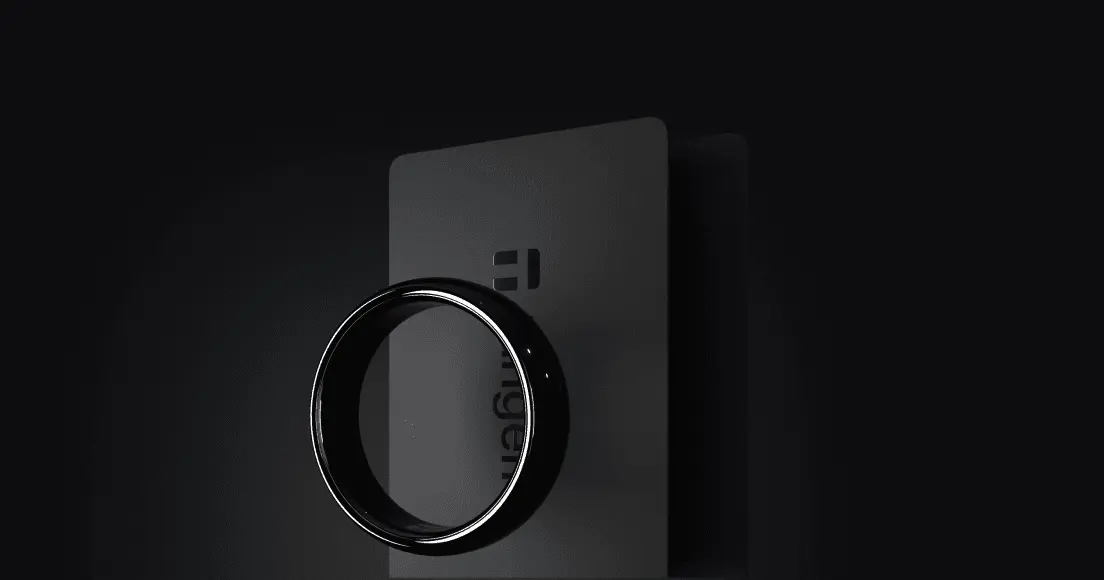
Tangem Ring is a zirconia ceramic wearable with the same EAL 6+ chip, IP69K rating, and NFC signing. It ships with two backup cards.
All form factors share the same security architecture and work with the same companion app.
Other hardware wallets are available as USB sticks or handheld devices. No competitor offers a wearable form factor with an equivalent security certification.
Software: what runs on the Tangem app
This is where the comparison gap has widened in 2026. Tangem has built the companion app into a full financial tool. Most hardware wallet companion apps still focus on send, receive, and firmware updates.
Swaps
Tangem aggregates rates from 8+ providers across both DEX and CEX routes. The app shows you the best available rate and labels it with a "Best DEX Rate" badge when a decentralized provider wins.
Cross-chain swaps are supported. Single-step approval reduces gas costs. Rate locking (introduced in the Send with Swap feature) guarantees the exact amount the recipient receives, regardless of price movement during execution.
DEX routing extends to Tron-based tokens (including USDT on TRC-20) and proof-of-work tokens like Bitcoin Cash, Litecoin, and Dash. These networks use the UTXO model and do not natively connect to EVM-based DEX infrastructure. Tangem built the routing to make it work.
Other wallets typically offer swap through a single integrated provider or require you to use an external DEX interface.
Staking
Tangem supports native staking for SOL, ETH, BNB, TRX, ADA, ATOM, and POL directly in the app. You select a validator and delegate. The app shows APR for each validator by default.
Other wallets that support staking often require a separate interface or browser extension to delegate.
Yield Mode
Yield Mode lets you earn passive yield on stablecoins (USDC, USDT, DAI) through Aave's liquidity pools. You enable it with a toggle. An audited Tangem smart contract handles the supply and withdrawal.
Your funds are never locked. You can send, receive, or swap them at any time while they earn yield. Disable Yield Mode, and the funds return to your wallet balance immediately.
No other hardware wallet offers native stablecoin yield without a third-party interface or custodial intermediary.
Tangem Pay
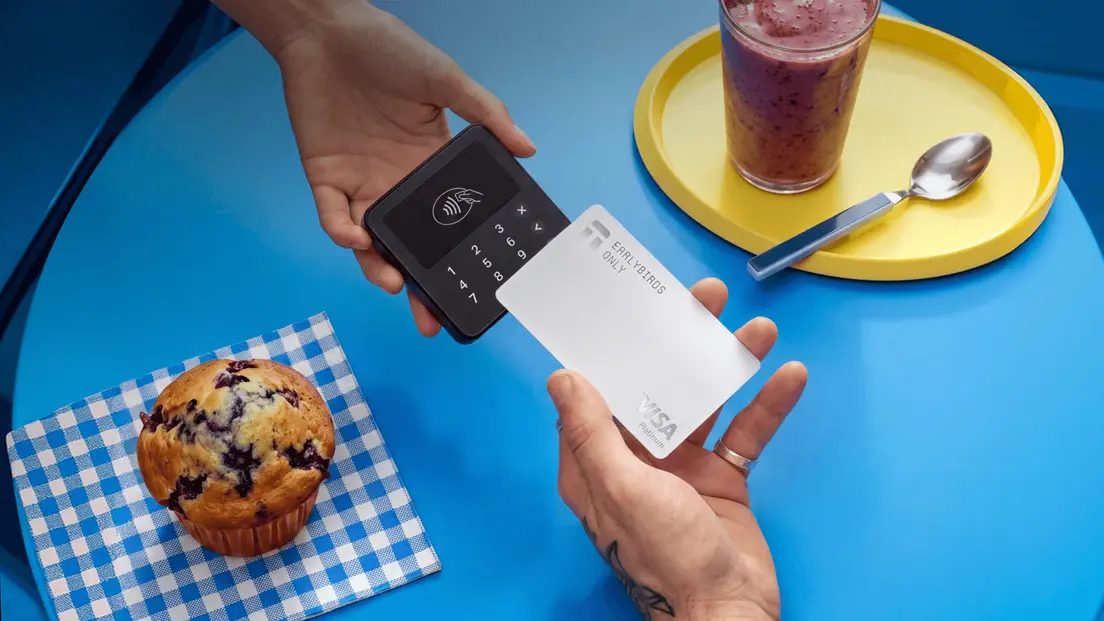
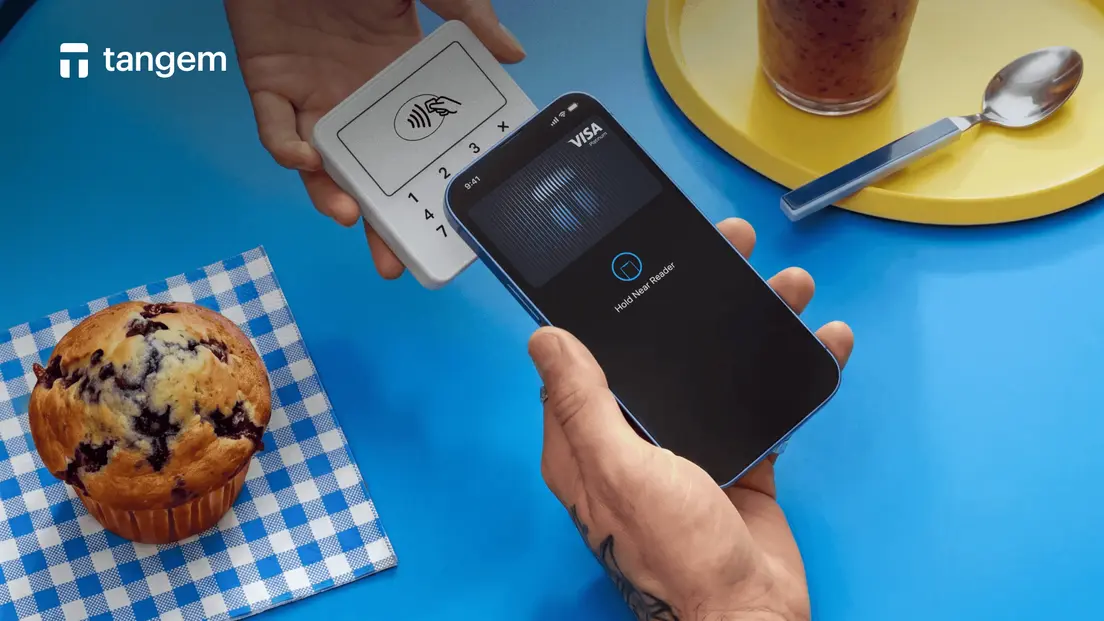
Tangem Pay is a non-custodial virtual Visa card. You fund it from your Tangem Wallet, external crypto wallets, or U.S. banks. At checkout, you tap your phone through Apple Pay or Google Pay. Merchants receive USD.
Key details:
The Basic tier is free and connects to the Visa Platinum benefit level, which includes airport lounge access, travel insurance, and concierge service. Wire transfers from your U.S bank fund the account for a flat fee of $1 via ACH. Contactless ATM withdrawals are live as of v6.2.
Tangem Pay is available in 42+ countries across the US, Latin America, Asia-Pacific, and (since March 2026).
Compliance and settlement are handled by Rain, a stablecoin payment infrastructure provider. KYC is required for the payment account. Your main Tangem Wallet remains private and does not require KYC.
No other hardware wallet offers an integrated, non-custodial payment card. Competing crypto Visa cards (such as Crypto.com) require custodial exchange accounts and, for higher tiers, staking of platform-native tokens.
Dynamic addresses (UTXO networks)
Tangem now generates a new receive address after each transaction on Bitcoin and other UTXO networks (BCH, LTC, DASH, DOGE, RVN). This improves privacy by preventing address reuse. You can enable it per token in settings.
Costs
A 2-card Tangem set costs $54.90. Each card is a full, independent backup. There are no subscription fees for the core wallet. The basic Tangem Pay tier is free. Wire transfers cost $1 flat.
Other hardware wallets range from $79 to $399 per device. Backup requires purchasing a second device or protecting a seed phrase (which may involve a $30–$80 metal backup plate). Many require a desktop computer. Some charge subscription fees for premium companion software features.
When you factor in backup costs, accessories, and overall software capabilities, Tangem's total cost of ownership is the lowest in the market.
Summary
Tangem leads in 23 of 25 comparison categories. It combines the highest consumer security certification (EAL 6+) with seedless backup, IP69K durability, a 25-year warranty, integrated staking, stablecoin yield, a non-custodial Visa card, DEX and CEX swap aggregation, and a 2-card entry price under $55.
The two categories where other wallets hold an advantage are built-in screens (for on-device transaction verification) and open-source firmware (for community-auditable code). Both serve the specific requirements of advanced users.
For the majority of crypto holders who need serious security without serious operational overhead, Tangem is the most complete hardware wallet available in 2026.


Don't miss these 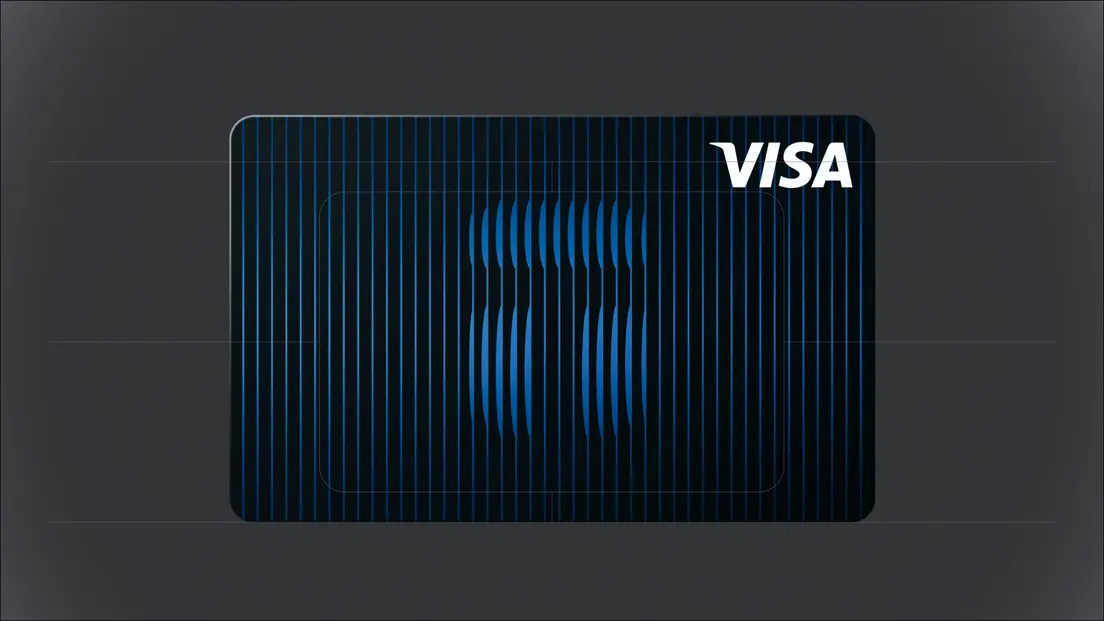
Other articles

