


UK Crypto Tax Deadline: 2025/26 Self Assessment, 31 Jan 2027
Ця стаття доступна такими мовами:

- When is the UK crypto tax deadline for 2025/26?
- What are the penalties for missing the 31 January deadline?
- Which crypto transactions are disposals for Capital Gains Tax?
- What are the Capital Gains Tax rates and allowance for 2025/26?
- How is crypto income from staking, mining and airdrops taxed?
- How do you report crypto on the SA108 for 2025/26?
- What does CARF reporting by UK crypto providers mean for you?
- What if you did not report crypto in earlier years?
- How do you prepare your 2025/26 crypto tax report for HMRC?
You sold some ETH in October 2025. You swapped BTC for SOL in February 2026. You earned staking rewards throughout the year. Now the question arises: when does HMRC want to hear about it, and what happens if you miss the date? The answer is 31 January 2027. That is the deadline for filing your 2025/26 online Self Assessment return and paying any tax owed. Everything else in this guide flows from that date.
When is the UK crypto tax deadline for 2025/26?
The online Self Assessment return and payment of tax owed for 2025/26 are both due by 11:59 pm on 31 January 2027, as confirmed by HMRC on GOV.UK. The 2025/26 tax year ran from 6 April 2025 to 5 April 2026.
Several earlier dates have already passed or are approaching.
| Date | What is due | Status |
|---|---|---|
| 5 October 2026 | Register for Self Assessment (first-time filers, or those who did not file for 2024/25) | Confirmed by HMRC on GOV.UK; passed |
| 31 October 2026 | Paper return | Confirmed by HMRC on GOV.UK; passed |
| 30 December 2026 | Online return, to have tax collected through your PAYE tax code | Confirmed by HMRC on GOV.UK |
| 31 January 2027 | Online return and payment of tax owed for 2025/26, plus first payment on account for 2026/27 | Confirmed by HMRC on GOV.UK |
| 31 July 2027 | Second payment on account for 2026/27 | Derived from the standing 31 July rule |
If you registered for Self Assessment after 5 October 2026, your deadline is three months from the date of HMRC's registration letter.
Payments on account are required unless your previous year's bill was under £1,000, or more than 80% of your tax was collected at source. Each payment is half of the previous year's bill, due on 31 January and 31 July. The figures you enter on the return are based on a complete record of every exchange account and self-custody wallet you used between 6 April 2025 and 5 April 2026.
What are the penalties for missing the 31 January deadline?
Miss the filing deadline and a £100 penalty lands immediately, even if no tax is owed or the tax was paid on time. The cost grows from there.
| Late filing | Penalty |
|---|---|
| Return late | £100 immediately |
| After 3 months | £10 a day for up to 90 days (maximum £900) |
| After 6 months | The higher of 5% of tax due or £300 |
| After 12 months | A further higher of 5% of tax due or £300 |
Late payment carries its own charges: 5% of unpaid tax at 30 days, again at 6 months, and again at 12 months. HMRC also charges interest on late-paid tax. The numbers add up fast. A £2,000 tax bill left unpaid for a year could attract over £1,000 in penalties and interest on top of the original amount.
Which crypto transactions are disposals for Capital Gains Tax?
HMRC treats crypto as property, not currency. That means every disposal is potentially a taxable event.
Per GOV.UK, disposals include:
- Selling crypto for fiat (pounds, dollars, euros)
- Exchanging one cryptoasset for another
- Using crypto to pay for goods or services
- Giving crypto away, except to a spouse, civil partner, or charity
The crypto-to-crypto point catches many people off guard. Swapping ETH for SOL on a DEX in January 2026 is a disposal of ETH at that moment. You calculate a gain or loss based on what you paid for the ETH and its sterling value on the day you exchanged it. Transfers between wallets you own are not disposals. Buying crypto with fiat is not a disposal. Simply holding is not a disposal.
Matching rules determine which acquisition cost is used against each disposal. HMRC matches disposals for each token type in this order:
- Same-day acquisitions
- Acquisitions in the 30 days after the disposal (earliest first)
- The remaining section 104 pool, which holds the average cost of all other units
NFTs are separately identifiable chargeable assets, so they are not pooled, and the same-day and 30-day matching rules do not apply. Mining costs, such as equipment and electricity, are not allowable costs for calculating a cryptoasset capital gain, per HMRC's Cryptoassets Manual (CRYPTO22200).
What are the Capital Gains Tax rates and allowance for 2025/26?
For 2025/26, gains on cryptoassets are taxed at 18% within your unused basic-rate Income Tax band and 24% above it, per GOV.UK Capital Gains Tax rates and allowances (updated 13 April 2026) and HMRC manual CG10245.
Separate rates exist for carried interest (32%) and Business Asset Disposal Relief or Investors' Relief (14%), but these do not apply to ordinary crypto disposals. The annual exempt amount for individuals in 2025/26 is £ 3,000. Budget 2026 left both the rates and the exempt amount unchanged for 2026/27. Here's what that means in practice: if your total crypto gains after deducting losses come to £3,000 or less, you have no CGT to pay, though you may still need to file.
Filing triggers from HMRC's SA108 Notes 2026: you must complete the capital gains pages if:
- Total disposal proceeds from chargeable assets exceeded £50,000, or
- Gains before losses exceeded the £3,000 annual exempt amount, or
- You are claiming a capital loss or other CGT election
All figures must be entered in sterling.
How is crypto income from staking, mining and airdrops taxed?
Gains from disposals are one thing. Income from holding and participating is another. Staking and mining rewards are considered trading income if the activity constitutes a trade. If it does not, they are miscellaneous income, valued in sterling when received, with relevant expenses deductible. Capital Gains Tax can then apply when those tokens are later disposed of, based on the sterling value at the time you received them as your acquisition cost.
The £1,000 trading and miscellaneous income allowance applies to crypto income from mining, staking, and lending. Here's the threshold structure:
- Total miscellaneous income of £1,000 or less: generally covered by the allowance
- £1,000 to £2,500: contact HMRC
- Above £2,500: register for Self Assessment
Airdrops depend on circumstances. If you received tokens without doing anything in return and not as part of a trade, Income Tax may not apply on receipt. If the airdrop was given in return for a service, it is income. Capital Gains Tax applies on disposal in either case.
For lending and liquidity pools, a transfer that passes beneficial ownership to a borrower or platform is currently a disposal. Proposed no-gain, no-loss treatment from 6 April 2027 is draft legislation. It is not law for 2025/26.
How do you report crypto on the SA108 for 2025/26?
Crypto disposals go in the cryptoasset section of form SA108, boxes 13.1 to 13.8, per HMRC's SA108 Notes 2026 (HMRC 12/25), which cover the period from 6 April 2025 to 5 April 2026. The cryptoasset section has been in recovery since 2024/25.
| Box | What goes in it |
|---|---|
| 13.1 | Number of disposals |
| 13.2 | Disposal proceeds |
| 13.3 | Allowable costs |
| 13.4 | Gains before losses |
| 13.5 | Losses |
| 13.6 | Claim or election code |
| 13.7 | Gains or losses already reported through the real-time Capital Gains Tax service |
| 13.8 | Tax already paid on those gains |
Gains can also be reported through the real-time Capital Gains Tax service before the return is filed. If you used that route, enter the overall gain or loss in 13.7, tax paid in 13.8, and include those figures within the 13.4 and 13.5 totals.
Step-by-step procedure:
- List every exchange account and self-custody wallet you used between 6 April 2025 and 5 April 2026.
- Download the transaction history from each exchange and build a record for each self-custody wallet from its public addresses.
- Value every disposal and every income receipt in sterling at the date of the transaction.
- Apply the same-day, 30-day, and Section 104 pool-matching rules to each token type.
- Total the number of disposals, proceeds, allowable costs, gains, and losses.
- Enter the totals in SA108 boxes 13.1 to 13.8.
- Report staking, mining, or other crypto income in the relevant income section of the return.
- Submit the online return and pay by 11:59 pm on 31 January 2027.
What does CARF reporting by UK crypto providers mean for you?
Since 1 January 2026, UK cryptoasset service providers have been collecting user and transaction data under the Reporting Cryptoasset Service Providers (Due Diligence and Reporting Requirements) Regulations 2025, SI 2025/744, which implement the OECD Crypto-Asset Reporting Framework (CARF).
The first report covers 1 January to 31 December 2026 and is due to be submitted to HMRC by 31 May 2027. That reporting covers 2026 activity, not your 2025/26 return, which is due in January. HMRC's news release of 27 August 2026 confirms it will start receiving this data in 2027. Users must give UK providers their name, date of birth, address, and National Insurance number or Unique Taxpayer Reference. Inaccurate or missing details can lead to a penalty of up to £300.
What about self-custody wallets? Providers report aggregate units and value of transfers to external wallets that are not known to be virtual asset service providers or financial institutions. They do not include wallet addresses in the submission, but must retain them for at least five years. These are provider duties and do not remove your reporting obligation.
The tax obligation, however, rests with you wherever your coins are held. Keeping assets in a self-custody wallet does not remove your responsibility to report gains and income to HMRC.
What if you did not report crypto in earlier years?
HMRC's Cryptoasset Disclosure Service, online since 29 November 2023, covers unpaid Capital Gains Tax and Income Tax on exchange tokens, NFTs, and utility tokens.
How far back HMRC can look depends on your conduct:
- 4 years where reasonable care was taken
- 6 years where insufficient care caused the underpayment
- 20 years for deliberate non-payment
Tax is due within 30 days of submitting the disclosure. Interest runs from the original due date, and HMRC's guidance confirms that failure to disclose can result in penalties of up to 100% of tax due. HMRC's official statistics show 240 people reported more than £1 million each in cryptoasset gains for 2024/25.
If you think you have missed a year, using the disclosure service voluntarily before HMRC contacts you generally results in lower penalties than waiting.
This section is general information about UK rules for the 2025/26 tax year as verified on 22 November 2026, not tax advice. Confirm your position with HMRC or a qualified tax adviser.
How do you prepare your 2025/26 crypto tax report for HMRC?
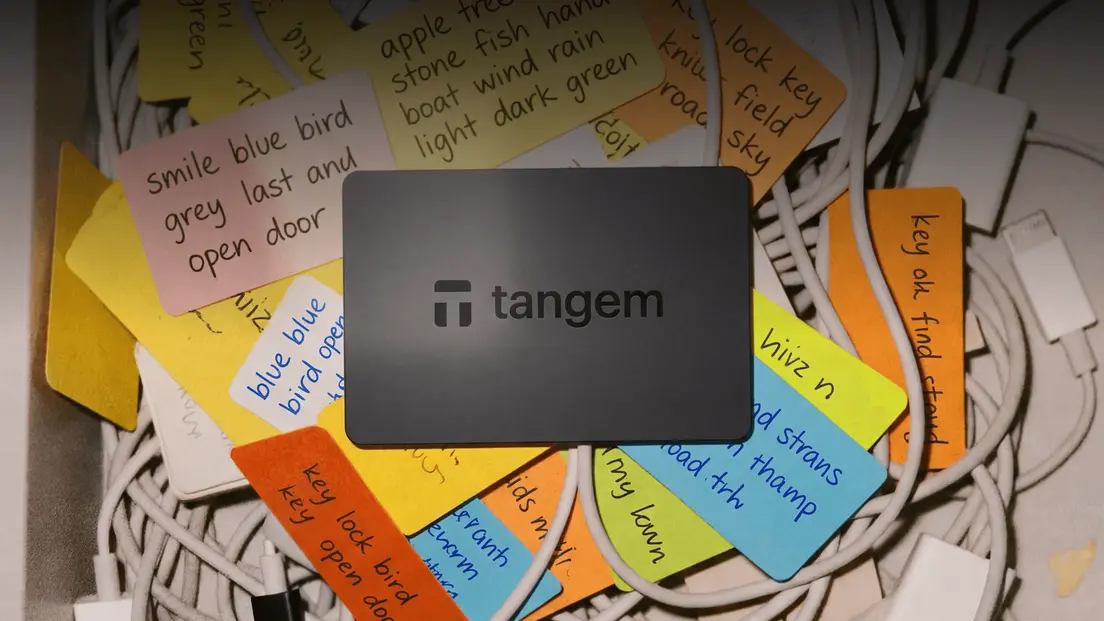
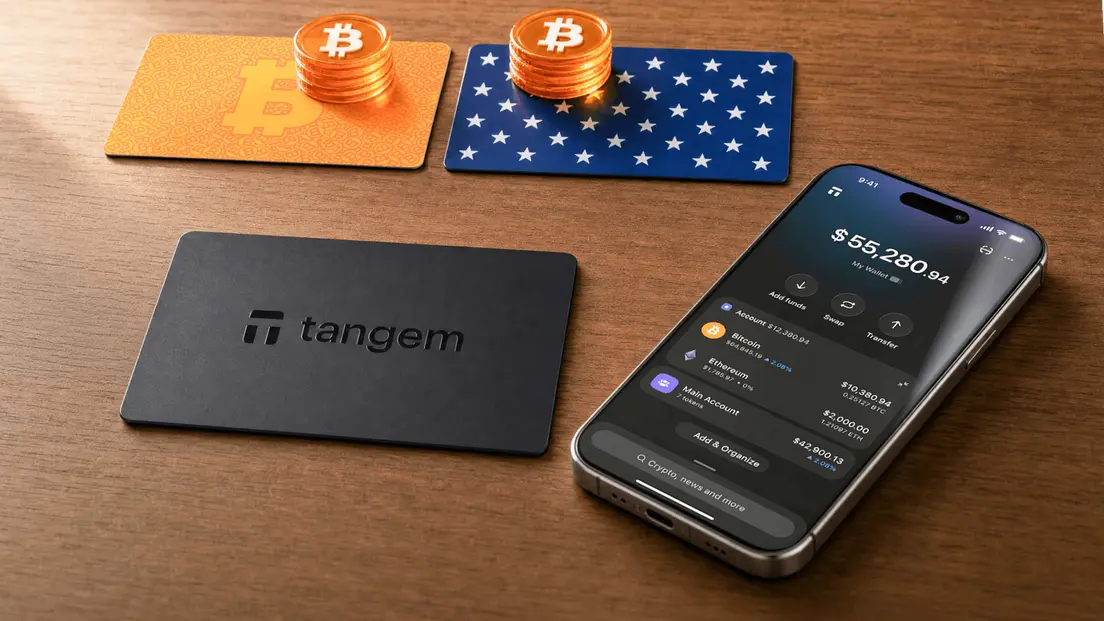
Exchange accounts are the easier part. Most platforms let you download a CSV of your transaction history directly. Self-custody wallets are different. Tangem Wallet has no in-app transaction-history export at the moment. Build the record from public addresses and, where supported, use a blockchain explorer to export a CSV. See Tangem's guide to transaction history for taxes for the full method.
Once you have your raw data, the work is the same regardless of where you held your assets: value every transaction in sterling, apply the matching rules, and produce totals for each SA108 box. Blockpit turns public wallet addresses and exchange data into a UK-format report. Connect by adding a public address or xPub, then add each exchange with a read-only API or CSV. No keys or seed phrase are shared.
Next, classify the activity. Blockpit sorts swaps, rewards, transfers, fees, DeFi activity, and NFTs. Then download the HMRC report. Blockpit's Expert Service offers an initial consultation free of charge; expert work is charged at €199 per hour, and tax reports and Blockpit Plus features are not included.
This article provides general information about UK rules for the 2025/26 tax year, as verified on 22 November 2026, and is not tax advice. Rules change. Confirm details with HMRC or a qualified tax adviser.
FAQ About UK Crypto Tax Deadline
-
Buying crypto with fiat and simply holding it are not disposals. You may still need to file if you received taxable crypto income, or if another Self Assessment requirement applies to you.
-
Start rebuilding the record from exchange statements, emails, and transaction data you can still access. For a self-custody wallet, use its public addresses and a blockchain explorer. Keep the asset, date, units, sterling value, and whether it was bought or sold together before calculating a gain or loss.
-
Yes. Exchanging one cryptoasset for another is a disposal, even when no fiat reaches your bank account. Work out the gain or loss on the asset you gave up using its sterling value on the day of the swap.
-
If you registered after 5 October 2026, HMRC gives you three months from the date of its registration letter to file. Check the date on that letter and prepare the return promptly.
-
Consider it when your records are incomplete, your activity includes both income and disposals, or you are correcting an earlier year. A qualified adviser can help you work through your position before you submit the return.
-
Start with statements, emails, and transaction data you can still access. For a self-custody wallet, build the record from its public addresses and use a blockchain explorer. Your records should show the asset, date, units, sterling value, and whether it was bought or sold.
-
Transaction fees may be allowable costs. Retain them alongside disposal records and include them in your calculation where they are allowable.
-
Check your records against the return you filed. If you find unpaid tax from an earlier year, the Cryptoasset Disclosure Service covers unpaid Income Tax and Capital Gains Tax on exchange tokens, NFTs, and utility tokens. Tax is due within 30 days of submitting a disclosure.


Не пропустіть 



Інші статті

