


Dusting Attacks: What Is Crypto Dust and How to Protect Your Wallet
Ця стаття доступна такими мовами:
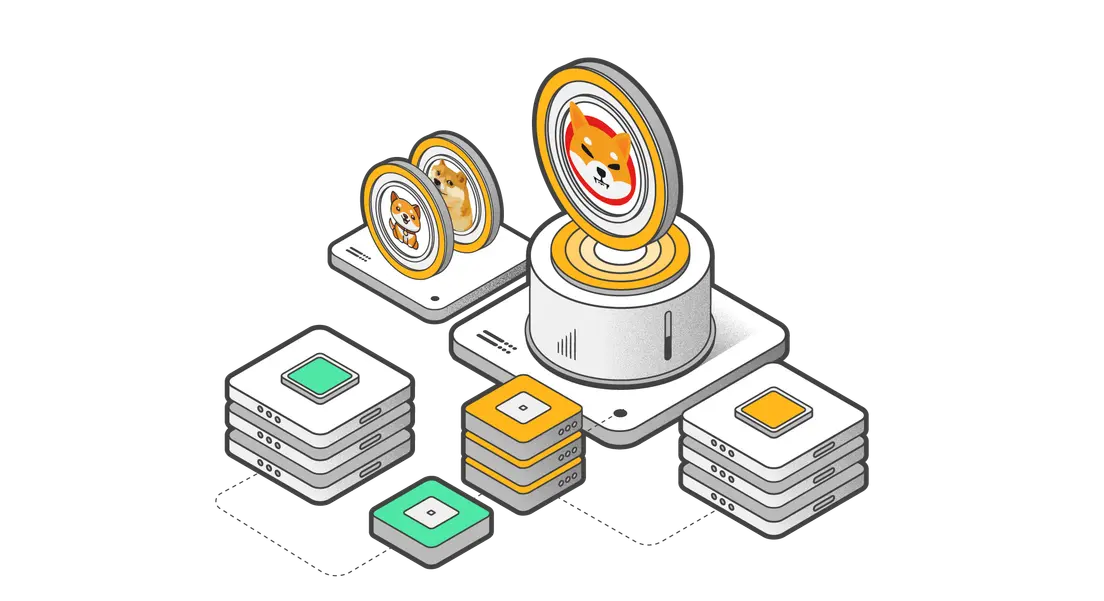
Most crypto scams are loud. Someone DMs you, promises free tokens, or pushes you to "verify" your wallet. A dusting attack is quieter. A stranger sends a tiny amount of crypto to your address and waits. The coins themselves can't hurt you, but what you do with them next can reveal a lot about your wallet. Here's what crypto dust is, how dusting attacks work, and what you can do about them.
What is crypto dust?
Crypto dust is an amount of crypto so small that it's often worth less than the fee needed to spend it. On Bitcoin, the term also has a technical meaning. Bitcoin Core nodes won't relay outputs below a certain size by default. That limit depends on the address type: 546 satoshis for legacy addresses (starting with "1") and 294 satoshis for Native SegWit addresses (starting with "bc1q"). Outputs a bit above these limits are still tiny and often used for dusting too.
Not all dust is suspicious. You can end up with dust from:
- Leftover balances after trading, often too small to sell
- Rounding when you send or swap
- Promotional airdrops and marketing transactions
Dust becomes a problem when someone sends it on purpose to watch what you do.
What is a crypto dusting attack?
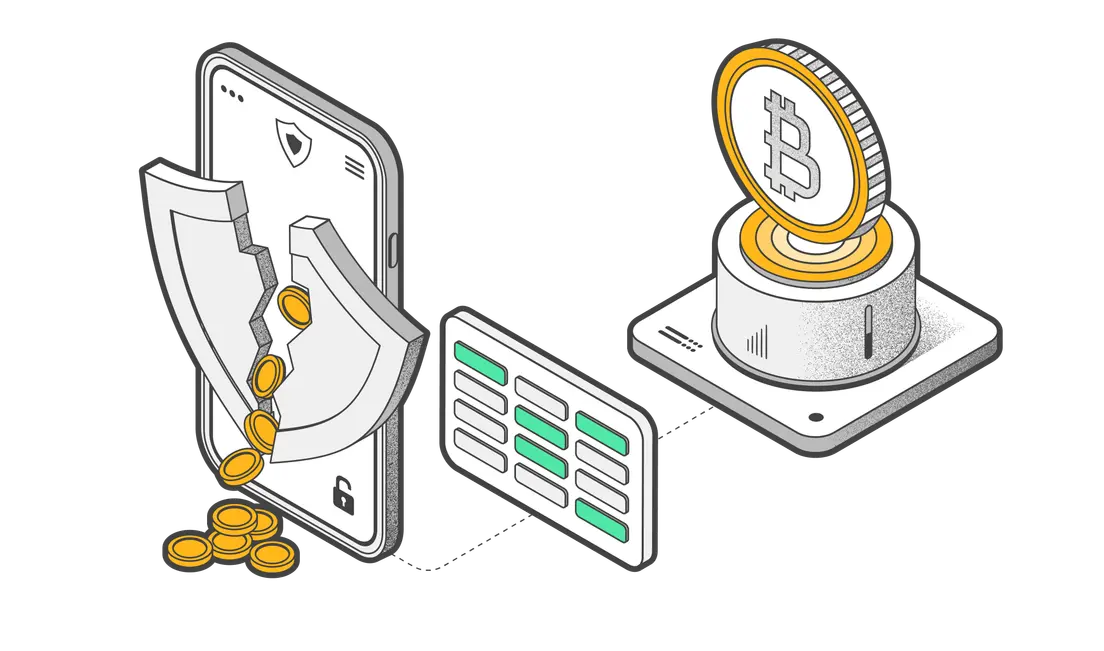
In a dusting attack, someone sends small amounts of crypto to many addresses, then tracks how those coins move. The goal is to link addresses and determine which belong to the same person or entity. Dusting works best on UTXO blockchains like Bitcoin, Litecoin, Dogecoin, Bitcoin Cash, and Dash. Here's why.
On these networks, your balance isn't one number. It's a collection of separate "coins" (unspent transaction outputs, or UTXOs), a bit like banknotes in a wallet. When you send a payment, your wallet selects some of those coins and combines them into a single transaction.
So if a dust coin lands at one of your addresses and your wallet later spends it together with coins from your other addresses, anyone watching the blockchain can assume all those addresses belong to you. Blockchain analytics tools do exactly this. Once one of those addresses is linked to your identity (for example, through an exchange withdrawal or a public donation link), the rest of your activity can be linked to you as well.
Why dusting attacks are dangerous
Dust can't move or steal your funds. The risk is what comes after:
- Loss of privacy. Your addresses, balance, and transaction history can be linked together.
- Targeted phishing. Someone who knows you have a large balance can target you with fake emails or messages that appear to be from an exchange or wallet provider, asking you to click a link, connect your wallet, or "verify" something.
- Bigger risks for large holders. A public, linkable balance can make you a target for scams or worse.
Dusting vs. address poisoning
People often mix these two up. They're related, but they're not the same attack.
- Dusting aims to track and deanonymize you by linking your addresses.
- Address poisoning aims to trick you into sending money to the wrong address. The attacker sends a tiny or zero-value transaction from an address that looks almost identical to one you use, usually matching the first and last few characters. If you later copy an address from your transaction history, you might grab the attacker's instead. This is common on networks like Ethereum and Tron, especially with stablecoins.
The defenses overlap, so both are covered below.
Who sends crypto dust?
Not every dust transaction comes from a scammer. Dust may come from:
- Scammers looking for targets for phishing or other schemes
- Blockchain analytics firms mapping addresses and wallet clusters
- Law enforcement and tax agencies tracing funds during investigations
- Marketers and projects advertising a service or token
- Developers testing software or network behavior
From the receiving end, you usually can't tell which one it is. So treat all unexpected dust the same way: leave it alone.
How to spot a dusting attack
Watch for:
- Very small incoming amounts from an address you don't recognize
- Amounts that would cost more in fees to spend than they're worth
- The same tiny amount landing in several of your addresses around the same time
- Transactions that come with a message, memo, token name, or link urging you to visit a website
You'll see these in your wallet's transaction history or on a block explorer.
How to protect yourself from dusting attacks
You can't stop anyone from sending crypto to a public address. But you can make dust much less useful to whoever sent it.
Don't spend the dust
The whole attack depends on you moving the dust together with your other coins. If your wallet supports coin control (choosing which UTXOs to spend), mark dust as "do not spend" or exclude it from your transactions.
Use a new address for each payment
Reusing one address means anyone who knows it can see every payment that went through it. A wallet that gives you a fresh receive address after each incoming transaction makes your activity much harder to piece together. All the addresses still belong to the same wallet and recovery phrase, and your wallet sums the balances for you.
In the Tangem app, this feature is called Dynamic Addresses. It's available for Bitcoin, Bitcoin Cash, Litecoin, Dash, Dogecoin, and Ravencoin. It's off by default, so you'll need to turn it on:
- Open the token page for Bitcoin or another supported network.
- Tap the three-dot menu in the top right corner.
- Select Dynamic Addresses.
- Review the information screen and tap Enable Dynamic Addresses.
A few things to know:
- If you have several accounts, turn it on separately for each account and network.
- On Bitcoin, Dynamic Addresses works with Native SegWit addresses (starting with "bc1").
- Funds sent to your older addresses still arrive and show up in your total balance.
Fresh addresses don't stop dust from arriving, but they limit what an attacker can learn from any single address. You can read more in our post on UTXO Dynamic Addresses and in the Help Center.
Be careful with airdrops and free tokens
Unsolicited tokens, especially ones with a website in the name or description, are a common bait. Don't visit the link, don't try to swap or sell the token, and don't approve any smart contract it points you to.
Check every address before you send
To avoid address poisoning, don't copy recipient addresses from your transaction history or a block explorer. Use a saved address, scan a QR code from a trusted source, or ask the recipient again. Then check the full address, not just the first and last few characters.
Never share your recovery phrase
No exchange, wallet provider, or support team will ask for your recovery phrase, private key, or access code. If a message about "suspicious dust" asks for any of these, it's a scam.
Can someone find out who I am from my address?
Not directly. Blockchains are pseudonymous: addresses aren't tied to names, but every transaction is public. Anyone can look up an address and see its history. The danger is that one link to your identity is often enough. An exchange account with KYC, a payment to a merchant, or an address you posted online can connect your name to an address. Dusting helps attackers expand that one link into a map of your wallet.
Real-world dusting attacks
Samourai Wallet, 2018. The Samourai Wallet team warned Bitcoin users about a dusting attack and advised them to mark the affected UTXOs as "Do Not Spend." The wallet later added alerts for incoming dust.
Litecoin, 2019. In August 2019, Binance flagged a large dusting attack on the Litecoin network. Addresses received 0.00000546 LTC each, and blockchain analytics firm Glassnode later estimated that about 294,000 addresses were affected. Glassnode also found a similar attack in April that year.
Dusting attacks FAQ: risks and response
-
It's when someone sends tiny amounts of crypto to many addresses, then tracks how those coins move to link addresses together and identify their owners.
-
No, not directly. Dust can't give anyone access to your funds. The risks are loss of privacy and targeted phishing that can follow.
-
UTXO blockchains such as Bitcoin, Litecoin, Dogecoin, Bitcoin Cash, and Dash, because spending dust together with your other coins links your addresses. On account-based networks like Ethereum and Tron, the more common threat is address poisoning.
-
Leave it alone. Don't spend it, swap it, or visit any link tied to it. If your wallet supports coin control, mark it as "do not spend."
-
Look for tiny, unexpected deposits from unknown addresses, especially amounts too small to spend after fees, or the same amount arriving in several of your addresses at once.
-
They help. Using a new receiving address for each payment limits how much an attacker can learn from any single address. In the Tangem app, you can turn on Dynamic Addresses for supported UTXO networks.


Не пропустіть 
Інші статті

