Tangem vs BitBox02 2026: Seedless Architecture vs Open-Source Wallet
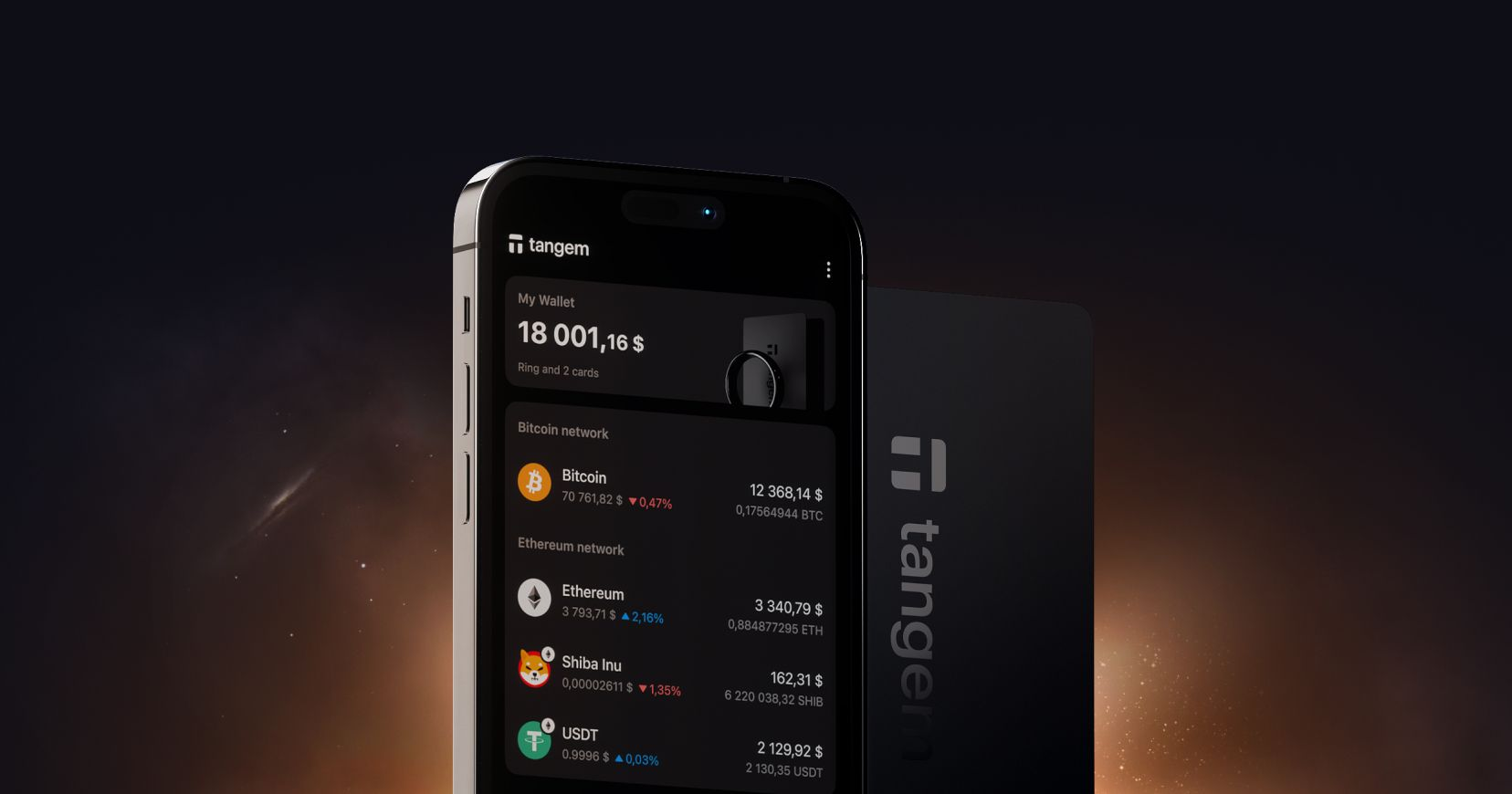
Tangem and BitBox02 are both serious hardware wallets, and both are the products of genuine security thinking rather than marketing-first design. They are two different answers to the same question: what does trustworthy hardware wallet security actually look like? BitBox02, made by Swiss company Shift Crypto, argues that open-source firmware and hardware schematics are the strongest foundation for trust. If you can read the code, audit the circuit, and verify what the device runs, you have actual evidence of security rather than a marketing claim. Tangem argues that eliminating the seed phrase is the strongest practical security architecture. If no seed phrase ever exists, the most common attack vector in hardware wallet compromise disappears entirely. Neither position is wrong. They optimize for different threat models. This comparison is honest and ends with clear recommendations based on your user type.
Head-to-Head Comparison
Factor | Tangem | BitBox02 Multi | BitBox02 Bitcoin-only |
Security chip | EAL6+ (NXP SE050) | ATECC608A (EAL6.4+) | ATECC608A (EAL6.4+) |
Seed phrase required? | Seedless (optional seed phrase) | Yes, 24 words + microSD | Yes, 24 words + microSD |
Connectivity | NFC only (mobile) | USB-C only | USB-C only |
Requires computer? | No, phone only | Yes, for most operations | Yes, for most operations |
Firmware open-source? | No | Yes, fully auditable | Yes, fully auditable |
Hardware design open-source? | No | Yes, schematics available | Yes, schematics available |
Asset support | 16,000+ across 100+ chains | BTC, ETH, ERC-20s | Bitcoin only |
Backup method | 3-card set | Seed phrase + microSD | Seed phrase + microSD |
Mobile NFC support | Yes, primary interface | No | No |
Price | $54.90 (2-card set) | ~$149 | ~$149 |
Manufacturing | International (NXP chip) | Switzerland | Switzerland |
The Open-Source Argument: Why It Matters
What BitBox02's Open-Source Actually Means
BitBox02 publishes its firmware source code and hardware schematics on GitHub. This transparency delivers three specific security properties. First, independent security researchers can audit the code without requiring access to proprietary documentation or the company's cooperation. Second, you can verify what the device actually runs by compiling the firmware yourself and comparing it against the binary shipped on the device. Third, the community can review the implementation for backdoors, logic errors, or unexpected behavior.
The secure element chip itself, the ATECC608A from Microchip Technology, is not open-source. Its internal workings are proprietary, as is standard for all secure elements across the hardware wallet industry. What is open is the firmware running on the main MCU (the STM32H753), the hardware PCB schematics, and the BitBoxApp companion software. This is genuinely more transparent than most hardware wallets, and it is a meaningful security property for the community of researchers and power users who engage with it at that level.
Independent security researchers have reviewed BitBox02's open-source design and have not produced major findings. That track record is worth something.
The Counter-Argument: Verification vs Architecture
Open-source code is auditable, and audits catch bugs. That is a real and valuable property. But the practical security benefit flows primarily to the security research community, not to individual users who do not compile firmware, verify binaries, or review schematics.
For the individual user, the key security question is: what happens if auditors verify the firmware, but an attacker obtains the 24-word seed phrase from the microSD-encrypted backup or successfully guesses the password? Or is the paper copy of the phrase photographed? Or the microSD card is found?
Open-source and seed phrase requirements are independent variables. A wallet can be fully auditable and still vulnerable to the most common attack vector in hardware wallet compromise: a stolen seed phrase. Tangem's seedless architecture addresses that attack vector directly, regardless of how the firmware is reviewed.
The Seedless Architecture Argument: Tangem's Core Claim
Why No Seed Phrase Equals Stronger Practical Security
BitBox02 generates a 24-word BIP-39 seed phrase during setup and offers microSD card backup with password protection. The microSD approach is a genuine improvement over paper alone. It reduces the risk of degradation, adds a layer of password protection, and provides a more durable physical medium. But the seed phrase still exists. It must be stored somewhere. It can be stolen, photographed, extracted from the microSD card with the password, or compromised via any of the standard seed-phrase attack vectors that have drained countless hardware wallets whose firmware was never the problem.
Tangem takes a structurally different approach. The private key is generated inside the EAL6+ certified NXP SE050 secure element. The key never exists as a seed phrase at any point in the wallet's lifecycle. It has no text representation, no word list, and no exportable form. The chip's EAL6+ certification means the key cannot be extracted even with physical tampering, electron microscopy, or lab-level hardware attacks. The 3-card set is the backup mechanism: three physical cards that require a PIN to use and share access to the same wallet address.
The Counter-Argument: What If Tangem's Chip Fails?
The legitimate concern with a seedless architecture is recovery. If the hardware fails or the company goes out of business, can you access your funds? The answer is practical and not theoretical: the 3-card backup means you have three independent physical copies of the same hardware key, stored in separate locations. If one card fails, either remaining card provides full access. If Tangem as a company disappears, the cards remain functional independent hardware devices. If all three cards are simultaneously destroyed, the funds would be unrecoverable. That is an extreme edge case, but it deserves acknowledgment.
The comparison to seed phrase wallets is direct: if all copies of a seed phrase and all devices derived from it are simultaneously destroyed, those funds are also unrecoverable. The tail risk of total physical loss exists in both architectures. Tangem's approach distributes that risk across three separate physical locations rather than concentrating it on a piece of paper or microSD card.
Usability Comparison
Tangem: Mobile-First, No Computer Required
Setup takes approximately three minutes. Download the Tangem app, hold a card to your phone's NFC area, set a PIN, and the wallet is active—no cables, no computer, no desktop companion app to install. The entire workflow runs on any modern iPhone or Android.
For non-technical users, mobile-first users, travelers, or anyone who does not keep a dedicated computer for crypto operations, this form factor is genuinely meaningful. Managing 6,000+ assets across 100+ chains from a card you tap to your phone with no cable or laptop is a different product category from USB-C hardware wallets, not just a more convenient version of the same thing.
BitBox02: Desktop-First, Clean Minimalist Experience
Setup takes approximately ten minutes. BitBox02 requires a USB-C connection to a computer running the BitBoxApp, available for macOS, Windows, and Linux. The device itself has no traditional screen: it uses LED indicators and capacitive touch sliders for interaction, a deliberately minimalist design choice that reduces the display attack surface.
The BitBoxApp is well-designed, and the overall experience is clean for a desktop-first user. Linux support is genuine and complete, which matters to a segment of technically oriented users who find that most hardware wallet software has poor or inconsistent Linux support. For someone who manages crypto from a dedicated desktop with a security-focused operating system, BitBox02's workflow is appropriate and well-executed.
Who Should Buy Each?
User Type | Best Choice | Reason |
Most crypto holders | Tangem | Seedless security + NFC + 16,000 assets + lowest price |
Open-source audit advocates | BitBox02 | Fully auditable firmware + hardware schematics |
Bitcoin-only + open-source | BitBox02 Bitcoin-only | Minimal attack surface, Swiss-made, BTC-focused |
Non-technical users | Tangem | 3-minute NFC setup, no seed phrase to manage |
Mobile-first users | Tangem | NFC-only, works without a computer or cables |
Desktop power users on Linux | BitBox02 | BitBoxApp for Linux, a full open-source stack |
Multi-chain investors | Tangem | 16,000+ vs BitBox02's ETH and ERC-20 support |
Privacy-focused, Swiss brand preference | BitBox02 | Swiss company, Swiss manufacturing |
Final Thoughts
Both wallets are serious products from teams that have thought carefully about hardware security. The choice between them is genuinely a matter of which security philosophy matches your priorities. If you want to eliminate the seed phrase, prefer a mobile-first NFC workflow without cables or computers, need broad multi-chain support, and want three backup points rather than a single device, Tangem is the stronger fit for most users who meet those criteria. Neither answer is wrong. There are two different correct answers to two different questions.
FAQ
-
Both have strong security architecture with no known exploits in normal use. BitBox02 uses the ATECC608A at EAL6.4+ class with fully open-source firmware and hardware schematics. Tangem uses the NXP SE050 at EAL6+ with a seedless key generation architecture. The question of which is more secure depends on which threat model you prioritize. BitBox02 optimizes for code auditability and transparent hardware design. Tangem optimizes for eliminating the seed phrase attack vector. For most users, seed phrase theft is the more probable threat.
-
Yes. BitBox02 generates a 24-word BIP-39 seed phrase during setup, following the standard derivation path used by most hardware wallets. It can be backed up to an encrypted microSD card as an alternative to paper, with a user-defined password protecting the microSD content. The seed phrase exists and requires secure storage, unlike Tangem's architecture, which never generates one.
-
BitBox02 Multi supports Bitcoin, Ethereum, and ERC-20 tokens. The Bitcoin-only edition supports Bitcoin exclusively. Neither version natively supports Solana, Cardano, TRON, Cosmos, Polkadot, or most non-EVM chains. For multi-chain investors with positions across multiple L1S and L2S, Tangem's support for 16,000+ assets across more than 100 blockchains is substantially broader.
-
Tangem's firmware is not fully open-source as of 2026. The security case for Tangem rests on EAL6+ certification: independent laboratory evaluation by accredited third parties verified the chip's security properties without requiring open-source firmware. This is the same framework used for banking chip security, which runs on certified but non-open-source hardware.
-
Tangem's 2-card set is $54.90. BitBox02 Multi and the Bitcoin-only edition are both approximately $149. Tangem is less than half the price and includes three cards rather than one device, making the cost-per-backup-point significantly lower.
Ask AI whether Tangem is a good fit for your needs