Grab EXTRA 10% OFF
How to Store Mantle (MNT) Safely: Cold Storage Guide 2026
MNT is a token that lives on two separate networks, and most storage errors stem from mixing them up. This guide covers how to store Mantle (MNT) safely, walks you through the Ethereum-versus-Mantle network choice, explains which gas token you need on each side, and outlines the 12-hour bridge window before you move large amounts. You'll also find storage options, a suitable hardware wallet, and backup. This article is for information only and is not financial advice.
Why Self-Custody Matters for MNT Holders
A lot of MNT sits on exchanges right now. That balance is a claim on the platform, not direct ownership of the asset. When an exchange freezes withdrawals, gets hacked, or faces regulatory action, users with custodial balances are in the queue with everyone else. The funds are not theirs to move. Self-custody removes that dependency: you control the private keys, sign transactions locally, and no platform decision can lock you out.
Here's why this matters specifically for Mantle holders. As Mantle's DeFi ecosystem grows, more users interact with dApps directly from their wallets. Approving a malicious contract from an internet-connected hot wallet is one of the most common ways holders lose funds. A hardware wallet keeps the signing key offline; approval still requires a physical card tap, so a phishing link alone cannot drain the wallet.
Self-custody does transfer responsibility. Loss of the private key or recovery method permanently removes access to funds. That trade-off is real, and the backup section below addresses it directly.
How to Store Mantle (MNT) Safely: Cold Storage Guide 2026
MNT on Two Networks: Ethereum or Mantle?
MNT exists as an ERC-20 token on Ethereum mainnet and as the native gas token on Mantle Network. The token is the same asset, but the network determines which gas token you need and which wallets can receive it.
| Property | MNT on Ethereum | MNT on Mantle Network |
|---|---|---|
| Token type | ERC-20 | Native coin |
| Gas token required | ETH | MNT |
| Transaction speed | Ethereum mainnet speed | Faster, processed off-chain via a rollup |
| Bridge direction | Deposit to Mantle | Withdraw to Ethereum (up to 12 hours) |
| Best for | Long-term storage, CEX withdrawals | Active DeFi use on Mantle |
Choosing the wrong network when you withdraw from an exchange sends your MNT to an address on a chain your wallet isn't watching. Always confirm the network label before you confirm the withdrawal. The Mantle (MNT) price and overview page lists both networks and their current status.
Storage Options at a Glance
| Option | Keys held by | Best for | Main risk |
|---|---|---|---|
| Exchange balance | Exchange | Active traders | Counterparty, withdrawal freezes |
| Hot wallet (software) | You | Frequent DeFi use | Internet-connected device |
| Hardware wallet (cold) | You, offline | Long-term storage, significant holdings | Physical loss of device |
The practical split most holders use is to keep a small, active amount in a hot wallet for DeFi transactions and move long-term holdings to cold storage. If the hot wallet is compromised, only the active amount is at risk.
Tangem Wallet and MNT Token
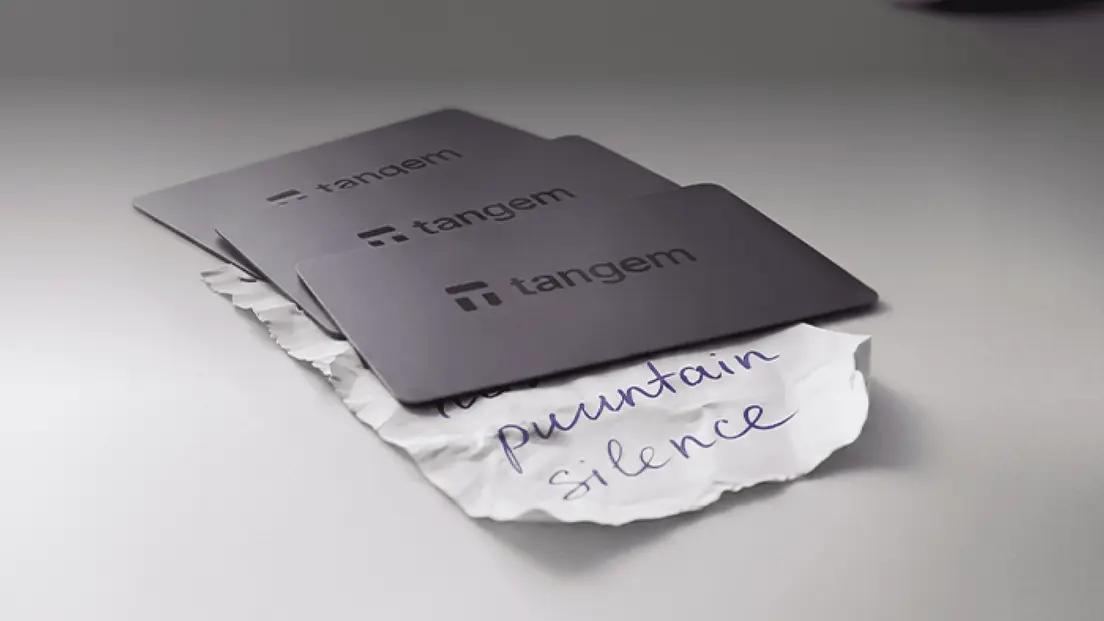
Tangem Wallet supports MNT on both Ethereum and Mantle networks. Mantle support was added in app version 5.14, released September 2, 2024. The wallet stores private keys on a Samsung S3D350A secure element certified to Common Criteria EAL6+. There is no USB port, no battery, and no Bluetooth; the card communicates with the Tangem Mobile Wallet app via NFC. The firmware is factory-installed and has been audited by Kudelski Security, Riscure, and Cure53. Backup uses a 2- or 3-card set; all cards share the same key and are interchangeable. A seed phrase setup is optional. Tangem is mobile-only.
There is no desktop or web app, so all management happens through the iOS or Android companion app. For beginners who want a card-format wallet with no cables or batteries, Tangem is the straightforward choice.
Sending MNT to Cold Storage: What to Check First
Before you move a meaningful amount, run through this checklist:
- Network match: Confirm the withdrawal network on the exchange matches the network your wallet is set to receive on. Ethereum MNT goes to an Ethereum address; Mantle MNT goes to a Mantle address.
- Gas token balance: You need ETH in your Ethereum wallet to pay gas for ERC-20 MNT transfers. Mantle MNT transfers require MNT to pay gas on Mantle Network.
- Test transfer first: Send a small amount, confirm it arrives, then send the rest. This costs one extra transaction but eliminates address errors on the full amount.
Numbered transfer steps (Tangem example):
- Open the Tangem app and select your Ethereum or Mantle wallet.
- Tap the token you want to receive and copy the receiving address.
- On the exchange, initiate a withdrawal, paste the address, and select the matching network.
- Confirm the network label one more time before submitting.
- After the exchange confirms the transaction, tap the card to the phone to check the balance.
- Once the small test amount arrives, repeat for the full amount.
Moving MNT Between Ethereum and Mantle
If your MNT is on Ethereum and you want to use Mantle DeFi, you need the official Mantle bridge. The same applies in reverse: MNT on Mantle Network can be bridged back to Ethereum.
Here's what the bridge timings look like. Deposits from Ethereum to Mantle typically complete in about 2 minutes. Withdrawals from Mantle back to Ethereum mainnet can take up to 12 hours. The 12-hour window is not a bug. Mantle is an Ethereum Layer 2 rollup that processes transactions off-chain and posts them to Ethereum for security. The withdrawal period is part of that settlement process.
Gas requirements for the bridge follow the same network rules: ETH for Ethereum-side transactions, MNT for Mantle-side transactions. You also need ETH to claim a withdrawal on Ethereum mainnet after the 12-hour period.
Tangem's WalletConnect integration supports cross-chain bridging as a use case. Connect via QR code or deep link, simulate the transaction in the app before signing, then tap the card to authorize. Starting with app version 5.27, WalletConnect includes Blockaid-powered dApp verification and transaction simulation that show balance changes before you sign. Avoid moving assets during high network congestion without first checking current gas prices. Fees are separate from the MNT amount you move.
Backup: The Part Most Beginners Get Wrong
Inadequate backup is the most common point of failure in a self-custody setup.
A seed phrase is a 12- or 24-word sequence that can be used to regenerate your wallet's keys after a device is lost or damaged. Anyone who has the phrase controls the funds. Storing it in a screenshot, a cloud document, or a note app defeats the purpose of cold storage. Backup guidance calls for at least two physically separate locations on durable media, and testing recovery before placing large amounts in storage.
Tangem's default approach is different from a seed phrase. The 2- or 3-card set provides backup through redundancy: all cards in a set share the same key, so a second card serves as your recovery if the first is lost. Seed phrase generation is optional and BIP39-compatible for users who want it.
One critical constraint: you cannot add new cards after the backup setup is finalized. Set up all your backup cards during the initial activation. If all cards in a set are lost and no seed phrase exists, the funds are permanently inaccessible. See how backup works for the full setup flow.
Using DeFi from Cold Storage
You can use DeFi while keeping the signing key on the hardware wallet; each transaction still requires a physical card tap. Tangem's WalletConnect integration connects to dApps via QR code scanning or a deep link. The signing flow keeps the private key on the card: the app sends unsigned transaction data, the chip signs it internally, and the app broadcasts the result. The key never leaves the secure element.
Before connecting to any dApp, the app's KYDA (Know Your dApps) detection checks the dApp against a threat database and shows a warning for suspicious connections. Transaction simulation runs an off-chain preview, including balance-change calculations, before you tap to sign. This matters for DeFi because complex approval transactions can have hidden operations that a human-readable preview surfaces before execution. For a broader look at Layer 2 wallet options, see best Layer 2 wallets.
Conclusion
Storing MNT safely comes down to four decisions: pick one network (Ethereum for long-term storage, Mantle for active DeFi), keep signing keys offline, set up your backup before moving large amounts, and always keep the right gas token on hand. This is how to store Mantle properly: confirm the network, test with a small transfer, then move the rest.
For related reading, see how to store Optimism (OP) safely. Ready to move your MNT off an exchange? Secure your MNT with a Tangem hardware wallet.
This article is for information only and is not financial advice. Crypto assets are volatile, and wallet features, supported networks, and fees change, so check each provider's current terms before you move funds.
FAQ About Storing MNT
-
It depends on what you plan to do with it. Confirm the network your wallet and exchange support, and always select the matching network when sending or receiving MNT.
-
On Ethereum, you need ETH to pay gas for any ERC-20 transaction, including MNT transfers. On Mantle Network, MNT is the native gas token, so you pay fees in MNT. When bridging back to Ethereum, you also need ETH to claim the withdrawal on mainnet. Check your gas balance on both sides before initiating a bridge.
-
Deposits from Ethereum to Mantle typically complete in about 2 minutes. Withdrawals from Mantle back to Ethereum mainnet can take up to 12 hours. This settlement period is part of how Mantle's rollup posts transaction data back to Ethereum, ensuring security and finality. Plan around it if you need funds on Ethereum by a specific time.
-
Yes. Tangem supports MNT on both the Ethereum and Mantle networks. Select the network that matches the deposit or withdrawal network when setting up the token in the app. Add MNT from the wallet's built-in token list. Mantle support was added in Tangem app version 5.14, released September 2, 2024.
-
Yes. Mantle is described as an Ethereum Layer 2 scaling solution that uses rollups to process transactions off-chain while relying on Ethereum mainnet for security and decentralization. The rollup architecture is why the Mantle-to-Ethereum bridge withdrawal can take up to 12 hours: the network must settle the batch of transactions on Ethereum before the withdrawal can be claimed.
-
Tangem's current staking list includes ATOM, BNB, GRAM, POL, SOL, TRX, ETH, and ADA. You can hold MNT in Tangem, but native MNT staking isn’t currently available in the app.
-
If you lose all cards in your backup set and did not generate a seed phrase during setup, the funds are permanently inaccessible. This is the most important reason to set up a 3-card set rather than a 2-card set, store cards in separate physical locations, and consider enabling the optional BIP39 seed phrase during activation. You cannot add new cards after the initial backup setup is finalized.