Grab EXTRA 10% OFF
Best Crypto Wallet in Italy 2026: Hardware, Apps and MiCA
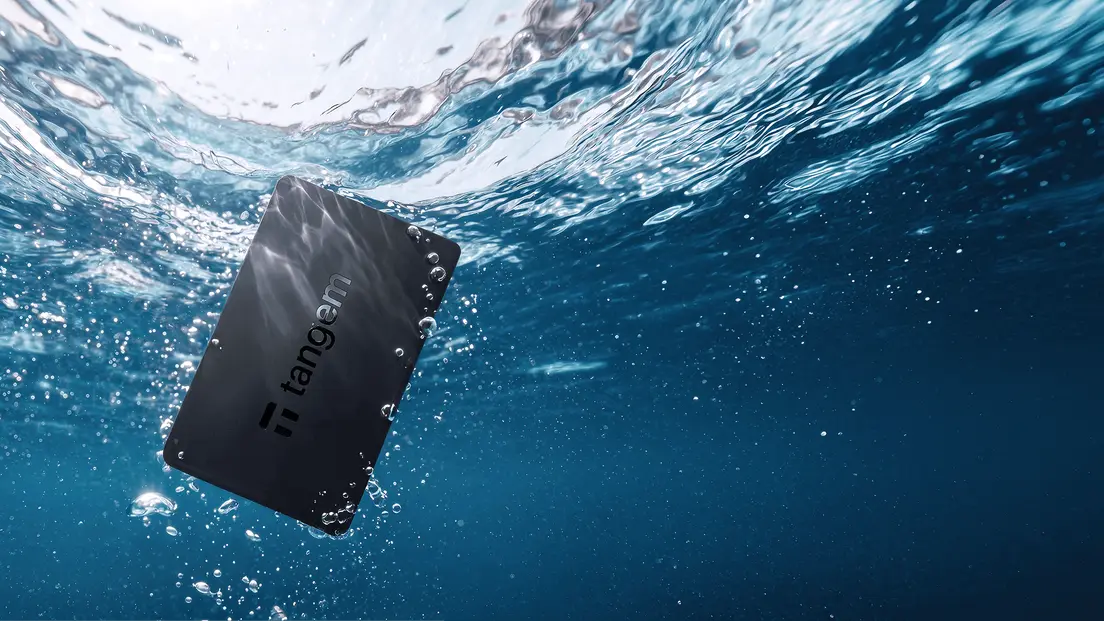
For most people in Italy, the best crypto wallet for long-term storage is a hardware wallet that keeps private keys offline. Tangem is a strong fit: an EAL6+ certified chip in a card, NFC setup with any modern phone, and no seed phrase required by default. Use MiCA-authorized exchanges for buying and selling, not for storage. Two things changed for crypto holders in Italy in 2026. First, MiCA's transitional period ended, so exchanges now need EU authorization to serve Italian customers. Second, the tax rate on crypto gains rose to 33%. Both changes make the question of where you store your crypto more consequential than ever.
This guide covers the main wallet types available in Italy, a comparison table across the leading options, why Tangem suits most Italian users, step-by-step setup instructions, the MiCA and tax context, and a practical FAQ.
Crypto in Italy in 2026: what changed
MiCA (Regulation (EU) 2023/1114) is the EU-wide framework that brought crypto-asset service providers under formal regulation. It covers exchanges, custodians, and other intermediaries that offer crypto services to EU residents.
In Italy, the transitional period ended on 1 July 2026. Providers without MiCA authorization had to stop offering crypto-asset services from that date, except for orderly wind-down activities. That means any exchange or custodian still serving Italian users after July 1 should hold valid authorization from an EU regulator.
The authorization structure in Italy is specific. CONSOB authorizes specialized crypto-asset service providers (CASPs) after receiving Banca d'Italia's opinion. Supervised intermediaries (banks, investment firms) notify either CONSOB or Banca d'Italia depending on their existing license. Once authorized, CASPs are entered in ESMA's register, the EU-wide list of licensed providers. Before using any exchange or custodian, you can consult CONSOB's CASP information against that register.
Critically, MiCA regulates service providers, not private holders. Holding your own crypto in a personal wallet requires no license or registration. Self-custody is entirely legal. The second change is tax. From January 1, 2026, Italy taxes crypto-asset gains at 33%. The previous €2,000 annual threshold was abolished as of January 1, 2025, so all gains are now taxable regardless of size.
Both changes point in the same direction: buy on a regulated platform, then move savings-sized holdings to self-custody. To understand what happens if your exchange leaves Europe, that guide covers the scenario in detail.
Types of crypto wallets available in Italy
1. Exchange accounts (custodial)
An exchange account lets you buy crypto with euros via SEPA transfer or card and sell back to fiat quickly. That convenience is real. But the exchange holds the private keys, not you. Access to your funds depends on the provider's authorization status, its internal rules, and its solvency.
Post-July 2026, Italian users should use only MiCA-authorized providers for this. Custodial storage can offer account recovery assistance, but it entails full reliance on the provider. For anything you plan to hold for weeks or months, moving to self-custody is the right call.
Verdict: use a MiCA-authorized provider to buy, then move long-term holdings off the exchange.
2. Software wallets (hot wallets)
Apps like Trust Wallet and MetaMask are free, self-custodial, and work immediately on any phone or browser. You control the keys. But those keys live on an internet-connected device, which means they're exposed to malware, phishing, and device compromise. Backup is a seed phrase, typically 12 words, that must be stored securely offline.
Hot wallets are fine for small balances you actively use for DeFi, swaps, and day-to-day transactions. For a deeper look at the trade-offs, the hot vs cold wallet comparison covers both sides.
Verdict: suitable for small, frequently used balances. Not ideal for savings.
3. Hardware wallets (cold wallets)
A hardware wallet generates and stores private keys offline, inside a dedicated device. Transactions are signed directly in the hardware. The private key never touches the internet-connected phone or computer used to prepare the transaction. That's the structural security advantage over any software wallet. Options covered in this guide: Tangem and BitBox02.
Verdict: the right choice for savings-sized balances.
Best crypto wallets in Italy compared
| Wallet | Type | Secure Element | Connectivity | Backup | Networks / Assets | Ideal For |
|---|---|---|---|---|---|---|
| Tangem (2- or 3-card set) | Hardware (cold) | Samsung S3D350A, CC EAL6+ | NFC only | Backup cards (seedless by default); optional seed phrase | 91+ blockchains / 16,000+ tokens | Beginners, travelers, advanced, phone-first users |
| BitBox02 | Hardware (cold) | ATECC608B secure chip (certification not stated by manufacturer) | USB-C | microSD card backup; optional 12- or 24-word phrase | Multi-edition: BTC, LTC, ADA, ETH, 1,500+ ERC-20 tokens | Privacy-focused users, Bitcoin holders |
| Trust Wallet | Software (hot) | None (software wallet) | iOS, Android, Chrome extension | 12-word secret phrase or encrypted cloud backup | 100+ blockchains / 10M+ assets | Active DeFi users, small daily balances |
| MetaMask | Software (hot) | None (software wallet) | Chrome, Firefox, Brave, Edge, Opera; iOS, Android | 12-word Secret Recovery Phrase or social login | ETH, BTC, SOL, Tron, Polygon, and others | Ethereum and EVM DeFi users |
Why Tangem is the best fit for most Italian users
Tangem stands out for Italian users who want cold storage without complexity. Here's why each feature matters in practice.
EAL6+ certified secure element. The Samsung S3D350A chip inside every Tangem card holds a Common Criteria EAL6+ certification, the same security tier used in national identity documents and electronic passports. The private key is generated by a True Random Number Generator inside the chip during activation and never leaves the card.
No seed phrase required by default. Seed phrases are the single biggest point of failure for most hardware wallet users: written on paper, photographed by mistake, or stored insecurely. Tangem's default backup model transfers encrypted private keys directly between cards in the same set. No words to write down, no paper to lose. If you already have a 12- or 24-word phrase from another wallet, you can import it as an option. For more on this approach, see crypto wallet without a seed phrase.
NFC with any modern phone. No USB cables, no desktop software required. Tap the card to your phone, confirm in the app, done. Setup takes 1 to 3 minutes.
Built to last. The card carries an IP69K dust- and water-protection rating, operates from -25°C to +50°C, and comes with a 25-year replacement warranty based on chip lifetime. It survives conditions that would destroy most electronics.
Independent security reviews. Kudelski Security's 2018 audit found no vulnerabilities, and Riscure's 2023 security assessment passed.
Wide asset support. Tangem supports 16,000+ tokens across 91+ blockchains, Bitcoin, Ethereum, Solana, stablecoins, and most assets Italian users are likely to hold.
- Fast delivery to Italy. Standard shipping costs €7.49 with a 1-5 business day window. Express shipping costs €14.90 with a 1-4 business day window. Orders above €89 (before VAT) qualify for free standard shipping. If you're buying from a reseller, see the note on buying a hardware wallet on Amazon; authorized resellers matter.
Tangem has no screen on the card. You verify transaction details in the app rather than on a dedicated hardware display, removing an additional hack vector. And if every card in your set is lost or destroyed without a seed phrase, nobody can recover the funds. Not Tangem, not any third party. That's the nature of true self-custody: you hold the keys, you bear the responsibility.
How to set up Tangem in Italy
Setting up Tangem takes under five minutes. Here's the full process:
- Order your cards. Buy directly from tangem.com or an authorized reseller. Standard delivery to Italy costs €7.49 (1-5 business days); express costs €14.90 (1-4 business days). The 2-card set starts at $54.90, the 3-card set at $69.90 (prices exclude VAT and duties).
- Install the Tangem app. Download the free app from the App Store (iOS) or Google Play (Android). No account registration is needed for basic wallet use.
- Tap the first card and set an access code. Hold the card to the NFC area of your phone. The app will detect it automatically. Set an access code. This protects the card from unauthorized use.
- Tap the backup cards. If you ordered a 3-card set, tap each backup card in sequence. The cards securely exchange encrypted key material with each other. Store the backup cards separately from your primary card.
- Add networks and tokens. In the app, add the blockchains and tokens you plan to use. Tangem supports 91+ networks, so Bitcoin, Ethereum, and most popular assets are available immediately.
- Fund the wallet with a small test transaction. Before moving a large amount, send a small test transaction first. Make sure you're using the correct network: sending ETH on Ethereum requires ETH for gas; sending USDT on Tron requires TRX. Matching the network matters.
- Keep transfer records for your tax return. Every transfer from an exchange to your Tangem wallet has a timestamp and transaction hash. Keep these records; they establish cost basis and ownership for Italian tax reporting purposes.
When buying crypto through the Tangem app, providers listed there set their own availability and fees.
Crypto taxes in Italy: what wallet users should know
Italy taxes crypto-asset gains under redditi diversi (miscellaneous income). Here are the rules as of October 2026.
33% rate from January 1, 2026. Gains realized from the sale or exchange of crypto assets are taxed at 33%. This rate replaced the previous 26% rate for crypto assets.
No minimum threshold since 2025. The €2,000 annual threshold that previously exempted small gains was abolished from January 1, 2025. Every gain is now taxable, regardless of size.
Euro-denominated e-money tokens: 26%. Qualifying euro-denominated electronic-money tokens are subject to a 26% rate under the statutory conditions. Conversion between euros and qualifying tokens and redemption at the nominal euro value do not result in a taxable gain or loss.
- Transfers between your own wallets are not taxable sales. Moving crypto from an exchange to your Tangem wallet, or from one personal wallet to another, is generally not a sale or exchange and does not ordinarily realize a taxable gain. Keep evidence that both wallets belong to you: transaction records, wallet addresses, exchange statements.
For context on how stablecoins are treated legally in Europe under MiCA, that guide covers the regulatory framework.
Final thoughts
The best crypto wallet in Italy in 2026 depends on what you're doing with your crypto. For buying and selling, use a MiCA-authorized exchange and verify it in ESMA's register. For storing anything you plan to hold, move it to self-custody. A hardware wallet is the right tool for savings-sized balances. Tangem combines an EAL6+ certified secure element, no required seed phrase, and a phone-first NFC design that works without cables or desktop software. It ships to Italy in 1-5 business days. No on-card screen, and losing every card without a seed phrase means permanent loss. Know the risk before you choose.
For a broader view of options across the continent, the best crypto wallets in Europe guide provides a comprehensive overview. See Tangem pricing and order for Italy
This is general information as of November 2026, not tax advice. Consult a commercialista or qualified tax professional for guidance on your specific situation.
FAQ
-
For most Italian users who want to store crypto safely over the long term, a hardware wallet is the best choice. Tangem combines an EAL6+ certified secure element, NFC-based phone setup, no required seed phrase, and delivery to Italy in 1-5 business days. It suits beginners and experienced holders alike. For active trading or DeFi use, a software wallet like Trust Wallet or MetaMask works alongside a hardware wallet for daily transactions.
-
Yes. Self-custody is fully legal in Italy. MiCA (Regulation (EU) 2023/1114) regulates crypto-asset service providers, not private individuals who hold their own crypto. You can store crypto in a personal hardware or software wallet without any license, registration, or notification to authorities. The regulatory obligations apply to exchanges and custodians, not to wallet users.
-
From January 1, 2026, Italy taxes crypto-asset gains at 33% under the redditi diversi category. The previous €2,000 annual threshold was abolished from January 1, 2025, so all gains are taxable. Qualifying euro-denominated electronic-money tokens are taxed at 26% under specific statutory conditions. Transfers between your own wallets are generally not taxable sales, but you should retain records proving ownership of both wallets. Consult a commercialista for advice on your situation.
-
From July 1, 2026, providers offering crypto-asset services to Italian users must hold MiCA authorization from an EU regulator. CONSOB and Banca d'Italia oversee authorization in Italy; authorized providers appear in ESMA's register. You should verify any exchange or custodian you use against that register before depositing funds.
-
Yes. Tangem ships to Italy from its international store. Standard shipping costs 7.49 euros with a 1-5 business-day delivery window. Express shipping costs 14.90 euros and has a 1-4 business-day window. Orders above €89 before VAT qualify for free standard shipping. Express shipping is excluded from the free-shipping offer.
-
If you have a backup card (included in the 2- or 3-card set), you retain full access to your wallet. Each card in the set has identical access to the same private key. If you lose one card, use the remaining card to access your funds and, if needed, transfer them. If you lose all your cards and do not have a seed phrase, the funds cannot be recovered by Tangem or any other party. That's why keeping backup cards in separate locations matters.