Switch to seedless. Get 30% off with SWITCH30 till Oct 15
Inside Onyx Layer 1: An Interview with the Onyx Team
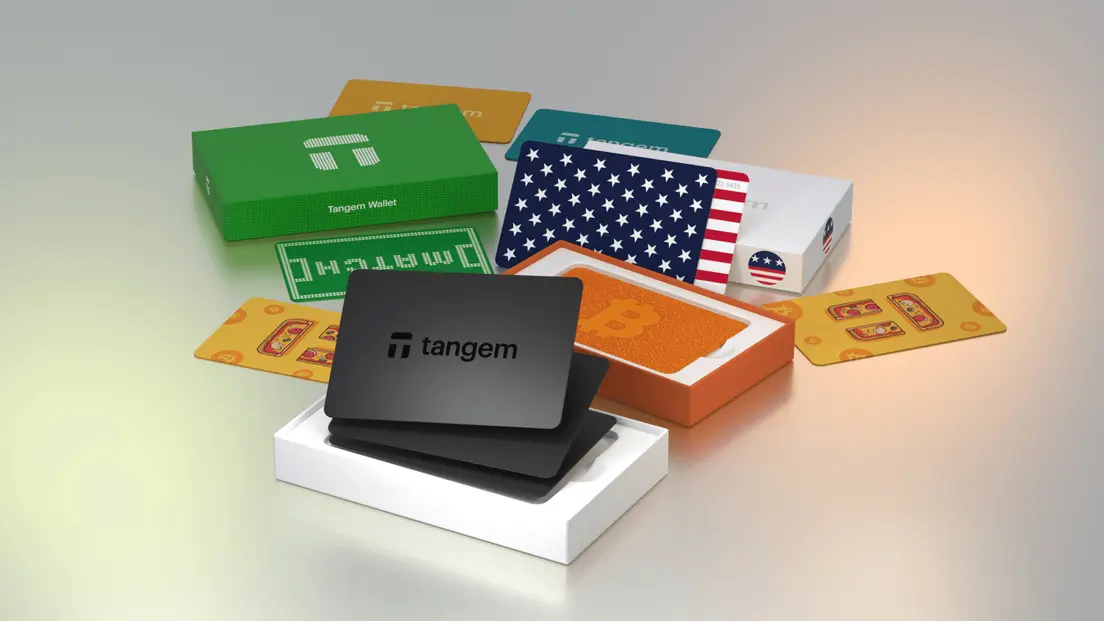
Tangem Wallet supports Onyx Layer 1. We spoke with the Onyx team about the project, the integration, and the next steps for the Tangem x Onyx partnership.
Q&A
1. For users just discovering Onyx, what's your project about?
Onyx is a blockchain ecosystem focused on making digital finance practical for individuals, developers, and institutions. At its core is Onyx Layer 1, a sovereign blockchain designed for payments, financial applications, and tokenized assets.
The problem we’re addressing is the gap between what blockchain makes possible and what people need to use it in everyday finance. Users want simple applications and affordable transactions. Developers need familiar tools and reliable settlement. Institutions also need privacy, controlled access, and infrastructure that can support their compliance requirements.
Onyx brings those needs together through its public network, enterprise infrastructure, and products such as Onyx Wallet, Onyx Bridge, and Onyx AI. XCN, or Onyxcoin, is the ecosystem’s utility, gas, and governance token.
2. What sets Onyx Layer 1 apart? Which features do you consider most important for developers and users?
The most important distinction is how Onyx combines a public blockchain with infrastructure for private, permissioned applications.
Onyx Layer 1 supports public applications and assets, while Onyx Mesh provides trusted ordering and verification for organizations that need to keep sensitive data and business logic within their own environments. That is particularly relevant to financial services, where transparency and privacy both matter.
For developers, EVM compatibility lowers the barrier to building: they can use familiar Solidity contracts and tools. For users, the priorities are fast settlement, low transaction costs, and straightforward access.
The network’s aBFT consensus is designed to provide finality without reorganizing the agreed transaction history. For payments and financial workflows, confidence that a transaction has settled is a fundamental requirement.
3. What role do you see XCN and Onyx Layer 1 playing in the growth of the ecosystem over the next few years?
We see Onyx Layer 1 becoming the shared foundation connecting the ecosystem’s applications, assets, and services.
Onyx Wallet provides an everyday entry point. Onyx Bridge connects supported networks. Onyx AI simplifies onchain workflows, and Onyx Mesh supports enterprise applications that require private control. Onyx Card extends that direction toward everyday spending, subject to its rollout and availability.
XCN connects participation across the ecosystem through transaction fees, staking, and governance. Governance also gives holders a role in decisions about incentives, infrastructure, and ecosystem funding.
Over the next few years, the goal is to make those components work together more naturally and give external developers compelling reasons to build on Onyx. Growth should come from useful applications and repeat usage.
4. Why are hardware wallets important for the Onyx community, and why did Onyx choose Tangem?
Network security and personal asset security address different parts of the same problem. A secure blockchain still needs users to protect the keys that authorize their transactions.
Hardware wallets add protection by keeping signing keys in dedicated hardware, reducing their exposure to threats on a phone or computer. For XCN holders, this provides another way to maintain direct control over their assets.
As the ecosystem grows, users should have custody options that suit their participation. Some prioritize everyday convenience; others want dedicated hardware protection for longer-term holdings. Making those choices accessible helps strengthen self-custody across the community.
Tangem’s combination of dedicated hardware security and a straightforward mobile experience aligns well with Onyx's direction.
5. What does having Onyx available directly in Tangem Wallet bring to the Onyx ecosystem?
It opens Onyx Layer 1 to existing Tangem users through a wallet they already own and know how to use. They can now interact directly with the network through Tangem, without needing to set up a separate wallet.
For the Onyx community, it also provides another way to manage assets on Onyx Layer 1 while using hardware to protect private keys and authorize transactions. That combines the convenience of Tangem’s mobile interface with hardware-backed self-custody.
For the ecosystem, the integration makes Onyx more accessible to an established hardware wallet user base and gives our existing users more choice in how they access the network.
6. How did the Onyx community respond to the joint campaign and the limited-edition Tangem Wallet featuring Onyx?
The campaign was designed to give the community a tangible connection to Onyx and to make self-custody more accessible. OIP-70 outlined a limited allocation of 440 Onyx-branded Tangem wallets, a dedicated purchasing portal, and a campaign-specific 10% discount.
It also created an opportunity to explain the relationship between holding XCN, protecting signing keys, and participating in the ecosystem.
Those interested in Tangem and hardware wallets were enthusiastic about being able to access a product branded with Onyx.
7. If a quantum computing breakthrough compromised Onyx’s digital signature scheme, how quickly could the network be upgraded?
There is currently no publicly known quantum computer capable of breaking the digital signatures Onyx uses. Our EVM wallet experience uses Ethereum-compatible ECDSA signatures over secp256k1, so it shares the same underlying quantum vulnerability as Ethereum and Bitcoin’s elliptic-curve signatures.
Onyx’s consensus uses Ed25519 and supports native key rotation. Ed25519 is also vulnerable to a sufficiently capable quantum computer, so our preparation includes upgrading both consensus signatures and user keys.
We have a gated protocol upgrade process and a phased migration plan:
- Node communications: Introduce hybrid or post-quantum key exchange for node-to-node TLS connections when suitable library support is available. Consensus itself does not depend on TLS.
- Client communications: Apply the same approach to client-facing endpoints.
- Consensus signatures: Introduce hybrid event signing combining Ed25519 with FN-DSA, based on Falcon, once a suitable draft specification is available, followed by a transition to FN-DSA alone.
- User keys: Add a post-quantum key type once FIPS 206 is finalized, allowing users and applications to adopt it and rotate keys in stages. Our provisional target is 2027, subject to the timing of the standard and implementation readiness. If FN-DSA is delayed, the planned fallback is ML-DSA, based on Dilithium.
The migration timeline will depend on standards readiness and testing. Our phased approach is designed to support an orderly transition and minimize disruption to users and network activity.
8. Ecosystems attract developers with grants, liquidity incentives, and token rewards. How will Onyx retain them if incentives disappear?
Our goal is for developers and users to stay because the network solves a problem for them. Incentives can help teams get started, but lasting adoption depends on reliable settlement, affordable transactions, familiar development tools, and applications people continue to use.
For institutions, Onyx Mesh adds another reason to build: shared ordering and verification while maintaining control over business logic and sensitive data. The long-term measure of success should be sustained usage and viable applications, rather than activity that depends entirely on rewards.
9. Meme coins are a powerful driver of blockchain activity. Has the meme economy influenced Onyx’s strategy?
We recognize that meme coins can attract communities and introduce people to a network. We also acknowledge them within the broader token landscape, and the public Layer 1 supports assets beyond institutional financial products.
Building on this, we recently introduced OIP-5, which proposes Onyx Launch, a decentralized meme-token launchpad on Onyx Layer 1. It would expand opportunities for token creation and community participation, with a voter-approved share of protocol fees contributing to XCN buybacks and burns. Development and activation remain subject to the proposal’s governance and security requirements.
Our stated focus remains practical digital finance. Onyx Launch represents a proposed expansion of community-driven activity alongside that focus.
10. Is Onyx building toward AI agents capable of initiating payments, interacting with smart contracts, or managing assets?
Onyx AI already combines off-chain intelligence with onchain execution across EVM blockchains. Users can give natural-language instructions to deploy smart contracts, execute single or batch token transfers, swap tokens, bridge assets, and run multi-step automated workflows. The agent handles contract compilation, deployment, and execution, with XCN credits required to execute tasks.
We also have Onyx Agent built into Onyx Wallet. It connects directly to the user’s mobile wallet, helping them review balances and positions and perform supported actions, such as swaps, XCN staking, and liquidity management through conversational requests.
Human authorization remains explicit in the wallet experience. Before submitting a transaction, Onyx Agent checks that the wallet has sufficient funds and presents a review screen with Confirm and Cancel controls. Users must authorize transactions before they are signed.
11. Looking ahead, what do you see as the next steps for Onyx and Tangem?
The most useful direction would be to deepen access to the ecosystem while continuing to improve security and ease of use. Potential areas include clearer onboarding and better access to supported Onyx assets and applications. Where technically feasible, we would also like to explore smoother integrations with staking, governance, swaps, and other ecosystem services.
Those are areas we would like to explore together. Any specific product or feature would be announced once its scope, implementation, and availability are confirmed.
Final
Onyx Layer 1 is available in Tangem Wallet. Onyx users can hold XCN and sign transactions with keys that never leave the secure element.
This article is for information only and is not financial advice. Crypto assets are high-risk, and their value can go down as well as up.