Almost 1 in 5 Canadians owns some form of cryptocurrency, and that number is climbing fast, especially among younger people. If you're under 35, there's a 1-in-3 chance you're already in the game. But here's the uncomfortable truth: most people who buy crypto have no idea how to actually keep it safe. They leave it sitting on an exchange, cross their fingers, and hope nothing goes wrong.
This guide will fix that. We'll walk through exactly how to store your crypto safely in Canada in 2026, from the basics of how wallets work, to the best hardware wallet you can buy right now, to the CRA tax rules you need to know so you don't get surprised at filing time. No jargon overload. No unnecessary complexity. Just what you actually need to know.
Main Takeaways
Leaving crypto on an exchange means you don't truly own it; the exchange does
The safest way to store crypto is in a hardware wallet that keeps your keys completely offline.
Tangem is the easiest and most secure hardware wallet for Canadians in 2026
The CRA treats crypto as a commodity and taxes it; keeping records is not optional.
You should have two wallets: one for holding, one for using
Why Storing Crypto Safely Actually Matters
Let's start with the thing nobody tells beginners: when you buy Bitcoin on Coinbase or Wealthsimple or any exchange, you don't actually own Bitcoin. You own a number on a screen. The exchange holds the real thing. Your account is essentially an IOU.
That's fine for small amounts you're actively trading. But it becomes a real problem when exchanges get hacked (it happens more than you'd think), go bankrupt (FTX collapsed in 2022 and hundreds of thousands of users lost everything), or freeze withdrawals when market conditions get chaotic. Canada's own QuadrigaCX collapsed in 2019, taking about $215 million CAD of customer funds with it. The CEO had been the only person with access to the private keys, and when he died unexpectedly, the money was effectively gone forever.
The solution is self-custody: taking your crypto off the exchange and storing it in a wallet that you control, with the private keys. When you control the keys, no exchange failure, no hack, no frozen withdrawal can take your funds. "Not your keys, not your coins" isn't just a crypto meme; it's the most important lesson in this entire guide.
How Crypto Storage Actually Works
Before we get into which wallet to use, let's quickly cover how this all works, because understanding it makes every other decision easier.
Your cryptocurrency doesn't actually live in a wallet. It lives on the blockchain, a public database that tracks who owns what. What a wallet stores is your private key: a unique cryptographic string that proves you own certain funds and lets you authorize transactions.
Think of it like the PIN to a bank account that no bank controls. Whoever has the private key has the crypto. Lose the key, lose the crypto. Someone else gets the key; they have the crypto. That's it.
Your wallet also has a public address, like your email address, for crypto. You share this when someone needs to send you funds. It's safe to share publicly. Your private key, on the other hand, never gets shared with anyone, ever.
Most wallets also generate a seed phrase during setup, usually 12 or 24 random words. This phrase is a human-readable backup of your private key. If your wallet is damaged or lost, you can use the seed phrase to recover your funds on a new device.
This means your seed phrase is just as valuable as your private key. Write it down on paper, store it somewhere safe and offline, and never, under any circumstances, type it into any website or app.
Hot Wallets vs Cold Wallets: What's the Difference?
Hot Wallets
A hot wallet is an app on your phone or computer that's always connected to the internet. Examples include MetaMask, Trust Wallet, and Coinbase Wallet. They're free, fast to set up, and great for small amounts and active DeFi use. The downside is that "connected to the internet" also means "accessible to hackers." A hot wallet on a compromised phone is a hot wallet someone else can drain.
Cold Wallets
A cold wallet keeps your private keys on a physical device that's never connected to the internet. To sign a transaction, you briefly bring the device near your phone or computer, but the keys never leave the hardware. This makes cold wallets essentially immune to remote hacking. Even if your phone gets completely taken over by malware, a cold wallet transaction can't be approved without the physical device in your hand.
Cold wallets cost money upfront (typically $50–$150 CAD), but for anything you're holding long-term or can't afford to lose, they're absolutely worth it.
The Right Setup for Most Canadians
Use both. Keep a small amount in a hot wallet (Trust Wallet or MetaMask) for day-to-day transactions, DeFi, and anything you're actively using. Keep your actual savings in a cold wallet, such as a hardware wallet, where they can't be accessed remotely—same logic as having a bank account for spending and a savings account for the rest.
The Best Way to Store Crypto in Canada: Tangem
If there's one thing to take from this guide, it's this: Tangem is the easiest and most secure way for Canadians to store crypto in 2026. It beats every other hardware wallet on simplicity, security architecture, and real-world usability, and it's the most beginner-friendly cold wallet available anywhere.
Here's what makes it different.
It Looks Like a Bank Card
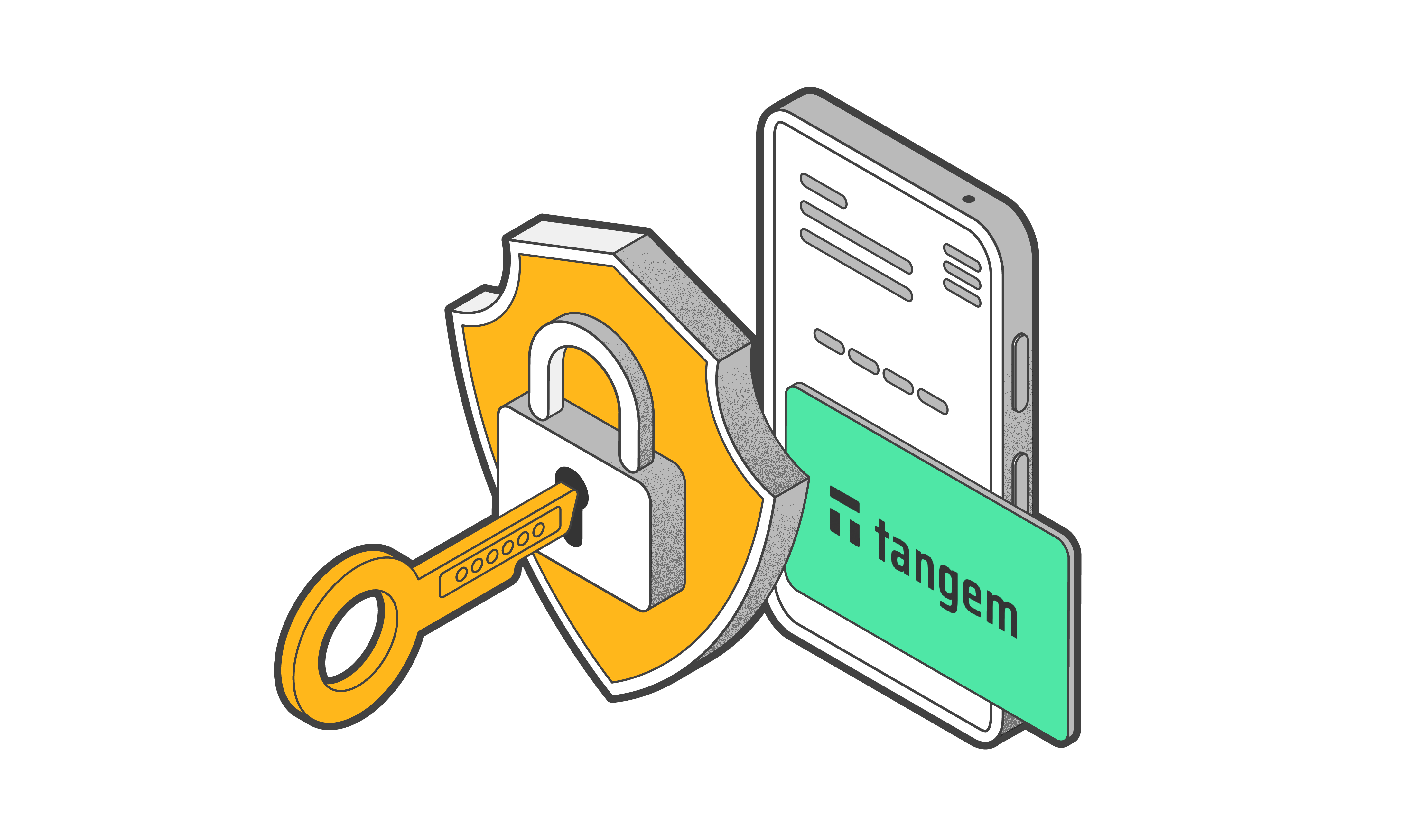
Tangem isn't a USB stick or a device with buttons and a tiny screen. It's a credit-card-sized NFC smartcard. You tap it to the back of your phone to sign transactions. That's it. No cables, no screens to squint at, no software to install on your computer, no firmware updates to worry about. For many Canadians who found traditional hardware wallets intimidating, Tangem is genuinely the first cold wallet that feels approachable.
Your Private Keys Never Leave the Device
Inside every Tangem card is a certified Secure Element chip (Samsung S3D350A/B, rated CC EAL6+), the same type used in biometric passports and contactless bank cards. Your private key is generated in this chip when you set up the wallet, and it never leaves it. Not when you sign a transaction, not during a software update, not ever. When you tap your card to approve a transaction, the Secure Element signs it internally and sends back only the result. Your phone sees the signed output, never the key itself.
The security rating here matters: CC EAL6+ means the chip has been independently evaluated and certified to resist advanced physical attacks. This is genuinely high-end security, the kind that's usually reserved for government ID documents and banking infrastructure.
No Seed Phrase, Seriously
This is Tangem's biggest advantage and what makes it genuinely revolutionary for new users. Every other hardware wallet generates a 12 or 24-word seed phrase that you have to write down, store securely, and never lose. That piece of paper becomes the single most dangerous thing in your possession. People have lost millions because their seed phrase was in a flooded basement, destroyed in a house fire, or found by someone they trusted.
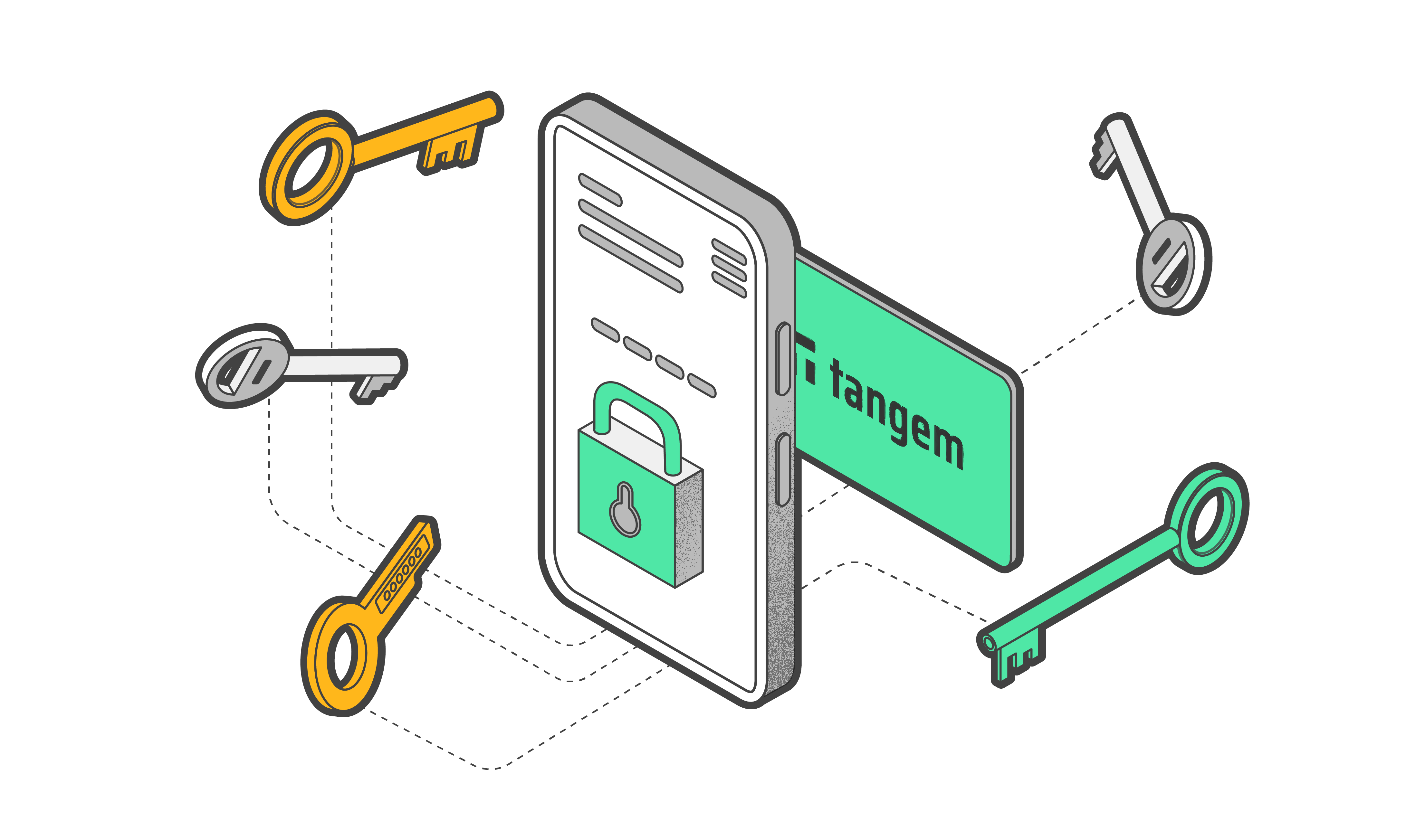
Tangem eliminates the seed phrase. Instead of a paper backup, you get a physical backup: a second (or third) linked NFC card in your wallet set. If you lose one card, you still have the others. Recovery doesn't require memorizing or storing any words, just keeping your backup card somewhere safe, like a drawer at home or a safety deposit box. It's a fundamentally more human-proof backup system.
The App Does Everything
The free Tangem app (iOS and Android) is where you manage everything. It supports over 10,000 tokens across 60+ blockchains, including Bitcoin, Ethereum, Solana, BNB Chain, Polygon, Tron, Avalanche, Arbitrum, and Base. You can buy crypto directly in the app via MoonPay using a Canadian debit or credit card, swap tokens with transparent fee breakdowns, stake assets like ETH, SOL, and TRX to earn yield, and manage multiple wallets with the Multi-Accounts feature.
Every time you do anything that moves funds, a send, a swap, a DeFi interaction, the app asks you to tap your Tangem card to confirm. That tap is the signature. No physical card, no transaction. It's a simple but powerful security guarantee: even if someone hacks your phone completely, they cannot approve transactions without the card in their hand.
How to Set Up Tangem: Step by Step
Order your Tangem wallet. Go to tangem.com and order a 2-card or 3-card wallet set. Ships to all Canadian addresses. The 2-card set starts at around $54.90 USD. The extra cards are your backup.
Download the Tangem app. Available on the App Store and Google Play. It's free.
Tap your card to set up. Open the app, hold your first Tangem card to the back of your phone (near the NFC reader, usually the top half of the back), and follow the prompts. The app will guide you through setup in a few minutes.
Link your backup cards. During setup, the app will ask you to tap your second card. This links it to the same wallet so that either card can access your funds. If you got a 3-card set, link the third one too.
Set your access code. This is a PIN or biometric lock for the app. Don't skip this step.
Store your backup card somewhere safe. This is your recovery option. A fireproof safe at home, a trusted family member's house, or a bank safety deposit box all work. The key thing: keep it physically separate from your primary card.
Add the coins you want to hold. Search Markets in the app to find and add tokens. Then find your wallet address for each asset and use it to transfer crypto from your exchange.
That's it. Most people complete the setup in under 5 minutes. You don't need any technical background.
Tangem Pros and Cons
Pros:
CC EAL6+ Secure Element, top-tier hardware security
No seed phrase removes the most common cause of crypto loss
NFC tap-to-sign is genuinely the simplest interaction model in hardware wallets
10,000+ tokens across 60+ blockchains
Waterproof, dustproof, and rated for extreme temperatures
Open-source app with independent security audits
One-time hardware cost, no subscription fees
Cons:
Requires an NFC-enabled smartphone (most phones since 2016 qualify)
Not desktop compatible.
Other Crypto Wallets Worth Knowing About
Tangem is our top pick, but here's how the rest of the field looks in 2026:
MetaMask: Hot Wallet for Ethereum and DeFi
MetaMask is the most-used crypto wallet in the world, and for good reason. If you're doing anything on Ethereum, swapping tokens, using DeFi protocols, or minting NFTs, MetaMask is essentially the default.
It works as both a browser extension and a mobile app, connects to almost every dApp, and lets you add custom networks with a few taps. Just remember it's a hot wallet, so keep only what you're actively using in it. For long-term holdings, move funds to Tangem.
Trust Wallet: Mobile Hot Wallet
Trust Wallet supports over 100 blockchains in a single app, an unmatched feature in the hot wallet space. It's great if you're jumping between Solana, BNB Chain, Ethereum, and Tron without wanting to manage multiple apps. The interface is clean and beginner-friendly. Owned by Binance, which is worth knowing from a privacy standpoint, but the wallet itself is non-custodial.
Coinbase Wallet: Beginner Hot Wallet
Not to be confused with the Coinbase exchange, Coinbase Wallet is a separate, non-custodial app where you control your own keys. It's the smoothest onboarding experience in the hot wallet space, and if you're already using Coinbase to buy crypto, moving funds from the exchange to the wallet takes about two minutes. Good starting point for beginners before they upgrade to hardware.
How to Move Your Crypto Off an Exchange to Tangem
This is the most important practical step. Here's how to do it safely:
Open the Tangem app and navigate to the wallet you want to receive funds.
Find your deposit address. Tap the asset (for example, Bitcoin), then tap "Receive." You'll see a QR code and a text address.
Double-check the network. Make sure you're looking at the correct address for the right blockchain. Sending ETH on the Arbitrum network to an Ethereum mainnet address is a common mistake; always match the network on both ends.
Go to your exchange (Wealthsimple, Newton, Coinbase, Binance, etc.) and navigate to "Withdraw" or "Send."
Paste your Tangem address as the destination. Don't type it manually, copy and paste, then verify the first and last few characters match what's shown in the Tangem app.
Send a small test amount first. Before moving everything, send a small test amount first. Confirm it arrives in Tangem. Once you're sure it works, send the rest.
Important: Once you've moved your crypto off an exchange, the exchange can't help you recover it. You are now the custodian. That's a good thing, but it means keeping your Tangem cards safe is your responsibility.
The Biggest Crypto Security Mistakes Canadians Make
Leaving Everything on an Exchange
We've covered this, but it bears repeating. Exchanges are for buying and trading, not storing. QuadrigaCX. FTX. Mt. Gox. Exchanges fail, and when they do, customers get nothing. If you've been holding significant crypto on Wealthsimple or any other platform for more than a few weeks, consider moving it to self-custody.
Storing Seed Phrases Digitally
Take a screenshot of your seed phrase. Saving it in Notes. Email it to yourself. Putting it in Google Drive. All of these are real things people do, and all of them are terrible ideas. Your seed phrase is the master key to your crypto. If it's on any internet-connected device, it's potentially accessible to hackers. Write it on paper. Store the paper somewhere physically safe. Tangem sidesteps this problem entirely by not having a seed phrase, but if you're using any other wallet, this rule applies.
Falling for Phishing
Phishing is when someone tricks you into entering your seed phrase or private key somewhere you shouldn't. It might look like a real wallet website, a "support" message on Discord or Telegram, or a fake app in the App Store. The rule is simple: no legitimate wallet, exchange, or support team will ever ask for your seed phrase. If anyone asks for it, it's a scam. Always download wallet apps directly from official websites or the official app stores.
Sending to the Wrong Network
This is the most common beginner mistake, and it can result in permanently lost funds. When you're sending ETH, for example, make sure both the sending platform and the receiving address are set to the same network (Ethereum mainnet, Arbitrum, Optimism, etc.). When in doubt, send a tiny test amount first and confirm it arrives before sending the rest.
Crypto Taxes in Canada: What the CRA Wants You to Know
Here's the deal with taxes in Canada: the Canada Revenue Agency (CRA) treats cryptocurrency as a commodity, similar to gold or oil. That means crypto profits are taxable, and the CRA is paying increasing attention to crypto activity.
Their 2025–26 departmental plan specifically identified crypto assets as an "emerging high-risk area" for enforcement. Starting in 2026, Canada is implementing the OECD Crypto-Asset Reporting Framework (CARF), which requires Canadian exchanges to report user transaction data directly to the CRA.
If you've been assuming your crypto activity is invisible to the government, that assumption is becoming less safe every year.
Here's what you need to know:
When You Owe Tax
You trigger a taxable event when you: sell crypto for Canadian dollars, trade one cryptocurrency for another (yes, even crypto-to-crypto swaps count), buy something with crypto, or give crypto as a gift. Buying crypto with CAD and just holding it is not a taxable event. Moving crypto between wallets you own is not a taxable event either, so transferring from Coinbase to Tangem is fine.
Capital Gains vs Business Income
This is the big fork in the road. If you hold crypto as a long-term investment and sell occasionally, the CRA generally treats your profits as capital gains, and only 50% of your gain gets added to your taxable income. So if you made $10,000 on Bitcoin, only $5,000 is taxable.
If you trade frequently, at high volume, in a way that looks like a commercial operation, the CRA may classify you as running a business, and 100% of your profit becomes taxable income. The line isn't always obvious, so if you're actively trading, talking to an accountant who understands crypto is genuinely worth it.
Keep Records of Everything
The CRA requires you to keep transaction records for at least 6 years. That means: the dates of every transaction, the CAD value at the time of each transaction, what you bought or sold, the wallet addresses involved, and the fees paid. Tools like Koinly, CoinTracker, or Cryptact can import your transaction history from exchanges and wallets automatically and generate tax reports. Using one of these tools from day one saves enormous headaches at filing time.
The Filing Deadline
Crypto gains and losses for the 2025 tax year need to be reported on your return by April 30, 2026. You report capital gains on Schedule 3, Line 7 (specifically designated for crypto assets since 2021). If you're unsure about your situation, a Canadian tax professional with crypto experience is worth the consultation fee.
What's Tax-Free
Buying crypto with CAD and holding it, no tax. Moving crypto between your own wallets, no tax. Receiving crypto as a gift under certain conditions, the recipient usually doesn't owe tax, but the giver may (the CRA treats the gift as if you sold it at fair market value).
The TFSA and RRSP Situation
You cannot hold actual cryptocurrency inside a TFSA or RRSP. However, you can hold crypto ETFs (like Purpose Bitcoin ETF, which trades on the TSX) inside these accounts, which lets you get crypto exposure with the tax advantages of registered accounts. This is worth exploring if you're thinking long-term.
Best Canadian Crypto Exchanges to Buy From
Before you can store crypto, you need to buy it. Here are the most trusted platforms for Canadians in 2026:
Wealthsimple Crypto
The most popular option for Canadian beginners. Registered with FINTRAC, clean app design, and easy to fund via Interac e-Transfer. Supports Bitcoin, Ethereum, and a growing list of altcoins. The main limitation is that you can't withdraw crypto directly to an external wallet; you need to sell and rebuy on another platform. Good starting point, not ideal for long-term self-custody.
Newton
Canadian-built exchange with no trading fees (they make money on the spread). Supports a wide range of assets and allows crypto withdrawals to external wallets, which makes it compatible with moving funds to Tangem. Popular with more active Canadian crypto users.
Bitbuy
Registered as an investment dealer with CIRO (Canada's Investment Regulatory Organization), which makes it one of the most regulated platforms available to Canadians. Supports crypto withdrawals to external wallets.
Coinbase
The global giant with strong Canadian support. Supports a massive range of assets, has straightforward withdrawal functionality, and integrates cleanly with Coinbase Wallet if you want to start with a hot wallet before going hardware.
Canada-Specific Crypto Considerations
Regulation Is Getting Clearer
Canada is one of the more crypto-regulated countries in the world, which is generally good for consumers. The Canadian Securities Administrators (CSA) laid out comprehensive requirements for crypto trading platforms in 2025; all registered exchanges in Canada now need to meet custody standards and disclosure requirements.
CIRO oversees platform registration. This means the crypto platforms available to Canadians have cleared a meaningful compliance bar, which provides some protection against the worst actors.
Bitcoin ATMs Are Everywhere
Canada has over 3,600 Bitcoin ATMs, second only to the United States. Toronto alone has over 1,000. This means buying crypto with cash is genuinely accessible in most major Canadian cities. Bitcoin ATMs typically charge fees of 8–15%, so they're not ideal for large purchases, but they're helpful for quick, anonymous small buys.
Quebec's Mining Scene
Quebec's low electricity rates (among the lowest in North America) have made it a global hub for crypto mining. If you're interested in mining to accumulate crypto, Quebec is one of the most economically viable places in the world to do so. Just remember that mining income is taxable as business income from the moment you receive it.
Quick-Reference Security Checklist
✅ Use a hardware wallet (Tangem) for anything you're holding long-term
✅ Never store seed phrases digitally, paper only, stored securely offline
✅ Send a small test transaction before moving large amounts
✅ Always verify the full wallet address before confirming a send
✅ Keep your backup Tangem card in a separate physical location
✅ Download wallet apps only from official sources
✅ Never share your private key or seed phrase with anyone, ever
✅ Keep transaction records for tax purposes, use Koinly or similar
✅ Avoid public Wi-Fi when making transactions
✅ Verify addresses manually, malware can swap clipboard addresses
Frequently Asked Questions
Is it legal to own crypto in Canada?
Yes, completely legal. Cryptocurrency is not legal tender in Canada; the CRA classifies it as a commodity, but buying, selling, and holding it is entirely permitted. Canadian exchanges must register with regulators, and your profits are subject to tax, but nothing is stopping any Canadian from owning crypto.
What's the safest way to store crypto in Canada?
A hardware wallet where you control your own private keys, specifically one with a certified Secure Element chip. Tangem is the best option in 2026 because it combines top-tier hardware security (CC EAL6+), no seed phrase vulnerability, and an NFC tap-to-sign system that's genuinely easy for anyone to use. For a hot wallet backup, Coinbase Wallet or Trust Wallet are solid non-custodial choices.
What happens if I lose my Tangem card?
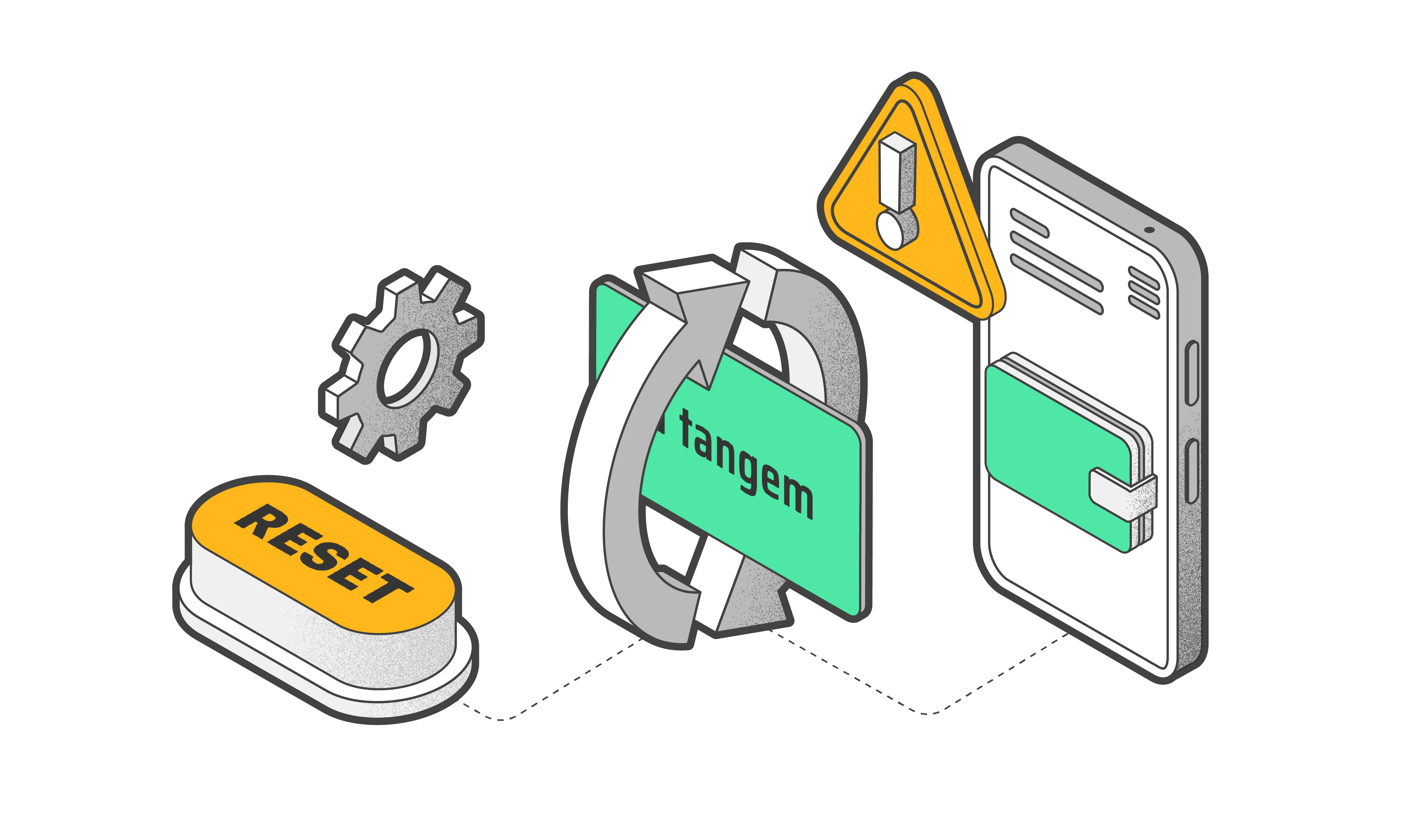
If you set up a 2 or 3-card wallet set (which Tangem recommends and what you get when you order), losing one card doesn't mean losing your funds. Your other backup cards still have access to the same wallet. Just use one of your backup cards to access your funds and, if needed, transfer them to a new wallet. This is why storing your backup card in a separate location from your primary card is so important.
Do I have to pay taxes on crypto in Canada?
Yes. The CRA taxes crypto as a commodity. If you sell, trade, or spend it, you likely have a taxable event. Casual investors typically pay capital gains tax on 50% of their profit. Frequent traders may be classified as running a business, in which case 100% of profit is taxable.
Buying and holding, and transferring between your own wallets, are generally not taxable events. The CARF reporting framework, starting in 2026, means Canadian exchanges will be required to report their activity to the CRA, so staying compliant from the start is strongly advised.
Can I move crypto from Wealthsimple to Tangem?
Wealthsimple Crypto does not currently support direct crypto withdrawals to external wallets, which is a significant limitation. To move funds to Tangem, you'd need to sell on Wealthsimple, transfer CAD to your bank account, and then buy on a platform that supports withdrawals, like Newton, Bitbuy, or Coinbase, before sending to Tangem. It's a few extra steps, but it's worth it for security.
What's the difference between a hot wallet and a cold wallet?
A hot wallet is an app on your phone or computer that's connected to the internet, convenient but more exposed to online threats. A cold wallet stores your private keys on a physical device that never connects to the internet, making it much harder to hack remotely.
Cold wallets cost money upfront, but are the right choice for anything you're holding long-term. Tangem is a cold wallet that uses NFC to communicate with your phone for signing transactions, without ever exposing your keys to the internet.
Is it safe to keep crypto on Canadian exchanges like Newton or Bitbuy?
Canadian exchanges are regulated and have precise, meaningful compliance requirements. But "regulated" doesn't mean "risk-free." Exchanges can still be hacked, experience financial problems, or be forced to freeze assets.
The universal rule: exchanges are for buying and trading, not long-term storage. Once you've bought crypto and don't plan to trade it immediately, move it to a hardware wallet. The few minutes it takes are worth it.
Does moving crypto between my own wallets trigger tax in Canada?
No. Transferring crypto between wallets you own, for example, from Coinbase to Tangem, is not a taxable event under CRA rules. Ownership hasn't changed, so no disposition has occurred.
Just make sure you keep records of the transaction dates and amounts, because you'll need accurate adjusted cost basis (ACB) records when you eventually sell.
What's the best crypto wallet for a Canadian beginner?
Tangem is the best all-around answer because it's both beginner-friendly and genuinely secure; you don't have to trade one for the other.
Setup takes under 10 minutes, no technical knowledge required, and the NFC tap-to-sign model is more intuitive than any traditional hardware wallet. If you're not ready to invest in hardware yet, Coinbase Wallet is the smoothest way to get started with non-custodial self-custody.
 + Up to $20 in BTC till Mar 16