The article explains the importance of using a crypto wallet to securely store your digital assets, highlighting the risks of leaving funds on exchanges, such as hacks and bankruptcies. It compares hot (software) and cold (hardware) wallets, emphasizing that hardware wallets like Tangem offer superior security by keeping private keys offline and simplifying backup with physical cards instead of vulnerable seed phrases. For beginners in 2026, Tangem is recommended as the best overall wallet due to its ease of use, robust security, and broad coin support.
Getting into crypto is exciting. But the moment you buy your first coin, you face a question that trips up millions of beginners: where do you actually keep it? Most people leave it sitting on the exchange where they bought it. That feels fine, until it isn't. Exchanges get hacked, go bankrupt, or freeze withdrawals without warning. When that happens, you can lose everything, and unlike a bank, nobody bails you out.
The solution is a crypto wallet. A wallet lets you take your crypto off an exchange and into your own hands. This guide explains what wallets are, how they work, which ones are worth your time as a beginner, and which one we think is the clear winner in 2026.
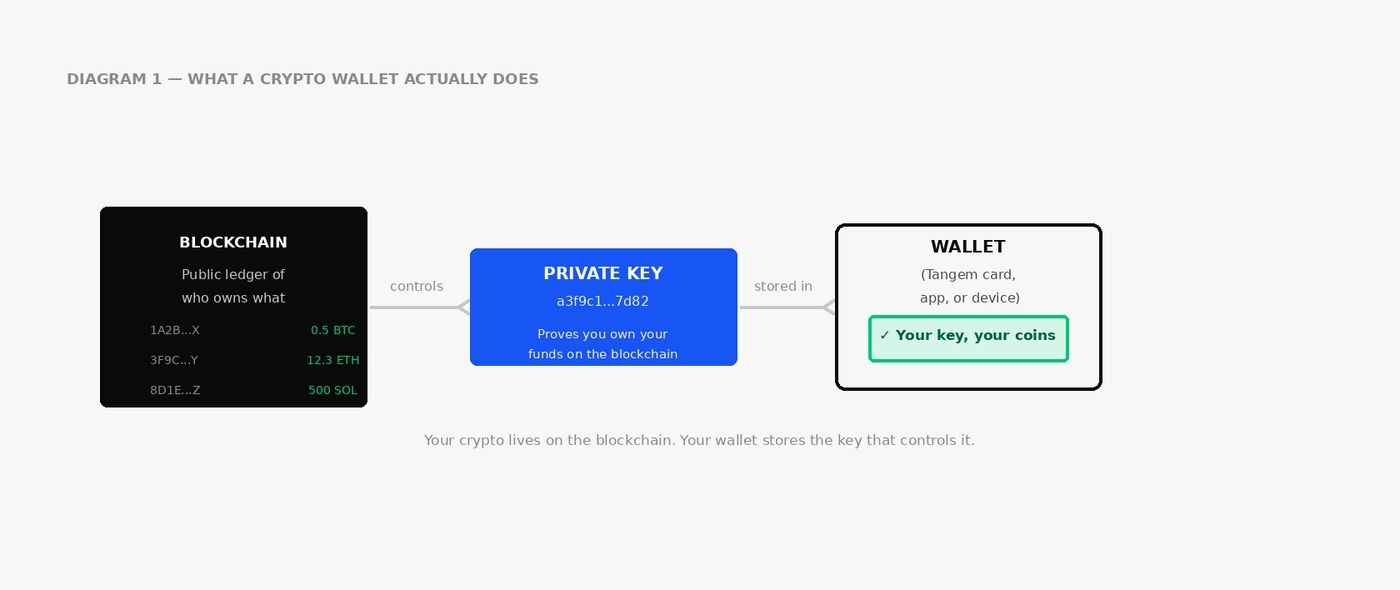
A crypto wallet doesn't store tokens; it stores the private key that proves you own them.
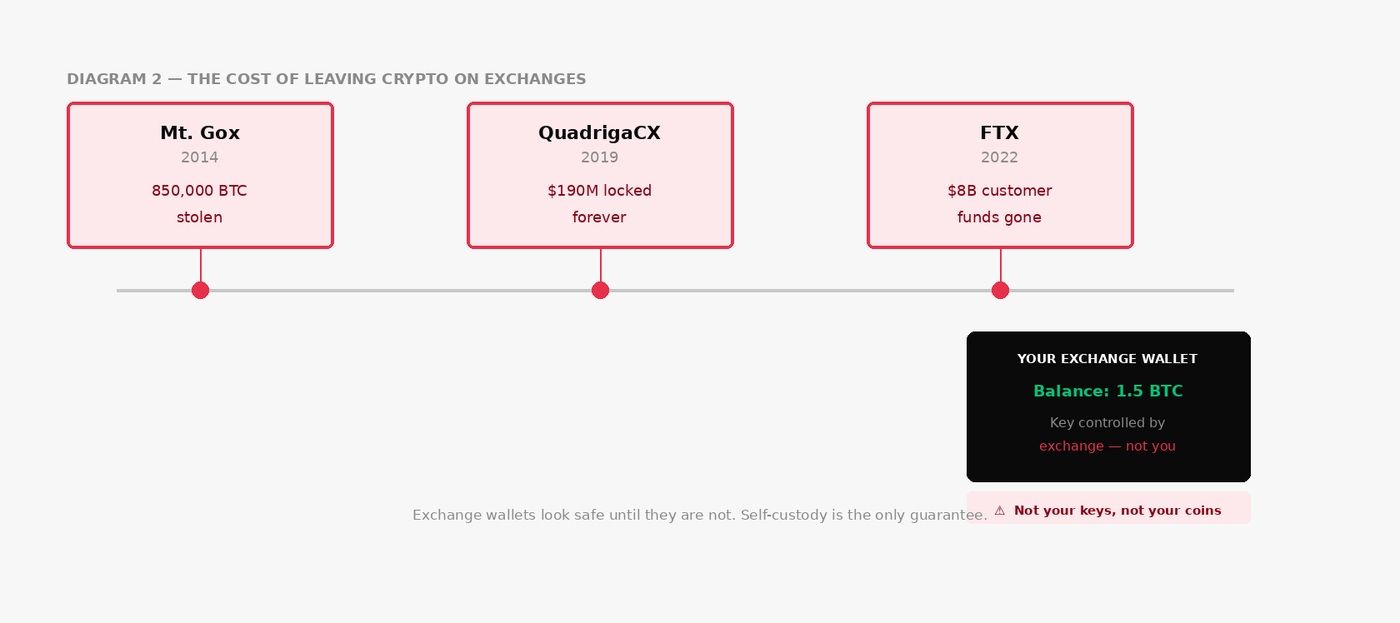
Leaving crypto on an exchange means the exchange controls your funds, not you.
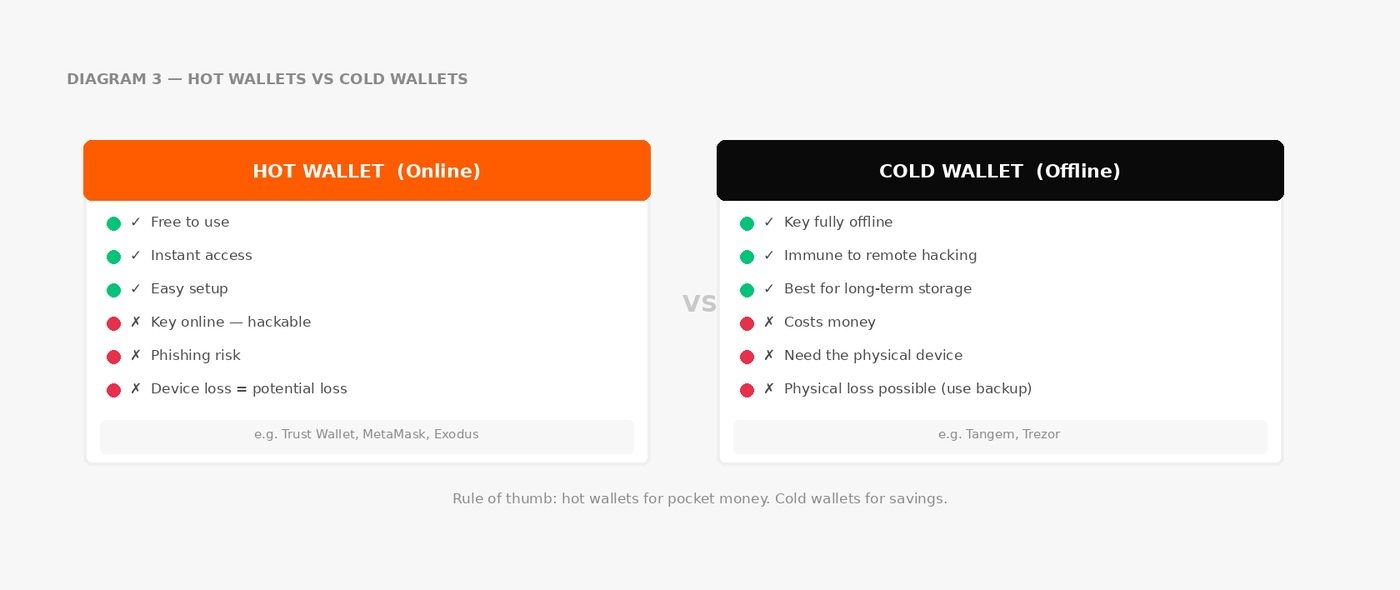
Cold wallets (hardware) are far safer than hot wallets (apps) for storing real money.
Tangem is the easiest hardware wallet to use, with no seed phrase to lose, no cables, and setup in under 3 minutes.
What is a Crypto Wallet?
Here's something that surprises most people: your crypto doesn't actually live inside a wallet. All cryptocurrencies live on the blockchain, a massive public database that tracks who owns what. What a wallet does is store your private key, the secret code that proves you own certain funds on that blockchain, and gives you the right to move them.
A wallet also gives you a public address (like a bank account number) that you share with others to receive funds. The public address is safe to share, but the private key is not.
Why leaving crypto on an exchange is a bad idea
"Just leave it on Coinbase" is the most common mistake beginners make. And it's understandable. Buying and holding in one place feels simple. But here's the truth: when your crypto sits on an exchange, you don't actually own it. The exchange does. You have an IOU.
This isn't a theoretical risk. It's happened over and over:
Mt. Gox (2014): The world's biggest Bitcoin exchange lost 850,000 BTC to hackers. Customers waited years for partial compensation.
QuadrigaCX (2019): Canada's largest exchange collapsed after the founder allegedly died as the only person who knew the passwords. $190M in customer funds were locked forever.
FTX (2022): One of crypto's most trusted exchanges collapsed almost overnight. Over $8 billion in customer funds vanished. Founder Sam Bankman-Fried was later convicted of fraud.
Bitfinex, Binance, others: Multiple exchanges have suffered significant hacks over the years, with hundreds of millions in losses.
The phrase you'll hear in crypto is: "not your keys, not your coins." It means if you don't control your private key, you don't control your crypto. A self-custody wallet fixes this by putting you in charge.
Hot wallets vs cold wallets: what's the difference?
Wallets come in two main flavors: hot and cold. The difference comes down to one thing: internet connection.
Hot wallets
A hot wallet is an app, browser extension, or web interface that's connected to the internet. They're free, easy to set up, and convenient for daily use. The tradeoff is security. Because they're online, they're exposed to hackers, phishing attacks, malware, and platform shutdowns.
Cold wallets
A cold wallet keeps your private key completely offline, on a physical device. This means no hacker can reach it through the internet because there's no internet connection to exploit. Even if your phone or laptop gets compromised, your funds are safe because the key never touched the internet.
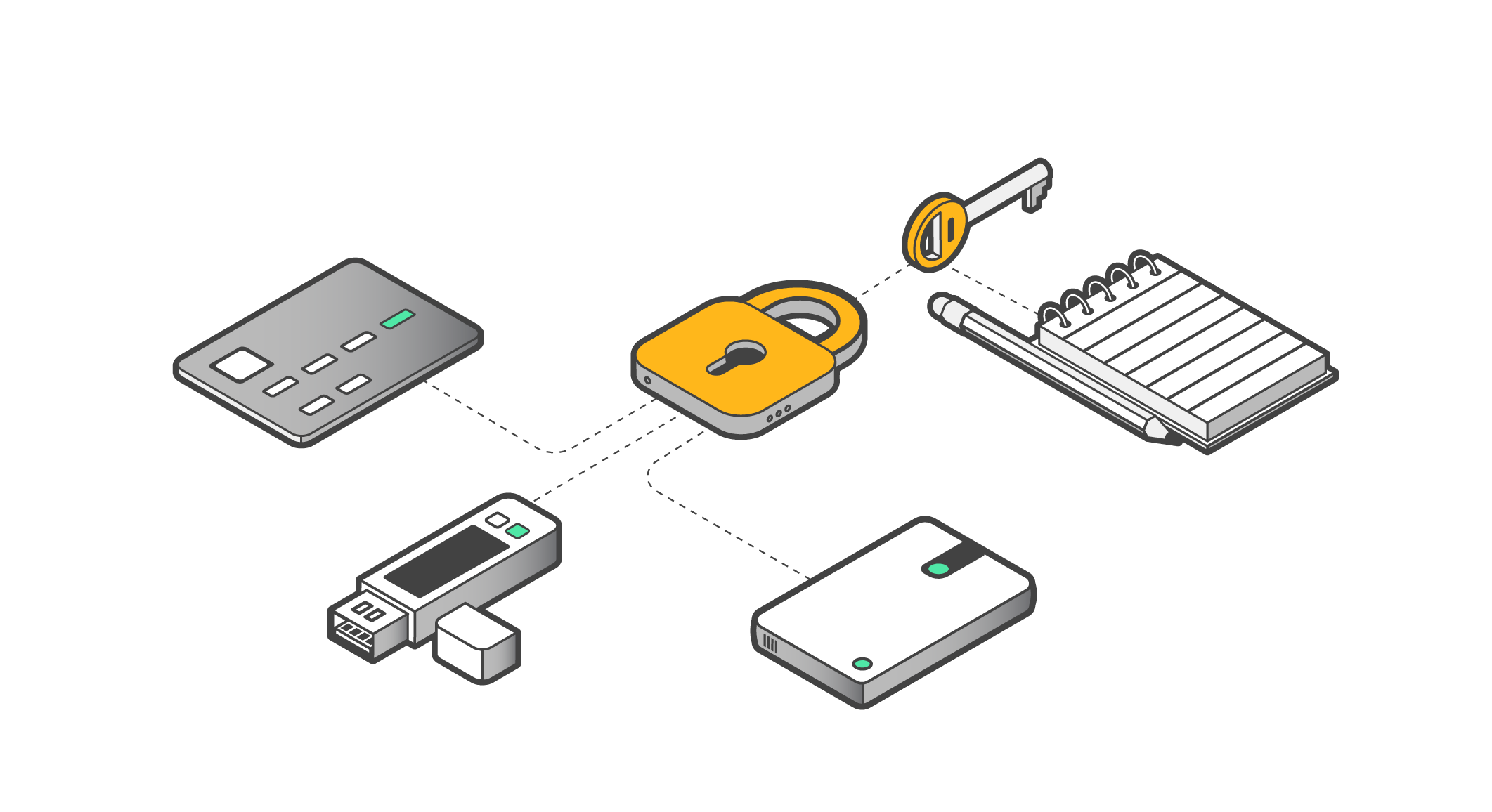
Hardware wallets are the most popular type of cold wallet. They were traditionally USB devices with tiny screens, but modern options like Tangem have simplified this dramatically. For anything more than a small amount, a cold wallet is what you want.
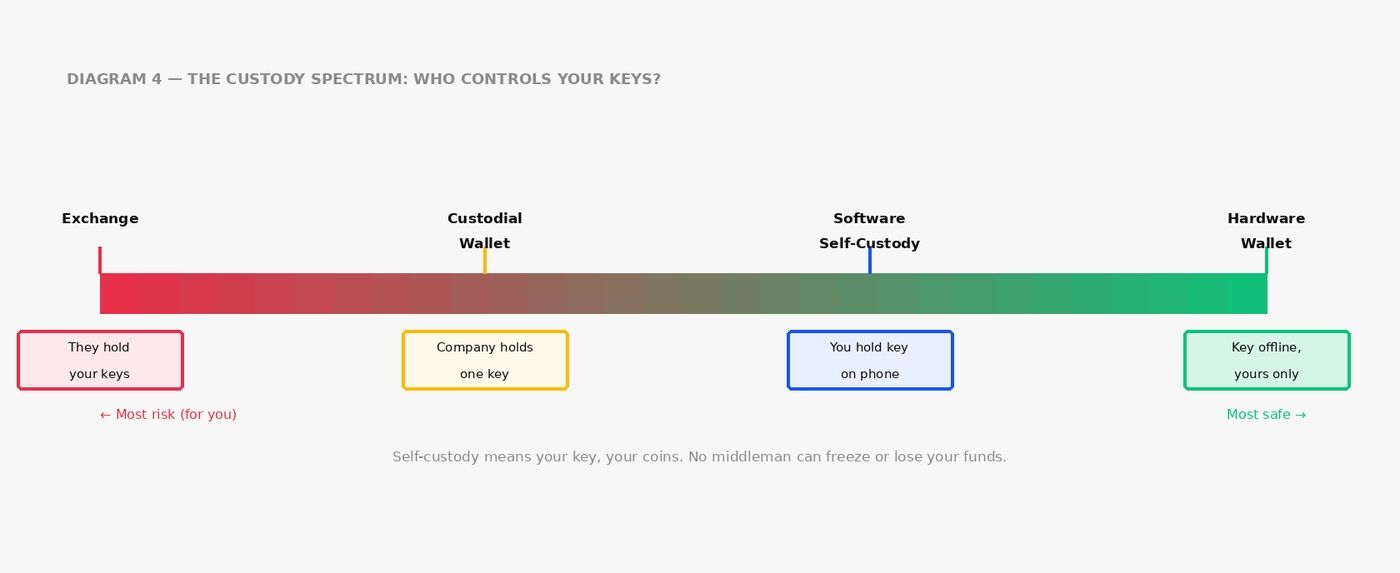
Custodial vs non-custodial: who controls your private keys?
There's a second important split in the wallet world: custodial vs non-custodial.
Custodial wallets
A custodial wallet means someone else holds your private key on your behalf. This is what exchanges do. It's also what some "wallet" apps do when they store your key on their servers. It's convenient and easy to use, but you're trusting another company with your funds. If they go down, you go down with them.
Non-custodial wallets
A non-custodial wallet means you hold your own private key. Nobody else has it. You are the bank. This is what "self-custody" means. It comes with more responsibility, but also more freedom. Nobody can freeze your funds, restrict your transactions, or lose your money through their own mistakes.
All the wallets reviewed in this guide are non-custodial (except exchange wallets, which we recommend avoiding for storage). That's the baseline for any wallet worth using.
How to pick the right crypto wallet as a beginner
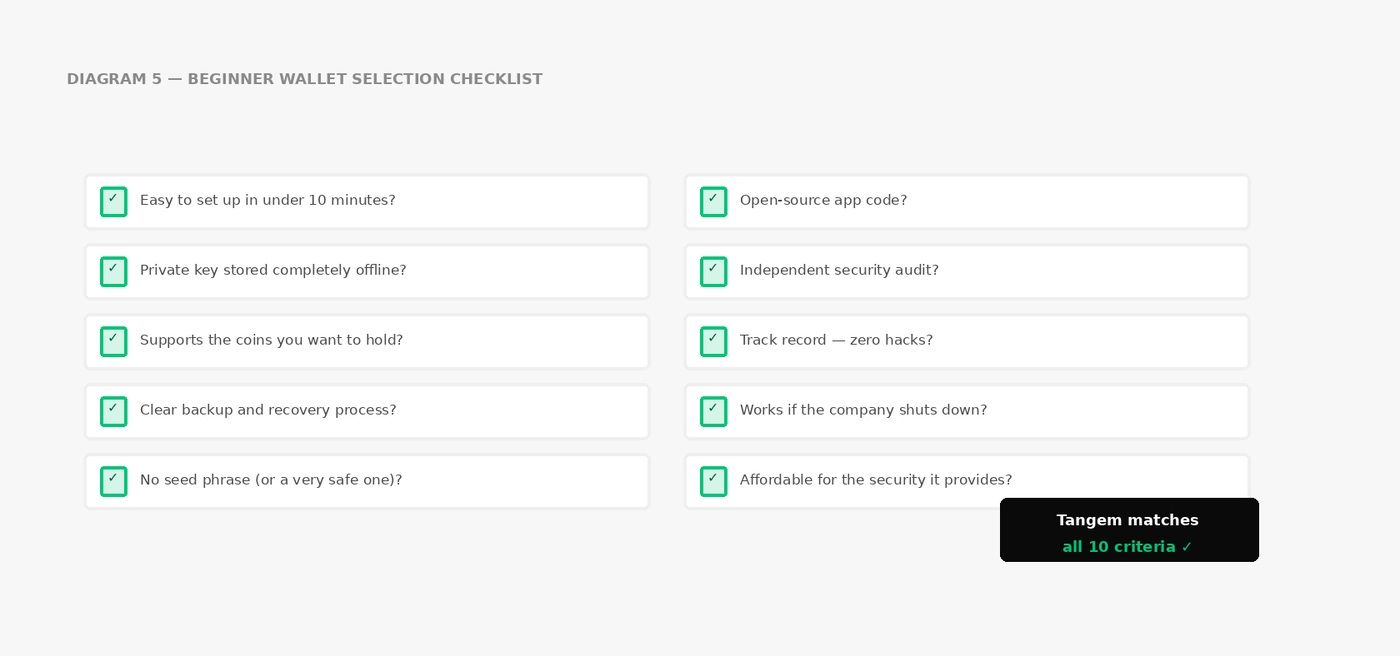
With dozens of wallets available, the choice can feel overwhelming. Here's what actually matters when you're just starting:
Ease of setup: Can you get started in under 10 minutes without reading a manual?
Security model: Is your private key stored offline? Who else could access it?
Coin support: Does it support the coins you want to hold?
Backup and recovery: What happens if you lose your phone or device?
Track record: Has the wallet been audited? Any known hacks or failures?
Cost: Hardware wallets cost money. How much are you willing to spend?
One thing to pay close attention to: how backup works. Most wallets use a seed phrase, a list of 12 to 24 random words that can be used to restore your wallet. If you lose those words, you lose your crypto forever. This is one of the most common ways beginners lose funds. Look for wallets that make backup as foolproof as possible.
Top 5 Crypto Wallets for Beginners in 2026
Trust Wallet
Hot Wallet / Mobile App
Trust Wallet is a free mobile app originally built for Ethereum and BEP tokens. Binance acquired it in 2018. It supports a large number of blockchains, has a built-in browser for decentralized apps, and is genuinely easy to use. For someone just learning how crypto wallets work, it's a decent starting point.
Pros
Free to download and use
Supports 100+ blockchains
Clean, simple interface
Built-in DeFi browser
Open-source code
Cons
Recovery requires a seed phrase
No hardware security element
Owned by Binance (centralization concern)
Phone loss or compromise = potential fund loss
MetaMask
Hot Wallet / Browser Extension + Mobile
Great for Ethereum and DeFi. A serious security risk if you're not careful. MetaMask is the most used crypto wallet in the world, with over 30 million monthly active users. It works as a browser extension, which makes it very easy to interact with decentralized applications on Ethereum, Polygon, and other EVM-compatible chains. If you want to explore NFTs, DeFi protocols, or any web3 app, MetaMask is often the first tool you need.
Pros
Industry-standard Ethereum wallet
Works with almost every DeFi app
Free and easy to install
Supports custom networks
Large community and support base
Cons
Browser extension = phishing magnet
Only works well on Ethereum-based chains
Not suitable for Bitcoin (BTC)
Seed phrase is your only backup
Malicious sites can trick you into approving bad transactions
Exodus
Hot Wallet / Desktop + Mobile
Exodus is known for its beautiful interface and good user experience. It works on desktop and mobile, supports a wide range of coins, and has built-in crypto exchange features. It's a strong contender for beginners who want something polished and all-in-one.
Pros
Excellent design and UX
Wide coin support (250+)
Built-in exchange
Desktop + mobile sync
24/7 human support
Cons
Not fully open-source (security concern)
Private keys stored on device — online risk
Seed phrase recovery required
Built-in exchange charges higher fees
Not suitable for large long-term holdings
Coinbase Wallet
Hot Wallet / Mobile + Browser Extension
This is different from having funds on the Coinbase exchange. Coinbase Wallet is a self-custody app where you control your keys. It's well-designed, supports multiple chains, and has good integration with DeFi and NFT platforms. For people already using Coinbase to buy crypto, this is the natural next step before a hardware wallet.
Pros
Easy to use for Coinbase users
Strong multi-chain support
Good DeFi and NFT integrations
Backed by a well-known company
Cloud backup option available
Cons
Still a hot wallet i.e., your keys are on your device
Cloud backup could be a risk if your cloud account is compromised
Seed phrase required for full recovery
Coinbase, as a company, is a regulatory target
Limited to what Coinbase supports long-term
Tangem: The best wallet for beginners overall
If you only take one thing from this guide, let it be this: for most beginners who want to actually own and protect their crypto, Tangem is the best wallet in 2026. Here's why.
Every software wallet reviewed above shares the same fundamental vulnerability: your private key lives on a device connected to the internet. That means it's always one compromised phone, one phishing click, or one data breach away from being stolen. A hardware wallet keeps your key completely offline. And among hardware wallets, Tangem is genuinely in a different category for simplicity.
Tangem hardware wallet
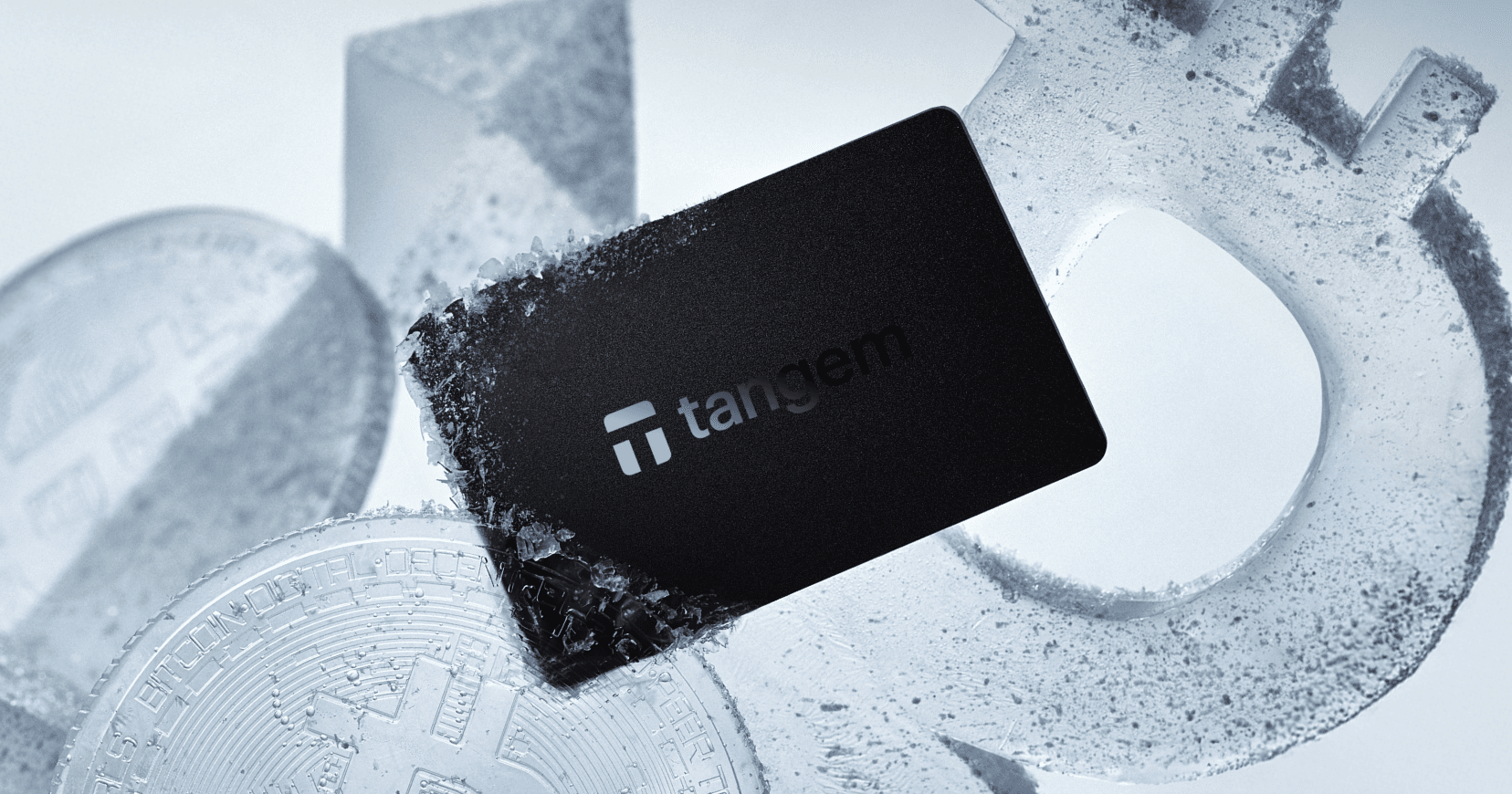
A credit-card-sized NFC wallet with no seed phrase, no cables, no screens, and a 3-minute setup. Your private key is generated and locked inside a Samsung-built CC EAL6+ secure chip. It never leaves.
No Seed Phrase: Backup is handled through physical cards, not a list of words you can lose or misplace.
CC EAL6+ rated secure element: The same security certification used in passports and banking cards. Independently audited.
TaptoSign: Just tap your Tangem card on your phone to approve transactions. No USB, no Bluetooth, no screen.
ZeroHacks: Over 7.5 million cards produced. Zero known security breaches in the company's history.
From $54.90: Cheaper than most hardware wallets. 25-year warranty. IP69K waterproof and dustproof.
The Tangem card contains a chip built by Samsung Semiconductors: the S3D350A/B Secure Element, certified to CC EAL6+. That's a security standard designed for military and government use, and it's now used in biometric passports. The chip generates your private key offline, stores it in tamper-resistant hardware, and uses it only to sign transactions within the chip. The key never appears anywhere else, not in the app, not on any server, not on your phone.
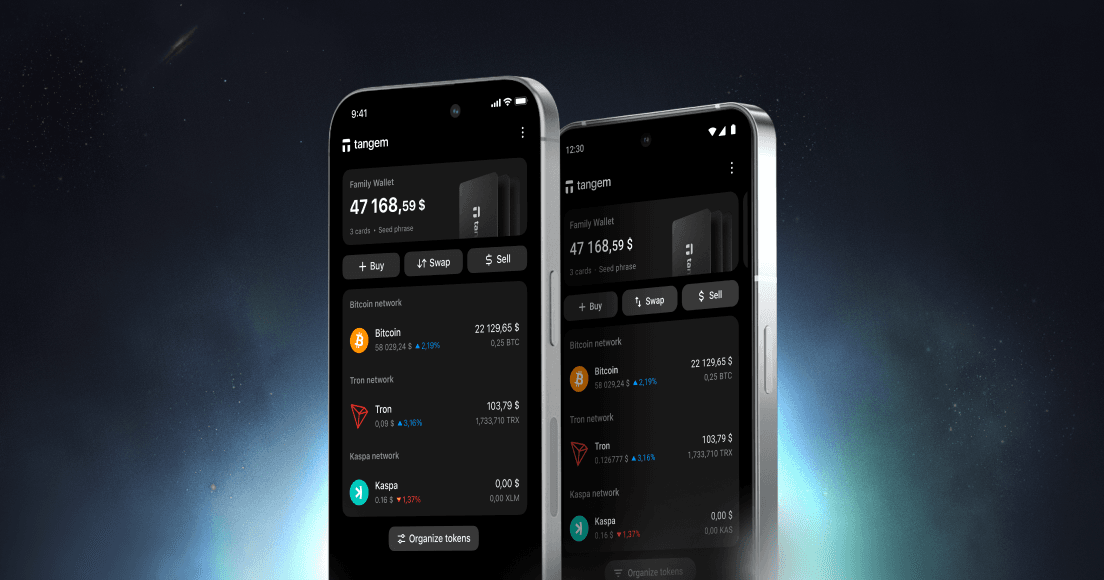
Tangem supports over 16,000 tokens across 85+ blockchains, including Bitcoin, Ethereum, Solana, XRP, Polygon, BNB Chain, Avalanche, Tron, and many more. The app also gives access to DeFi, token swaps, staking, and buying crypto directly. It's not just a storage device — it's a full crypto management tool.
Crypto Wallet side-by-side comparison
Wallet
Type
Key stored offline?
Seed phrase?
Cost
Best for
Tangem
Hardware
Yes — chip
Optional
~$54.90
Everyone
Trust Wallet
Hot / Mobile
No
Required
Free
Small amounts
MetaMask
Hot / Browser
No
Required
Free
Ethereum DeFi
Exodus
Hot / Desktop+Mobile
No
Required
Free
Desktop users
Coinbase Wallet
Hot / Mobile+Browser
No
Required
Free
Coinbase users
Security best practices for beginners
Owning a good wallet is only half the job. How you use it matters just as much. Here are the most important habits to develop early:
Move your crypto off exchanges
As soon as you buy, transfer to your own wallet. Exchanges are for buying, not storing. Every day your crypto sits on an exchange is a day you're trusting that company with your money.
Never share your private key or seed phrase
Nobody legitimate will ever ask for your private key or seed phrase. Not Tangem. Not Coinbase. Not any support agent. If anyone asks, it's a scam, full stop. Your seed phrase is the master key to your funds.
Store backup separately from your main card
If you use Tangem, your backup cards should be in a different physical location. A fire that destroys your home shouldn't also destroy your backup. The same goes for seed phrases; don't keep them on the same shelf as your hardware wallet.
Watch out for phishing
Phishing is by far the most common way people lose crypto. Fake wallet websites, fake support accounts on social media, and emails impersonating exchanges. Always check the URL. Always download apps only from official sources. Read Tangem's guide on securing your wallet.
Set up two-factor authentication everywhere
Any exchange account or crypto-related account should have 2FA enabled. Use an authenticator app (like Google Authenticator or Authy) rather than SMS, which can be SIM-swapped.
Frequently Asked Questions
Do I need a wallet to buy crypto?
Not to buy it, no. You can buy on an exchange, and it'll sit there. But to truly own your crypto and protect it from exchange failures, hacks, or freezes, you need your own wallet. Buying without a wallet is like earning cash and leaving it in the store's register.
Can I lose all my crypto if I lose my Tangem card?
Not if you've set up backup cards. Tangem is designed to be purchased as a 2 or 3-card set. Lose one card, use another. This is one of Tangem's biggest advantages over traditional hardware wallets and seed-phrase-based wallets; physical redundancy without the paper recovery risk
What's a seed phrase, and why is it dangerous?
A seed phrase is a list of 12 or 24 random words that can restore your wallet on any device. The danger is that anyone who finds or photographs your seed phrase can steal everything. It's the master key. Losing it permanently locks you out. Many beginners store it poorly (photos, notes apps, email drafts) and lose funds as a result. Tangem's seedless model eliminates this risk.
Is a free software wallet good enough?
For learning and small amounts, yes. For anything you can't afford to lose, no. A $55 hardware wallet is cheap insurance compared to losing hundreds or thousands of dollars to a hack, phishing attack, or phone failure. Think of it as the cost of actually owning your crypto.
Can Tangem see my crypto?
No. Tangem doesn't have access to your private key and never did. Your key is generated inside the chip and never transmitted to any server, including Tangem's. Not even Tangem could steal your funds if they wanted to. The app is also open-source, so anyone can verify this.
What if Tangem as a company shuts down?
Your funds would be completely safe. The Tangem app is open-source, meaning the community can maintain it independently. Your private key is on your card, not on any Tangem server. You'd still be able to access and move your funds using open-source tools even if the company disappeared tomorrow.
What coins does Tangem support?
Tangem supports over 10,000 tokens across 60+ blockchains, including Bitcoin, Ethereum, BNB Chain, Solana, XRP, Polygon, Avalanche, Tron, and many more. It's updated regularly through the app. Check the full list at tangem.com/en/cryptocurrencies.
Is Tangem waterproof?
Yes. The cards are rated IP69K, meaning they're dustproof and waterproof. They're also resistant to X-rays, electromagnetic pulses, and extreme temperatures. There are no moving parts to break. The only thing inside each card is the chip and an NFC antenna.
How does Tangem compare to Coinbase Wallet or Trust Wallet?
The core difference is offline security. Tangem stores your private key on a certified hardware chip, completely offline. Trust Wallet and Coinbase Wallet store your key on your phone, which is always connected to the internet and susceptible to malware, phishing, and device theft. For small daily amounts, software wallets are fine. For real holdings, hardware wins every time.
 + Up to $20 in BTC till Apr 6