


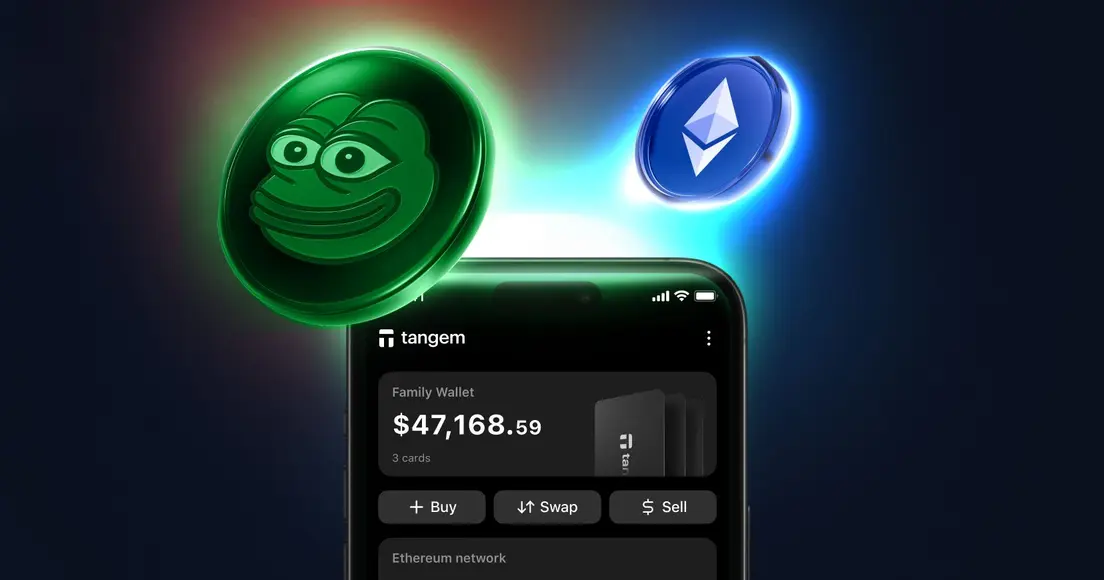
Staking Crypto: What It Is and How to Earn Rewards
Ця стаття доступна такими мовами:
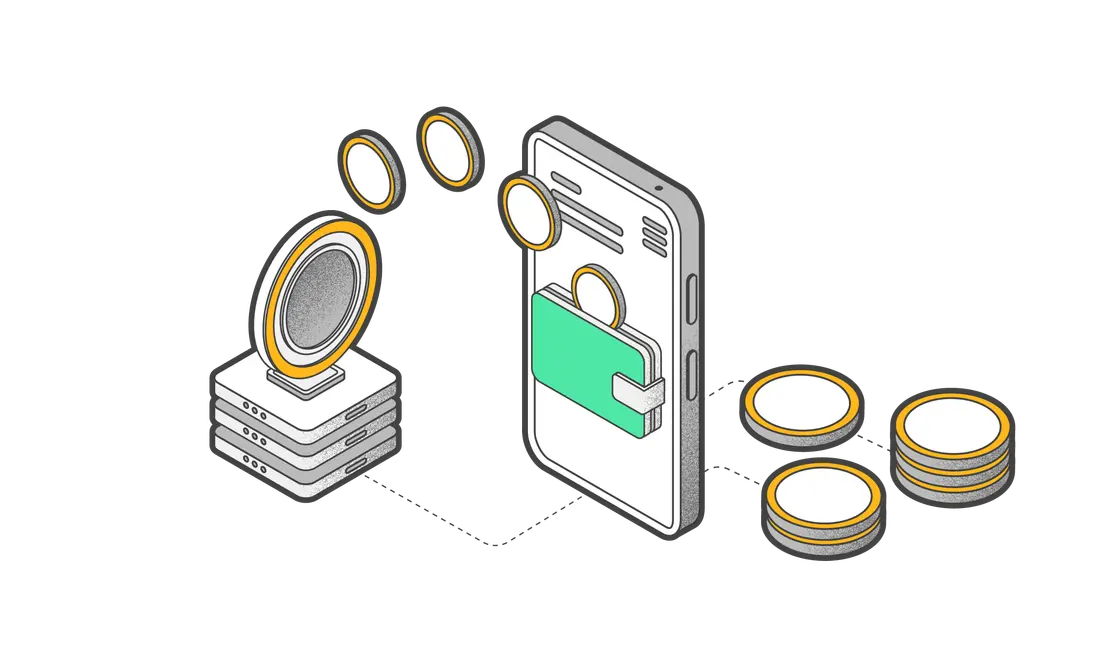
If you hold proof-of-stake coins like Solana, Cosmos, or Cardano, they can do more than sit in your wallet. Through staking, you put them to work securing the network and earn rewards in return. This guide explains how staking works, where you can do it, what it can realistically earn, and what can go wrong. It also shows how to stake directly in the Tangem app without handing your coins to anyone.
What is staking?
Staking means committing your coins to help run a proof-of-stake (PoS) blockchain. In return, the network pays you rewards, usually in the same coin you staked.
It's often compared to earning interest at a bank, but the mechanics are different. Nobody is lending your money out. The rewards come from the network itself and are paid to the people who help validate transactions and keep the chain secure.
How proof-of-stake works
On a proof-of-stake blockchain, validators confirm transactions and add new blocks. To become a validator, you lock up a certain amount of the network's coin as collateral. If you follow the rules, you earn rewards. If you cheat or go offline on certain networks, you can lose part of your stake (a process called slashing).
Running your own validator requires technical skill, servers that stay online around the clock, and often substantial capital. On Ethereum, for example, a solo validator needs 32 ETH. Most people don't do that. Instead, they delegate their coins to an existing validator. The validator does the technical work, you share in the rewards, and the validator takes a small commission. On most networks, your coins stay at your own address the whole time. You're assigning your stake, not sending your coins away.
Some networks, like Cosmos and TRON, use variants where coin holders vote for validators. The idea is the same: you back a validator with your stake and earn a share of its earnings.
How much can you earn from staking?
It depends on the network. Annual rates usually range from a few percent to the low teens. In the Tangem app at the time of writing, for example, estimated rates run from around 5% for SOL to around 14% for ATOM.
A few things affect what you actually earn:
- Network rules. Each blockchain sets its own reward rate, and it changes as more or fewer people stake.
- Validator commission and performance. A validator that charges a high fee or misses blocks will pay you less.
- Token price. Rewards are paid in the coin you staked. If the price drops 30% in a year, a 7% reward won't make up for it in dollar terms.
- Fees. Every stake, unstake, and claim is a blockchain transaction with a network fee. On small amounts, fees can eat a big part of your rewards.
Staking rates are estimates, not guarantees. Be wary of any platform that promises fixed, very high returns. That's one of the most common signs of a scam.
If you want to understand how these percentages are calculated, see our guide to APR and APY in crypto.
Where to stake crypto
You have three main options. The biggest difference between them is who controls your coins while they're staked.
1. Staking in a self-custodial wallet
Some wallets let you delegate to validators directly from the app. Your coins stay in your wallet, under your keys, and you sign every staking transaction yourself. This is often called native staking.
This is the option that keeps you in full control. You choose the validator, you can see your stake on the blockchain, and no middleman exchange could freeze withdrawals or go bankrupt. The Tangem app supports native staking. More on that below.
2. Staking on a centralized exchange
Many exchanges offer staking with a few clicks. Some have "fixed" or "locked" products, where your coins are tied up for a set period, and "flexible" ones, where you can withdraw any time, usually for a lower rate.
It's convenient, but there's a trade-off: you're giving the exchange custody of your coins. The exchange takes a stake on your behalf, keeps a cut of the rewards, and controls when you can withdraw. If the exchange gets hacked, freezes accounts, or fails, your staked coins are at risk.
3. DeFi and liquid staking
DeFi protocols allow you to stake via smart contracts. With liquid staking, for example, you deposit coins into a protocol and get a token back that represents your staked position. You can trade or use that token elsewhere while your original coins earn rewards.
This adds flexibility, but also extra layers of risk: smart contract bugs, the liquid token losing its peg to the original coin, and the general complexity of DeFi. You can connect a self-custodial wallet like Tangem to these protocols through WalletConnect, so your keys stay with you, but the protocol's risks still apply.
How to stake crypto in the Tangem app
Native staking is built into the Tangem app. You delegate directly to validators on-chain, and your private keys never leave your Tangem card or ring (or your device, if you use the Tangem mobile wallet). Staking is powered by Yield.xyz and P2P.org, two established staking infrastructure providers.
Which coins can you stake in Tangem?
Currently, you can stake:
- Cardano (ADA)
- Cosmos (ATOM)
- BNB (BNB)
- Ethereum (ETH)
- GRAM (formerly TON)
- Polygon (POL, on Ethereum)
- Solana (SOL)
- TRON (TRX)
The list keeps growing. To see every supported coin and its current estimated rate in the app:
- Tap or swipe up on the search bar at the bottom of the home screen.
- Open the Earn tab.
- In the All types filter, select Staking.
How to stake
- Open the Tangem app and select the coin you want to stake on the home screen.
- Tap Stake.
- Read the terms, including the estimated rate and the unbonding period, then tap Stake.
- Enter the amount you want to stake, or stake your full balance, and tap Next.
- Keep the suggested validator or choose another one from the list.
- Review the details, tap Stake, and sign the transaction with your Tangem wallet.
Your stake and rewards then appear in the Native staking section of the coin's page.
How to unstake
- Open the staked coin and tap Native staking.
- Select the validator under Your stakes.
- Enter the amount, tap Next, review, and tap Unstake. Then sign the transaction.
- Wait for the unbonding period to end. Then tap Unstake again in Your stakes and tap Withdraw to move the coins back to your available balance.
A few network-specific things to know:
- Unbonding periods differ. TRON, for example, takes 14 days. The app shows the period for each coin before you stake.
- ADA works differently. Your whole ADA balance is staked, and new ADA you receive is staked automatically. Your ADA stays unlocked, so you can still send or swap it.
- Minimums apply on some networks. For example, SOL requires about 1 SOL and ETH requires 0.01 ETH.
- Rewards are handled differently per network. On some networks, rewards are automatically added to your stake. On others, you claim them manually from the Rewards section.
For full details on each coin, see the Staking section of the Help Center or our step-by-step guide to staking crypto in Tangem.
Choosing a validator
The app suggests validators, but you can pick a different one. Things worth checking are the commission, uptime, and how long the validator has been running. Spreading your stake across multiple validators can also reduce risk. Read more in how to pick a reliable staking validator. For Solana, you can also delegate to Tangem's own validator.
The main risks of staking
Staking is one of the simpler ways to earn on your crypto, but it isn't risk-free.
- Price drops. Rewards are paid in the staked coin. If its price falls, your total value can drop even as your coin balance grows.
- Lock-up and unbonding periods. On many networks, you can't access your coins immediately after you unstake. If the market moves sharply, you may have to wait days before you can sell.
- Slashing. On some networks, a validator that misbehaves or goes offline can lose part of the stake delegated to it.
- Fees. Network fees for staking, unstaking, and claiming can outweigh the rewards on small amounts.
- Custodial risk. If you stake through an exchange, you depend on that exchange staying solvent, secure, and willing to process withdrawals.
- Smart contract risk. DeFi and liquid staking rely on code that can have bugs or be exploited.
- Scams. Projects promising unusually high, fixed returns are a classic red flag. If a yield sounds too good to be true, it probably is.
A few habits help: stake only coins you're comfortable holding long term, don't put everything with one validator or on one network, and always read the terms (rate, unbonding period, minimums) before you sign.
Staking vs. mining
Both are ways blockchains reward people for securing the network, but they work very differently. Mining (used by proof-of-work chains like Bitcoin) requires specialized hardware and a lot of electricity. Staking requires only the coins themselves. With delegation, you can start with a small amount, and there's no equipment to buy or maintain.
That's also why you can't natively stake Bitcoin: it runs on proof-of-work, not proof-of-stake.
Conclusion
Staking lets you earn rewards on proof-of-stake coins by helping secure the network. Returns vary by network and aren't guaranteed, and the real trade-offs are price risk, lock-up periods, and who holds your coins while they're staked.
If you want to earn without giving up custody, staking from a self-custodial wallet is the most direct route. In the Tangem app, you can stake supported coins in a few taps, choose your validator, and keep your keys with you the whole time.
Tangem AG provides only hardware wallets and non-custodial software solutions for managing digital assets. Tangem is not regulated as a financial services provider or cryptocurrency exchange. Tangem does not hold, custody, or control users’ assets or transactions. Crypto transaction services are provided by third-party providers. Tangem provides no advice or recommendation on the use of these third-party services.
Staking and yield generation services are provided by third-party blockchain protocols and decentralized finance (DeFi) platforms. Tangem provides non-custodial access only. Earnings from staking are not guaranteed, may fluctuate significantly, and depend entirely on network or protocol conditions. Users participate at their own risk.
Making money from staking: FAQ
-
Staking means committing your coins to help secure a proof-of-stake blockchain. In return, you earn rewards from the network, usually paid in the same coin.
-
It depends on the network. Annual rates usually range from a few percent to the low teens, and they change over time. Rates are estimates, not guarantees, and the coin's price can rise or fall regardless of your rewards.
-
No. Most people delegate their coins to an existing validator. You keep your coins at your address and share in the validator's rewards, minus its commission.
-
Yes. The Tangem app has built-in native staking for ADA, ATOM, BNB, ETH, GRAM, POL, SOL, and TRX. You delegate directly to validators, and your private keys stay in your Tangem wallet.
-
Your private keys never leave your Tangem card or ring, and you sign every staking transaction yourself. Staking still carries network risks, such as price volatility, unbonding periods, and slashing on some networks, but you don't hand custody of your coins to anyone.
-
You can request to unstake at any time, but many networks have an unbonding period before your coins become available again. The Tangem app shows the period for each coin before you stake.
-
Not natively. Bitcoin uses proof-of-work, and stablecoins like USDT and USDC don't have native staking rewards. Any yield offered on them comes from a different kind of product with different risks.
-
Price drops, lock-up and unbonding periods, slashing, network fees, and, if you stake through an exchange or DeFi protocol, custodial or smart contract risk.


Не пропустіть 

Інші статті

