
 EXTRA −10%


Crypto Staking in 2026: How and Where to Earn
Ця стаття доступна такими мовами:
Crypto staking is the act of locking coins in a Proof-of-Stake blockchain to support network security and transaction validation, and receiving additional cryptocurrency as rewards. That's the core mechanic. Everything else in this guide builds on it.
If you've been holding crypto and wondering whether it can do more than sit there, staking is the first answer worth understanding. It generates yield from assets you already own. Trading, mining, and savings accounts work differently.
What Is Crypto Staking?
In a Proof-of-Stake (PoS) network, validators compete to generate new blocks. A larger stake increases a validator's chance of being selected to validate a block and receive the associated reward. Participants who have committed capital to the system receive the rewards. Mining hardware does not decide the outcome.
Compared with Proof-of-Work mining, staking requires no expensive hardware, no high electricity costs, and no specialized technical knowledge. The barrier to entry is lower. For example, a Tangem user can delegate 1 TRX on TRON, its stated minimum. After requesting an exit, the stated unbonding period is 14 days. Simply holding crypto, by contrast, means keeping it in a wallet without committing it to network validation. It generates no staking rewards. Bitcoin is the clearest example: it uses Proof-of-Work, not Proof-of-Stake, so it cannot be staked at all.
Most beginners don't run validator infrastructure. That's fine. Delegated Proof-of-Stake lets you delegate your coins to an existing validator with minimal or no entry threshold. You benefit from the validator's block rewards proportionally, without running any servers yourself.
How Does Staking Work in a Self-Custody Wallet?
Self-custody means you, not an exchange or intermediary, control the private keys. Transactions are signed locally on your device and broadcast to the blockchain. You'll also see the terms "non-custodial" and "self-hosted" used for the same model; they all describe the same arrangement. Non-custodial staking keeps that key control with you throughout the staking process. Your coins are delegated to a validator, but your wallet retains the signing authority. No platform holds your funds.
Here's why that distinction matters: when you stake through an exchange, the exchange controls the keys. If the platform is hacked, becomes insolvent, or faces regulatory action, your staked assets are caught in that process. Self-custody removes that counterparty risk. The tradeoff is responsibility. You manage your own key backups. If you lose access to your wallet and have no recovery method, the funds are gone. Set up your recovery method carefully.
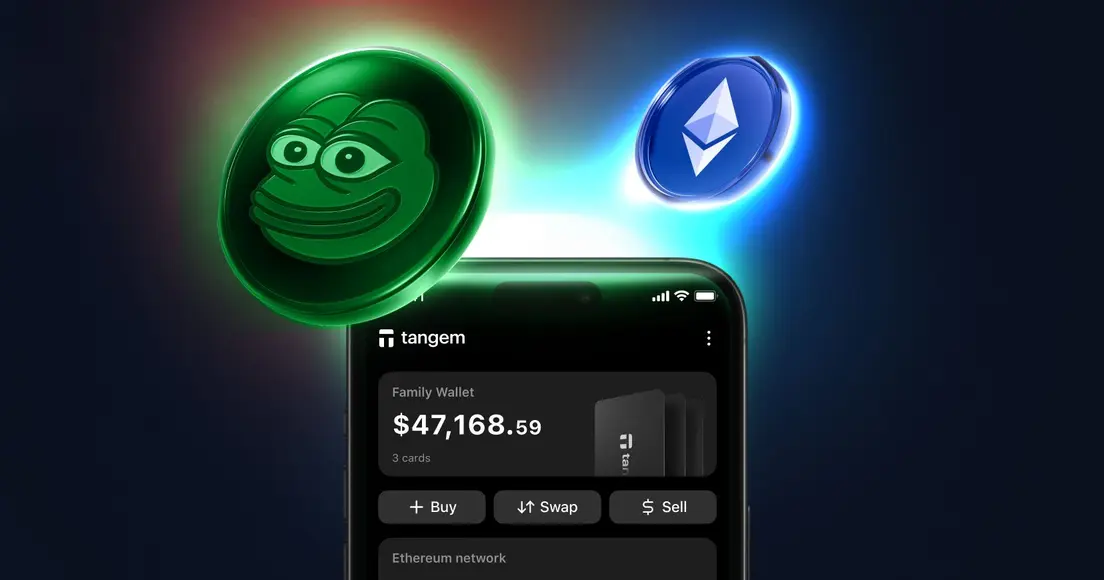
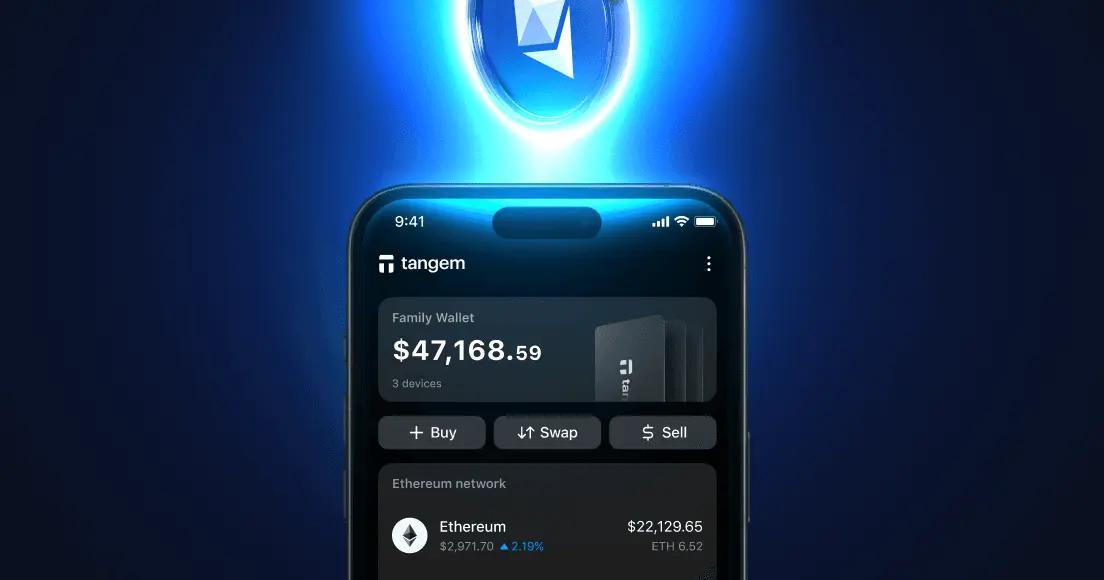
Tangem Wallet supports native in-app staking for Solana (SOL), TRON (TRX), Cosmos (ATOM), Polygon (POL), BNB Smart Chain (BNB), Cardano (ADA), and TON (Toncoin). Staking through the wallet is non-custodial: Tangem provides access but does not hold your funds or guarantee earnings. The app displays the current APR and APY for each validator, lets you select a validator, and guides you through the confirmation step with a tap of a physical card. A TRON holder with 1 TRX meets the stated minimum. An exit request then brings a stated 14-day unbonding period.
Where Can You Stake? Exchange, Wallet, or Validator
Three routes exist. Each handles custody differently.
| Route | Who holds the keys | Recovery help | Main risk |
|---|---|---|---|
| Exchange (custodial) | The exchange | Yes | Platform hack, insolvency, regulatory action |
| Self-custody wallet | You | No | Key loss, user error |
| Validator (direct) | You | No | Technical complexity, slashing |
Exchange staking is the simplest entry point. You deposit coins, the exchange handles the validator relationship, and rewards appear in your account. The cost is custody: the exchange controls the keys, making your funds subject to whatever happens to that platform.
Self-custody wallet staking keeps your keys with you. You choose a validator inside the app, delegate your stake, and the wallet signs transactions locally. This is the middle path for most users: accessible but non-custodial.
Running a validator directly means operating a node that verifies transactions and maintains network integrity. It's technically demanding and usually requires significant capital. Ethereum validator operation, for instance, requires at least 32 ETH. Most retail stakers delegate rather than operate. Self-custody trades the platform safety net for direct control. That's the honest tradeoff.
How to Start Staking (Step by Step)
Before you stake anything, four terms determine your actual experience:
- Lock-up period: how long your coins are committed to the validator
- Unbonding period: the delay between requesting to unstake and being able to move your coins
- Warmup period: the time before your stake begins earning rewards
- Validator: the node operator performing validation on your behalf
These matter because unstaking is not instant when an unbonding period applies. You can't sell or transfer staked tokens until the unbonding completes, and rewards don't accrue during that window. If you might need liquidity quickly, check the unbonding period before committing. A Tangem user with 1 TRX starts at the stated minimum. Moving those coins again takes 14 days after the request is made.
Here's the practical sequence for staking in a self-custody wallet like Tangem:
- Choose a supported token and verify you hold enough to meet the network minimum.
- Open the staking section and review the current APR, unbonding period, and available validators.
- Select a validator. Some wallets recommend specific validators; Tangem's Solana staking is provided through Yield.xyz.
- Enter the amount you want to stake.
- Confirm the transaction with a physical card tap in Tangem's case.
- Monitor rewards in the app and claim or restake according to the network's reward schedule.
That's the delegated Proof-of-Stake route. No server setup, no minimum beyond the network's own threshold.
What Determines Your Staking Rewards
APR (Annual Percentage Rate) is the expected yearly return from staking. It's the number you'll see most often when comparing validators or networks. Reward rates are variable, not fixed. The stated rate can differ by network and by individual validator. A validator with a lower commission passes more rewards to delegators; one with higher uptime earns rewards more consistently.
A validator's chance of being selected to validate a block increases with the total amount of coins staked with it. That creates a network effect: larger validators win blocks more frequently but distribute rewards across more delegators. Token price volatility can entirely outweigh staking rewards. If you stake a token earning 8% APR and the token's price drops 40% over the same period, the net position is negative regardless of the yield. Staking rewards are denominated in the token you stake, not in dollars.
Token inflation is the same issue from another angle. Networks that issue large numbers of new tokens as staking rewards dilute the value of existing tokens. A high APR on a highly inflationary token may look attractive but may perform poorly in practice.
Staking by Coin and by Use Case
Network terms differ materially across chains. A reader comparing options should check the network-specific reward rate, unbonding period, reward schedule, and any minimum before committing assets.
Tangem's stated requirements give a useful illustration of how much these vary:
| Network | Minimum | Unbonding period | Reward behavior |
|---|---|---|---|
| TRON (TRX) | 1 TRX | 14 days | Manual claim |
| BNB Smart Chain | 1 BNB | Varies by network | - |
| Cardano (ADA) | None (via P2P.org) | 0 days | Rewards accrue by epoch |
| TON (Toncoin) | 10.2 TON | Varies by network | - |
| Solana (SOL) | None stated | Varies by network | Automatic compounding |
Solana staking compounds automatically; Tron staking requires manual reward claims. That difference affects how often you need to interact with your position.
Stablecoin yield is a separate mechanism. Lending, liquidity provision, and protocol incentives generate yield on stablecoins. It does not come from Proof-of-Stake validation. Tangem's Yield Mode is a native Aave integration that supplies supported assets to Aave liquidity pools, generating yield through aTokens. Yield Mode supports stablecoins and select Aave-compatible tokens; additional assets are planned. To see the current list, open the Earn tab in the Tangem app and filter by Yield Mode. Funds remain fully liquid: no lock-up periods, no exit penalties.
Tangem does not charge a Yield Mode fee; the APY depends on Aave rates and real-time market supply and demand. This is not staking. It's a different yield mechanism for a different asset class.
Is Staking Safe?
Staking carries real risks. None of them are reasons to avoid it entirely, but each deserves a clear look before you commit.
Market risk is the biggest one for most people. Token price volatility can reduce the value of staked assets, while an unbonding period prevents a quick exit. You can earn rewards while losing value simultaneously.
Liquidity risk follows directly. Staked tokens cannot be transferred or sold until they're unstaked and unbonded. If you need to move funds during an unbonding period, you can't.
A 1 TRX position meets Tangem's stated minimum, but leaving it takes 14 days after an exit request is submitted. Don't use funds you expect to need during that time.
Slashing is a penalty applied when a validator behaves maliciously or goes offline for extended periods. It can reduce staked funds. Choosing a reliable validator reduces this risk. Tangem uses Yield.xyz for slashing-protection coverage on native staking positions.
- Custody risk depends on your route. Self-custody places key-management responsibility on you. Exchange custody creates platform counterparty risk. Neither is risk-free; they're different risk profiles.
Staking rewards are not guaranteed. Rates vary with network participation, validator performance, and token economics. The APR shown at the time you stake is not a promise.
Поширені запитання
-
No. A physical card tap is required to authorize a staking transaction, even when biometrics are enabled. The app alone cannot move funds.
-
It depends on the network. Cardano has no stated minimum when staking via P2P.org through Tangem. TRON requires as little as 1 TRX. TON requires a minimum of 10.2 TON. Running your own Ethereum validator requires 32 ETH, but delegated staking on most networks has a much lower bar. Check the specific network's requirements before choosing an asset to stake.
-
The difference is custody. In the custodial model, an exchange controls your private keys, which means your staked assets are subject to whatever happens on that platform: hacks, insolvency, or regulatory action. A self-custody wallet keeps the keys with you. The exchange is simpler; the wallet gives you direct control and removes the platform as a point of failure.
-
No. Staking rewards are variable, not fixed. Rates shift with network participation, validator performance, commissions, and protocol parameters. The APR displayed when you stake reflects current conditions, not a locked-in return. Token price changes and inflation can also affect the real value of rewards, even when the nominal APR looks attractive.
-
Three risks matter most. Market risk: the token's price can fall while your coins are locked, and an unbonding period can prevent a quick exit. Slashing risk: a validator that misbehaves or goes offline can have a portion of staked funds reduced as a penalty. Liquidity risk: staked tokens can't be transferred or sold until unstaking and unbonding complete. The custody route determines a fourth risk: platform counterparty risk for exchange staking or key-management responsibility for self-custody.
-
No. Bitcoin uses Proof-of-Work, not Proof-of-Stake, so it cannot be staked. Staking is a Proof-of-Stake mechanism, and Bitcoin's network design doesn't include it.


Не пропустіть 
Інші статті

