


 Переходьте на seedless. Знижка 30% з SWITCH30 до 02 лист.
5 Best Crypto Wallet Alternatives to Binance in November 2026
- Why should I move my crypto off Binance (or any exchange) after this hack?
- What are the safest overall alternatives to holding crypto on Binance?
- Which software (hot) wallets work best for everyday use instead of Binance?
- Is a hardware wallet really safer than Binance after this incident?
- What about multi-chain or mobile-first wallets for people used to Binance’s features?
- How do I choose the right wallet and move funds safely?
- Will self-custody wallets let me trade or earn yield like on Binance?
- Can I still trade or use DeFi without leaving funds on an exchange?
- Which self-custody wallets let me buy and sell crypto with fiat as I did on Binance?
- What will I miss about Binance's on- and off-ramps after I move to self-custody?
- Does Binance covering the losses mean it’s safe to leave funds there again?
The October 29, 2026 security incident at Binance, where attackers compromised hot wallets and withdrew roughly $6.3 billion in assets, has left many users questioning the safety of keeping funds on centralized exchanges.
Binance has pledged to cover losses via its SAFU fund and treasury, frozen about $3 billion in stolen assets, and aims to restore withdrawals in phases. Still, the event reinforces a core crypto principle: not your keys, not your coins.
We've provided clear answers to the questions you might be asking right now.
Why should I move my crypto off Binance (or any exchange) after this hack?
Centralized exchanges hold user funds in custodial wallets they control. Even with strong security and insurance funds, a single breach can quickly drain hot wallets. Self-custody wallets put the private keys in your control, so no exchange-level compromise can move your assets without your approval. Move long-term holdings off exchanges; keep only what you need for trading.
What are the safest overall alternatives to holding crypto on Binance?
Hardware (cold) wallets are the gold standard for security. Top options in 2026 include:
- Tangem Wallet
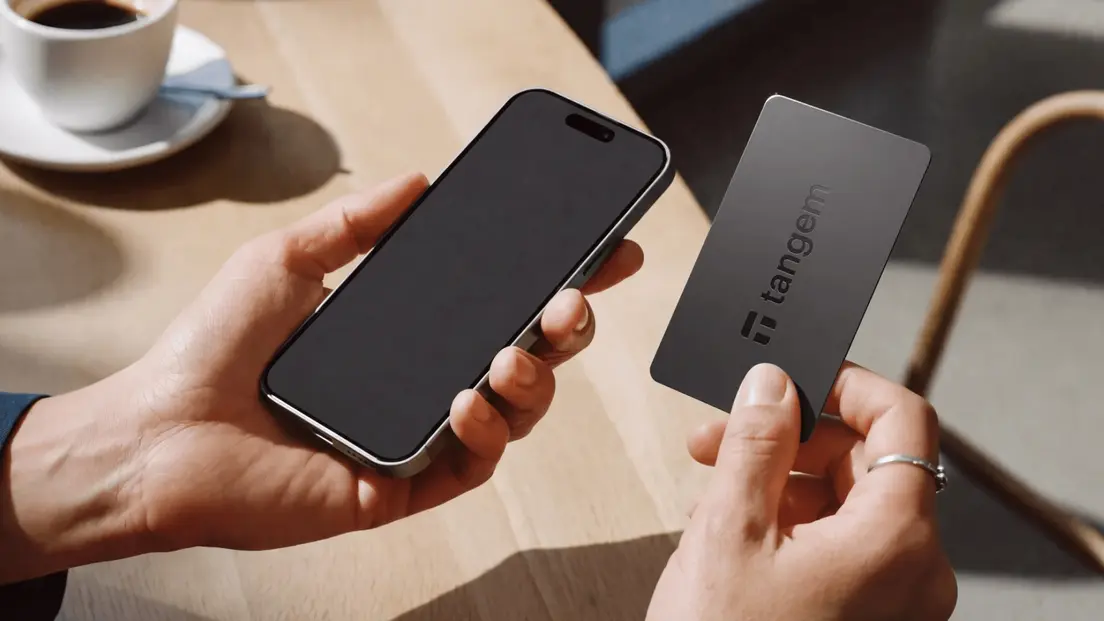
Tangem Wallet is an NFC card with an EAL6+- certified secure element that generates and stores the private key; the key never leaves the secure element. It supports over 16,000 assets across 91+ networks. The default setup is seedless. Extra cards act as backups, and a recovery phrase is optional. A two-card set costs $54.91. A three-card set costs $62.91.
- Tangem Ring
Tangem Ring puts the same security in a wearable form. The body is hypoallergenic zirconia ceramic with an IP69K rating. It weighs 4 grams and carries a 25-year guarantee. The ring has no battery. Your phone's NFC field powers it. You tap the ring on your phone and confirm with an access code or biometrics in the app. A set with two backup cards costs $160. Sizes range from US 8 to 13. See Tangem Ring.
- OneKey Pro
OneKey Pro uses four EAL 6+ secure elements. Its firmware is open source. The device has a 3.5-inch touchscreen and fingerprint unlock. It connects over USB-C or Bluetooth. Air-gapped QR signing keeps the device offline during transactions. Each send takes a few more steps.
- Foundation Passport Prime
Passport Prime is a premium air-gapped wallet. It signs over QR codes and runs open-source KeyOS with sandboxed apps. The device has a large color touchscreen and a secure element. It supports Bitcoin only. An app lets owners test the device's random number generator. Passport Prime costs $565, the highest price on this list.
- imKey
Incubated by the imToken team, imKey is a portable hardware wallet device that retails for $109.99 USD. It features a bank-grade CC EAL6+ secure element chip with anti-tamper mechanisms that physically destroy keys if an intrusion is detected.
These devices keep keys offline and require physical confirmation for transactions, making remote hacks nearly impossible.
Which software (hot) wallets work best for everyday use instead of Binance?
For convenience and DeFi/dApp access while still controlling your keys:
- Tangem Mobile Wallet: A free self-custody wallet on iOS and Android. You can send, receive, swap, and stake. Tangem has no access to your keys and cannot freeze your assets. Over 90 blockchains supported. Back up private keys via a seed phrase, iCloud or Google Drive, or a Tangem card or ring.
- MetaMask: Leading browser + mobile wallet for Ethereum and EVM chains; pairs well with hardware wallets.
- Phantom: Excellent for Solana-first users with growing multi-chain support.
- Rabby: Strong for active DeFi users
These are free and non-custodial, allowing you to interact with decentralized finance without leaving funds on an exchange.
Is a hardware wallet really safer than Binance after this incident?
Yes. Binance’s breach involved hot wallets connected to the internet and internal systems. Hardware wallets generate and store keys offline; transactions are signed on the device itself. No wallet is 100% risk-free, but the attack surface is far smaller than a major exchange.
What about multi-chain or mobile-first wallets for people used to Binance’s features?
- Tangem: Polished mobile experience with built-in swaps and broad asset support; beginner-friendly. Good for those who dislike managing seed phrases.
- Zengo: Seedless MPC (multi-party computation) recovery, mobile-focused.
- Exodus: similar multi-chain options — Useful for cross-chain trading and dApps.
Avoid relying solely on a wallet closely tied to a large exchange if your goal is independence.
How do I choose the right wallet and move funds safely?
- Decide based on needs: cold storage for large/long-term amounts; hot wallets for frequent use.
- Download only from official sites/app stores.
- Write down and securely store your seed phrase offline (never digitally).
- Start with a small test transfer.
- Once withdrawals resume on Binance, move the bulk of your assets.
- Enable any available 2FA, biometrics, or passphrase protections.
Will self-custody wallets let me trade or earn yield like on Binance?
Yes. Many do via built-in swaps, staking, or connections to decentralized exchanges and staking protocols. Tangem also lets you swap assets right in the app through integrated providers. Stablecoin swaps, such as USDC to USDT, have 0% commission.
Can I still trade or use DeFi without leaving funds on an exchange?
Yes. You can withdraw your assets to a non-custodial wallet and connect it to decentralized exchanges. Tangem’s enhanced WalletConnect feature, you can fully trade and use DeFi without ever leaving funds on an exchange: simply connect your wallet to thousands of dApps across Solana and 40+ EVM networks (Uniswap, Aave, Jupiter, etc.), and review the clear transaction simulation and warnings. Your private keys never leave the secure environment, so you keep true self-custody while still swapping, lending, staking, and interacting with protocols.
Which self-custody wallets let me buy and sell crypto with fiat as I did on Binance?
Tangem Wallet has built-in buy and sell. Tap Buy to purchase with a card, bank transfer, or Apple Pay through Mercuryo, MoonPay, Simplex, or Unlimit. Tap Sell to cash out to your bank account or Visa card through MoonPay. The crypto goes straight to your wallet. Providers run KYC and set fees; availability varies by country and token.
What will I miss about Binance's on- and off-ramps after I move to self-custody?
You will miss the P2P marketplace. No non-custodial wallet has P2P trading, and fiat access is provided through on-ramp and off-ramp providers.
You will also lose the single account with many local payment methods. Each provider has its own KYC, limits, and supported countries. Cashing out to a bank runs through one provider today, MoonPay, so a country that MoonPay does not serve has no in-app off-ramp.
Tangem Pay covers spending. It is a Visa card funded with crypto and U.S. bank transfers via ACH and Fedwire.
Does Binance covering the losses mean it’s safe to leave funds there again?
Binance has pledged to make users whole via SAFU and treasury (reportedly ~90% already covered as of Oct 31). This reduces the risk of immediate loss, but the core issue remains: you still rely on their security, systems, and ability to process withdrawals. Most voices on X treat this as a temporary fix, not a reason to abandon the “not your keys, not your coins” rule for long-term holdings.
The Binance incident is a reminder that even the largest platforms carry counterparty risk. Hardware wallets from Tangem give most users the best balance of security and practicality in 2026. Always verify official sources, keep software updated, and never share your seed phrase. Your keys, your crypto.