Mude para seedless. 30% OFF com SWITCH30 até 21 out.
Como migrar SEI do Cosmos para EVM sem perder seus fundos
A SEI encerrou o suporte ao Cosmos. Veja como garantimos que você pudesse migrar facilmente.
Este artigo está disponível nos seguintes idiomas:
No início de 2026, a SEI, uma blockchain de alta performance, passou por uma grande reestruturação. O projeto desativou um dos dois sistemas técnicos em que operava, chamado Cosmos, e consolidou tudo em um único padrão, o EVM. Para quem usava SEI em exchanges centralizadas, a transição foi automática. Já para usuários de carteiras de autocustódia, ou seja, quem guarda suas próprias chaves, foi necessário um passo manual.
Neste artigo, explicamos o que aconteceu, por que aconteceu, o que a Tangem fez para garantir que nenhum usuário ficasse para trás e como migrar seu SEI caso ainda não tenha feito isso.
O que é SEI e por que ela funcionava em dois ambientes?
A SEI é uma blockchain Layer 1, ou seja, uma rede independente como Ethereum ou Solana, com suas próprias regras, validadores e infraestrutura. Ela foi lançada em 2023 com um design incomum: rodava dois ambientes técnicos separados ao mesmo tempo.
One side used EVM. The other used Cosmos. To understand why that matters and why dropping one of them is a big deal, it helps to know what each one actually is. EVM: Ethereum Virtual Machine
EVM: Ethereum Virtual Machine O ambiente de software que a maioria das blockchains utiliza para rodar aplicativos e smart contracts. Pense nele como o sistema operacional no qual os apps de cripto funcionam. O Ethereum usa esse padrão. O mesmo vale para Polygon, Avalanche, BNB Chain e milhares de outras. Se uma carteira ou protocolo é compatível com EVM, pode operar em todas essas redes com poucas adaptações. Endereços EVM começam com "0x". |
Cosmos Um framework separado para criar blockchains que podem se comunicar diretamente entre si. Ele alimenta redes como Cosmos Hub e Osmosis, e utiliza um formato de endereço e sistema de transações diferentes. Os endereços Cosmos na SEI começam com "sei1". Apesar de ser poderoso para alguns casos de uso, o Cosmos opera em um ecossistema menor e mais fragmentado do que o EVM. |
A SEI originalmente suportava ambos porque, na época, a ideia era atrativa: dar a desenvolvedores e usuários a flexibilidade de dois ecossistemas no mesmo lugar. Na prática, manter os dois se mostrou um desafio de engenharia. Dois sistemas significam o dobro de complexidade, o dobro de manutenção e uma experiência fragmentada, com algumas carteiras funcionando só de um lado.
Por que a SEI abandonou o Cosmos?
Em maio de 2025, a comunidade SEI votou em uma proposta de governança chamada SIP-3. A votação aprovou a descontinuação de toda a camada Cosmos (smart contracts CosmWasm, transferências IBC, transações nativas Cosmos) e a transição da SEI para uma rede apenas EVM.
EVM won the developer gravity war; the tooling, wallets, bridges, and developer talent all center on EVM. Maintaining a parallel Cosmos environment added complexity without providing enough value to justify it. The target on the other side of all this: a chain capable of processing more than 200,000 transactions per second, with sub-400ms transaction finality.
O que a Tangem fez para ajudar na migração
What Tangem did to help users migrate When SEI published the SIP-3 roadmap, Tangem didn't wait. The day the direction became clear, we started treating it as a deadline we owned. As soon as the SIP-3 timeline became clear, we began building EVM support for SEI on our side. We stayed in close contact with the SEI team, tracked their migration documentation as it evolved, and stress-tested our implementation throughout the process. During this work, we identified a specific problem that was easy to overlook at the scale of a network-wide migration: some Tangem cards had been set up only for SEI's Cosmos side. They had no EVM address at all. For those users, the standard migration flow simply wouldn't work. We flagged this directly to the SEI team. They heard us out and updated the migration flow to cover these edge cases. Before the Tangem upgrade went live, we ran the entire migration end-to-end on a real wallet, tracing the exact path a user would take.
Como migrar seu SEI
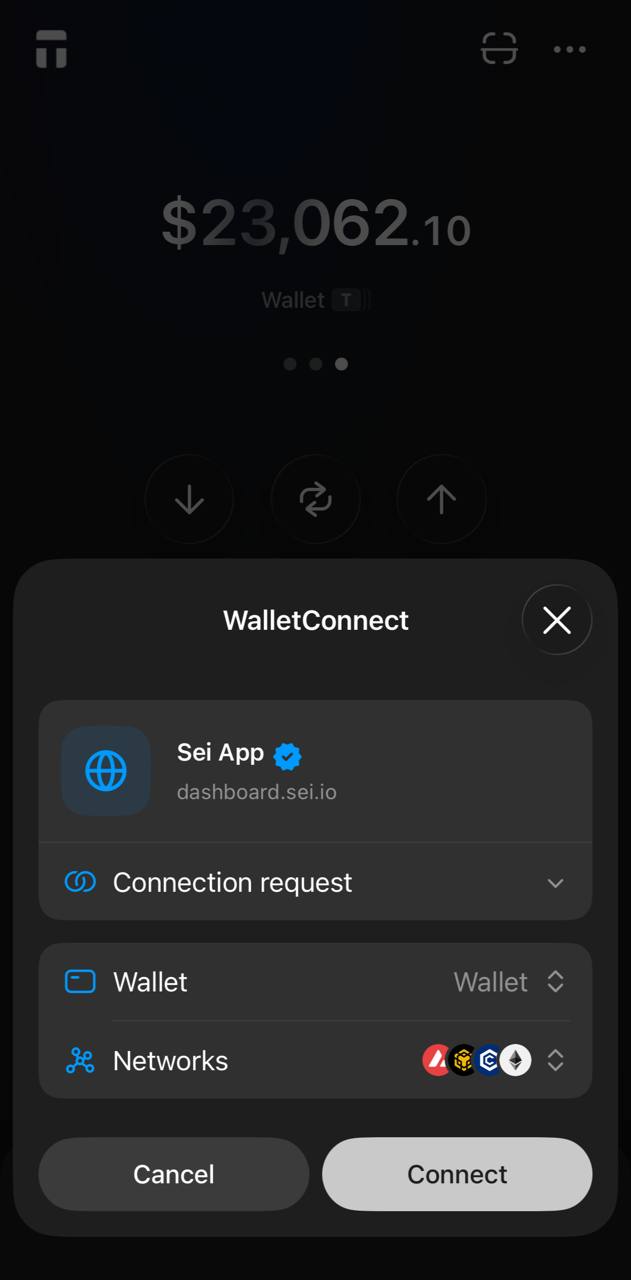
How to migrate your SEI The SEI team published an official migration guide. What follows is a plain-English walkthrough of what to expect when you go through it. Connect via WalletConnect
- Connect via WalletConnect: No site de migração da SEI, conecte sua Tangem Wallet usando a opção WalletConnect no app.
- Gas + association: Garanta saldo suficiente de SEI para cobrir a taxa de gas e, em seguida, envie a transação que associa seus endereços 0x... e sei1... na blockchain. Qualquer transação EVM de saída registra o vínculo automaticamente.
This is the most hands-on step of the process. You'll need to send a small amount of SEI to your new EVM address from another wallet or exchange.
- Transfer from Cosmos: envie seu SEI nativo do antigo endereço Cosmos para o endereço sei1... vinculado, tornando-o disponível na sua carteira EVM.
Depois de concluir o processo, o endereço intermediário deixa de ser relevante. Você pode simplesmente ignorá-lo.
O que aprendemos com essa migração
A Tangem mantém um monitoramento contínuo que acompanha mudanças em todas as redes que suportamos. Detectamos a migração da SEI assim que o roadmap foi publicado. Esse tempo de reação faz toda a diferença entre uma transição tranquila e uma correria de última hora. Não é o trabalho mais glamouroso, mas garante a qualidade do serviço.
Alguns problemas ainda são resolvidos conversando com pessoas. A solução para os cartões Tangem que só tinham Cosmos não veio de um script ou ferramenta automática, mas de um diálogo direto com a equipe da SEI. Mesmo hoje, com IA em tudo, certos desafios ainda dependem de equipes conversando de verdade.
Perguntas frequentes
-
Endereços Cosmos usam o prefixo "sei1" (formato bech32). Endereços EVM utilizam o prefixo padrão "0x", o mesmo do Ethereum.
-
Não. O token SEI não muda; apenas o ambiente técnico em que ele existe. A migração é uma atualização da infraestrutura da carteira, não uma troca de token. Você termina o processo com a mesma quantidade de SEI, agora em um endereço EVM em vez de Cosmos.
-
O SIP-3 é a proposta de governança que autorizou a transição da SEI para EVM-only. Foi aprovada pela comunidade SEI em maio de 2025 e envolveu a desativação dos smart contracts CosmWasm, o bloqueio das transferências IBC e a remoção da camada de transações nativa do Cosmos. A implementação em três fases ao longo de 2026 foi a execução dessa decisão.
-
Sim. A partir da atualização da Tangem abordada neste artigo, o SEI EVM é totalmente suportado. Se você estiver usando uma versão antiga do app da Tangem com configuração apenas Cosmos, será necessário atualizar o aplicativo e seguir o fluxo de migração descrito acima.
-
Para usuários de carteiras de autocustódia que usam o portal oficial de migração da SEI, não há prazo fixo; a Fundação SEI deixou claro que a opção de migração não expira.
-
Seus fundos não desaparecem, mas ficam inacessíveis. Assim que a infraestrutura Cosmos da SEI for totalmente desligada, ativos não migrados não poderão mais ser movimentados, enviados ou utilizados.