Choosing the right crypto wallet in 2026 is more consequential than ever. With over $3 trillion in total crypto market capitalization and an estimated 580 million global users, the question of where and how you store your digital assets directly determines their safety.
Exchanges have been hacked. Custodians have gone bankrupt. Seed phrases have been lost, stolen, or entered into phishing sites. The wallet you choose is a security decision.
This guide covers the top crypto wallet apps available in 2026, with honest assessments of their strengths, weaknesses, security architecture, and real-world usability.
What is a crypto wallet app?
A crypto wallet app doesn't actually store your cryptocurrency; that's a common misconception. Your funds exist on the blockchain.
What a wallet stores is your private key: a cryptographic string of characters that proves ownership and authorizes transactions. Without access to your private key, you cannot move your funds. With it, anyone can.
This is why the wallet category you choose matters enormously:
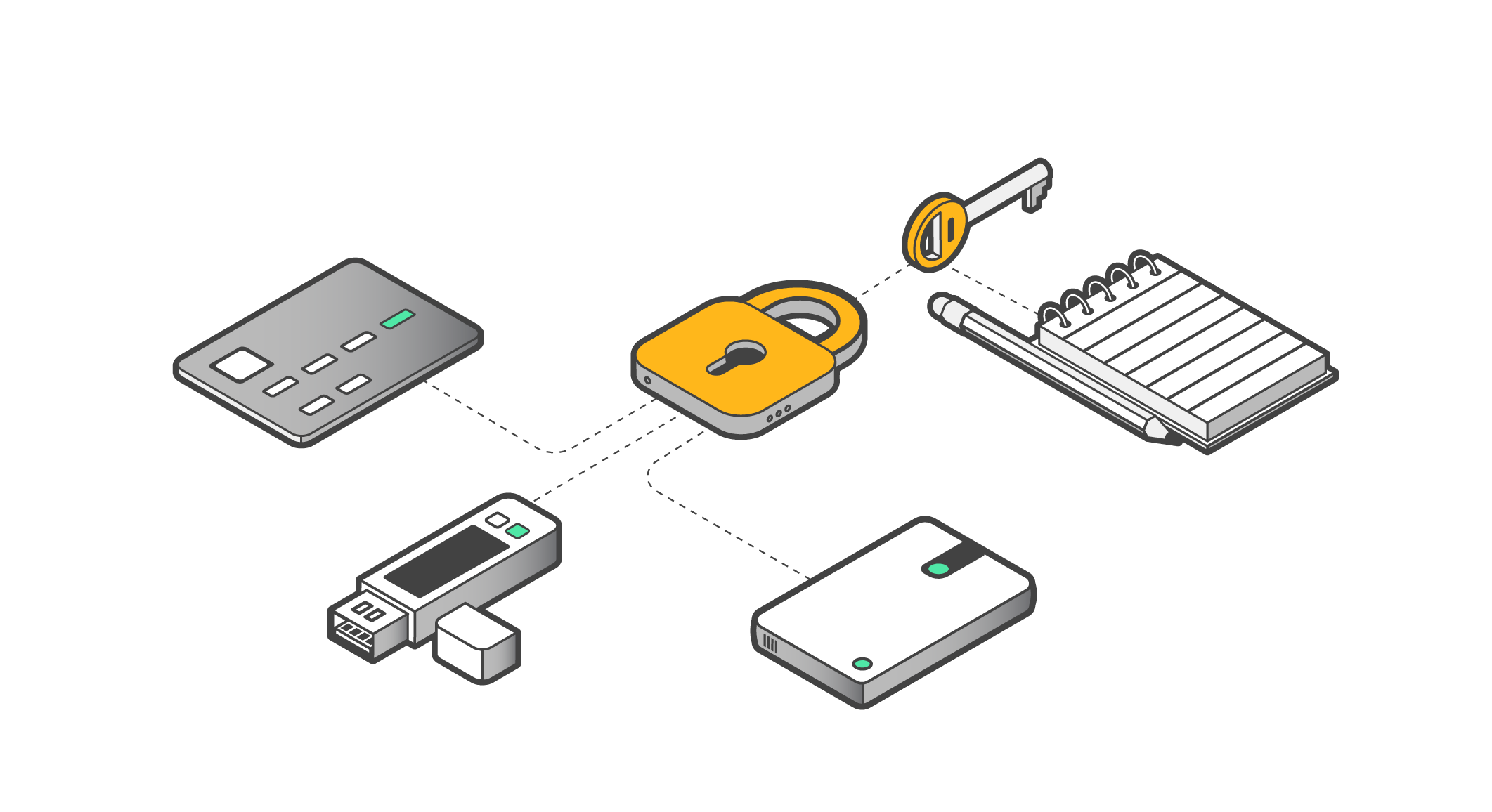
Hot wallets (software wallets): Connected to the internet. Convenient for daily transactions but exposed to online threats like phishing, malware, and remote exploits.
Cold wallets (hardware wallets): Keep private keys offline. Much harder to attack remotely, making them ideal for long-term storage or larger holdings.
Custodialwallets: A third party (usually an exchange) holds your keys. Convenient but requires trusting the platform; if it fails, gets hacked, or freezes withdrawals, your funds could be at risk.
Non-custodial wallets: You hold your own keys. Full sovereignty, but you are responsible for backup and security.
What to look for in a crypto wallet app
Before diving into specific wallets, these are the criteria that separate good wallets from great ones:
Security architecture
Look for wallets with hardware-level isolation (secure elements or smartcard chips), open-source code that has been publicly audited, and no seed phrase requirement, or at a minimum, encrypted seed storage. The presence of a Secure Element (SE) chip, such as those certified to CC EAL6+, is a strong indicator of robust security design.
Multi-chain support
The crypto ecosystem spans hundreds of blockchains. A wallet that only supports Bitcoin and Ethereum will quickly feel limiting. Look for support across major L1s (Solana, Avalanche, BNB Chain, Tron), EVM-compatible networks, and popular token standards like ERC-20 and SPL.
Swap and DeFi access
The best wallets offer built-in token swapping, staking options, and Web3 browser support for interacting with dApps. This reduces the need to move funds to an exchange for every trade.
Fees transparency
Wallets may charge swap fees, on-ramp fees, or spread markups. Some are upfront about these; others embed margins invisibly. A good wallet shows you the exact fee breakdown, network fees (gas), platform fees, and any third-party provider margins, before you confirm.
User experience
Even the most secure wallet is useless if it's too complicated to use correctly. Onboarding time, interface clarity, and error recovery options all matter. Beginners need guided flows; advanced users need power features. The best wallets serve both.
Crypto wallet comparison 2026
Wallet
Type
Tokens
Custody
Price
Score
Tangem
Hardware+App
10,000+
Non-custodial
$54.90+
9.4/10
Coinbase Wallet
Mobile (hot)
100,000+
Non-custodial
Free
8.1/10
Trust Wallet
Mobile (hot)
100+
Non-custodial
Free
7.9/10
Ledger Wallet
Hardware+App
50+
Non-custodial
$79+
8.6/10
Binance
Exchange
350+
Custodial
Free
7.5/10
Exodus
Desktop+Mobile
260+
Non-custodial
Free
7.7/10
Best crypto wallet Apps: in-depth review
1. Tangem Wallet: Best overall
Wallet
Security
Ease of Use
Features
Score
Tangem
⭐⭐⭐⭐⭐
⭐⭐⭐⭐⭐
⭐⭐⭐⭐
9.4/10
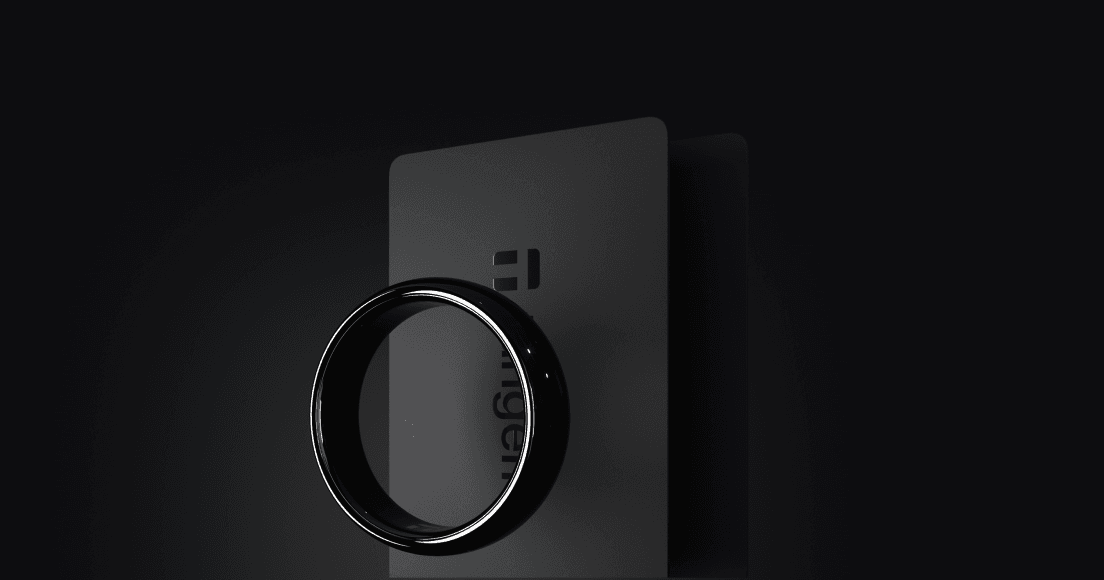
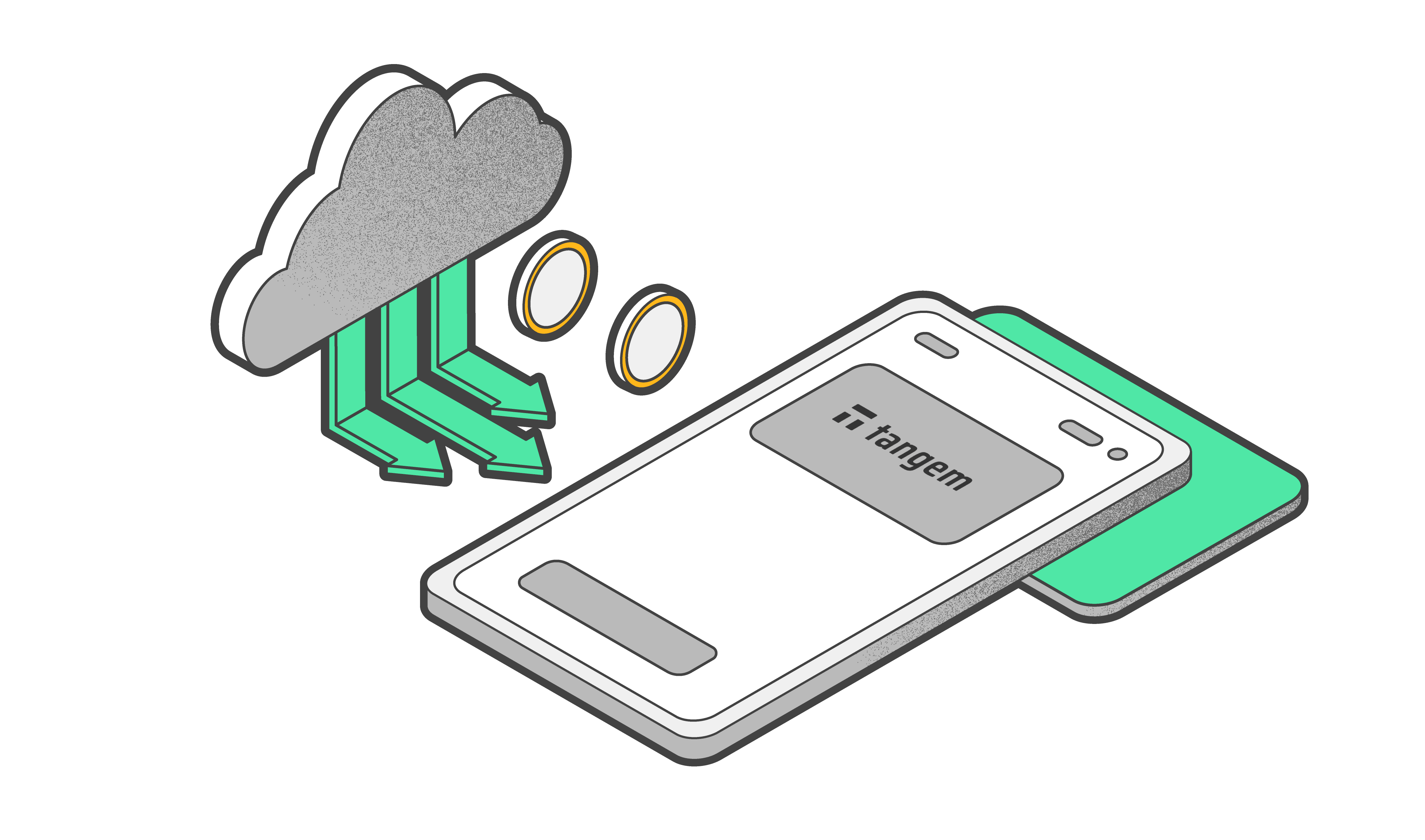
Tangem hardware wallet is a credit-card-sized smartcard with a built-in NFC chip and a certified Secure Element (Samsung S3D350A/B, CC EAL6+). You tap the card to your phone to sign transactions. There are no USB cables, screens to break, or batteries to replace.
The most distinctive feature is Tangem's seedless architecture. Traditional hardware wallets generate a 12- or 24-word seed phrase that must be written down and stored securely. Lose it, and your funds are gone. Someone finds it, and your funds are gone.
Tangem generates your private key in the card's Secure Element during setup, and it never leaves the chip. No seed phrase is generated or stored externally. Instead, Tangem's backup system uses a set of 2-3 linked cards. If you lose one card, you restore access with another from the same wallet set.
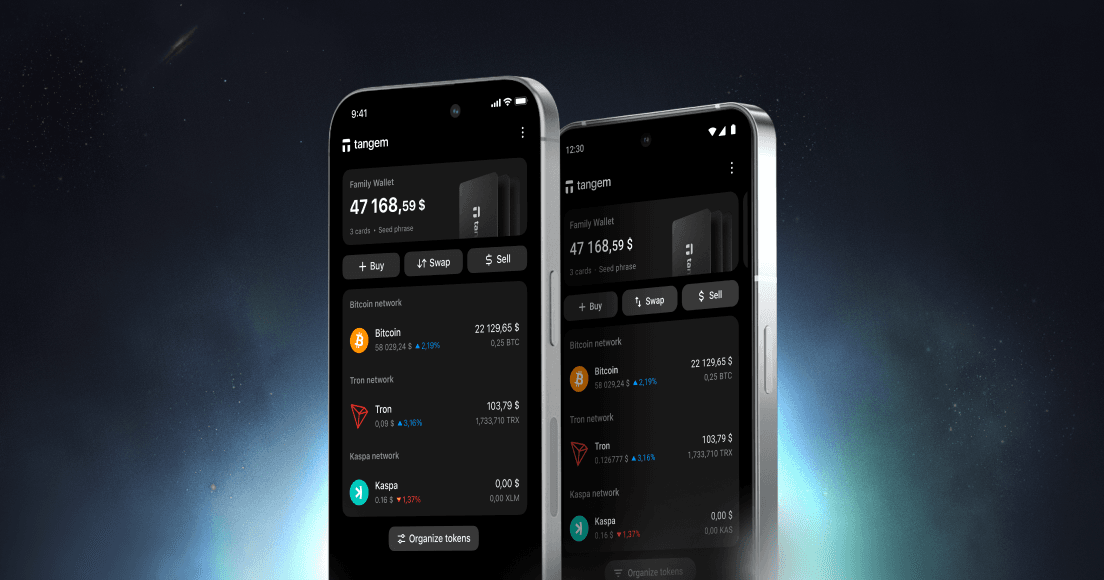
The companion app (available on iOS and Android) supports over 16,000 tokens across more than 85 blockchains, including Bitcoin, Ethereum, Solana, BNB Chain, Polygon, Tron, Avalanche, and more.
In-app swaps are powered by multiple aggregators with transparent fee breakdowns. The app also supports staking for select networks, and the recently added Multi-Accounts feature lets you manage various wallets from a single interface.
Pros
Certified Secure Element (CC EAL6+) keeps private keys completely offline and in hardware.
Excellent onboarding experience, designed explicitly for people new to self-custody.
No seed phrase required, removing the most significant human-error vulnerability in crypto security.
Simple tap-to-sign NFC interaction; easier to use correctly than competitors' touchscreens and buttons.
Supports 16,000+ tokens across 85+ blockchains; one of the broadest hardware wallet compatibility ranges available.
Wallets are waterproof, dustproof, and virtually indestructible, rated for temperatures from -35°C to +50°C.
One-time hardware cost; no subscription fees or bloated software ecosystem.
Cons
Requires an NFC-enabled smartphone; older phones may not be compatible
Bottom line: Tangem is the best all-around crypto wallet for users who want hardware-level security without the complexity of traditional hardware wallets.
The seedless design addresses the most common real-world cause of crypto loss, and the NFC card form factor makes it practical for everyday use.
2. Trezor Wallet
Wallet
Security
Ease of Use
Features
Score
Trezor Wallet
⭐⭐⭐⭐
⭐⭐⭐
⭐⭐⭐⭐
8.6/10
Trezor is an established name in the hardware wallet market. The Trezor app pairs with Trezor's hardware devices (Safe 3, Safe 5, Safe 7, Model T) to provide a full-featured interface for managing crypto assets, accessing DeFi, and buying crypto directly. Trezor devices use a certified Secure Element chip (CC EAL6+).
Pros
Certified Secure Element
Broad ecosystem: supports 5,000+ assets and integrates with MetaMask, WalletConnect, and major DeFi platforms
Extensive third-party app support.
Cons
USB/Bluetooth connection is less friction-free than NFC tap; setup is more involved for new users
More expensive than Tangem.
Bottom line: Trezor remains a solid hardware wallet option.
3. Coinbase Wallet
Wallet
Security
Ease of Use
Features
Score
Coinbase Wallet
⭐⭐⭐
⭐⭐⭐⭐⭐
⭐⭐⭐⭐
8.1/10
Coinbase Wallet is a non-custodial mobile wallet that gives users self-custody while remaining approachable for newcomers. Unlike Coinbase,, where the company holds your keys, Coinbase Wallet stores your private keys locally on your device, encrypted with your biometrics or PIN.
The app supports Ethereum and virtually all EVM-compatible chains, Bitcoin, and Solana, and enables direct interaction with dApps through its built-in browser.
Pros
Deep integration with the Coinbase exchange for fiat on/off-ramps
Supports 100,000+ tokens on EVM chains, plus Bitcoin and Solana
Free to download and use; no subscription or hardware cost
Cons
Software-only wallet: private keys stored on a device connected to the internet, making it more vulnerable than hardware alternatives
Seed phrase is still required for recovery; if lost, all funds are unrecoverable.
Swap fees can be higher than competitors', especially on smaller trades
U.S.-centric in some features; limited availability of specific on-ramp options in other regions
Bottom line. For larger holdings, pair it with Tangem for cold storage.
4. Trust Wallet app
Wallet
Security
Ease of Use
Features
Score
Trust Wallet
⭐⭐⭐
⭐⭐⭐⭐
⭐⭐⭐⭐
7.9/10
Trust Wallet, owned by Binance since 2018, is one of the world's most downloaded crypto wallets with over 100 million users. It is non-custodial, supporting more than 100 blockchains and millions of tokens. Its built-in DApp browser gives direct access to DeFi protocols, NFT marketplaces, and Web3 applications.
Trust Wallet is particularly popular among active DeFi users who need to interact with contracts across multiple chains without repeatedly switching apps. The wallet has a built-in DEX for token swaps.
Pros
Excellent multi-chain DeFi access, supports 100+ blockchains out of the box.
Non-custodial with private keys stored on-device.
Cons
Being owned by Binance raises questions about data privacy and potential conflicts of interest.
Hot wallet only; all security depends on your phone and standard software protections
Past security incidents, including fake app reports and phishing campaigns targeting its users
Swap fees are embedded and not always transparent.
Bottom line: Trust Wallet shines for DeFi-native users. For any significant holdings, it should be treated as an active-use wallet rather than a long-term solution.
5. Exodus Wallet app
Wallet
Security
Ease of Use
Features
Score
Exodus
⭐⭐⭐
⭐⭐⭐⭐
⭐⭐⭐⭐
7.7/10
Exodus stands out as a crypto wallet available across desktop (Windows, Mac, Linux) and mobile. It supports 260+ assets across major blockchains and includes built-in exchange functionality, staking, and portfolio tracking.
Exodus also integrates with Trezor hardware wallets. However, unlike most competitors, Exodus's code is not open-source. This is a notable gap for security-conscious users who want independent verification of how the software handles private keys.
Pros
Available on desktop and mobile with full sync between devices
Swap fees include a markup on top of network fees; they can be costlier than DEX aggregators.
A hot wallet with no native hardware; security relies entirely on device security
Bottom line: Exodus is for desktop-heavy users.
6. Binance Wallet
Wallet
Security
Ease of Use
Features
Score
Binance
⭐⭐
⭐⭐⭐⭐
⭐⭐⭐⭐⭐
7.5/10
Binance is the world's largest crypto exchange by volume, and its app is the go-to platform for hundreds of millions of traders. The built-in wallet is custodial, meaning Binance holds your keys, but what's truly impressive is their trading infrastructure, liquidity, and wide range of financial products, which are hard to match. For straightforward trading activities like futures, margin, or copy trading, Binance offers an excellent experience. Its app makes it easy to get started with low trading fees — especially when using BNB — and gives you access to hundreds of tokens, making it a leading platform. Just remember, funds in a Binance account aren’t technically yours; they’re an IOU from Binance.
Binance is the world's largest crypto exchange by volume, and its app is the go-to platform for hundreds of millions of traders. The built-in wallet is custodial, meaning Binance holds your keys, but what's truly impressive is their trading infrastructure, liquidity, and wide range of financial products, which are hard to match.
For trading activities like futures, margin, or copy trading, Binance offers an excellent experience. Its crypto wallet app makes it easy to get started with low trading fees, especially when using BNB, and gives you access to hundreds of tokens.
Just remember, funds in a Binance account aren’t technically yours; they’re an IOU from Binance.
Pros
Best trading liquidity and the widest token selection of any platform
Very low trading fees, further reduced by using BNB for fees
Custodial; you don't hold your private keys; Binance controls your funds
Ongoing regulatory challenges globally, including U.S. restrictions and DOJ settlements
Not available or restricted in certain regions
Interface can be overwhelming for beginners, given the sheer number of product categories.
Bottom line: Binance is a powerful tool for active trading, not for storage. Use it to trade, then withdraw to a Tangem wallet for safekeeping. Never leave significant amounts on any exchange long-term.
Safety best practices for any crypto wallet
No matter which wallet you choose, these principles separate people who keep their crypto from those who lose it:
Never share your seed phrase or private key with anyone; no support team, app update, or "wallet migration" tool will ever legitimately require it.
Store seed phrases offline and in multiple locations, such as fireproof safes, safety deposit boxes, or specialized metal seed storage products.
Verify every transaction before signing, always confirm the recipient address and amount, especially when using a new dApp or bridge.
Be phishing-aware, bookmark wallet apps, and exchange URLs. Never click links in emails, DMs, or Telegram messages claiming to be from your wallet provider.
Use hardware wallets for anything you can't afford to lose. Hot wallets are convenient, but should hold only what you'd carry in a physical wallet.
Frequently asked questions
Common questions about crypto wallet apps in 2026.
What is the safest crypto wallet app in 2026?
Tangem is the safest crypto wallet app in 2026. Unlike software wallets that store private keys on an internet-connected device, Tangem keeps your keys locked inside a certified Secure Element chip (CC EAL6+) on a physical card. The Tangem app is the interface for everything from portfolio management to swaps and staking, while all signing happens on the card itself, meaning a compromised phone can never compromise your crypto.
What's the difference between a hot wallet and a cold wallet?
A hot wallet operates on an internet-connected device such as your phone or computer. While it's really convenient, it can be vulnerable to things like phishing, malware, and remote attacks. On the other hand, a cold wallet keeps private keys offline on specialized hardware, adding an extra layer of security. For example, Tangem functions as a cold wallet that feels similar to a mobile app; you simply tap the physical card to sign transactions, and your keys stay safely offline, away from internet risks.
Do I need a seed phrase with Tangem?
No, and that's the point. Tangem uses a seedless architecture in which the private key is generated within the card's Secure Element and never extracted. Recovery is handled through a set of 2–3 linked backup cards. This removes the most common cause of crypto loss: seed phrases being lost, stolen, or entered into phishing sites.
What's the difference between a custodial and a non-custodial wallet?
With a custodial wallet (like a Binance account), a third party holds your private keys. You are trusting them with your funds; if they get hacked, go bankrupt, or freeze withdrawals, you may lose access. A non-custodial wallet (like Tangem, Trust Wallet, or Coinbase Wallet) keeps your keys under your control. "Not your keys, not your coins" is the short version.
Can I use a crypto wallet app to buy crypto directly?
Yes. Most modern wallets include fiat on-ramp integration. Tangem supports purchases via MoonPay and other providers inside the app. Coinbase Wallet integrates directly with the Coinbase exchange. Trust Wallet supports MoonPay and Transak. These let you buy crypto with a debit/credit card or bank transfer without leaving the wallet.
What happens if I lose my Tangem card?
If you set up a 2- or 3-card wallet set (recommended), losing one card doesn't mean losing your funds. The remaining cards in the set still have access. This is Tangem's equivalent of a seed phrase backup, except the backup is another hardware card rather than a string of words you have to store safely.
Is it safe to keep crypto on an exchange like Binance?
No. Exchange accounts are custodial, which means Binance manages your keys for you. Remember how the FTX collapse in 2022 showed the risks? Users who kept their funds on the exchange lost access when it shut down. That's why many experts suggest trading on exchanges while keeping your funds in self-custody with additional security measures, such as wallets.
How many cryptocurrencies does Tangem support?
Tangem supports over 16,000 tokens across 8+ blockchains, including Bitcoin, Ethereum, Solana, BNB Chain, Polygon, Tron, Hyperliquid, Arbitrum, Base, and many more. New networks are regularly added through app updates.
Are free crypto wallet apps trustworthy?
Many are. "Free" in this context means no upfront cost; wallets typically make revenue through swap fee margins. The critical factors are whether the code has been audited, whether it's open-source, and whether you control your own keys. Always download wallet apps directly from official sources to avoid fake app scams.
Do I need to be technical to use a hardware wallet like Tangem?
No. Tangem is designed to be the least technical hardware wallet available. Setup takes a few minutes: download the app, tap your card to your phone, create a PIN, and you're done. No firmware to install, no USB connections, no screens to navigate. Every day use is a single tap to approve transactions, comparable in ease to using a contactless bank card.
Can I stake crypto directly in a wallet app?
Yes, several wallets support in-app staking. Tangem supports staking for Ethereum, Solana, Tron, Cosmos, and other supported networks directly in the app. Trust Wallet and Coinbase Wallet also offer staking for select assets. Staking rewards vary by network and are paid directly to your wallet.
What should I do if I think my wallet has been compromised?
Act immediately. If you have a seed phrase, move your funds to a new wallet with a new seed phrase; do not reuse the same phrase. If you use Tangem, a compromised phone does not compromise your cards; the keys are in the hardware.
Conclusion
The crypto wallet landscape in 2026 is more mature and competitive than ever. Software wallets have improved dramatically in usability, DeFi support, and multi-chain access. But the fundamentals of security haven't changed: private keys stored on an internet-connected device are inherently more vulnerable than those stored on offline hardware.
Tangem earns the top spot because it solves the most complex problem in crypto self-custody: how do you make hardware-level security genuinely easy to use? Its NFC card format, seedless architecture, and broad blockchain support deliver a product that's both more secure than any software wallet and easier to use than any traditional hardware wallet.
Limited-Time Offer
20% OFF + up to $20 in BTC 🛍️
Selected Wallets
Ends March 16
 + Up to $20 in BTC till Apr 6