 Switch to seedless. Get 30% off with SWITCH30 till Oct 21



Top 7 Quantum Resistant Crypto Coins in October 2026
We broke down the 7 tokens actually worth watching if quantum resistance is the requirement.
This article is available in the following languages:
Google's Quantum AI team dropped a paper today that the crypto industry has been dreading. A sufficiently powerful quantum computer could derive a Bitcoin private key from its public key in approximately nine minutes. Bitcoin's average block time is ten minutes.
The research estimates a 41% success rate on an on-spend attack, meaning a quantum machine intercepts a transaction in-flight and extracts the private key before the network confirms the block. Earlier estimates put the qubit threshold for cracking Bitcoin's ECDSA at millions of qubits. Google has pulled that number below 500,000 physical qubits, a roughly 20x reduction in the resources required. Experts now point to 2029 as the key deadline.
About 6.9 million BTC (roughly one-third of the total supply) already sit in wallets with exposed public keys. This includes Satoshi-era coins and any address that has ever broadcast a transaction. Bitcoin's own Taproot upgrade, activated in 2021, inadvertently widened the attack surface by making public keys visible on-chain by default. Google has set its own internal post-quantum migration deadline: 2029.
The Ethereum Foundation published a post-quantum roadmap in February. Bitcoin merged its first proposal for a quantum-resistant address last month. Neither is close to done. Some chains, however, already solved this problem. Here are the seven tokens actually worth paying attention to if quantum resistance is the requirement.
What is Quantum-Resistant Cryptography?
Most blockchains secure transactions using Elliptic Curve Digital Signature Algorithm (ECDSA) or similar schemes. These rely on mathematical problems like factoring large prime numbers, which classical computers can't solve in a reasonable timeframe. Quantum computers running Shor's algorithm can do that in record time, posing a significant threat.
Post-quantum cryptography (PQC) refers to cryptographic algorithms designed to resist attacks from quantum computers. NIST, the U.S. National Institute of Standards and Technology, finalized its first PQC standards in 2024, including CRYSTALS-Dilithium, Falcon, and SPHINCS+. The projects on this list use these standards, or comparable approaches, either at the protocol layer or as active upgrades.
There's a significant difference between quantum-resistant chains today, chains actively implementing PQC, and chains still in the roadmap phase. We highlighted this difference in every entry.
Top 7 Quantum-Resistant Cryptocurrencies in 2026
1. Quantum Resistant Ledger (QRL)
QRL stands as the leading example in the field. Established from its inception in 2018, it was built on post-quantum cryptography as its fundamental architecture, distinguishing itself from projects that merely attempt to adapt these technologies later.
It uses XMSS (eXtended Merkle Signature Scheme), a hash-based signature system that has undergone rigorous examination and validation by NIST. After seven years of operation, the platform has impressively maintained a spotless security record, with zero security hotfixes, no required emergency patches, and no emergency items on its roadmap.
The upcoming Project Zond introduces SPHINCS+ for smart contracts and an EVM-compatible virtual machine, giving DeFi developers a migration path to a chain that was secure before most of them knew what a qubit was. QRL doesn't move fast. It doesn't need to.
Cryptographic approach: XMSS (hash-based), SPHINCS+ (via Project Zond).
Status: Quantum-resistant at mainnet today.
2. IOTA (IOTA)
IOTA doesn't use a traditional blockchain. It runs on the Tangle, a directed acyclic graph (DAG) which sidesteps several attack vectors that affect linear chains. IOTA was built with post-quantum cryptography as a design principle from the beginning, not patched in afterward.
The architecture is particularly relevant for machine-to-machine transactions and IoT applications, where high transaction volumes make conventional blockchain overhead impractical. IOTA's quantum-resistant design means the security model scales with the use case.
Cryptographic approach: Hash-based signatures, DAG structure.
Status: PQC-native by design.
3. Abelian (ABEL)
Abelian entered the market in 2018 with a specific mandate: to apply lattice-based cryptography to a public blockchain with privacy features. It integrates novel cryptographic algorithms designed to resist quantum attacks, with a particular focus on transaction privacy and data integrity.
The project is academically grounded and developed by researchers who came at this from cryptography first, blockchain second. Most projects that claim quantum resistance came at it from the opposite direction and are still working backward.
Cryptographic approach: Lattice-based cryptography.
Status: PQC-native, privacy-focused.
4. Cellframe (CELL)
Cellframe is a modular blockchain network built from the ground up with quantum-resistant security. It approaches the problem with a cybersecurity-first architecture, incorporating post-quantum cryptographic techniques specifically designed to address both scalability and security simultaneously; a combination most PQC projects sacrifice one for the other.
European stakeholder backing has contributed to its research foundation. The modularity matters: as NIST finalizes and updates its PQC standards, Cellframe's architecture is designed to absorb those changes without hard forks.
Cryptographic approach: Quantum-resistant cryptographic modules.
Status: PQC-native.
5. Algorand (ALGO)
Algorand crossed a meaningful threshold on November 3, 2025: the first mainnet Falcon-1024 transaction. Falcon is a NIST-approved lattice-based signature scheme. Algorand's state proofs, generated every 256 rounds, are already secured by Falcon. Core accounts still use Ed25519, but opt-in Falcon keys are now available via the CLI, and AVM upgrades will embed native verification for dApps.
The network runs at 10,000 TPS with 2.8-second blocks. It's the strongest proof that quantum resistance and performance are not mutually exclusive and the most credible PQC implementation from a major smart contract platform to date.
Cryptographic approach: Falcon-1024 (NIST-approved lattice-based).
Status: Partial implementation live; full rollout in progress.
6. Hedera (HBAR)
Hedera's governance structure, a 29-node council that includes Google, IBM, and Boeing, means security upgrades get audited and deployed without the coordination chaos that will likely stall Bitcoin's response. SHA-384 hashing already meets NSA CNSA 2.0 standards for top-secret data classification.
Hedera is also partnering with SEALSQ on its QS7001 chip, which embeds Dilithium keys in FIPS-compliant hardware at the node level. Hedera is positioning itself as the enterprise-grade post-quantum ledger, and the architecture supports that claim.
Cryptographic approach: SHA-384, Dilithium (via SEALSQ hardware integration).
Status: Partially quantum-resistant today; hardware-level PQC coming.
7. QANplatform (QANX)
QANplatform is a hybrid PoS Layer 1 built on Dilithium signatures, another NIST-approved algorithm, and fully EVM-compatible. Developers deploy in Solidity, Python, or Go without rewriting a single line of code. This matters because the biggest friction to PQC adoption is migration cost.
The hybrid public-private chain architecture means enterprises can run permissioned environments on the same quantum-safe infrastructure as the public chain. For compliance-heavy sectors moving away from classical cryptography, this is a practical on-ramp.
Cryptographic approach: CRYSTALS-Dilithium (NIST-approved lattice-based)
Status: PQC-native with EVM compatibility.
The distinction that matters: QRL, IOTA, Abelian, and Cellframe are quantum-resistant at the protocol level today. Algorand, Hedera, and QANplatform are actively implementing NIST-approved algorithms. Nervos is architecturally adaptable. ICP is researching. Bitcoin is hoping the community moves faster than the hardware does.
Which of These Tokens Can You Store on a Tangem Wallet?
A hardware wallet secured by an EAL6+ certified secure element is a sensible custody choice for quantum-resistant assets precisely because the threat model is long-term. You're not hedging against today's quantum computers but against 2029 and beyond. Cold storage in a device with a 25-year hardware guarantee is consistent with that thesis.
It's also worth noting that a hardware wallet addresses the custody layer of the quantum threat, not the protocol layer. As Chainalysis explains, the real exposure is in the on-chain cryptography. Once a public key is visible on-chain, cold storage alone cannot protect against a future quantum attack on the underlying chain. Holding quantum-resistant assets in a hardware wallet is the complete solution.
Conclusion
Google's paper is not a death notice for Bitcoin. It's a countdown clock. The 9-minute attack isn't possible yet. But the qubit threshold just dropped by 20x, the timeline just compressed to 2029, and roughly 6.9 million BTC are already sitting in wallets with fully exposed public keys.
Quantum resistance is not a marketing category. It's a specific set of cryptographic properties; hash-based signatures, lattice-based algorithms, or architecture-level agnosticism, that either exist in a protocol or don't.
Frequently Asked Questions
What is a quantum-resistant cryptocurrency?
A quantum-resistant cryptocurrency uses post-quantum cryptographic (PQC) algorithms that cannot be broken by quantum computers running algorithms like Shor's or Grover's. Most blockchains use ECDSA, which quantum computers can theoretically defeat. Quantum-resistant chains use alternatives like XMSS, CRYSTALS-Dilithium, Falcon, or SPHINCS+, all of which NIST has validated as quantum-safe.
Is Bitcoin quantum-resistant?
No. Bitcoin uses ECDSA, which is vulnerable to Shor's algorithm running on a sufficiently powerful quantum computer. Google's March 2026 research estimates that a future quantum machine could crack a Bitcoin private key in approximately 9 minutes, just inside Bitcoin's 10-minute block time. Bitcoin's community is debating BIP 360, a proposal for a quantum-resistant address format, but no implementation timeline exists.
Which cryptocurrency is the most quantum-resistant?
QRL (Quantum Resistant Ledger) is the most established quantum-resistant blockchain. It was built from the ground up using XMSS—a NIST-studied hash-based signature scheme—and has operated without a security patch since 2018. Algorand and Hedera are the strongest options among larger-cap assets with live PQC implementations underway. All of these can be stored securely on Tangem.
When will quantum computers be able to break Bitcoin?
Google's 2026 research sets 2029 as the key deadline for both Google's internal post-quantum migration and the broader crypto industry. The qubit threshold required to attack Bitcoin has been revised down from millions to below 500,000 physical qubits, a roughly 20x reduction. Experts consider a quantum computer relevant to cryptography feasible in the 2027–2033 window.
How does post-quantum cryptography work?
PQC algorithms are based on mathematical problems that quantum computers can't solve efficiently. The main approaches include lattice-based cryptography (used by Dilithium, Falcon, and Kyber), hash-based signatures (used by XMSS and SPHINCS+), and code-based cryptography. NIST finalized its first PQC standards in 2024, and the chains on this list use these or comparable approaches.
Can a hardware wallet protect against quantum attacks?
A hardware wallet like Tangem protects your private keys by keeping them offline and securely stored in an EAL6+ certified secure element. This eliminates remote attack vectors.
However, if the underlying blockchain uses ECDSA and a quantum computer eventually becomes powerful enough to derive private keys from public keys, the on-chain cryptography becomes vulnerable. Storing quantum-resistant assets in cold storage is the complete solution; cold storage alone isn't sufficient if the chain itself is vulnerable.
What NIST-approved post-quantum algorithms are used in crypto?
The main NIST-approved PQC algorithms active in crypto projects include CRYSTALS-Dilithium (used by QANplatform and Hedera), Falcon-1024 (live on Algorand mainnet as of November 2025), and SPHINCS+ (coming to QRL via Project Zond). These were finalized in NIST's 2024 PQC standardization process and are considered the current gold standard for post-quantum security.
Is Ethereum quantum-resistant?
Not yet. Ethereum is actively developing a post-quantum roadmap. The Ethereum Foundation published its plan in February 2026, and Vitalik Buterin has outlined requirements across validator signatures, data storage, accounts, and proofs. Ethereum's account model is considered particularly exposed; once a public key is revealed by any transaction, it remains permanently visible on-chain, giving a quantum attacker unlimited time to derive the private key.
What is the difference between quantum-resistant and quantum-proof?
Functionally, these terms are used interchangeably, but "quantum-resistant" is the more technically precise term. No cryptographic system can be proven unconditionally secure for all future quantum hardware. Quantum-resistant algorithms are those for which no known quantum algorithm provides a significant speedup. Post-quantum cryptography (PQC) is the correct technical designation.
What happens to crypto if quantum computers become widely available?
Any blockchain still using ECDSA or RSA when quantum computers become sufficiently powerful to break them would face catastrophic exposure. Wallets with exposed public keys (any address that has made a transaction) could have their private keys derived.
The chains that have migrated to PQC, or built on it from the start, would be unaffected. This is why the 2029 timeline matters: migration takes years, and decentralized networks can't flip a switch.
All prices and market data referenced reflect conditions as of early October 2026. Cryptocurrencies are highly speculative assets. This is not financial advice.

Don't miss these 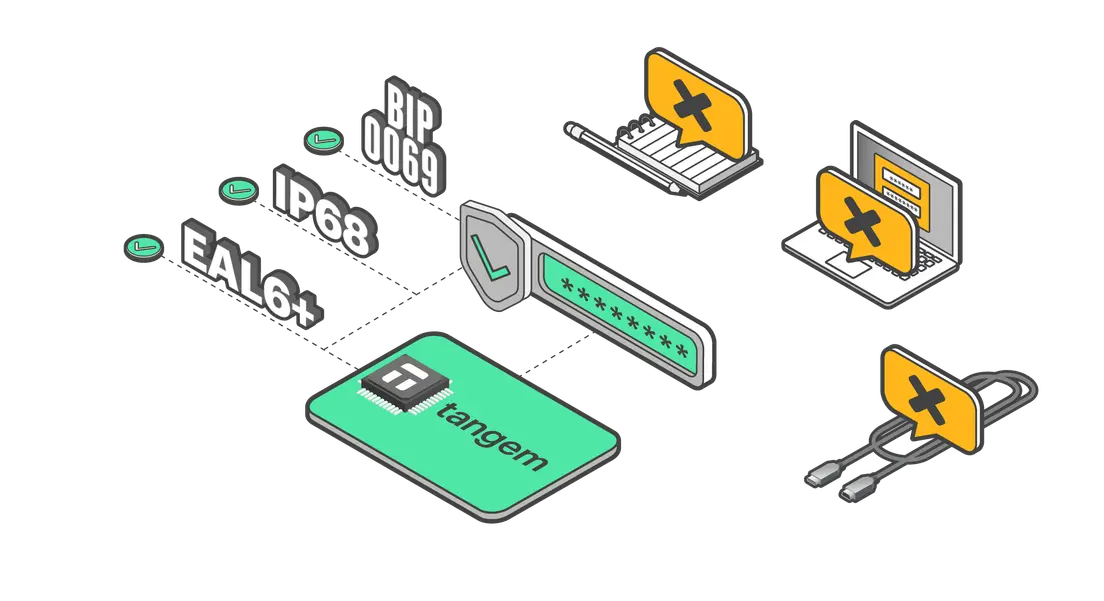





Other articles

